Saturday, October 31, 2009

Inscription from the Period of the Kings of Judah

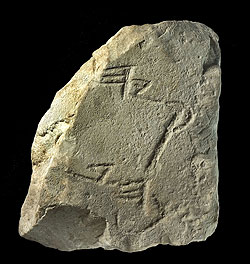
A fragment of a limestone plaque bearing several letters of ancient Hebrew script was discovered while sifting soil that was excavated in the vicinity of the Gihon Spring, within the precincts of the “Walls around Jerusalem National Park”.


The stone fragment dates to the eighth century BCE and this is based on the numerous pottery sherds that were discovered together with it, as well as the shape of the Hebrew letters that are engraved in the inscription.

The plaque is broken on all sides. All that remains of the inscription are two lines of writing: In the upper line the last part of a given name is preserved: ...]קיה, or as it is transliterated into English …]kiah. Unfortunately the remains of another letter before the kof cannot be discerned. If the letter preceding the kof was a zayin, we could complete the name to read חזקיה, or Hezekiah in English, and perhaps ascribe historical importance to the inscription. On the other hand, there are other first names that were used in Judah and Jerusalem at that time that could be mentioned here such as Hilkia, Amekiya, etc.

In the second line are the remains of two words. Here too, is a suffix of a word: ...]כה, or as it is transliterated into English …]ka. Here we have several possibilities for completing the word such as: בְּרָכָה, or birqa, that is, a greeting expressing best wishes (a possible ending for some sort of commemorative inscription). Another possibility is the word בְּרֵכָה, or brecha, meaning water reservoir. The reconstruction of this word is possible based on the fact that Brechat HaShiloah, or the Shiloah Pool in English, is located nearby, and also based on the fact that a pool is mentioned in the famous Shiloah inscription that was discovered close by.

In any event the fact that we are dealing with a stone plaque indicates that this is a commemorative inscription that may have been meant to celebrate some sort of building project.

All that remains is to wait and hope that in time other fragments of the inscription will be found.

Wednesday, October 28, 2009

Quarry from the End of the Second Temple Period

.

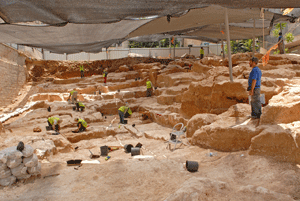
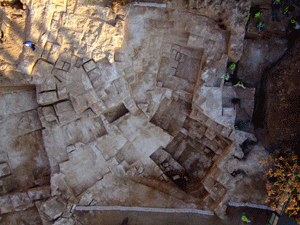
An ancient quarry, c. 1 dunam in area and dating to the end of the Second Temple period (c. 2,030 years old), was uncovered in excavations being conducted on Shmuel HaNavi Street in Jerusalem, under the direction of Dr. Ofer Sion and Yehuda Rapuano of the Israel Antiquities Authority, prior to the construction of residential buildings.


Dr. Ofer Sion, the excavation director on behalf of the Israel Antiquities Authority, believes, “The immense size of the stones (maximum dimensions: length 3 m, width 2 m, height 2 m) indicates it was highly likely that the large stones that were quarried at the site were destined for use in the construction of Herod’s magnificent projects in Jerusalem, including the Temple walls. It seems that a vast number of workers labored in the quarry where various size stones were produced: first they quarried small stones and when the bedrock surface was made level they hewed the large stones. The stones were quarried by creating wide detachment channels that were marked by means of a chisel which weighed c. 2.5 kilograms. After the channels were formed the stones were severed from the bedrock using hammers and chisels”.

“We know from historical sources that in order to build the Temple and other projects which Herod constructed, such as his palace, hundreds of thousands of various size stones were required – most of them weighing between two and five tons each”, said Dr. Sion. “The dimensions of the stones that were produced in the quarry that was revealed are suitable for the Temple walls. The large section that was exposed is actually a small part of an enormous series of quarries that was spread across the entire slope – from the Musrara Quarter to the Sanhedria Quarter. The massive quarrying effort, on the order of hundreds of thousands of stones, lowered the topography of Jerusalem in the vicinity of the Old City. Today, with the exposure of this quarry, the intensity of the building projects as described in the historical sources can be proven: Flavius Josephus wrote that before Herod built the Temple he prepared the infrastructure for it: the quarrying of the Temple’s stones lasted eight whole years. The Temple itself was built in a relatively short period of time of two years. With the exposure of the quarries in Sanhedria and Ramat Shlomo, it is clear that Herod began quarrying closest to the Temple and worked away from it: first he exploited the stone on the nearby ridges and subsequently he moved on to quarry in more distant regions”.


According to Dr. Sion, “In those days the world of hi-tech focused on quarrying, removing and transporting stones. Historical sources record that Herod trained more than 10,000 people to be involved in this work: they prepared suitable transportation routes and then moved the huge stones in a variety of ways – on rolling wooden fixtures that were drawn by camels, in pieces on carriages, etc.

Among the artifacts that were discovered in the excavation on Shmuel HaNaiv Street were metal plates (referred to in the Talmud as ‘cheeks’) that were used as fulcrums to severe the stones from the bedrock, and coins and pottery sherds that date to the end of the Second Temple period (the first century BCE).

2,000 Year Old Miqve in Jerusalem

-

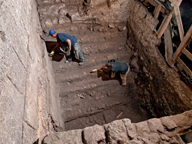
A large and impressive ritual bath (miqve) from the end of the Second Temple period was recently uncovered in archaeological excavations the Israel Antiquities Authority is carrying out in the Western Wall tunnels, in cooperation with the Western Wall Heritage Foundation.


The miqve was discovered inside the western hall of a splendid structure that is located just c. 20 meters from the Western Wall. Parts of the building were discovered in the past and the Israel Antiquities Authority is currently exposing another one of the three halls inside it. It is one of the most magnificent structures from the Second Temple period ever to be uncovered.

The edifice is built of very delicately dressed ashlar stones and the architectural decoration in it is of the highest quality. From an architectural and artistic standpoint there are similarities between this structure and the three magnificent compounds that King Herod built on the Temple Mount, in the Cave of the Patriarchs and at Allonei Mamre, and from which we can conclude the great significance that this building had in the Second Temple period.

In his book The War of the Jews, Josephus Flavius writes there was a government administrative center that was situated at the foot of the Temple. Among the buildings he points out in this region were the council house and the “Xistus”- the ashlar bureau. According to the Talmud it was in this bureau that the Sanhedrin – the Jewish high court at the time of the Second Temple – would convene. It may be that the superb structure the Israel Antiquities Authority is presently uncovering belonged to one of these two buildings.

According to archaeologist Alexander Onn, director of the excavation on behalf of the Israel Antiquities Authority, “It is interesting to see that in the middle of the first century CE they began making changes in this magnificent structure – at that time it was no longer used as a government administrative building and a large miqve was installed inside its western hall where there were c. 11 steps that descend to the immersion pool. It seems that the city of Jerusalem grew in this period and it became necessary to provide for the increased ritual bathing needs of the pilgrims who came to the Temple in large numbers, especially during the three pilgrimage festivals (Shlosha Regalim). Immersing oneself in the miqve and maintaining ritual purity were an inseparable part of the Jewish way of life in this period, and miqve’ot were absolutely essential, especially in the region of the Temple.”

The Western Wall Heritage Foundation acts to uncover the Jewish people’s past at the Western Wall, and the miqve is further evidence of the deep ties the Jewish people have with Jerusalem and the Temple.

Rabbi Shmuel Rabinowitz, the rabbi in charge of the Western Wall and the holy places, pointed out the cooperation between the Western Wall Heritage Foundation and the Israel Antiquities Authority which have joined together in order to discover the rich history of Jerusalem there, while strictly ensuring that no excavations approach the Temple Mount compound, contact with which is forbidden by Halachic law.

Saturday, October 24, 2009

"The Heliodoros stele" and the Maccabean Revolt

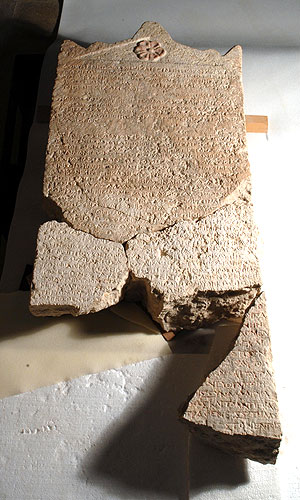
"The Heliodoros stele"- consisting of 28 lines inscribed on limestone is considered one of the most important ancient inscriptions found in Israel. Recently, three smaller fragments of a Greek inscription were found at an Israel Antiquities Authority excavation at Maresha.

Dr. Dov Gera determined that the fragments were actually the lower portion of "The Heliodoros stele". This discovery confirmed the assumption that the stele originally stood in one of the temples in Maresha- Beit Guvrin National Park today. It now can be determined that this royal stele originated in the city of Maresha.

The stele adds important archaeological evidence and historical context for understanding the period of time leading up to the Maccabean Revolt, an event celebrated each year on the holiday of Hanukah.


The Heliodoros Stele - with all of its pieces restored - photograph Peter Lenny, Israel Museum Jerusalem

This royal stone stele bears a proclamation by the Seleucid king, Seleucus IV (brother of Antiochus IV), and dates to 178 BCE. The contents of the stele shed light on the Seleucid government's involvement in local temples, mentioning an individual named Olympiodoros, the appointed "overseer" of the temples in Coele Syria – Phoenicia, including Judea. The order of the king was sent to Heliodorus, who was probably the same person mentioned in II Maccabees 3.

According to the story in Maccabees, Heliodorus, as the representative of King Seleucus IV, tried to steal the wealth from the Temple in Jerusalem but instead was severely beaten as a result of divine intervention. Three years later Seleucus IV was assassinated and was succeeded by his brother Antiochus IV, who was the ruler who according to II Maccabees eventually issued an edict of persecution against the Jewish people and desecrated the Temple in Jerusalem leading to the Maccabean Revolt.

Royal seal impressions discovered

Royal seal impressions were discovered in excavations of the Israel Antiquities Authority at Umm Tuba, in the southern hills of Jerusalem.

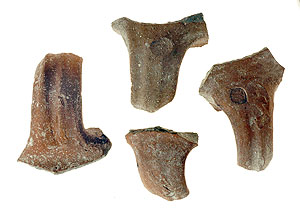
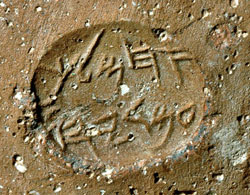
Considering the limited area of the excavation and the rural nature of the structure that was revealed, the excavators were surprised to discover in it so many royal seal impressions that date to the reign of Hezekiah, King of Judah (end of the eighth century BCE). Four “LMLK” type impressions were discovered on handles of large jars that were used to store wine and oil in royal administrative centers. These were found together with the seal impressions of two high ranking officials named Ahimelekh ben Amadyahu and Yehokhil ben Shahar, who served in the kingdom’s government. The Yehokhil seal was stamped on one of the LMLK impressions before the jar was fired in a kiln and this is a very rare instance in which two such impressions appear together on a single handle.


Another Hebrew inscription, 600 years later than the seal impressions of the Kingdom of Judah, was discovered on a fragment of a jar neck that dates to the Hasmonean period. An alphabetic sequence was engraved with a thin iron stylus below the vessel’s rim in Hebrew script that is characteristic of the beginning of the Hasmonean period (end of the second century BCE). The letters hay to yod and a small part of the letter kaf were preserved on the sherd. Similar inscriptions bearing alphabetic sequences were discovered in the past, usually on ostraca (inscriptions written in ink on pottery sherds) or engraved on ossuaries (stone receptacles in which human bones were buried). The alphabetic inscription that was discovered in this instance is unique and the significance of it requires further study: was this a “writing exercise” done by an apprentice scribe or should we ascribe it some magical importance?


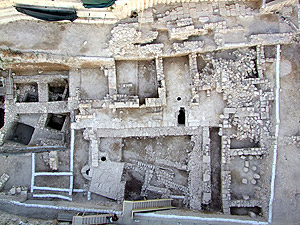
The remains of the large building included several rooms arranged around a courtyard. Pits, agricultural installations and subterranean silos were hewn inside the courtyard. A potter’s kiln, a large columbarium cave in which there is a rock-hewn hiding refuge, pottery vessels, etc were also discovered inside the built complex. The pottery vessels that were recovered from the ruins of the building indicate it first dates to the end of the Iron Age (the First Temple period) in the eighth century BCE. Following its destruction, along with Jerusalem and all of Judah during the Babylonian conquest, Jews reoccupied it in the Hasmonean period (second century BCE) and it existed for another two hundred years until the destruction of the Second Temple. During the Byzantine period the place was reinhabited as part of the extensive rural settlement of monasteries and farmsteads in the region between Jerusalem and Bethlehem.

Some three years ago the impressive remains of a monastery from this period were excavated that together with the remains of the current excavation confirm the identification of the place as “Metofa”, which is mentioned in the writings of the church fathers in the Byzantine period. The name of the Arab village, “Umm Tuba” is therefore a derivation of Byzantine “Metofa”, which is Biblical “Netofa” and is mentioned as the place from which two of David’s heroes originated (2 Samuel 23:28-29).

City of David: Magnificent Roman Building

A spacious edifice from the Roman period (third century CE) – apparently a mansion that belonged to a wealthy individual – was recently exposed in the excavations the Israel Antiquities Authority is carrying out in the 'Givati Car Park' at the City of David, in the Walls Around Jerusalem National Park.


According to Dr. Doron Ben-Ami, the excavation director on behalf of the IAA, together with Yana Tchekhanovets, “Although we do not have the complete dimensions of the structure, we can cautiously estimate that the building covered an area of approximately 1,000 square meters. In the center of it was a large open courtyard surrounded by columns. Galleries were spread out between the rows of columns and the rooms that flanked the courtyard. The wings of the building rose to a height of two stories and were covered with tile roofs”.

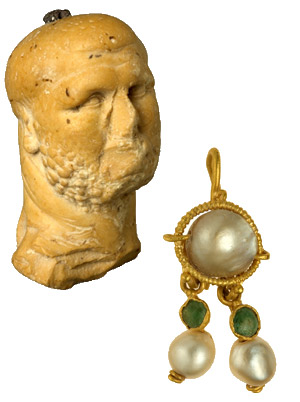
A large quantity of fresco fragments was discovered in the collapsed ruins from which the excavators deduced that some of the walls of the rooms were treated with plaster and decorated with colorful paintings. The painted designs that adorned the plastered walls consisted mostly of geometric and floral motifs. Its architectural richness, plan and particularly the artifacts that were discovered among its ruins bear witness to the unequivocal Roman character of the building. The most outstanding of these finds are a marble figurine in the image of a boxer and a gold earring inlaid with precious stones.


The building, which was constructed during the third century CE, was shaken by a tremor in the fourth century, the results of which are clearly apparently in the excavation area:the walls of the rooms caved-in and their stone collapse, which was piled high, covered the walls of the bottom floor, some of which still stand to a considerable height. Architectural elements such as columns and capitals, as well as mosaics and the large amount of fresco fragments that were used in the rooms of the second story were discovered inside the collapsed ruins. The coins that were discovered among the collapse and on the floors indicated the building’s ruins should be dated to circa 360 CE. It seems that what we have here is archaeological evidence of the results of the earthquake that struck our region in 363 CE.

Dr. Ben-Ami adds, “We know of no other buildings from the Roman period that were discovered in Israel which have a similar plan to that of the building from the City of David. The closest contemporary parallels to this structure are located in sites of the second-fourth century CE that were excavated in Syria. Edifices such as these are “urban mansions” from the Roman period that were discovered in Antioch, Apamea and Palmyra. If this parallel is correct, then in spite of its size and opulence, it seems that this building was used originally as a private residence”.

The exposure of the Roman building in the City of David is a significant contribution to our understanding of the extent of the construction in the Roman city in the third-fourth centuries CE. It constitutes extremely important archaeological evidence regarding the growth of the settlement at the end of the Roman period into the southern precincts of the city, and it shows that the prevailing supposition among scholars according to which the City of David hill remained outside the area of Roman settlement at the time of the Aelia Capitolina is no longer valid.

The Lod Mosaic And Its Builders


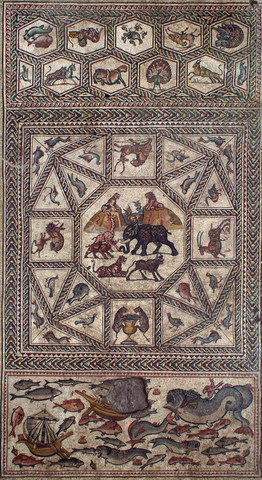
The 1,700 year old mosaic, which is one of the largest and most magnificent ever seen in Israel, was exposed in the city of Lod in 1996. It is a real archaeological gem that is extraordinarily well-preserved. It is c. 180 sq m in size. It is composed of colorful carpets that depict in great detail mammals, birds, fish, floral species, and sailing and merchant vessels that were in use at the time. It is believed the mosaic floor was part of a villa that belonged to a wealthy man in the Roman period.

Recently the conservators were surprised to discover that the builders of the beautiful mosaic left their personal mark there: while working on the plaster bedding which is done before attaching the mosaic, the artisans trod on it wearing sandals and in their bare feet.
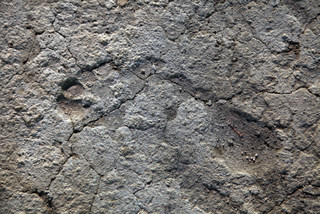


According to Jacques Neguer, head of the IAA Art Conservation Branch, “When removing a section of mosaic it is customary to clean its bedding, and that way study the material from which it is made and the construction stages. We look for drawings and sketches that the artists made in the plaster and marked where each of the tesserae will be placed. This is also what happened with the Lod mosaic: beneath a piece on which vine leaves are depicted, we discovered that the mosaic’s builders incised lines that indicate where the tesserae should be set, and afterwards, while cleaning the layer, we found the imprints of feet and sandals: sizes 34, 37, 42 and 44. At least one imprint of a sole resembles a modern sandal. Based on the concentration of foot and sandal prints it seems that the group of builders tamped the mortar in place with their feet”.


Neguer added, “The mosaic consists of three parts that different artists built, probably in different periods. There are different kinds of art here, and we can see that the hand that affixed the tesserae is different: a trained eye recognizes that the preparation which was done prior to the work is different. Besides the necessary professionalism, exposing the footprints is also the result of a lot of luck. It is not always possible to cut the layers of the mosaic precisely so that we discover such a clear picture of the plaster with the incising on it”.

Neguer states that, “the excitement here was great. It is fascinating to discover a 1,700 year old personal mark of people who are actually like us, who worked right here on the same mosaic. We feel the continuity of generations here”.

The hand and foot prints that were revealed will be removed from the area and will be conserved and returned to the site together with the mosaic, to the Shelby White and Leon Levy Lod Mosaic Archaeological Center.

The conservation of the site in Lod is meant to be a springboard that will boost tourism and a leverage that will alter the image of the city. The mosaic is located in the eastern part of Lod, next to the entrance at Ginnaton Junction. This intersection is easily reached from Ben Gurion Airport and from two of the country’s main highways: Highway 1, which connects Tel Aviv with Jerusalem, and Highway 6, which links the north of the country with the south. The site is situated between two streets: He-HalutzStreet, which leads to the marketplace and Struma Street, which leads to the city’s historic center. The location of the site next to the country’s main transportation arteries makes it highly accessible and will facilitate turning it into a site that is of interest to the entire country. The municipality, in cooperation with the Israel Antiquities Authority, plans to integrate it into a tourism circuit that will include a number of historic sites in the city.