Tuesday, September 15, 2020

Did our early ancestors boil their food in hot springs?


Scientists have found evidence of hot springs near sites where ancient hominids settled, long before the control of fire

MASSACHUSETTS INSTITUTE OF TECHNOLOGY

Research News

Some of the oldest remains of early human ancestors have been unearthed in Olduvai Gorge, a rift valley setting in northern Tanzania where anthropologists have discovered fossils of hominids that existed 1.8 million years ago. The region has preserved many fossils and stone tools, indicating that early humans settled and hunted there.

Now a team led by researchers at MIT and the University of Alcalá in Spain has discovered evidence that hot springs may have existed in Olduvai Gorge around that time, near early human archaeological sites. The proximity of these hydrothermal features raises the possibility that early humans could have used hot springs as a cooking resource, for instance to boil fresh kills, long before humans are thought to have used fire as a controlled source for cooking.

"As far as we can tell, this is the first time researchers have put forth concrete evidence for the possibility that people were using hydrothermal environments as a resource, where animals would've been gathering, and where the potential to cook was available," says Roger Summons, the Schlumberger Professor of Geobiology in MIT's Department of Earth, Atmospheric, and Planetary Sciences (EAPS).

Summons and his colleagues have published their findings today in the Proceedings of the National Academy of Sciences. The study's lead author is Ainara Sistiaga, a Marie Sklodowska-Curie fellow based at MIT and the University of Copenhagen. The team includes Fatima Husain, a graduate student in EAPS, along with archaeologists, geologists, and geochemists from the University of Alcalá and the University of Valladolid, in Spain; the University of Dar es Salaam, in Tanzania; and Pennsylvania State University.

An unexpected reconstruction

In 2016, Sistiaga joined an archaeological expedition to Olduvai Gorge, where researchers with the Olduvai Paleoanthropology and Paleoecology Project were collecting sediments from a 3-kilometer-long layer of exposed rock that was deposited around 1.7 million years ago. This geologic layer was striking because its sandy composition was markedly different from the dark clay layer just below, which was deposited 1.8 million years ago.

"Something was changing in the environment, so we wanted to understand what happened and how that impacted humans," says Sistiaga, who had originally planned to analyze the sediments to see how the landscape changed in response to climate and how these changes may have affected the way early humans lived in the region.

It's thought that around 1.7 million years ago, East Africa underwent a gradual aridification, moving from a wetter, tree-populated climate to dryer, grassier terrain. Sistiaga brought back sandy rocks collected from the Olduvai Gorge layer and began to analyze them in Summons' lab for signs of certain lipids that can contain residue of leaf waxes, offering clues to the kind of vegetation present at the time.

"You can reconstruct something about the plants that were there by the carbon numbers and the isotopes, and that's what our lab specializes in, and why Ainara was doing it in our lab," Summons says. "But then she discovered other classes of compounds that were totally unexpected."

An unambiguous sign

Within the sediments she brought back, Sistiaga came across lipids that looked completely different from the plant-derived lipids she knew. She took the data to Summons, who realized that they were a close match with lipids produced not by plants, but by specific groups of bacteria that he and his colleagues had reported on, in a completely different context, nearly 20 years ago.

The lipids that Sistiaga extracted from sediments deposited 1.7 million years ago in Tanzania were the same lipids that are produced by a modern bacteria that Summons and his colleagues previously studied in the United States, in the hot springs of Yellowstone National Park.

One specific bacterium, Thermocrinis ruber, is a hyperthermophilic organism that will only thrive in very hot waters, such as those found in the outflow channels of boiling hot springs.

"They won't even grow unless the temperature is above 80 degrees Celsius [176 degrees Fahrenheit]," Summons says. "Some of the samples Ainara brought back from this sandy layer in Olduvai Gorge had these same assemblages of bacterial lipids that we think are unambiguously indicative of high-temperature water."

That is, it appears that heat-loving bacteria similar to those Summons had worked on more than 20 years ago in Yellowstone may also have lived in Olduvai Gorge 1.7 million years ago. By extension, the team proposes, high-temperature features such as hot springs and hydrothermal waters could also have been present.

"It's not a crazy idea that, with all this tectonic activity in the middle of the rift system, there could have been extrusion of hydrothermal fluids," notes Sistiaga, who says that Olduvai Gorge is a geologically active tectonic region that has upheaved volcanoes over millions of years -- activity that could also have boiled up groundwater to form hot springs at the surface.

The region where the team collected the sediments is adjacent to sites of early human habitation featuring stone tools, along with animal bones. It is possible, then, that nearby hot springs may have enabled hominins to cook food such as meat and certain tough tubers and roots.

"Why wouldn't you eat it?"

Exactly how early humans may have cooked with hot springs is still an open question. They could have butchered animals and dipped the meat in hot springs to make them more palatable. In a similar way, they could have boiled roots and tubers, much like cooking raw potatoes, to make them more easily digestible. Animals could have also met their demise while falling into the hydrothermal waters, where early humans could have fished them out as a precooked meal.

"If there was a wildebeest that fell into the water and was cooked, why wouldn't you eat it?" Sistiaga poses.

While there is currently no sure-fire way to establish whether early humans indeed used hot springs to cook, the team plans to look for similar lipids, and signs of hydrothermal reservoirs, in other layers and locations throughout Olduvai Gorge, as well as near other sites in the world where human settlements have been found.

"We can prove in other sites that maybe hot springs were present, but we would still lack evidence of how humans interacted with them. That's a question of behavior, and understanding the behavior of extinct species almost 2 million years ago is very difficult, Sistiaga says. "I hope we can find other evidence that supports at least the presence of this resource in other important sites for human evolution."

Saturday, September 12, 2020

Study confirms widespread literacy in biblical-period kingdom of Judah


Researchers at Tel Aviv University (TAU) have analyzed 18 ancient texts dating back to around 600 BCE from the Tel Arad military post using state-of-the-art image processing, machine learning technologies, and the expertise of a senior handwriting examiner. They have concluded that the texts were written by no fewer than 12 authors, suggesting that many of the inhabitants of the kingdom of Judah during that period were able to read and write, with literacy not reserved as an exclusive domain in the hands of a few royal scribes.

The special interdisciplinary study was conducted by TAU's Dr. Arie Shaus, Ms. Shira Faigenbaum-Golovin, and Dr. Barak Sober of the Department of Applied Mathematics; Prof. Eli Piasetzky of the Raymond and Beverly Sackler School of Physics and Astronomy; and Prof. Israel Finkelstein of the Jacob M. Alkow Department of Archeology and Ancient Near Eastern Civilizations. The forensic handwriting specialist, Ms. Yana Gerber, is a senior expert who served for 27 years in the Questioned Documents Laboratory of the Israel Police Division of Identification and Forensic Science and its International Crime Investigations Unit.

The results were published in PLOS ONE on September 9, 2020.

"There is a lively debate among experts as to whether the books of Deuteronomy, Joshua, Judges, Samuel, and Kings were compiled in the last days of the kingdom of Judah or after the destruction of the First Temple by the Babylonians," Dr. Shaus explains. "One way to try to get to the bottom of this question is to ask when there was the potential for the writing of such complex historical works.

"For the period following the destruction of the First Temple in 586 BC, there is very scant archaeological evidence of Hebrew writing in Jerusalem and its surroundings, but an abundance of written documents has been found for the period preceding the destruction of the Temple. But who wrote these documents? Was this a society with widespread literacy, or was there just a handful of literate people?"

To answer this question, the researchers examined the ostraca (fragments of pottery vessels containing ink inscriptions) writings discovered at the Tel Arad site in the 1960s. Tel Arad was a small military post on the southern border of the kingdom of Judah; its built-up area was about 20,000 square feet and it housed between 20 and 30 soldiers.

"We examined the question of literacy empirically, from different directions of image processing and machine learning," says Ms. Faigenbaum-Golovin. "Among other things, these areas help us today with the identification, recognition, and analysis of handwriting, signatures, and so on. The big challenge was to adapt modern technologies to 2,600-year-old ostraca. With a lot of effort, we were able to produce two algorithms that could compare letters and answer the question of whether two given ostraca were written by two different people."

In 2016, the researchers theorized that 18 of the Tel Arad inscriptions were written by at least four different authors. Combined with additional textual evidence, the researchers concluded that there were in fact at least six different writers. The study aroused great interest around the world.

The TAU researchers then decided to compare the algorithmic methods, which have since been refined, to the forensic approach. To this end, Ms. Gerber joined the team. After an in-depth examination of the ancient inscriptions, she found that the 18 texts were written by at least 12 distinct writers with varying degrees of certainty. She examined the original Tel Arad ostraca at the Israel Museum, the Eretz Israel Museum, the Sonia and Marco Nedler Institute of Archaeology of Tel Aviv University, and the Israel Antiquities Authority's warehouses at Beit Shemesh.

Ms. Gerber explained:

"This study was very exciting, perhaps the most exciting in my professional career. These are ancient Hebrew inscriptions written in ink on shards of pottery, utilizing an alphabet that was previously unfamiliar to me. I studied the characteristics of the writing in order to analyze and compare the inscriptions, while benefiting from the skills and knowledge I acquired during my bachelor's degree studies in classical archaeology and ancient Greek at Tel Aviv University. I delved into the microscopic details of these inscriptions written by people from the First Temple period, from routine issues such as orders concerning the movement of soldiers and the supply of wine, oil, and flour, through correspondence with neighboring fortresses, to orders that reached the Tel Arad fortress from the high ranks of the Judahite military system. I had the feeling that time had stood still and there was no gap of 2,600 years between the writers of the ostraca and ourselves.

"Handwriting is made up of unconscious habit patterns. The handwriting identification is based on the principle that these writing patterns are unique to each person and no two people write exactly alike. It is also assumed that repetitions of the same text or characters by the same writer are not exactly identical and one can define a range of natural handwriting variations specific to each one. Thus, forensic handwriting analysis aims at tracking features corresponding to specific individuals, and concluding whether a single or rather different authors wrote the given documents.

"The examination process is divided into three steps: analysis, comparison, and evaluation. The analysis includes a detailed examination of every single inscription, according to various features, such as the spacing between letters, their proportions, slant, etc. The comparison is based upon the aforementioned features across various handwritings. In addition, consistent patterns,such the same combinations of letters, words, and punctuation, are identified. Finally, an evaluation of identicalness or distinctiveness of the writers is made. It should be noted that, according to an Israel Supreme Court ruling, a person can be convicted of a crime based on the opinion of a forensic handwriting expert."

Dr. Shaus further elaborated:

"We were in for a big surprise: Yana identified more authors than our algorithms did. It must be understood that our current algorithms are of a "cautious" nature -- they know how to identify cases in which the texts were written by people with significantly different writing; in other cases they refrain from definite conclusions. In contrast, an expert in handwriting analysis knows not only how to spot the differences between writers more accurately, but in some cases may also arrive at the conclusion that several texts were actually written by a single person. Naturally, in terms of consequences, it is very interesting to see who the authors are. Thanks to the findings, we were able to construct an entire flowchart of the correspondence concerning the military fortress -- who wrote to whom and regarding what matter. This reflects the chain of command within the Judahite army.

"For example, in the area of Arad, close to the border between the kingdoms of Judah and Edom, there was a military force whose soldiers are referred to as "Kittiyim" in the inscriptions, most likely Greek mercenaries. Someone, probably their Judahite commander or liaison officer, requested provisions for the Kittiyim unit. He writes to the quartermaster of the fortress in Arad "give the Kittiyim flour, bread, wine" and so on. Now, thanks to the identification of the handwriting, we can say with high probability that there was not only one Judahite commander writing, but at least four different commanders. It is conceivable that each time another officer was sent to join the patrol, they took turns."

According to the researchers, the findings shed new light on Judahite society on the eve of the destruction of the First Temple -- and on the setting of the compilation of biblical texts. Dr. Sober explains:

"It should be remembered that this was a small outpost, one of a series of outposts on the southern border of the kingdom of Judah. Since we found at least 12 different authors out of 18 texts in total, we can conclude that there was a high level of literacy throughout the entire kingdom. The commanding ranks and liaison officers at the outpost, and even the quartermaster Eliashib and his deputy, Nahum, were literate. Someone had to teach them how to read and write, so we must assume the existence of an appropriate educational system in Judah at the end of the First Temple period. This, of course, does not mean that there was almost universal literacy as there is today, but it seems that significant portions of the residents of the kingdom of Judah were literate. This is important to the discussion on the composition of biblical texts. If there were only two or three people in the whole kingdom who could read and write, then it is unlikely that complex texts would have been composed."

Prof. Finkelstein concludes:

"Whoever wrote the biblical works did not do so for us, so that we could read them after 2,600 years. They did so in order to promote the ideological messages of the time. There are different opinions regarding the date of the composition of biblical texts. Some scholars suggest that many of the historical texts in the Bible, from Joshua to II Kings, were written at the end of the 7th century BC, very close to the period of the Arad ostraca. It is important to ask who these texts were written for. According to one view, there were events in which the few people who could read and write stood before the illiterate public and read texts out to them. A high literacy rate in Judah puts things into a different light.

"Until now, the discussion of literacy in the kingdom of Judah has been based on circular arguments, on what is written within the Bible itself, for example on scribes in the kingdom. We have shifted the discussion to an empirical perspective. If in a remote place like Tel Arad there was, over a short period of time, a minimum of 12 authors of 18 inscriptions, out of the population of Judah which is estimated to have been no more than 120,000 people, it means that literacy was not the exclusive domain of a handful of royal scribes in Jerusalem. The quartermaster from the Tel Arad outpost also had the ability to read and appreciate them."


To recreate ancient recipes, check out the vestiges of clay pots


Archaeologists find that unglazed ceramic cookware absorbs the chemical residue of present and past meals

UNIVERSITY OF CALIFORNIA - BERKELEY

Research News

IMAGE

IMAGE: SEVEN LA CHAMBA UNGLAZED CERAMIC POTS USED IN A YEARLONG COOKING EXPERIMENT THAT ANALYZED THE CHEMICAL RESIDUES OF MEALS PREPARED. view more 

CREDIT: PHOTO COURTESY OF MELANIE MILLER

If you happen to dig up an ancient ceramic cooking pot, don't clean it. Chances are, it contains the culinary secrets of the past.

A research team led by University of California, Berkeley, archaeologists has discovered that unglazed ceramic cookware can retain the residue of not just the last supper cooked, but, potentially, earlier dishes cooked across a pot's lifetime, opening a window onto the past.

The findings, reported in the journal Scientific Reports, suggest that gastronomic practices going back millennia -- say, to cook Aztec turkey, hominy pozole or the bean stew likely served at the Last Supper -- can be reconstructed by analyzing the chemical compounds adhering to and absorbed by the earthenware in which they were prepared.

"Our data can help us better reconstruct the meals and specific ingredients that people consumed in the past which, in turn, can shed light on social, political and environmental relationships within ancient communities," said study co-lead author Melanie Miller, a researcher at Berkeley's Archaeological Research Facility and a postdoctoral scholar at the University of Otago in New Zealand.

In a yearlong cooking experiment led by Miller and Berkeley archaeologist Christine Hastorf, seven chefs each prepared 50 meals made from combinations of venison, maize (corn) and wheat flour in newly purchased La Chamba ceramic pots. This robust, burnished black clay cookware dates back to pre-Columbian South America, and the handcrafted vessels remain popular for preparing and serving traditional foods today.

The group came up with the idea in Hastorf's Archaeology of Food graduate seminar at Berkeley. By analyzing the chemical residues of the meals cooked in each pot, the researchers sought to learn whether the deposits found in ancient cooking vessels would reflect the remains of only the last dish cooked, or previous meals, as well.

In addition to receiving donated deer roadkill, they purchased large quantities of whole grains and a mill, which Hastorf set up in her garage, to grind them. The group then developed a repertoire of six recipes using deer meat and whole and milled grain.

They picked staple ingredients that could be found in many parts of the world. For example, two recipes focused on hominy, which is made from soaking maize in an alkaline solution, while two others used wheat flour.

"We chose the food based on how easy it would be to distinguish the chemicals in the food from one another and how the pots would react to the isotopic and chemical values of the food," said Hastorf, a Berkeley professor of anthropology who studies food archaeology, among other things.

Each of the seven chefs cooked an experimental meal weekly in a La Chamba pot using the group's designated ingredients. "The mushy meals were bland, and we didn't eat them," Miller noted.

Every eighth meal was charred to replicate the kinds of carbonized residues that archaeologists often encounter in ancient pots and to mimic what would normally happen in a pot's lifetime. Between each meal, the pots were cleaned with water and a branch from an apple tree. Surprisingly, none of them broke during the course of the study.

At Berkeley's Center for Stable Isotope Biogeochemisty, the team conducted an analysis of the charred remains and the carbonized patinas that developed on the pots. Stable isotopes are atoms whose composition does not decay over time, which is useful for archaeological studies. An analysis of the fatty lipids absorbed into the clay cookware was performed at the University of Bristol in England.

Overall, chemical analyses of the food residues showed that different meal time scales were represented in different residues. For example, the charred bits at the bottom of a pot contained evidence of the latest meal cooked, while the remnants of prior meals could be found in the patina that built up elsewhere on the pot's interior and in the lipid residue that was absorbed into the pottery itself.

These results give scientists a new tool to study long-ago diets and also provide clues to food production, supply and distribution chains of past eras.

"We've flung open the door for others to take this experiment to the next level and record even longer timelines in which food residues can be identified," Miller said.

Ancient earthquake may have caused destruction of Canaanite palace at Tel Kabri


Flourishing Canaanite palatial site suddenly abandoned 3,700 years ago; new evidence points to earthquake as probable culprit

GEORGE WASHINGTON UNIVERSITY

Research News

IMAGE

IMAGE: AERIAL VIEW SHOWING THE SOUTHERN STORAGE COMPLEX (SSC), THE NORTHERN STORAGE COMPLEX (NSC; BLUE DASHED BOX) AND THE TRENCH (RED DASHED LINES) view more 

CREDIT: ERIC CLINE/GW

WASHINGTON (Sept. 11, 2020)--A team of Israeli and American researchers funded by grants from the National Geographic Society and the Israel Science Foundation has uncovered new evidence that an earthquake may have caused the destruction and abandonment of a flourishing Canaanite palatial site about 3,700 years ago.

The group made the discovery at the 75-acre site of Tel Kabri in Israel, which contains the ruins of a Canaanite palace and city that dates back to approximately 1900-1700 B.C. The excavations, located on land belonging to Kibbutz Kabri in the western Galilee region, are co-directed by Assaf Yasur-Landau, a professor of Mediterranean archaeology at the University of Haifa, and Eric Cline, a professor of classics and anthropology at the George Washington University.

"We wondered for several years what had caused the sudden destruction and abandonment of the palace and the site, after centuries of flourishing occupation," Yasur-Landau said. "A few seasons ago, we began to uncover a trench which runs through part of the palace, but initial indications suggested that it was modern, perhaps dug within the past few decades or a century or two at most. But then, in 2019, we opened up a new area and found that the trench continued for at least 30 meters, with an entire section of a wall that had fallen into it in antiquity, and with other walls and floors tipping into it on either side."

According to Michael Lazar, the lead author of the study, recognizing past earthquakes can be extremely challenging in the archaeological record, especially at sites where there isn't much stone masonry and where degradable construction materials like sun-dried mud bricks and wattle-and-daub were used instead. At Tel Kabri, however, the team found both stone foundations for the bottom part of the walls and mud-brick superstructures above.

"Our studies show the importance of combining macro- and micro-archaeological methods for the identification of ancient earthquakes," he said. "We also needed to evaluate alternative scenarios, including climatic, environmental and economic collapse, as well as warfare, before we were confident in proposing a seismic event scenario."

The researchers could see areas where the plaster floors appeared warped, walls had tilted or been displaced, and mud bricks from the walls and ceilings had collapsed into the rooms, in some cases rapidly burying dozens of large jars.

"It really looks like the earth simply opened up and everything on either side of it fell in," Cline said. "It's unlikely that the destruction was caused by violent human activity because there are no visible signs of fire, no weapons such as arrows that would indicate a battle, nor any unburied bodies related to combat. We could also see some unexpected things in other rooms of the palace, including in and around the wine cellar that we excavated a few years ago."

In 2013, the team discovered 40 jars within a single storage room of the palace during an expedition also supported by a National Geographic Society grant. An organic residue analysis conducted on the jars indicated that they held wine; it was described at the time as the oldest and largest wine cellar yet discovered in the Near East. Since then, the team has found four more such storage rooms and at least 70 more jars, all buried by the collapse of the building.

"The floor deposits imply a rapid collapse rather than a slow accumulation of degraded mud bricks from standing walls or ceilings of an abandoned structure," Ruth Shahack-Gross, a professor of geoarchaeology at the University of Haifa and a co-author on the study, said. "The rapid collapse, and the quick burial, combined with the geological setting of Tel Kabri, raises the possibility that one or more earthquakes could have destroyed the walls and the roof of the palace without setting it on fire."

The investigators are hopeful that their methodological approach can be applied at other archaeological sites, where it can serve to test or strengthen cases of possible earthquake damage and destruction.


Wednesday, September 9, 2020

Ancient hunters stayed in frozen Northern Europe rather than migrating to warmer area


Ancient hunters stayed in the coldest part of Northern Europe rather than migrating to escape freezing winter conditions, archaeologists have found.
Evidence from Arctic fox bones show communities living around 27,500 years ago were killing small prey in the inhospitable North European Plains during the winter months of the last Ice Age.
Researchers have found no evidence of dwellings, suggesting people only stayed for a short time or lived in tents in the area excavated, KrakĂłw Spadzista in Southern Poland -- one of the largest Upper Palaeolithic sites in Central Europe. Until now it wasn't clear if people retreated elsewhere each winter to avoid the intense cold.
Dr Alexander Pryor, from the University of Exeter, who led the study, said: "Our research shows the cold harsh winter climates of the last ice age were no barrier to human activity in the area. Hunters made very specific choices about where and when to kill their prey."
Inhabitants of KrakĂłw Spadzista around 27,500 years ago killed and butchered large numbers of woolly mammoths and arctic foxes at the site. For the first time, the research team were able to reconstruct details of how the foxes were moving around in the landscape before they died, and also what time of the year they died, through analysing the internal chemistry and growth structures of their tooth enamel and roots.
The analysis of teeth from four of the 29 hunted foxes show each was born and grew up in a different location, and had migrated either tens or hundreds of kilometres to the region before being killed by hunters -- by snares, deadfalls or other trapping methods -- for both their thick warm furs as well as meat and fat for food. The carcasses were brought back to the site to be skinned and butchered.
Analysis of the dental cementum of at least 10 fox individuals demonstrate that the majority were killed between late winter and late spring, most likely in late winter. The foxes ranged in age, from sub-adult to very old.
The study, published in the Journal of Archaeological Science: Reports, also involved Sylwia PospuĹ‚a, Piotr Wojtal, Nina Kowalik and JarosĹ‚aw WilczyĹ„ski from the Polish Academy of Sciences and Tereza NesnĂ­dalová from the University of Exeter.
Around 2,400 arctic fox bones were found about 30m south of a huge concentration of bones from more than 100 individual woolly mammoths that dominate the site, in an area used for the production of lithic tools and the processing of smaller prey animals.
The study suggests the Arctic fox colonised the area because they moved over long distances season by season, something they still do today, in order to find food.
Dr Pryor said: "Arctic fox provided both food and hides to Palaeolithic hunters, with their fur coats reaching full length around the beginning of December; this winter fur usually begins shedding by early spring. They also lay down substantial stores of body fats seasonally that are greatest from late autumn throughout the winter season and do not start to become seriously depleted until early spring. Hunters most likely targeted the foxes in the late winter period -- before the onset of fur shedding and loss of critical fat supplies.
"The high numbers of fox remains found at the site suggests what was happening was a deliberate, organised procurement strategy rather than just simple incidental hunting."
The analysis of teeth suggests hunters engaged in large-scale winter hunting of solitary Arctic foxes that were ranging widely across the landscape. The site was used as a base camp for ranging visits to maintain trapping lines and for processing hides.
Krakow Spadzista was one of the most northerly sites in central Europe during the Late Gravettian when much of the northern plains region had already been abandoned. Mean annual temperature was between −1.0 °C and +4.3 °C.

Tuesday, September 8, 2020

Latest Archaelogy Reports


Neanderthals

The oldest Neanderthal DNA of Central-Eastern Europe

Jonathan Kantrowitz at Archaeology News Report - 59 minutes ago
[image: IMAGE] IMAGE: AERIAL VIEW OF STAJNIA CAVE. view more CREDIT: MARCIN ?ARSKI Around 100,000 years ago, the climate worsened abruptly and the environment of Central-Eastern Europe shifted from forested to open steppe/taiga habitat, promoting the dispersal of wooly mammoth, wooly rhino and other cold adapted species from the Arctic. Neanderthals living in these territories suffered severe demographic contractions due to the new ecological conditions and only returned to the areas above 48° N latitude during climatic ameliorations. However, in spite of the discontinuous settlemen... more »

How Neanderthals adjusted to climate change

Jonathan Kantrowitz at Archaeology News Report - 1 week ago
German-Italian research project investigates different cutting tools from the Sesselfelsgrotte cave. UNIVERSITY OF ERLANGEN-NUREMBERG SHARE PRINT E-MAIL Climate change occurring shortly before their disappearance triggered a complex change in the behaviour of late Neanderthals in Europe: they developed more complex tools. This is the conclusion reached by a group of researchers from Friedrich-Alexander-Universität Erlangen-NĂĽrnberg (FAU) and UniversitĂ  degli Studi die Ferrara (UNIFE) on the basis of finds in the Sesselfelsgrotte cave in Lower Bavaria. Neanderthals lived approxi... more »

DNA from an ancient, unidentified ancestor was passed down to humans living today

Jonathan Kantrowitz at Archaeology News Report - 4 weeks ago
New algorithm suggests that early humans and related species interbred early and often PLOS SHARE PRINT E-MAIL A new analysis of ancient genomes suggests that different branches of the human family tree interbred multiple times, and that some humans carry DNA from an archaic, unknown ancestor. Melissa Hubisz and Amy Williams of Cornell University and Adam Siepel of Cold Spring Harbor Laboratory report these findings in a study published 6th August in *PLOS Genetics*. Roughly 50,000 years ago, a group of humans migrated out of Africa and interbred with Neanderthals in Eurasia. B... more »
 
Israel

Magnificent remains of a royal structure from the time of the Kings of Judah

Jonathan Kantrowitz at Archaeology News Report - 1 day ago
Who was privileged to live in the monumental structure possessing a breathtaking view of the City of David and the Temple, which was uncovered in an archeological excavation on the Armon Hanatziv (Commissioner's Palace, also known as Governor's House) Promenade? Was it one of the Kings of Judah, or was it perhaps a Jerusalemite family of nobility and wealth during the First Temple period? A rare, impressive, and very special collection of several dozen adorned architectural stone artifacts, which together were part of a magnificent structure, was discovered in the Antiquities Autho... more

3,200-year-old fort, site of epic battles in biblical era, found in south Israel

Jonathan Kantrowitz at Archaeology News Report - 2 weeks ago
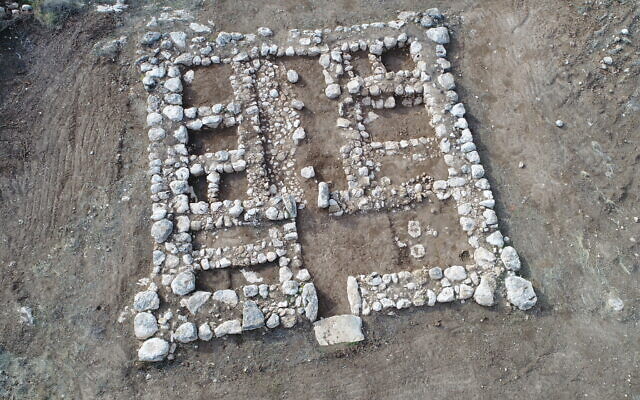
[image: A 3,200-year-old citadel unearthed near Guvrin Stream and Kibbutz Gal On, August 2020. (Emil Aladjem/Israel Antiquities Authority)] A 3,200-year-old citadel unearthed near Guvrin Stream and Kibbutz Gal On, August 2020. (Emil Aladjem/Israel Antiquities Authority) A 3,200-year-old Canaanite citadel where epic battles were fought during biblical times has been unearthed near the southern Israeli city of Kiryat Gat, the Israel Antiquities Authority (IAA) announced Sunday. The 12th century BCE fort next to Kibbutz Gal On and the Guvrin Stream, some 70 kilometers (40 miles) south of... more »
 

A seal and a seal impression discovered in the City of David bears witness to the restoration of the city in the period of Ezra and Nehemiah

Jonathan Kantrowitz at Archaeology News Report - 4 weeks ago
Revealed in archaeological excavations by the Israel Antiquities Authority and Tel Aviv University in the Givati Parking Lot Excavation of the City of David, in the Jerusalem Walls National Park The new findings may indicate that despite the plight of Jerusalem after the destruction of the First Temple, efforts were made to restore the stature of the administrative authorities. The impression depicts a man sitting on a large chair - probably a king - and in front of his columns. The findings will be displayed tomorrow (Wednesday) at the 5th "Jerusalem Days" conference of Yad Ben-... more »

Megalithic Structures in the Golan and the Galilee Reveal Rock Art of a Mysterious Ancient Culture

Jonathan Kantrowitz at Archaeology News Report - 4 weeks ago
*A new study presents, for the first time, ancient rock art discovered recently in the Yehudiya Nature Reserve. The rock art, over 4,200 years old, is engraved on the walls of megalithic burials called "dolmens." In an article recently published, Israel Antiquities Authority and Tel-Hai College researchers report on four different sites where dolmen builders engraved artistic motifs on the walls of the enormous structures they erected, opening a window to the mysterious culture of the ancient builders.* Millions of visitors to the Yehudiya Nature Reserve have no idea that their fo... more »

A significant administrative storage center from the days of Kings Hezekiah and Menashe uncovered in Jerusalem near the US Embassy

Jonathan Kantrowitz at Archaeology News Report - 4 weeks ago
*Over 120 seal impressions stamped on jars found in the Arnona neighborhood of Jerusalem provide a sneak-peek into tax collection in the period of the Judean monarchs. * *The excavations in Arnona, conducted by the Israel Antiquities Authority, were funded by the Israel Land Authority and administrated by the Moriah Jerusalem Development Corporation and revealed one of the largest and most important collections of seal impressions uncovered in Israel. The impressions were stamped with the letters "LMLK" (to the King) written in ancient Hebrew script and the name of an ancient city i... more »

A 1,300-year old church, apparently part of a monastery, was uncovered in the village of Kfar Kama, near Mount Tabor

Jonathan Kantrowitz at Archaeology News Report - 4 weeks ago
*The church was discovered in Kfar Kama, in archaeological excavations carried out by the Israel Antiquities Authority, in collaboration with the Kinneret Academic College and local volunteers * The discovery in the Galilee excited the Head of the Greek Catholic Church in Israel, who personally came to visit the site * The excavation was conducted before the construction of a playground, at the initiative of the Kfar Kama Local Council and the Jewish National Fund.* A 1,300year-old church, with ornate mosaic floors, was recently revealed in an excavation in the Circassian village of... more »
 
Americas

Drone survey reveals large earthwork at ancestral Wichita site in Kansas

Jonathan Kantrowitz at Archaeology News Report - 5 days ago
Results show possible council circle at what may be Etzanoa near Wichita DARTMOUTH COLLEGE Research News SHARE PRINT E-MAIL [image: IMAGE] IMAGE: LEFT: DRONE-ACQUIRED ORTHOIMAGE OF THE SITE SHOWING MAJOR FEATURES DISCUSSED IN THE PAPER. RIGHT: THERMAL IMAGES MOSAIC COLLECTED FROM 11:15 PM-12:15 AM. (IMAGES FROM FIGURE 6 OF THE STUDY).... view more CREDIT: IMAGES BY JESSE CASANA, ELISE JAKOBY LAUGIER, AND AUSTIN CHAD HILL. A Dartmouth-led study using multisensor drones has revealed a large circular earthwork at what may be Etzanoa, an archaeological site near Wichita, Kansas. Arc... more »
 

Analysis of ancient Mesoamerican sculptures supports universality of emotional expressions

Jonathan Kantrowitz at Archaeology News Report - 2 weeks ago
Universal facial expressions uncovered in art of the ancient Americas: A computational approach AMERICAN ASSOCIATION FOR THE ADVANCEMENT OF SCIENCE SHARE PRINT E-MAIL An analysis of facial expressions in ancient Mesoamerican sculptures finds that some emotions expressed in these artworks match the emotions that modern U.S. participants would anticipate for each discernible context, including elation, sadness, pain, anger, and determination or strain. For instance, elation was predicted in the context of social touch while anger was predicted in the context of combat. The result... more »


Ancient shell llama offering found in lake Titicaca

Jonathan Kantrowitz at Archaeology News Report - 5 weeks ago
PENN STATE SHARE PRINT E-MAIL [image: IMAGE] IMAGE: STONE BOX WITH CARVED SHELL LLAMA AND ROLLED GOLD FOIL view more CREDIT: TEDDY SEQUIN A llama carved from a spondylus shell and a cylindrical laminated gold foil object were the contents of a carved stone box -- an offering -- found at the bottom of Lake Titicaca, according to researchers from Penn State and the UniversitĂ© libre de Bruxelles, Belgium. The offering, found near an island in the lake, was not located where others had found offerings in the past. "We knew they (Inca) did some form of ritual offerings and that they... more »
 
Asia

How climate change led to fall of ancient civilization

Jonathan Kantrowitz at Archaeology News Report - 5 days ago
SHARE PRINT E-MAIL [image: IMAGE] IMAGE: THIS FIGURE SHOWS THE SETTLEMENTS OF THE INDUS VALLEY CIVILIZATION DURING DIFFERENT PHASES OF ITS EVOLUTION. RIT ASSISTANT PROFESSOR NISHANT MALIK DEVELOPED A MATHEMATICAL METHOD THAT SHOWS CLIMATE CHANGE LIKELY... view more CREDIT: RIT A Rochester Institute of Technology researcher developed a mathematical method that shows climate change likely caused the rise and fall of an ancient civilization. In an article recently featured in the journal *Chaos: An Interdisciplinary Journal of Nonlinear Science*, Nishant Malik, assistant prof... more »

Ancient mammoth ivory carving technology reconstructed by archeologists

Jonathan Kantrowitz at Archaeology News Report - 1 week ago
SIBERIAN FEDERAL UNIVERSITY SHARE PRINT E-MAIL [image: IMAGE] IMAGE: A TEAM OF ARCHEOLOGISTS FROM SIBERIAN FEDERAL UNIVERSITY AND NOVOSIBIRSK STATE UNIVERSITY PROVIDED A DETAILED RECONSTRUCTION OF A TECHNOLOGY THAT WAS USED TO CARVE ORNAMENTS AND SCULPTURES FROM MAMMOTH IVORY.... view more CREDIT: LBOVA L. / 2020, ARCHAEOLOGICAL RESEARCH IN ASIA A team of archeologists from Siberian Federal University and Novosibirsk State University provided a detailed reconstruction of a technology that was used to carve ornaments and sculptures from mammoth ivory. The team studied a string ...more »
 
Near East

Vast stone monuments constructed in Arabia 7,000 years ago

Jonathan Kantrowitz at Archaeology News Report - 1 week ago
FULL STORY ------------------------------ In a new study published in *The Holocene*, researchers from the Max Planck Society in Jena together with Saudi and international collaborators, present the first detailed study of 'mustatil' stone structures in the Arabian Desert. These are vast structures made of stone piled into rectangles, which are some of the oldest large-scale structures in the world. They give insights into how early pastoralists survived in the challenging landscapes of semi-arid Arabia. The last decade has seen rapid development in the archaeology of Saudi Arabia. R... more »

Cremation in the Middle-East dates as far back as 7,000 B.C.

Jonathan Kantrowitz at Archaeology News Report - 3 weeks ago
Cremated remains from Israel signify a 7th-millennium cultural shift in funeral practices PLOS SHARE PRINT E-MAIL [image: IMAGE] IMAGE: PICTURE OF BONES IN SITU: A. SEGMENT OF AXIAL SKELETON: RIBS AND VERTEBRAE EXPOSED IN THE MIDDLE OF THE STRUCTURE. B. RIGHT COXAL IN SITU; PRESERVED ALMOST COMPLETE BY A... view more CREDIT: BOCQUENTIN ET AL, 2020 (PLOS ONE, CC BY) Ancient people in the Near East had begun the practice of intentionally cremating their dead by the beginning of the 7th millennium BC, according to a study published August 12, 2020 in the open-access journal *PLOS... more »
 

Evidence of the path of modern humans leaving Africa 100,000 years ago, was discovered in Dimona

Jonathan Kantrowitz at Archaeology News Report - 4 weeks ago
*Local youths working with the Israel Antiquities Authority uncovered the Stone Age site during the summer * This is the first place in Israel where in situ evidence has been found of the particular stone knapping technology used by humans who left Africa * The discovery was revealed in an archeological excavation facilitating the construction of a solar energy field and was underwritten by the Israel Electric Company* Recent excavations conducted by the Israel Antiquities Authority together with local youths from Dimona, in preparation for the construction of a solar energy field ... more »
 

Native American stone tool technology found in Arabia

Jonathan Kantrowitz at Archaeology News Report - 4 weeks ago
CNRS SHARE PRINT E-MAIL [image: IMAGE] IMAGE: STONE FLUTED POINTS DATING BACK SOME 8,000 TO 7,000 YEARS AGO, WERE DISCOVERED ON ARCHAEOLOGICAL SITES IN MANAYZAH, YEMEN AND AD-DAHARIZ, OMAN. UNTIL NOW, THE PREHISTORIC TECHNIQUE OF FLUTING HAD... view more CREDIT: © JÉRÉMIE VOSGES / CNRS Stone fluted points dating back some 8,000 to 7,000 years ago, were discovered on archaeological sites in Manayzah, Yemen and Ad-Dahariz, Oman. Spearheads and arrowheads were found among these distinctive and technologically advanced projectile points. Until now, the prehistoric technique of ... more »
Europe

Lactose tolerance spread throughout Europe in only a few thousand years

Jonathan Kantrowitz at Archaeology News Report - 5 days ago
Palaeogeneticists at Mainz University have found evidence of lactase persistence in only a small proportion of human bones from the Bronze Age battlefield in the Tollense valley JOHANNES GUTENBERG UNIVERSITAET MAINZ Research News SHARE PRINT E-MAIL [image: IMAGE] IMAGE: BRONZE AGE SKULL IN SITU IN THE TOLLENSE VALLEY. view more CREDIT: PHOTO/©: STEFAN SAUER/TOLLENSE VALLEY PROJECT The human ability to digest the milk sugar lactose after infancy spread throughout Central Europe in only a few thousand years. This is the conclusion reached by an international research team led by J... more »
 

Bronze Age tradition of keeping human remains

Jonathan Kantrowitz at Archaeology News Report - 6 days ago
SHARE PRINT E-MAIL [image: IMAGE] IMAGE: UNIQUE PRONGED BRONZE OBJECT FROM THE WILSFORD G58 BURIAL FOUND ALONGSIDE THE HUMAN BONE MUSICAL INSTRUMENT. view more CREDIT: WILTSHIRE MUSEUM, COPYRIGHT UNIVERSITY OF BIRMINGHAM/DAVID BUKACHIT Using radiocarbon dating and CT scanning to study ancient bones, researchers have uncovered for the first time a Bronze Age tradition of retaining and curating human remains as relics over several generations. While the findings, led by the University of Bristol and published in the journal *Antiquity*, may seem eerie or even gruesome by today's c... more »

Helminth infections common in Medieval Europe

Jonathan Kantrowitz at Archaeology News Report - 1 week ago
PRINT E-MAIL [image: IMAGE] IMAGE: PHOTOMICROGRAPH OF A TRICHURIS TRICHIURA EGG FROM AN ARCHAEOLOGICAL DEPOSIT. view more CREDIT: ADRIAN SMITH AND PATRIK FLAMMER, UNIVERSITY OF OXFORD, UK Although helminth infections--including tapeworms and roundworms--are among the world's top neglected diseases, they are no longer endemic in Europe. However, researchers reporting in *PLOS Neglected Tropical Diseases* report that these infections were common in Medieval Europe, according to grave samples analyzed from across the continent. Helminths are parasitic worms and they infect an estimate... more »

Atlantic sturgeon in the king's pantry -- unique discovery in Baltic sea wreck from 1495

Jonathan Kantrowitz at Archaeology News Report - 1 week ago
Researchers at Lund University in Sweden can now reveal what the Danish King Hans had planned to offer when laying claim to the Swedish throne in 1495: a two-metre-long Atlantic sturgeon. The well-preserved fish remains were found in a wreck on the bottom of the Baltic Sea last year, and species identification was made possible through DNA analysis. At midsummer in 1495, the Danish King Hans was en route from Copenhagen to Kalmar, Sweden, on the royal flagship Gribshunden. Onboard were the most prestigious goods the Danish royal court could pr... more »
 

Medieval texts reveal false Royal Navy origins

Jonathan Kantrowitz at Archaeology News Report - 2 weeks ago
FLINDERS UNIVERSITY SHARE PRINT E-MAIL Alfred the Great, King of Wessex from 871 and King of the Anglo-Saxons from 886 to 899, is widely touted as establishing England's first Royal fleet but research led by Flinders Medieval Studies PhD candidate Matt Firth has found evidence that the Anglo-Saxons' first recorded naval victory occurred 20 years before Alfred was crowned King of Wessex and 24 years before his first recorded naval victory. The research - Kingship and Maritime Power in 10th?Century England, by Matthew Firth and Erin Sebo - has been published in the *International... more »

Syphilis may have spread through Europe before Columbus

Jonathan Kantrowitz at Archaeology News Report - 2 weeks ago
Syphilis is a sexually transmitted disease -- and while commonly dismissed due to the availability of modern treatments, it is in fact spreading at an alarming rate: Over the last decades, more than 10 million people around the world have been infected with the syphilis subspecies pallidum of the Treponema pallidum bacteria. Other treponematoses, such as yaws and bejel, are caused by other subspecies of Treponema pallidum. The origins of syphilis, which wreaked havoc in Europe from the late 15th to the 18th century, are still unclear. The most popular hypothesis so far holds Christo... more »

Remains of 17th century bishop support neolithic emergence of tuberculosis

Jonathan Kantrowitz at Archaeology News Report - 3 weeks ago
Bishop Peder Winstrup of Lund, Sweden passed away in the winter of 1679 at the age of 74 and was interred in a crypt at Lund Cathedral; three centuries later, his astonishingly well-preserved remains provide insights to the origins of tuberculosis MAX PLANCK INSTITUTE FOR THE SCIENCE OF HUMAN HISTORY SHARE PRINT E-MAIL [image: IMAGE] IMAGE: PORTRAIT OF BISHOP PEDER JENSEN WINSTRUP view more CREDIT: ORF3US / CC BY-SA (HTTPS://CREATIVECOMMONS.ORG/LICENSES/BY-SA/3.0) When Anthropologist Caroline Arcini and her colleagues at the Swedish Natural Historical Museum discovered small cal... more »
 
 
Africa

New neural network differentiates Middle and Late Stone Age toolkits

Jonathan Kantrowitz at Archaeology News Report - 1 week ago
By analyzing the tool forms that frequently occur together, researchers have developed a neural network that reliably distinguishes between Middle and Later Stone Age assemblages MAX PLANCK INSTITUTE FOR THE SCIENCE OF HUMAN HISTORY SHARE PRINT E-MAIL [image: IMAGE] IMAGE: MIDDLE AND LATER STONE AGE POPULATIONS INHABITED A VARIETY OF LANDSCAPES PRESENT IN EASTERN AFRICA, SUCH AS THE OPEN SAVANNAHS IN THE OMO BASIN OR TROPICAL COASTAL FORESTS AT PANGA... view more CREDIT: LEFT: M. GROVE; RIGHT: J. BLINKHORN MSA toolkits first appear some 300 thousand years ago, at the same time a... more »
 

Humans prepared beds to sleep on right at the dawn of our species -- over 200 000 years ago

Jonathan Kantrowitz at Archaeology News Report - 3 weeks ago
UNIVERSITY OF THE WITWATERSRAND SHARE PRINT E-MAIL [image: IMAGE] IMAGE: BORDER CAVE IN THE LEBOMBO MOUNTAINS. PANORAMA FROM DRONE IMAGES. A. KRUGER view more CREDIT: A. KRUGER Researchers in South Africa's Border Cave, a well-known archaeological site perched on a cliff between eSwatini (Swaziland) and KwaZulu-Natal in South Africa, have found evidence that people have been using grass bedding to create comfortable areas for sleeping and working on at least 200 000 years ago. These beds, consisting of sheaves of grass of the broad-leafed Panicoideae subfamily were placed near... more »
 
Australia

Australian Indigenous banana cultivation found to go back over 2,000 years

Jonathan Kantrowitz at Archaeology News Report - 3 weeks ago
Findings help dispel the view that Australia's first peoples were 'only hunter gatherers' AUSTRALIAN NATIONAL UNIVERSITY SHARE PRINT E-MAIL [image: IMAGE] IMAGE: ANCIENT BANANA CULTIVATION SITE AT WAGADAGAM, MABUYAG ISLAN, TORRES STRAITview more CREDIT: ANU Archaeologists at The Australian National University (ANU) have found the earliest evidence of Indigenous communities cultivating bananas in Australia. The evidence of cultivation and plant management dates back 2,145 years and was found at Wagadagam on the tiny island of Mabuyag in the western Torres Strait. The site compr... more »