Thursday, May 29, 2025

A sweeping study of 7,000 years of monuments in South Arabia


Structures played key role in preserving social connections

P

Ohio State University

Platform monument 

image: 

Researchers look over the remains of a platform monument, the largest type of monument studied. They were generally created in a single session, by multiple individuals.

view more 

Credit: The Ohio State University

COLUMBUS, Ohio – New research brings together 7,000 years of history in South Arabia to show how ancient pastoralists changed placement and construction of monuments over time in the face of environmental and cultural forces.


In a study published today (May 28, 2025) in PLOS One, an international team of archaeologists documents how monuments changed as the climate transitioned from a humid environment to, eventually, an arid desert.


Early monuments were built by larger groups at one time. But as people dispersed with the increasingly drier climate, smaller groups began constructing monuments and eventually built many of them in several visits.


“The findings show that monuments are a flexible technology that reflect the resilience of desert pastoralists in the face of a changing climate,” said Joy McCorriston, lead author of the study and professor of anthropology at The Ohio State University.


But the key role that these monuments played in people’s lives remained a constant.


“These monuments are touchstones for human social belonging,” McCorriston said.


“As these groups became smaller and more spread out in the desert, people’s interactions with the monuments consolidates a sense of being part of a larger society.”


The research team analyzed 371 archaeological monuments in the arid Dhofar region of Oman. The earliest monuments studied were created from 7500 to 6200 BP (years Before Present) in the Holocene Humid Period. This period was characterized by higher-than-modern rainfall in southern Arabia.


The most recent monuments studied were created from 1100-750 BP, during the Late Antiquity when the area had become a desert.


While examples of most of the monuments and archaeological sites had previously been studied and classified, that research was generally very time- and place-specific, McCorriston said.


“What we’ve done is take a holistic look and show how all these individual monuments were part of a larger story of how the monuments changed as the lives of the people changed over thousands of years,” she said.


The researchers did this by looking at a standard set of observations for all the monuments and developing a model that could be used in other contexts and places around the world.


For example, the model may be applicable and adaptable to assess social resilience in regions such as Saharan, Mongolian, or the high Andes.


One of the key measurements the researchers made was the volume and size of stones used in construction of the monuments. The earliest-built monuments in the study were Neolithic platforms, which contained larger stones. They were the largest monuments studied and were built at one time.


“The significance of the larger stones is that it takes more people to lift them.  We know that it took at least seven strong men to lift the largest stones,” McCorriston said.


“These large monuments that were built in one episode could only be built early on, before the region became arid. This is when large groups of people could still come together at one time.”


Some of these larger monuments could serve large gatherings of people, where they could converge with multiple herds of cattle, and have animal sacrifices and feasts.


As the region became more arid and could no longer support large numbers of people nor their coming together, small groups traveled widely, going to where they could find water and places for their animals to graze.


They still had to build monuments in one episode, such as for burials, but by this time they tended to be smaller and use smaller stones, the researchers found.


What became more common were what are called accretive monuments, which people built over time – sometimes many years – rather than in one episode, like the earlier platform monuments.


One example of such monuments is accretive triliths. The higher number of triliths, along with the smaller stone volumes with few heavy stones, are consistent with monuments built over time by smaller, dispersed groups in an era of hyper-aridity.


These accretive monuments functioned as touchstones, allowing pastoralists to maintain connections and social resilience even as their movements and populations became more dispersed.


“In many cases, they were building a memory. They come to a monument and add their piece, which was a replicated element of the whole. It helped people maintain a community, even with those they may rarely see,” she said.


It is impossible to say what were the precise messages the monuments were meant to convey, according to McCorriston. “What we can say is that the monuments conveyed readable meanings to others who shared the same cultural context.”


It is possible, though, that some monuments were built to assure others in a social network access to important environmental information as they came by later.


“People would need to know, did it rain here last year? Did the goats eat all the grass? Pastoralists used this technology to help absorb the risk of being in an inherently variable and risky environment,” she said. And they would need to depend on social networks for livestock exchanges, marriage partners, and rare materials, like sea shells, carnelian and agate and metal.


“That is one of the key points of what we found. Our model highlights a reliance on monuments to preserve connections and adapt socially in a changing world.”


Other Ohio State co-authors on the study were Lawrence Ball, Ian Hamilton, Matthew Senn and Abigail Buffington. Other co-authors were Michael Harrower of Johns Hopkins University; Sarah Ivory of Penn State University; Tara Steimer-Herbet of the Université de Genève, Geneva, Switzerland; and ‘Ali Ahmad Al-Kathiri and ‘Ali Musalam Al-Mahri of the Ministry of Heritage and Tourism, Salalah, Sultanate of Oman.

Excavating life on the medieval Mongolian frontier


The Hebrew University of Jerusalem

Grave inside the garrison 

image: 

Grave inside the garrison

view more 

Credit: Credit: Gideon Shelach-Lavi

New archaeological findings along a little-known medieval wall in eastern Mongolia reveal that frontier life was more complex than previously believed. Excavations show evidence of permanent habitation, agriculture, and cultural exchange, suggesting that these walls were not solely defensive structures but part of a broader system of regional control and interaction during the Jin dynasty.


Link to pictures and video: https://drive.google.com/drive/folders/1krCqKwVHzMIA-EaU7AhES47HikEgElmp?usp=sharing


A team of international archaeologists led by Professor Gideon Shelach-Lavi of the Department of Asian Studies at the Hebrew University of Jerusalem has uncovered new insights into life along one of Asia’s most enigmatic medieval frontiers. Their findings, recently published in the journal Antiquity, focus on a little-known section of the Medieval Wall System and reveal that the main function of this section was not military defense. In fact, excavation reviled that in this part of the Medieval Wall System there was now standing linear wall but only a relatively shallow trench that starched over 300 km long.  Researchers now believe that the main function of this line, that included also walled forts, was managing movement of nomadic populations, controlling local unrest, regulating trade, marking territory, and shaping regional interactions.


The Medieval Wall System is a vast network of trenches, earthen walls, and fortified enclosures constructed between the tenth and thirteenth centuries across parts of Mongolia, China, and Russia. Despite its impressive scale, many segments remain poorly understood. Since 2018, the collaborative research project The Wall: People and Ecology in Medieval Mongolia and China based in the Hebrew university—funded by the European Research Council—has worked to map, excavate, and interpret these monumental features. The 2023 field season focused on the Mongolian Arc, a remote frontier zone running through Mongolia’s Sukhbaatar and Dornod provinces parallel to the current border with China.


“Our goal was not only to understand how these walls were built, but to uncover what life was like for the people who lived near them,” explained Professor Shelach-Lavi. “This goes beyond military history—it’s about reconstructing everyday experiences on the edges of imperial power.”

The team’s excavation centered on a fortified enclosure known as MA03 in Sukhbaatar Province, dated by radiocarbon analysis to the period of the Jin dynasty (twelfth to thirteenth century). Although traditionally thought to serve defensive purposes, the shallow trench near MA03 lacked a substantial wall, suggesting that it functioned more as a territorial marker or checkpoint than a military barrier. Within the enclosure, the researchers uncovered stone architecture, an advanced heating system, and a range of artifacts—including animal bones, pottery, iron tools, and a broken iron plough. These remains point to a permanent settlement engaged in herding, hunting, and agriculture, challenging the common perception of the region as exclusively nomadic. The heating system, similar to those found in medieval China and Korea, further suggests cultural exchange and adaptation to Mongolia’s severe winters.

One of the most striking discoveries was a mid-fifteenth-century burial inserted long after the enclosure had been abandoned. The grave, which contained well preserved textiles, wooden objects, and metal artifacts, was dug directly into the collapsed remains of the enclosure wall.

“This tells us that even centuries later, the site still held meaning,” said Professor Shelach-Lavi. “It remained visible in the landscape and may have been remembered—or even revered—by later communities.”

The findings contribute to a growing body of research suggesting that ancient frontier walls across Eurasia served not just military ends, but also administrative and symbolic functions. In the context of Mongolia—long associated with mobile pastoralism—the study reveals a more complex and adaptable way of life.

“Our research reminds us to look beyond capital cities and royal courts,” said Professor Shelach-Lavi. “People lived, worked, traded, and built communities along these borderlands.

Understanding their lives helps us understand the broader dynamics that shaped Eurasian history.”

Learn more: https://www.the-wall-huji.com/the-mongolian-arc

Wednesday, May 28, 2025

Oldest whale bone tools discovered


Peer-Reviewed Publication

Universitat Autonoma de Barcelona

Excavations in 2022 in the Basque cave of Isturitz, France 

image: 

 Excavations in 2022 in the Basque cave of Isturitz, France, where several dozen whale bone objects were discovered. Picture: Jean-Marc Pétillon 

Excavation director (to be credited): Christian Normand 

view more 

Credit: Picture: Jean-Marc Pétillon

Humans were making tools from whale bones as far back as 20,000 years ago, according to a study conducted by scientists from the Institute of Environmental Science and Technology of the Universitat Autònoma de Barcelona (ICTA-UAB), the French National Centre for Scientific Research (CNRS), and the University of British Columbia. This discovery broadens our understanding of early human use of whale remains and offers valuable insight into the marine ecology of the time. 

Whales, the largest animals on Earth, were an important source of food and materials such as oil and bone. For this reason, they are believed to have played a key role in the survival of many coastal human groups. However, tracing the origins of human-whale interactions is challenging, as coastal archaeological sites are especially fragile and vulnerable to rising sea levels, making it difficult to preserve evidence of early human-marine mammal relationships. 

 The research, led by Jean-Marc Pétillon (CNRS) along with ICTA-UAB scientist Krista McGrath and published in Nature Communications, analyzes 83 bone tools excavated from sites around the Bay of Biscay in Spain, along with 90 additional bones from Santa Catalina Cave, also located in the province of Biscay. The authors used mass spectrometry and radiocarbon dating to identify the species and age of the samples. 

“Our study reveals that the bones came from at least five species of large whales, the oldest of which date to approximately 19,000–20,000 years ago. These represent some of the earliest known evidence of humans using whale remains as tools”, says Jean-Marc Pétillon, senior author of the research. 

According to Krista McGrath, leading author of the paper, “ZooMS is a powerful technique for investigating past sea mammal diversity, particularly when diagnostic morphometric elements are missing from bone remains and objects, which is often the case for bone artefacts. We managed to identify species such as sperm whales, fin whales, blue whales, all still present in the Bay of Biscay today, as well as grey whales, a species now mostly restricted to the North Pacific and Arctic Oceans”. 

In addition, chemical data extracted from the bones suggest that the feeding habits of these ancient whales differed slightly from those of their modern counterparts, pointing to potential changes in behavior or the marine environment. Overall, this discovery not only enhances our understanding of early human use of whale remains but also sheds light on the role whales played in past ecosystems. 

Sunday, May 25, 2025

In less than a year: a second gold ring was discovered in the City of David


The small gold ring probably belonged to a boy or girl living in Jerusalem during the Second Temple period about 2,300 years ago* The ring joins other pieces of jewelry from the Early Hellenistic period discovered in this excavation. Researchers of the Israel Antiquities Authority and Tel Aviv University: “This jewelry discovered now was likely buried then in the context of a well-known practice of that period, which symbolized the transition from childhood to adulthood.”

A gold ring set with a red gemstone, approximately 2,300 years old, was discovered in excavations conducted by the Israel Antiquities Authority and Tel Aviv University in the City of David in the Jerusalem Walls National Park, and funded by the Elad Association. This is the second gold ring discovered in less than a year from the same excavation, and from the same period.

The gold ring uncovered. Photo by Eliyahu Yanai, City of David

The gold ring uncovered. Photo by Eliyahu Yanai, City of David

The first gold ring found less than a year ago. Photo: Asaf Pery City of David

The gold ring uncovered. Photo by Eliyahu Yanai, City of David

Rivka lengler, a City of David excavator present when the ring was uncovered, says: “We sifted the dirt through a sieve, right near the excavation area, and suddenly Ben, who works with me, pulls a gold ring out of the dirt. At first, he was sure it must be a modern item dropped by one of our excavators, but when I examined the ring, I immediately assessed it as something ancient. We called over the archaeologists, everyone gathered around us and marveled at the special find; It was very exciting. Already at first glance, you could see its great similarity to the ring discovered in our excavation only a few months ago, just that this one was even smaller. When I held this ring in my hand, I felt part of my history. I felt that I could actually touch and connect with the people who lived here in Jerusalem thousands of years ago.”

The gold ring uncovered in the City of David. Photo: Reut Vilf, City of David

The two rings were discovered within a single year. Photo: Yiftah Shalev, Israel Antiquities Authority

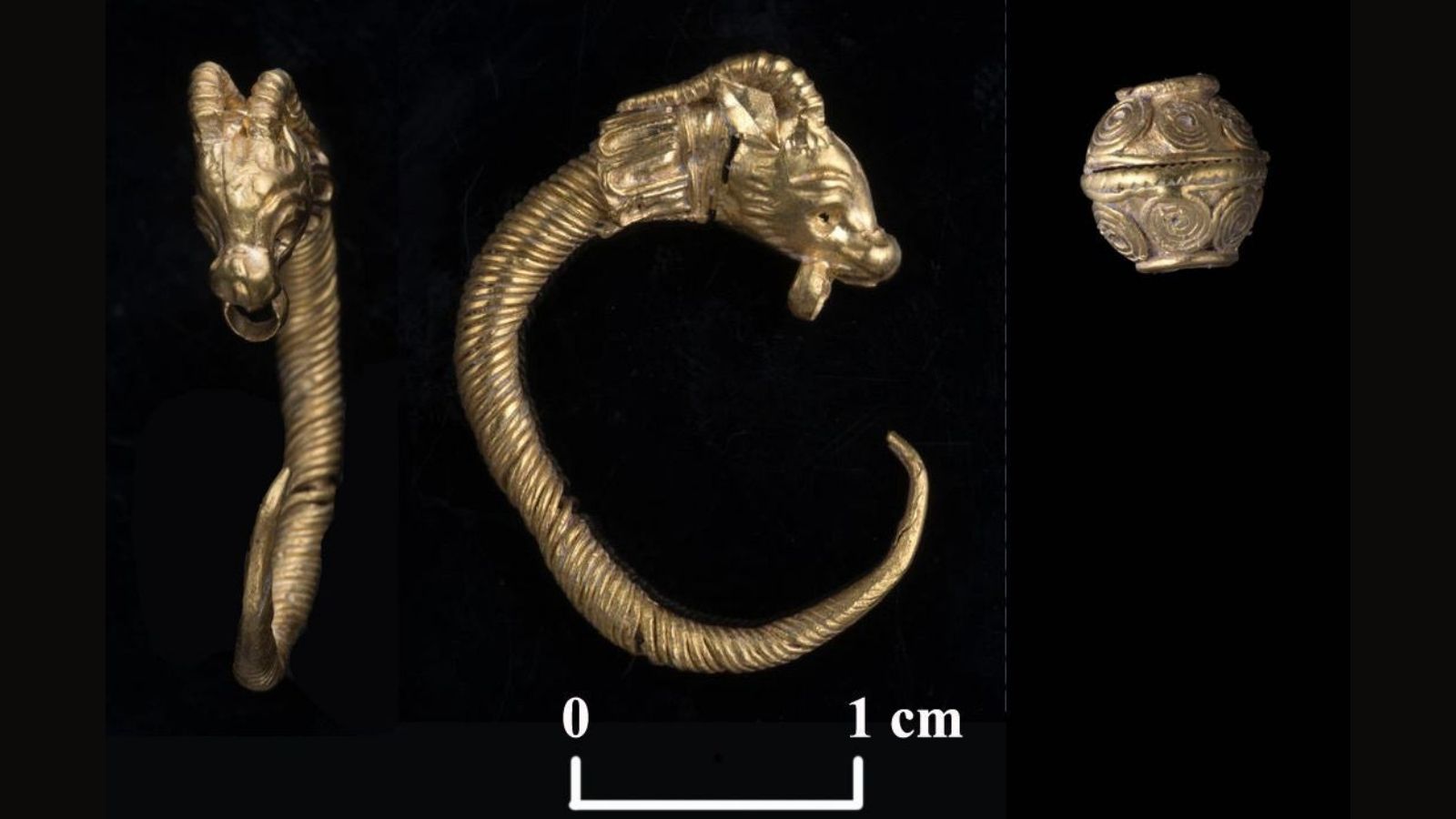
According to the excavation managers, Dr. Yiftah Shalev and Dr. Marion Zindel from the Israel Antiquities Authority, and Efrat Bocher from the Ancient Jerusalem Research Center, and Prof. Yuval Gadot from Tel Aviv University “The two gold rings were discovered in a layer dating to the late 3rd century or early 2nd century BCE, set in the foundations of a large building which bears witness to its occupants’ wealth. In the same stratumin which these rings were unearthed, a number of bronze earrings were also recently found. And it is in this very same stratumthat a gold earring decorated with a horned animal image and a decorated gold bead were also discovered – all dating from the Early Hellenistic period.”

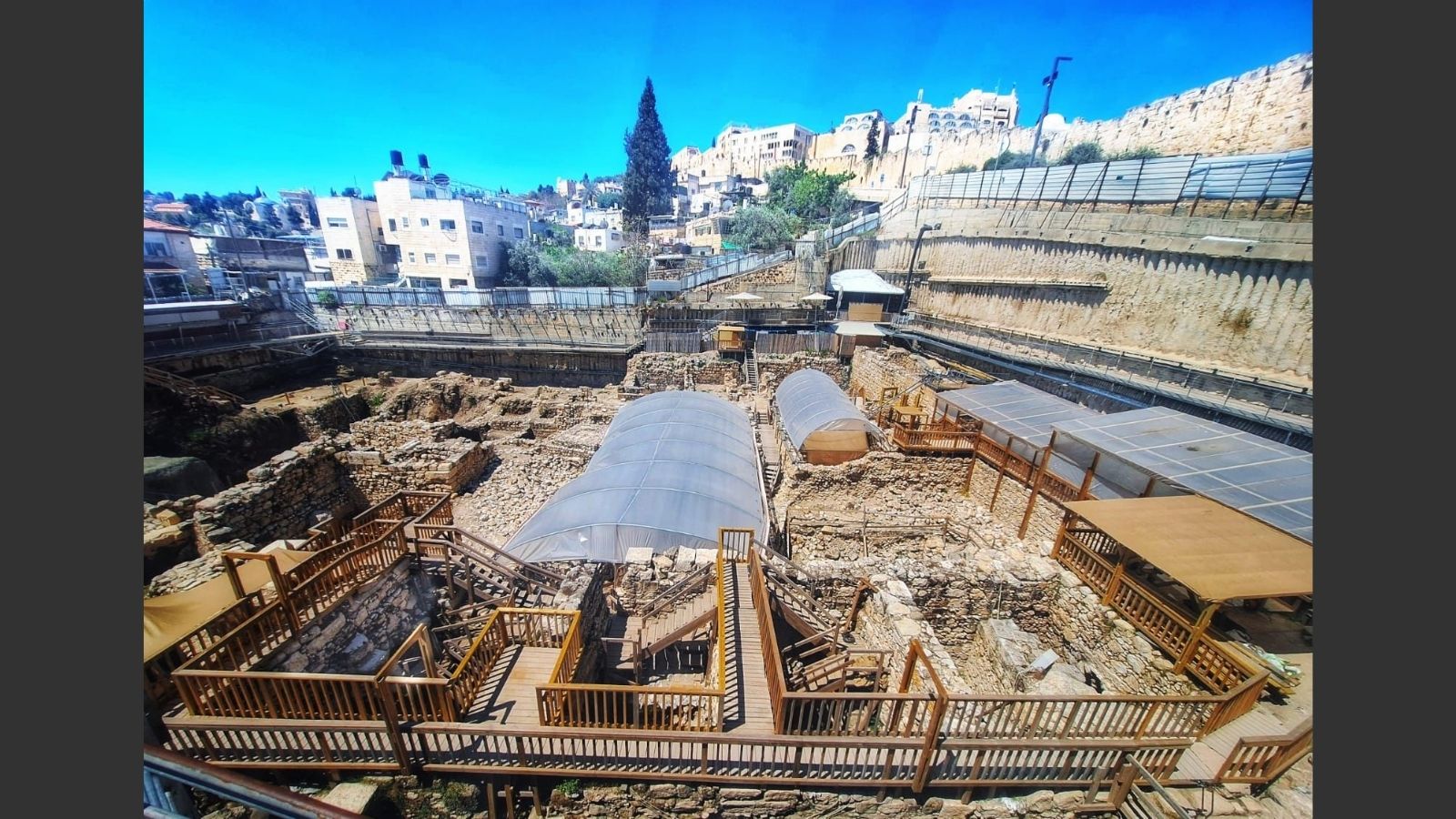
Excavation of the Givati ​​parking lot in the City of David. Photo: Maor Ganot, City of David

The gold earring and gold bead uncovered in the City of David from the same period. Photo: Clara Amit, Israel Antiquities Authority.

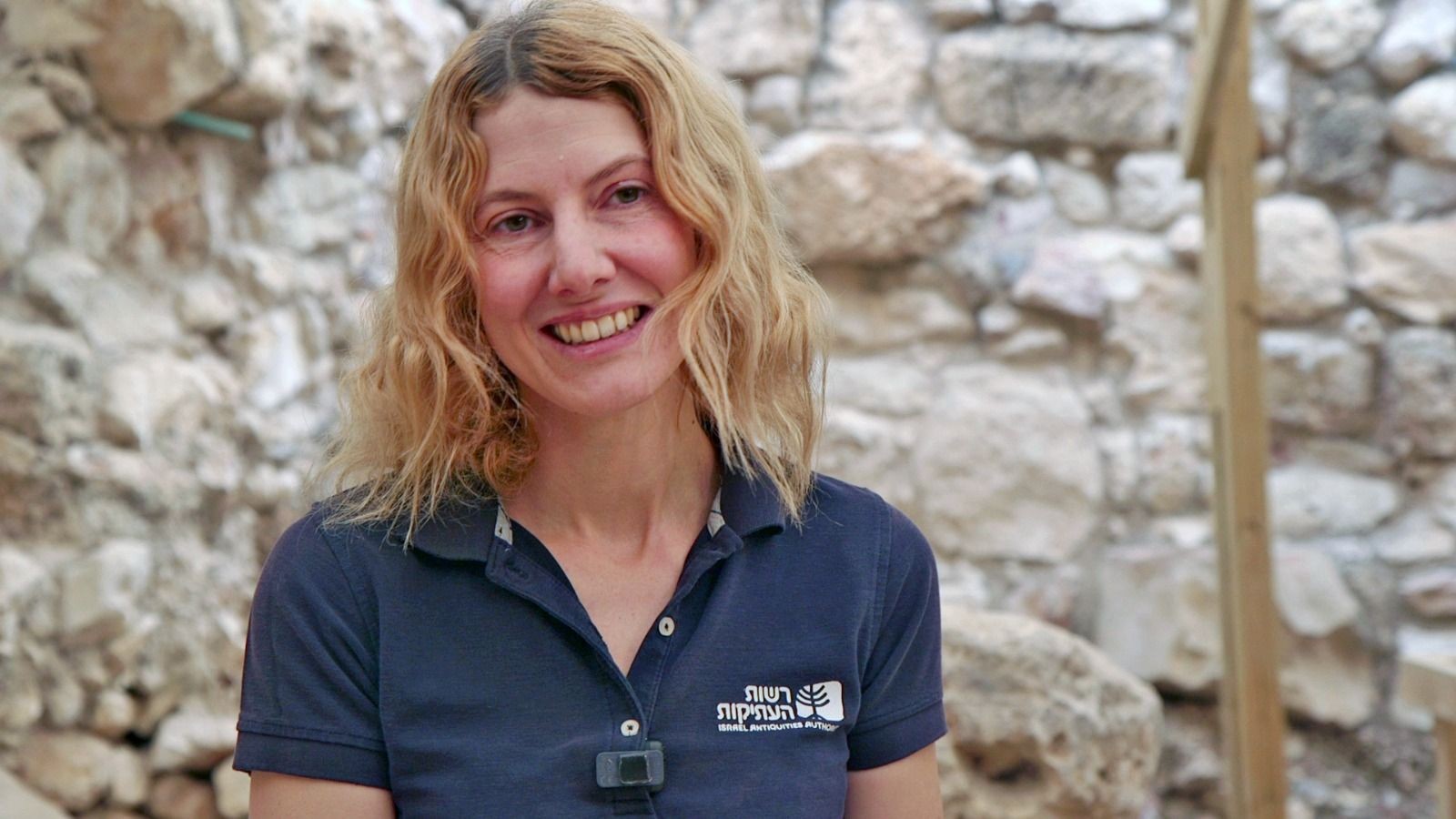
According to Dr. Marion Zindel that conducted the ring’s research, ”That the two small rings and the rest of the jewelry were all discovered under the building’s floors raises the possibility that they were buried there on purpose. One of the possibilities now being examined is that the jewelry found in the building’s foundations was in the context of executing of a well-known Hellenistic period custom in which betrothed women would bury jewelry and other childhood objects in the house foundations as a symbol of the transition from childhood to adulthood.” According to the researchers, “Jewelry that combines gold with brightly colored precious stones, such as the garnet stone, were well-known from this period, in which fashion was influenced by Eastern countries such as India and Persia. These fashionable influences were enabled thanks to Alexander the Great’s conquests, and the consequent trade channels opening with these regions.”

Dr. Marion Zindel. Photo: Emil Aladjem, Israel Antiquities Authority

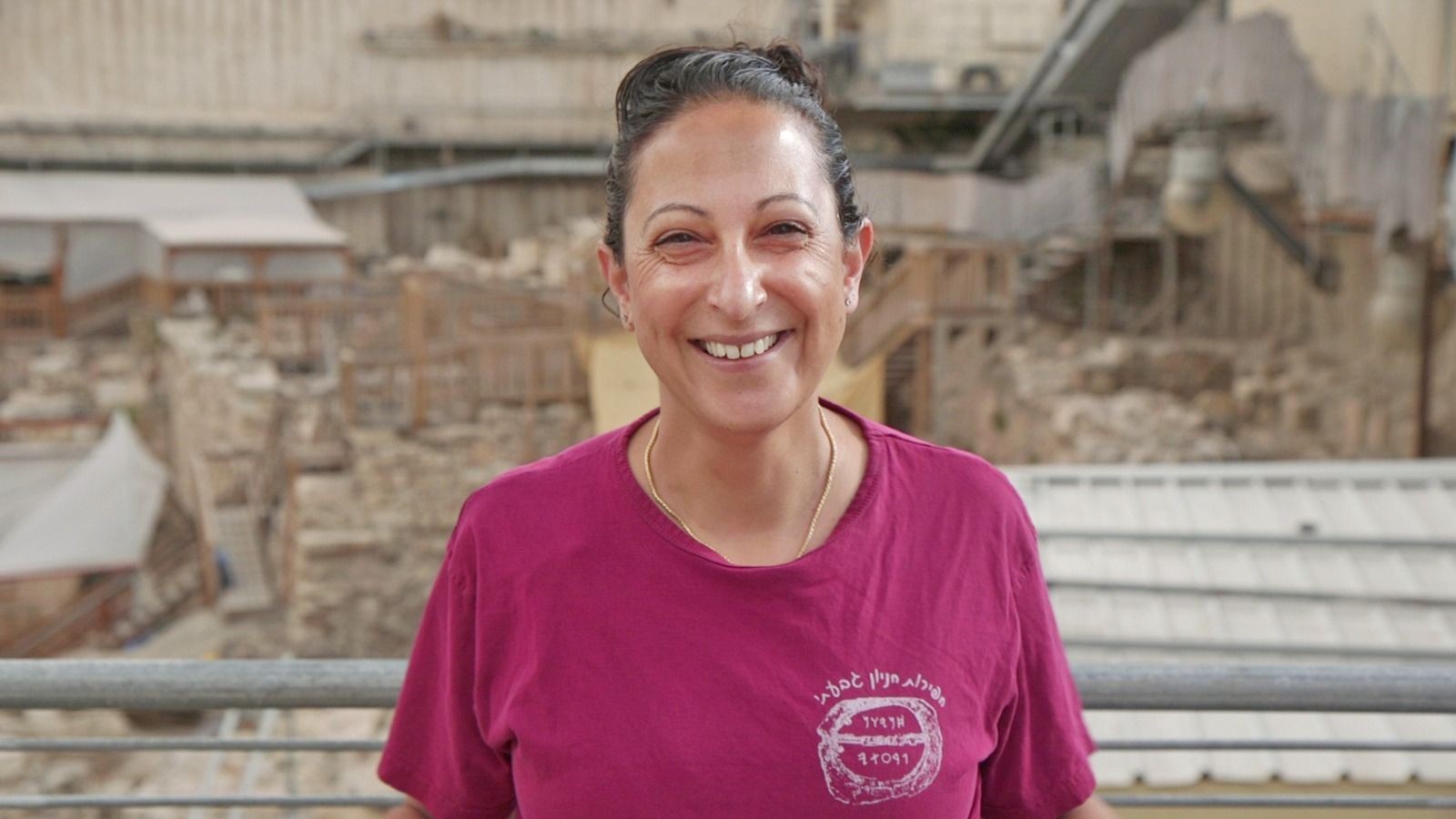
According to Efrat Bocher, one of the excavation managers, “This is the first time that we have found in Jerusalem such a large assemblage of gold jewelry from that period. This displayed wealth is very rare in any archaeological layer, and it attests to the wealth of Jerusalem and the high standard of living of the city's residents during this period.”

Efrat Bocher. Photo: Emil Aladjem, Israel Antiquities Authority

According to Eli Escusido, Director of the Israel Antiquities Authority, “The discovery of the golden rings from the time of the Second Temple in the City of David is tangible evidence of the wealth, beauty and importance of Jerusalem even thousands of years ago. The Israel Antiquities Authority is proud to lead the archaeological research of Jerusalem, and to make accessible to the public the heritage of 'Jerusalem of Gold' – not just as words in a song, but as historical facts uncovered right under our feet.”