Wednesday, April 16, 2025

A little girl discovered a 3,800-years-old Canaanite seal on a family trip near Beit Shemesh


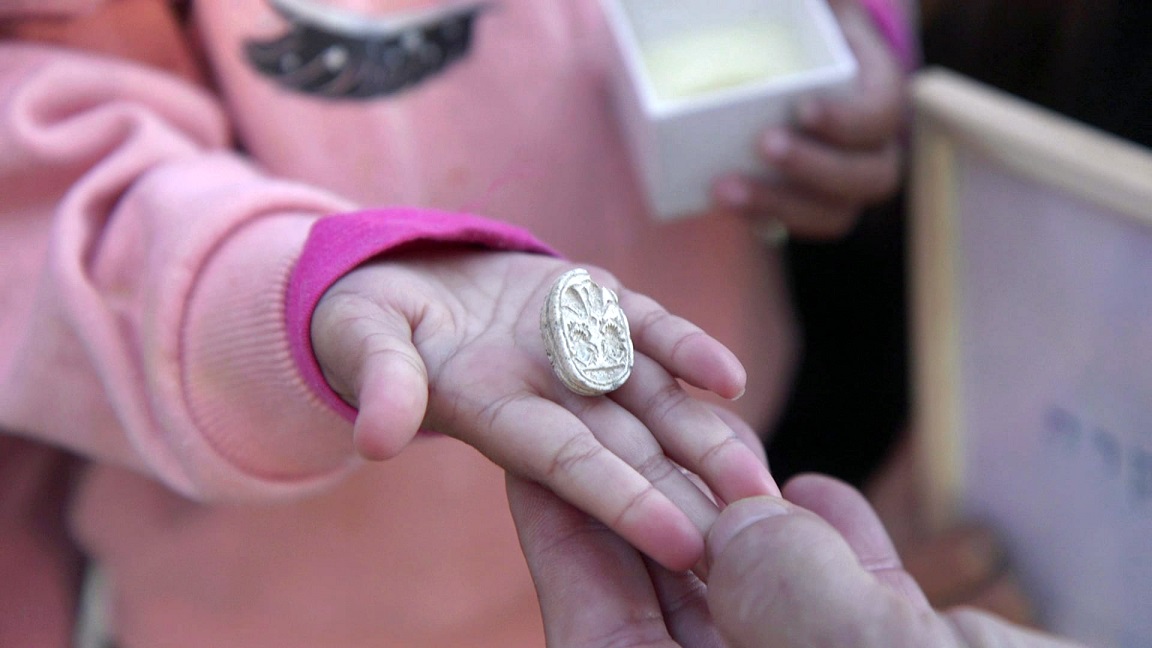
While walking with her family on a trip to Tel Azeka, near Beit Shemesh, 3.5-year-old Ziv Nitzan picked up a stone that turned out to be an ancient seal amulet from the Middle Bronze Age.


Early this past March, during a family trip to Tel Azeka, near Beit Shemesh, 3.5-year-old Ziv Nitzan from Moshav Ramot Meir found an ancient scarab amulet, about 3,800 years old. “We were walking along the path, and then Ziv bent down – and out of all the stones around her, she picked up this particular stone,” recounts Omer Nitzan, Ziv's sister. “When she rubbed it and removed the sand from it, we saw something was different about it. I called my parents to come see the beautiful stone, and we realized we had discovered an archaeological find! We immediately reported this to the Israel Antiquities Authority.”

Semyon Gendler, Judah Region District Archaeologist on behalf of the Israel Antiquities Authority, praised Ziv and her family for reporting the find, and awarded her a certificate of appreciation for good citizenship. The ancient find will be included in a special display for Passover that the Israel Antiquities Authority has prepared at the Jay and Jeanie Schottenstein National Campus for the Archaeology of Israel, alongside other finds from the days of Egypt and Canaan, most of which are being displayed for the first time.
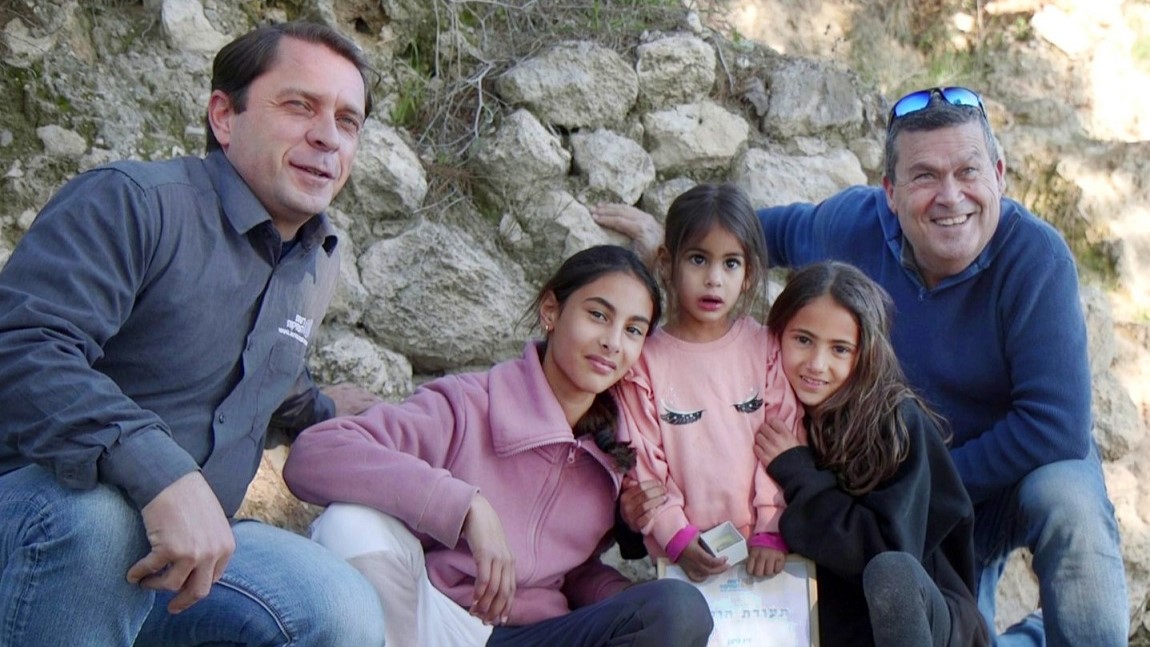
From right to left – Prof. Oded Lipschits, Noga, Ziv and Omer Nitzan, and Semyon Gendler. Photo by Emil Aladjem, Israel Antiquities Authority

The seal in the hand of 3.5-year-old Ziv. Photo by Emil Aladjem, Israel Antiquities Authority

Dr. Daphna Ben-Tor, an expert in ancient amulets and seals, determined that the seal found by Ziv is a Canaanite scarab from the Middle Bronze Age – dating to about 3,800 years ago. She says, “Scarabs were used in this period as seals and as amulets. They were found in graves, in public buildings and in private homes. Sometimes they bear symbols and messages, that reflect religious beliefs or status.”

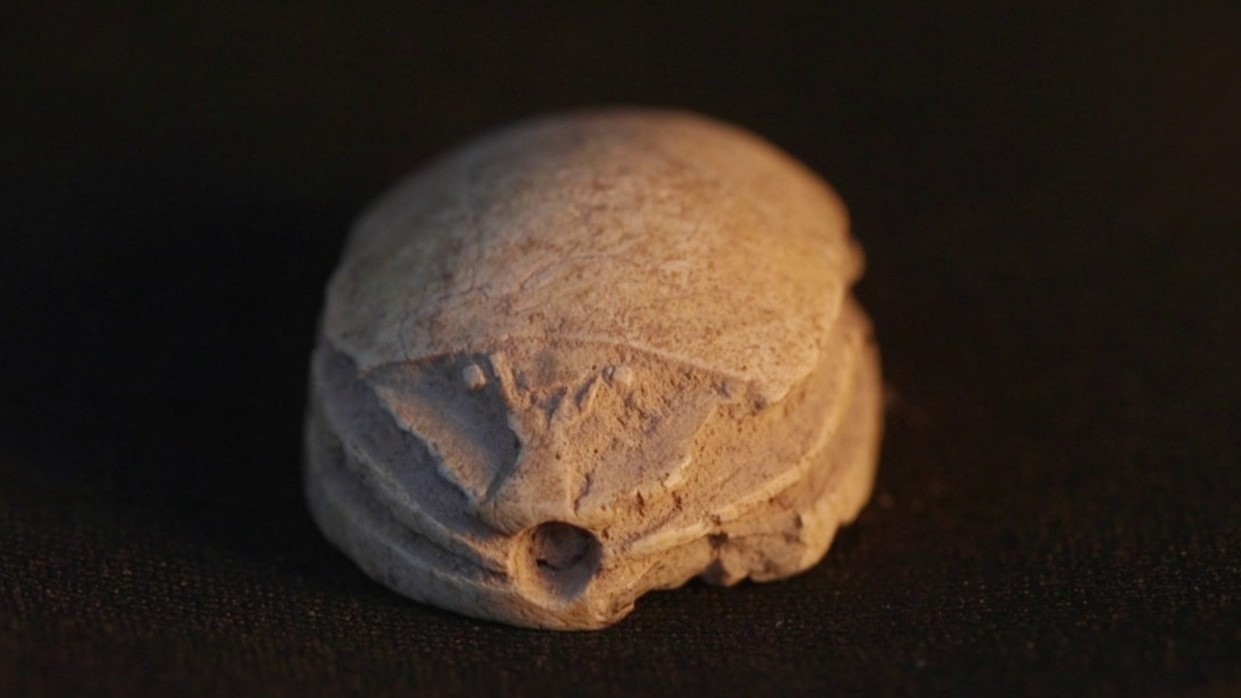
The scarab seals are tiny ornate objects, originating in ancient Egypt and designed in the shape of a dung beetle. This beetle, considered sacred in the eyes of the ancient Egyptians, was a symbol of new life, because of the dung ball it created and then laid its eggs into it, from which new life would hatch. Its name in Egyptian derives from the verb “to come into being”, or “to be created”. This is because the Egyptians saw the scarab as a symbol of the incarnation of God the Creator.
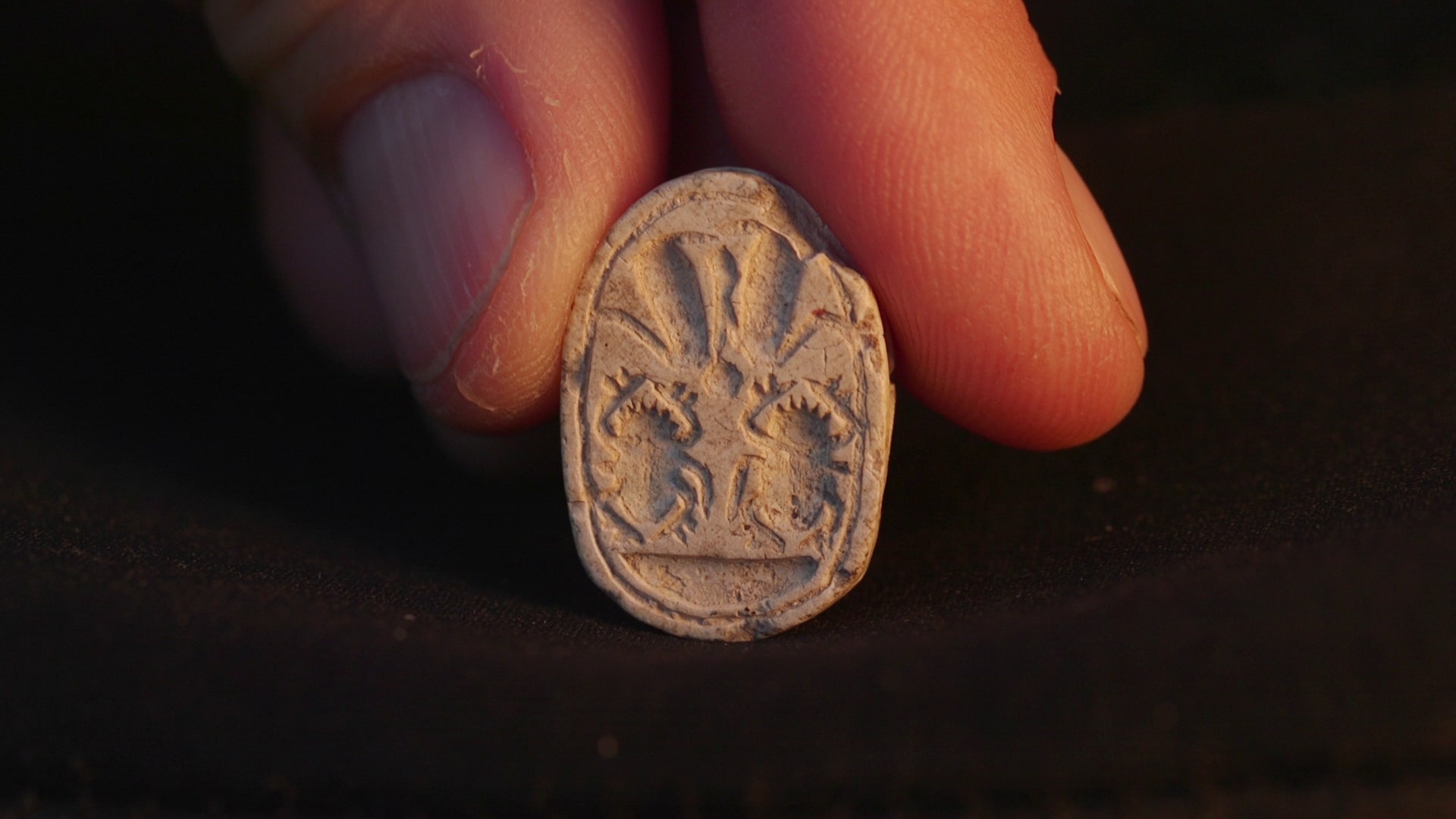
The seal from Tel Azekah. Photo by Emil Aladjem, Israel Antiquities Authority

The back of the seal from Tel Azeka – shaped like a scarab. Photo by Emil Aladjem, Israel Antiquities Authority

The scarab Ziv found was discovered at the foot of Tel Azeka – an important archaeological tel near Beit Shemesh. In this mound, evidence was discovered of many changing cultures over the course of history. Amongst other things, excavations by Tel Aviv University have revealed findings from the days of the Judahite Kingdom, including city walls, agricultural installations, and more. Tel Azekah was also known as a key feature in the biblical battle scene between David and Goliath as described in the Book of Samuel (Samuel I 17:1).

“We have been excavating here for almost 15 years, and the excavation findings show that during the Middle Bronze and Late Bronze Ages, here in Tel Azekah, thrived one of the most important cities in the Judean Lowlands,” says Prof. Oded Lipschits, director of the Tel Aviv University archaeological dig, who even came to meet Ziv and her sisters at the tel. “The scarab found by Ziv joins a long list of Egyptian and Canaanite finds discovered here, which attest to the close ties and cultural influences between Canaan and Egypt during that period.”
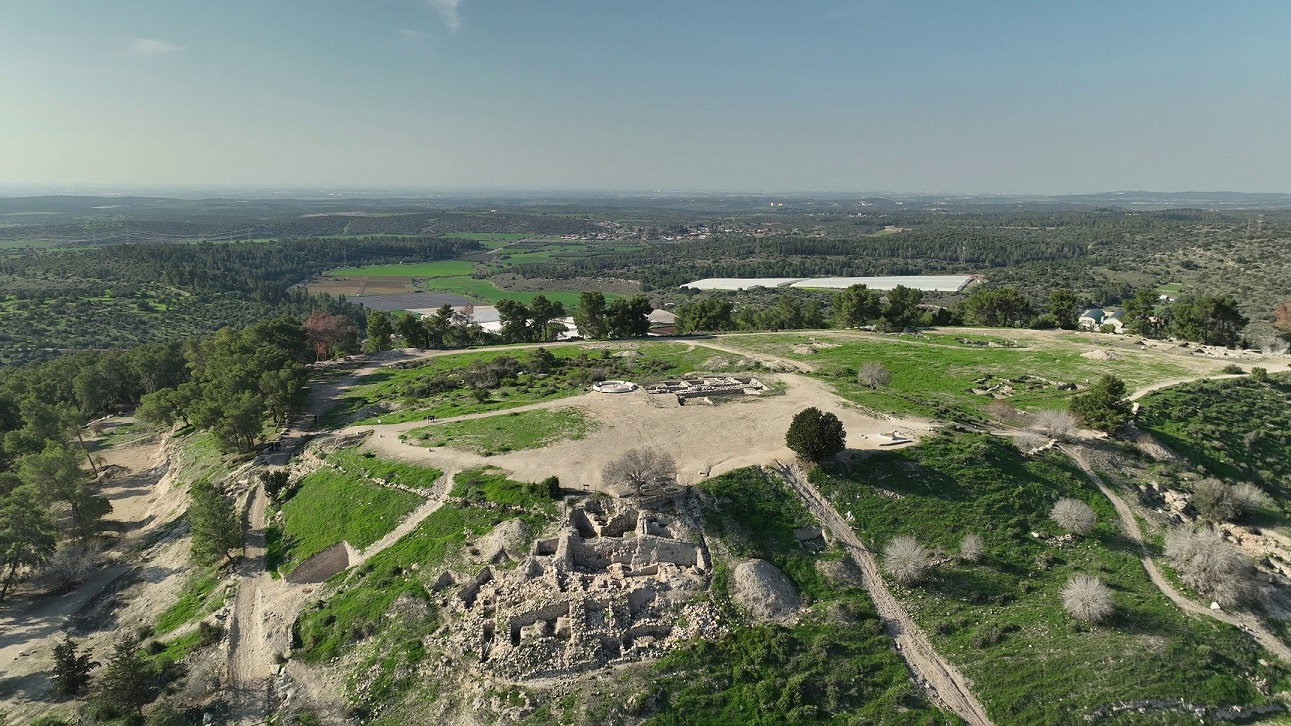
Tel Azekah – aerial view. Photo by Emil Aladjem, Israel Antiquities Authority

According to Israeli Minister of Heritage, Amichai Eliyahu, “The seal that little Ziv found during a family trip to Tel Azekah connects us to a grand story, that of the ancient civilizations that lived in this land thousands of years ago. The scarab Ziv found also reminds us that in the Land of Israel, even children can be a part of discovering history.”

“Ziv, and her family, deserve praise for handing over the find to the National Treasures of the state of Israel,” says Eli Escusido, Director of the Israel Antiquities Authority. “Thanks to her, everyone will be able to see it and enjoy it. In honor of Passover, we will present the seal in a special exhibition set up by the Israel Antiquities Authority at the Jay and Jeanie Schottenstein National Campus for the Archaeology of Israel, alongside other findings from the Egyptian and Canaanite eras. In our public tours we will present impressive items for the first time, including seals of the pharaohs, Egyptian statues, ritual vessels, and evidence of the Egyptian cultural influence in the Land of Israel – and everyone is invited!” Details are found on the Israel Antiquities Authority website

Friday, April 11, 2025

Pleistocene-age Denisovan male identified in Taiwan


A fossil Pleistocene-age hominin jawbone discovered in Taiwan has now been identified as belonging to a Denisovan, according to a new paleoproteomic analysis of the remains. The findings provide direct molecular evidence that Denisovans occupied diverse climates, from the cold Siberian mountains to the warm, humid subtropical latitudes of Taiwan, and offer new morphological insights into this enigmatic hominin lineage. 

Recent research has revealed a surprising variety of ancient human relatives that lived in eastern Asia during the Pleistocene before modern humans arrived. One of the most important discoveries is the Denisovans, a distinct group identified through DNA from fossils in Denisova Cave, Siberia. Studies show that Denisovans were closely related to Neanderthals and interbred with both them and modern humans. However, outside Siberia, direct genetic evidence of Denisovans has only been found on the Tibetan Plateau. While other fossils found across eastern Asia have been proposed as being Denisovan, their classification remains uncertain without molecular confirmation. 

Here, Takumi Tsutaya and colleagues provide paleoproteomic evidence identifying a fossil hominin mandible (Penghu 1) recovered from the Penghu Channel off Taiwan as belonging to a male Denisovan. The Penghu remains, along with various animal fossils, were retrieved through commercial fishing dredging from the seafloor, which was once part of the Asian mainland during lower sea levels in the Pleistocene. 

Using ancient proteomic analysis, Tsutaya et al. extracted proteins from bone and dental enamel from the fossil and retrieved 4,241 amino acid residues, two of which were Denisovan-specific protein variants. According to the authors, these variants are rare in modern human populations but have a higher frequency in regions associated with Denisovan genetic introgression. What’s more, morphological analysis of the Penghu 1 remains reveals a robust jaw structure with large molars, and distinctive root structures, features that align with traits seen in the Tibetan Denisovan specimen, suggesting these traits were characteristic of the lineage and perhaps sex-specific.

Thursday, April 10, 2025

Longest known seafaring venture 8,500 years ago brings hunter-gatherers to Malta before early farmers

Seafaring hunter-gatherers were accessing remote, small islands such as Malta thousands of years before the arrival of the first farmers, a new international study has found.

Published in Nature, the research team – led by Professor Eleanor Scerri of the Max Planck Institute of Geoanthropology (MPI-GEA) and the University of Malta – found hunter-gatherers were crossing at least 100km of open water to reach the Mediterranean island of Malta 8,500 years ago, a thousand years before the arrival of agricultural practises.

This report documented the oldest long-distance seafaring in the Mediterranean, before the invention of boats with sails – an astonishing feat for hunter-gatherers likely using simple dugout canoes.

At the cave site of Latnija in the northern Mellieħa region of Malta, the research team found the traces of humans in the form of their stone tools, hearths, and cooked food waste.

Small, remote islands were long thought to have been the last frontiers of pristine natural systems.

Humans were not thought to have been able to reach or inhabit these environments prior to the dawn of agriculture, and the technological shift that accompanied this transition.

“Even on the longest day of the year, these seafarers would have had over several hours of darkness in open water,” said Professor Nicholas Vella of the University of Malta, co-investigator of the study.

Dr Mathew Stewart, from Griffith University’s Australian Research Centre for Human Evolution, analysed the animal remains from this site as part of the study.

“At the site we recovered a diverse array of animals, including hundreds of remains of deer, birds, tortoises, and foxes.” Dr Stewart said.

“Some of these wild animals were long thought to have gone extinct by this point in time,” added Professor Scerri.

“They were hunting and cooking red deer alongside tortoises and birds, including some that were extremely large and extinct today.”

In addition to this, the team of researchers found clear evidence for the exploitation of marine resources.

“We found remains of seal, various fish, including grouper, and thousands of edible marine gastropods, crabs and sea urchins, all indisputably cooked,” said Dr James Blinkhorn of the University of Liverpool and MPI-GEA, one of the study’s corresponding authors.

“The incorporation of a diverse range of terrestrial and, especially, marine fauna into the diet likely enabled these hunter-gatherers to sustain themselves on an island as small as Malta,” added Dr Stewart.

These discoveries also raised questions about the extinction of endemic animals on Malta and other small and remote Mediterranean islands, and whether distant Mesolithic communities may have been linked through seafaring.

“The results add a thousand years to Maltese prehistory and force a re-evaluation of the seafaring abilities of Europe’s last hunter-gatherers, as well as their connections and ecosystem impacts,” Professor Scerri said.

The findings ‘Hunter-gatherer sea voyages extended to remotest Mediterranean islands’ have been published in Nature.


Ancient tools from a South African cave reveal connections between prehistoric people


In a cave overlooking the ocean on the southern coast of South Africa, archaeologists discovered thousands of stone tools, created by ancient humans roughly 20,000 years ago. By examining tiny details in the chipped edges of the blades and stones, archaeologists are able to tell how the tools were made. In a new study published in the Journal of Paleolithic Archaeology, researchers analyzed these stone tools and discussed how the different techniques used to make them hint at the ways that prehistoric people traveled, interacted, and shared their craft.

“This is an important insight into how people who lived in this region were living and hunting and responding to their environment,” says Sara Watson, a postdoctoral scientist at the Field Museum’s Negaunee Integrative Research Center and lead author of the study.

During the period when these blades were made, between 24,000 and 12,000 years ago, the Earth was nearing the end of the last major ice age. Since so much of the Earth’s water was frozen in glaciers and ice caps, the sea level was lower, and the region that’s now the coast of South Africa was a few miles inland. “Instead of being right on the water like they are today, these caves would have been near vast, open plains with large game animals like antelope,” says Watson. “People hunted those animals, and to do that, they developed new tools and weapons.”

The caves, part of what archaeologists call the Robberg technocomplex, no longer overlook a plain— they're in a towering cliff face over a rocky beach. “It’s a 75-foot climb up to the cave from the shoreline,” says Watson. “We had safety ropes and a staircase made of sandbags, and we had to be harnessed in while doing the excavation.”

Every day, Watson and her colleagues made the climb with all their excavation and photography equipment, weighing up to 50 pounds per person. “Since these are extremely, extremely old sites, from before the end of the last ice age, we had to be very careful with our excavation,” says Watson. “We used little tiny dental tools and mini trowels so that we could remove each little individual layer of sediment.”

Beneath ancient dust and dirt, Watson and her team found thousands of stone tools: small, sharp blades, as well as the larger pieces of rock from which these blades were chipped. The bigger rock that blades are made from is called a core. “When your average person thinks about stone tools, they probably focus on the detached pieces, the blades and flakes. But the thing that is the most interesting to me is the core, because it shows us the particular methods and order of operations that people went through in order to make their tools,” says Watson.

Watson and her colleagues observed several distinct patterns of how the cores had been broken into smaller blades. “In a lot of these technologies, the core reduction is very specific, and it’s something that you are taught and learn, and that’s where the social information is,” says Watson. “If we see specific methods of core reduction at multiple sites across the landscape, as an archaeologist, it tells me that these people were sharing ideas with one another.”

For instance, one particular method of breaking tiny bladelets off of a core that Watson found in the Robberg caves is a style also found hundreds of miles away in places including Namibia and Lesotho. “Same core reduction pattern, same intended product,” says Watson. “The pattern is repeated over and over and over again, which indicates that it is intentional and shared, rather than just a chance similarity.”

Overall, Watson says that the study reveals how much there still is to learn about the Robberg caves and the people who used them thousands of years ago. “We have a very long and rich history as a species, and humans go back a lot farther in time than most people realize,” says Watson. “People living around the last ice age were very similar to people today.”


Painted altar found at Tikal adds new context to mysterious Maya history


A newly discovered altar, buried near the center of the ancient Maya city of Tikal, is shedding new light on the 1,600-year-old tensions between Tikal and the central Mexican capital of Teotihuacan


Just steps from the center of Tikal, a 2,400-year-old Maya city in the heart of modern-day Guatemala, a global team of researchers including scholars from Brown University have unearthed a buried altar that could unlock the secrets of a mysterious time of upheaval in the ancient world.

The altar, built around the late 300s A.D., is decorated with four painted panels of red, black and yellow depicting a person wearing a feathered headdress and flanked by shields or regalia. The face has almond-shaped eyes, a nose bar and a double earspool. It closely resembles other depictions of a deity dubbed the “Storm God” in central Mexico.

In a study released on Tuesday, April 8, in Antiquity, the Brown researchers, along with co-authors from across the United States and Guatemala, argue that the painted altar wasn’t the work of a Maya artist. Instead, they believe it was created by a highly skilled artisan trained at Teotihuacan — the formidable ancient power whose seat was located 630 miles west, outside modern-day Mexico City.

“It’s increasingly clear that this was an extraordinary period of turbulence at Tikal,” said Stephen Houston, a professor of social science, anthropology, and history of art and architecture at Brown, who co-authored the paper. “What the altar confirms is that wealthy leaders from Teotihuacan came to Tikal and created replicas of ritual facilities that would have existed in their home city. It shows Teotihuacan left a heavy imprint there.”

Even before discovering the altar, Houston and colleagues knew the Maya interacted with Teotihuacan for centuries before their relationship became closer.

Founded in about 850 B.C., Tikal existed for generations as a small city with little influence before ballooning into a dynasty around 100 A.D. Archaeologists have evidence that Tikal and the much more powerful Teotihuacan began interacting regularly about two centuries later. What seemed at first to be a casual trading relationship, Houston said, quickly became something more contentious.

“It’s almost as if Tikal poked the beast and got too much attention from Teotihuacan,” Houston said. “That’s when foreigners started moving into the area.”

An ancient coup d’etat

Houston said that over several decades, scholars have collected mounting evidence of a less-than-friendly relationship. The research started in the 1960s, when archaeologists found a cut and mutilated stone with well-preserved text describing the conflict in broad terms. 

Thanks to the stone’s text, they learned that “around A.D. 378, Teotihuacan was essentially decapitating a kingdom,” Houston said. “They removed the king and replaced him with a quisling, a puppet king who proved a useful local instrument to Teotihuacan.”

Decades later, using light detection and ranging (LiDAR) technology, the Brown scholars and several colleagues discovered a scaled-down replica of the Teotihuacan citadel just outside the center of Tikal, buried under what archaeologists believed were natural hills. The discovery suggested that in the years leading up to its overthrow, Teotihuacan’s presence in the Maya city probably involved an element of occupation or surveillance.

Co-author Andrew Scherer, a professor of anthropology and of archaeology and the ancient world at Brown and director of the Joukowsky Institute for Archaeology and the Ancient World, said the altar was built right around the time of the coup. He said the altar’s meticulously painted exterior isn’t the only evidence of the capital’s heavy-handed presence: Inside the altar, the archaeologists found a child buried in a seated position, a rare practice at Tikal but common at Teotihuacan. They also found an adult interred with a dart point made of green obsidian; Scherer said the material and design of the dart point are distinct to Teotihuacan.

The fact that the altar and the area around it was later buried, Scherer said, cements the research team’s theory that Teotihuacan’s presence left Tikal forever changed and even scarred.

“The Maya regularly buried buildings and rebuilt on top of them,” Scherer said. “But here, they buried the altar and surrounding buildings and just left them, even though this would have been prime real estate centuries later. They treated it almost like a memorial or a radioactive zone. It probably speaks to the complicated feelings they had about Teotihuacan.”

Power begets power

“Complicated” is an apt way to describe Tikal’s collective memory of the Teotihuacan coup, Houston said. The event may have shaken Tikal to its core, but it ultimately made the kingdom more powerful: Over the next few centuries, Tikal rose to yet greater heights, becoming a nearly unmatched dynasty before eventually declining around 900 A.D., along with the rest of the Maya world.

“There’s a kind of nostalgia about that time, when Teotihuacan was at the height of its power and taking increasing interest in the Maya,” Houston said. “It’s something exalted for them; they looked back on it almost wistfully. Even when they were in decline, they were still thinking about local politics in context of that contact with central Mexico.”

As they uncover more details about the contentious story of Teotihuacan and Tikal, Houston and Scherer said they’re both struck by how familiar it sounds: An all-powerful empire spots paradise and decides to plunder its riches.

“Everyone knows what happened to the Aztec civilization after the Spanish arrived,” Houston said. “Our findings show evidence that that’s a tale as old as time. These powers of central Mexico reached into the Maya world because they saw it as a place of extraordinary wealth, of special feathers from tropical birds, jade and chocolate. As far as Teotihuacan was concerned, it was the land of milk and honey.” 

Wednesday, April 9, 2025

Brick stamps in Roman Trier - building material for an ancient metropolis


Trier flourished in the 4th century AD, when Roman emperors resided in the city. Monumental buildings such as the Imperial Baths and the Basilica of Constantine still bear witness to this era. The construction materials included fired bricks of various formats, used for walls, roofs, and heating systems. Approximately 4,000 stamped bricks from the Roman period are stored in the depots of Generaldirektion Kulturelles Erbe’s (GDKE) Rheinisches Landesmuseum Trier. Excavated since the early 20th century, this collection is among the largest from the northern Roman provinces. However, only a small portion has been studied to date. A team of researchers from the museum, Goethe University Frankfurt, and LEIZA now aims to systematically analyze them. Their goal is to gain insights into brick production as a key economic sector in the expansion of ancient Trier. “We assume that most of the stamped bricks date from Late Antiquity. This allows us to conduct a comprehensive analysis of how building ceramics were produced and used during this period,” says Dr. Thomas Schmidts, a private lecturer at Goethe University and conservator in the “Roman Archaeology” area of competence at LEIZA in Mainz. “Brick stamps are also key to understanding the economic and social structures of Late Antiquity,” he adds.

A key project focus is the spatial distribution of the bricks, which will help researchers trace the architectural development of Augusta Treverorum, the Roman Trier, which became known as Treveris in Late Antiquity. The study may reveal previously unknown state and public construction projects. Additionally, the researchers plan to quantify the efforts involved in late antique brick production, transportation, and construction. For the first time, archaeometric analyses will be conducted on Trier’s bricks, examining their material composition – specifically, the chemical composition of the clay – to determine the raw materials used. This will allow researchers to identify or confirm the existence of specific workshops.

“We are very pleased that our joint proposal was successful in the competitive DFG process. A broad methodological spectrum is not just typical of LEIZA, it also is increasingly important to gaining groundbreaking new insights,” emphasizes Prof. Dr. Alexandra W. Busch, General Director of LEIZA. “The project's findings will not only expand our knowledge of late antique building ceramics but also serve as a model study that integrates archaeological and archaeometric methodologies, helping us reconstruct Trier's historical development.”

Valencina de la Concepción, a large sustainable and egalitarian community at the height of the Copper Age


The Chalcolithic site of Valencina de la Concepción in Seville was permanently occupied for a thousand years, between 3300 and 2150 BCE, by a community of several thousand inhabitants who organised themselves in an egalitarian manner and reached a high level of economic sustainability based on cooperation and diversification.

This is the conclusion of a research team from the Universitat Autònoma de Barcelona (UAB) that has analysed 635 macrolithic tools recovered from the northern part of the site. The study, published in the Journal of Archaeological Science: Reports, rethinks previous interpretations, which considered Valencina a purely ritual or temporary meeting place, and reinforces its character as a complex and long-lasting settlement.

Researchers from the Autonomous University of Madrid, the University of Würzburg, Germany, and the German Archaeological Institute Madrid also participated in the study.

Valencina de la Concepción, with a total surface area of 450 hectares, is the most extensive site in Europe from the third millennium BCE. Despite a growing amount of information on the megalithic tombs of the necropolis and its concentric graves, little is known about another area, the settlement, which occupies ca. 200 hectares, and about the economic practices and social relations of the communities that frequented it. This study allowed researchers to understand the economic activities that were carried out throughout the occupation of the settlement and to re-evaluate its socio-economic organisation.

The artefacts analysed come from habitation and production units, such as huts, workshops and pits arranged in a circular formation, as well as from the material found inside the ditches. The analysis reflects an economy based on domestic and subsistence activities, with a great productive diversity, which included the processing of grains, plant fibres, animals, leather, metals, stone and other organic and inorganic materials.

The activities were maintained in a stable manner throughout the entire occupation of the Copper Age, between 5,300 and 5,150 years ago. “This indicates a permanent occupation of the settlement. The only observable changes between the three major phases of occupation could be due to the density of occupation of the area,” says Marina Eguíluz, predoctoral researcher at the Department of Prehistory of the UAB and first author of the study.

The great variety of work identified and the fact that no accumulation of surpluses has been detected suggests an organisational model based on a cooperative and diversified economy. This productive model, in combination with a basically egalitarian organisation, would have allowed the population, probably made up of several thousand inhabitants, to be economically sustainable over the course of a millennium.

“The observed continuity highlights the sustainability of the socioeconomic model present during the Copper Age, based on cooperativism and the lack of accumulation and centralisation, and differentiated from later models of productive intensification. This reinforces the proposal to define the most developed communities of the Copper Age in the south of the Iberian Peninsula as cooperative societies of abundance, a form of social organisation that deeply questions the traditional evolutionary models, based on hierarchical and power relations between bands, tribes, prefectures or states”, emphasises Roberto Risch, researcher of Prehistory at the UAB and coordinator of the study.

Artefacts until now associated with ritualism

Until now, the interpretation of Valencina de la Concepción has focused mainly on its necropolis and on specific parts of the settlement. Above all, the objects analysed were related to funerary practices, products of distant origin and the specialised craft production of pottery, metallurgy and copper. Stone materials were previously interpreted as evidence of ritualism due to their reduced and fragmented nature, and thus have received little attention as tools for subsistence and daily activities.

The artefacts analysed in this study were recovered from excavations carried out at Cerro de la Cabeza and the Pabellón Cubierto, included in the Valencina Nord project developed by the German Archaeological Institute of Madrid, the University of Würzburg and the Autonomous University of Madrid, with the collaboration of the UAB.

The study also shows that the tools were intensively used and the materials were reused. The materials were obtained from areas located within a maximum radius of 30 kilometres, which points to a local and regional management of lithic resources.

The methodology included the technological and functional analysis of the artefacts, as well as the macroscopic identification of raw materials, in order to understand aspects such as origin, production, use and discard, as well as radiocarbon dating and stratigraphic observations. In some of the items, samples of organic origin were collected, which have allowed a better understanding of their function.

The study carried out by UAB researchers opens the door to new comparative studies with other Chalcolithic sites focused on macrolithic artefacts.