Thursday, April 1, 2021

'House of the Drinking Contest' Mosaic Among Restored Artifacts From the Ancient City of Antioch in New Exhibition

 ×

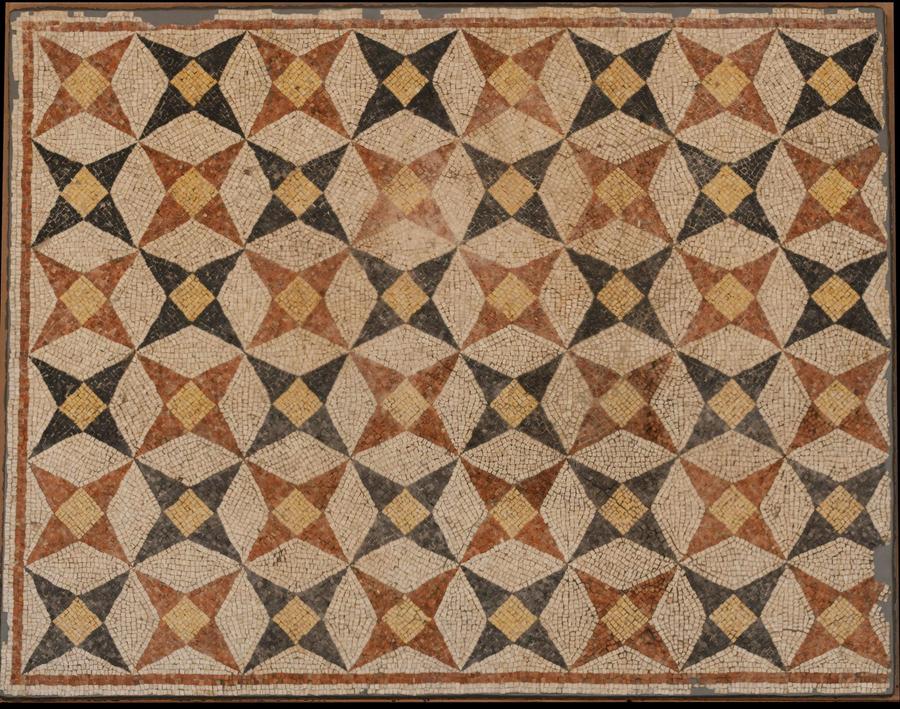
Roman, Antioch, Mosaic pavement from The House of the Drinking Contest, c. AD 200 — 300, Stone Tesserae, Museum purchase, Museum of Fine Arts, St. Petersburg
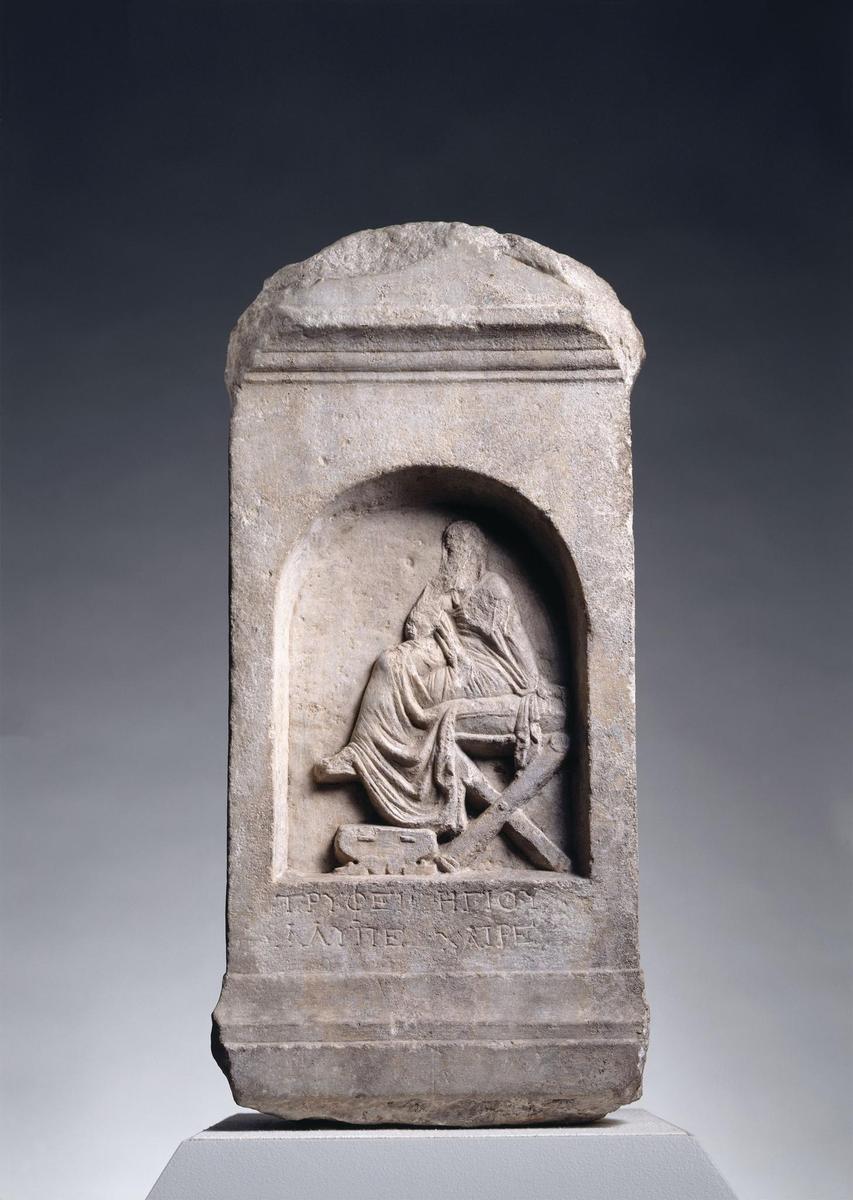
Hellenistic, Seleuceia Pieria, Gravestone of Tryphe , c. 150 — 100 BC, White marble, Princeton University Art Museum: Gift of the Committee for the Excavation of Antioch to Princeton Universit
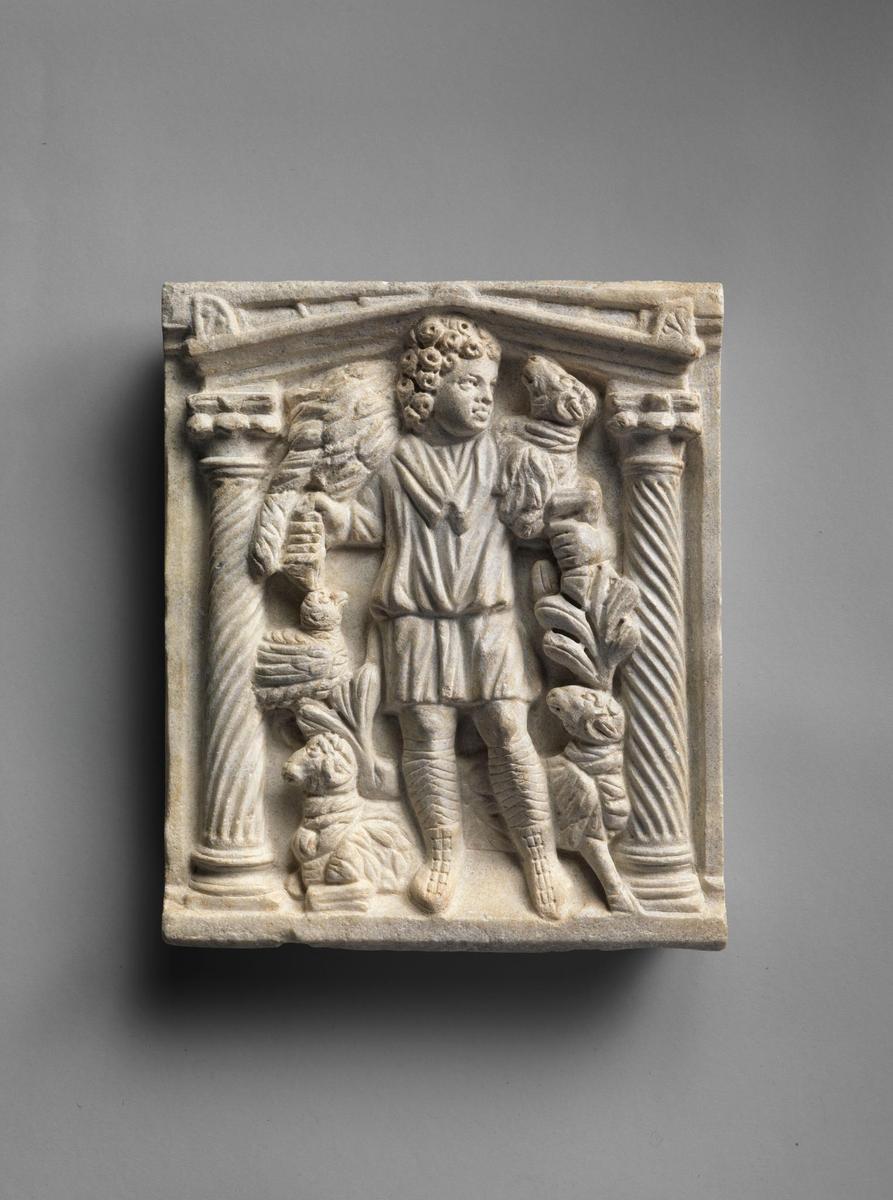
Roman, Tetrarchic, Relief from a Sarcophagus with Christ as the Good Shepherd , c. AD 300, Marble, Princeton University Art Museum: Gift of the Friends of the Princeton University Art Museum
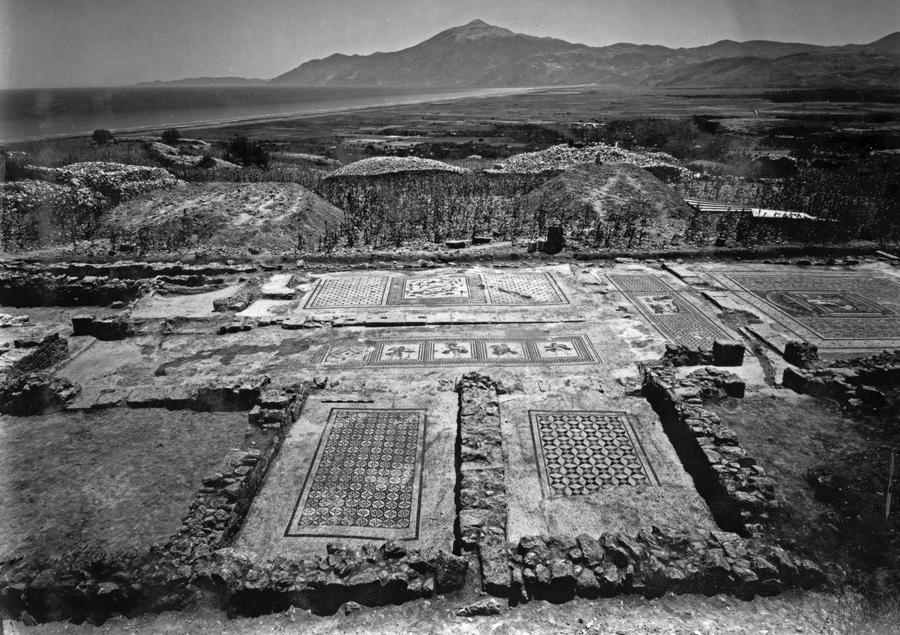
xcavation of Antioch - on - the - Orontes, View of building excavated down to mosaic level with Mount Casius in background, The House of the Drinking Contest , 1939, Princeton University Archives
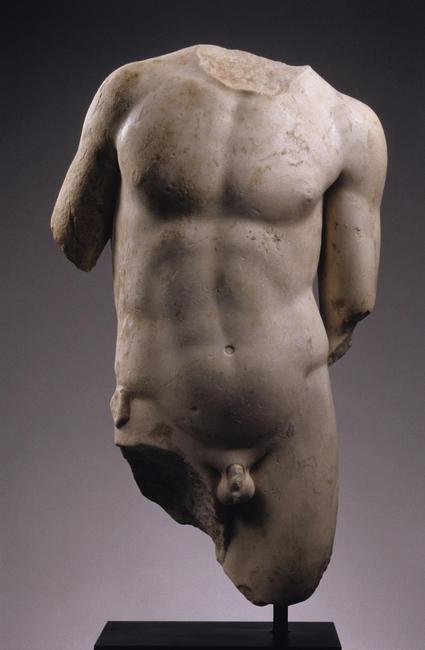
Roman, Antonin, Torso of a Youth , 2nd century AD, Marble, Princeton University Art Museum: Gift of the Committee for the Excavation of Antioch to Princeton University
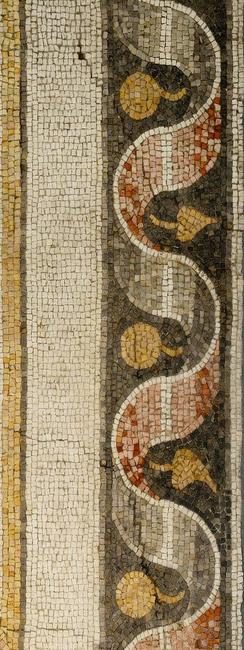
Roman, Antioch, Mosaic fragment from The House of Ge and the Seasons (detail), c. AD 200 — 300, Stone Tesserae, Museum purchase, Museum of Fine Arts, St. Petersburg

A new exhibition at the Museum of Fine Arts, St. Petersburg(Florida) is presenting the famed 1930s excavation of the ancient city of Antioch through rare documents, artifacts, and the exquisite mosaics that were discovered during the archaeological dig.

Antioch Reclaimed: Ancient Mosaics at the MFA (April 10–August 22, 2021) features five geometric mosaic pavements, which date from the 2nd to the 5th centuries AD, from the MFA Collection. The MFA acquired the mosaics from Princeton University in 1964, one year prior to the museum opening to the public. After three of the mosaics were recovered from under the east lawn of the museum in 2018, all five ancient mosaics underwent an extensive conservation and preservation process to restore their original luster. An outdoor conservation lab at the museum allowed the community to observe the process. MFA, St. Petersburg is the only arts institution in Florida with mosaics from ancient Antioch in its collection.

The MFA. St. Petersburg’s mosaics are among the hundreds unearthed from 1933–1939 in what was the site of Antioch, a Greco-Roman city in ancient Syria founded in 300 BC that is now modern Antakya, a provincial capital of southern Turkey. Princeton led the Committee for the Excavation of Antioch, a group of art and academic institutions from the United States and France that excavated the area under an agreement with the Syrian government.

The dig resulted in the discovery of the city center of Antioch and its wealthy suburbs, where all the mosaics were discovered covering the floors of the elegant private villas.

To retell the excavation story, Princeton University Art Museum is lending major works from its collection. In addition, the Princeton Archives is lending archival documents from the legendary dig to the MFA exhibition. These include vintage photographs, letters, telegrams, journals and find cards, guest books, drawings, as well as newly-discovered film footage that shows the excavation in progress, and actual lifting of the mosaics from their original locations.

Antioch Reclaimed is curated by MFA Senior Curator of Early Western Art Michael Bennett, Ph.D. and Andrea De Giorgi, Ph.D., associate professor of Classics at Florida State University, and one of the leading scholars of ancient Antioch in America.

“This exhibition is unique for us, and for any art museum for that matter,” said Dr. Bennett. “It’s a hybrid exhibition that seams together history and art to present the riveting story of Antioch and its fascinating excavation. When you step into the galleries, you will see the beauty of the incredible art and images, and learn about the significance of the artifacts, but
you’ll also experience and feel what it was like during that ancient time, and in that historical moment of archeological discovery.”

The exhibition is the second phase of a three-phase project for the five MFA mosaics. The last phase will be to permanently install all the mosaics in the MFA’s Membership Garden. The mosaics are an integral part of the MFA’s 56-year-old history. When MFA Founder Margaret Acheson Stuart and Rexford Stead, the museum’s first director, decided to purchase the mosaics from Princeton it signaled the downtown waterfront museum would be encyclopedic in scope, telling the history of art with a collection that spans across time and global cultures. The mosaics were the first shipment of art to arrive in the MFA’s loading
dock.

MFA Executive Director and CEO Kristen A. Shepherd said restoring the mosaics has been an exciting opportunity for the community to understand ancient culture and the profound importance of conserving and displaying antiquities. “We are thrilled to be able to share a piece of history from such a pivotal time in the ancient world with our community and visitors,” said Shepherd, whose longtime affection for the mosaics began during her visits to the MFA as a teenager. “There has been such a deep and genuine interest from the public for our mosaics, and now we can all truly embrace them and their exciting journey with this one-of-a-kind exhibition.”

Wednesday, March 31, 2021

Early humans in the Kalahari were as innovative as their coastal neighbours


Archaeological evidence in a rockshelter at the edge of the Kalahari Desert, South Africa, is challenging the idea that the origins of our species were linked to coastal environments

UNIVERSITY OF INNSBRUCK

Research News

IMAGE

IMAGE: THE ARCHAEOLOGICAL SITE AT A ROCK SHELTER IN SOUTH AFRICA'S KALAHARI DESERT: MORE THAN 100,000 YEARS AGO, PEOPLE USED THE SO-CALLED GA-MOHANA HILL NORTH ROCKSHELTER FOR SPIRITUAL ACTIVITIES.... view more 

CREDIT: JAYNE WILKINS

"Our findings from this rockshelter show that overly simplified models for the origins of our species are no longer acceptable. Evidence suggests many regions across the African continent were involved, the Kalahari being just one," Dr Wilkins said.

"Archaeological evidence for early Homo sapiens has been largely discovered at coastal sites in South Africa, supporting the idea that our origins were linked to coastal environments. There have been very few well-preserved, datable archaeological sites in the interior of southern Africa that can tell us about Homo sapiens' origins away from the coast.

"A rockshelter on Ga-Mohana Hill that stands above an expansive savannah in the Kalahari is one such site."

Used as a place of spiritual activities today by some of the local community, archaeological research in the rockshelter has revealed a long history as a place of spiritual significance.

The researchers excavated 22 white calcite crystals and fragments of ostrich eggshell, thought be used as water containers, from deposits dated to 105,000 years ago at Ga-Mohana Hill North Rockshelter when the environment was much wetter than today. The researchers were delighted to discover that the assemblage of human-collected crystals and ostrich eggshell fragments at Ga-Mohana Hill were significantly older than that reported in interior environments elsewhere.

"Our analysis indicates that the crystals were not introduced into the deposits via natural processes, but were deliberately collected objects likely linked to spiritual beliefs and ritual," Dr Wilkins said.

"The crystals point towards spiritual or cultural use of the shelter 105,000 years ago," said Dr Sechaba Maape from the University of the Witwatersrand. "This is remarkable considering that site continues to be used to practice ritual activities today."

The age of the archaeological layers was constrained via Optically Stimulated Luminescence (OSL) dating in the OSL laboratory at the Department of Geology at the University Innsbruck, Austria.

"This technique measures natural light signals that accumulate over time in sedimentary quartz and feldspar grains," said Dr Michael Meyer, head of the OSL Laboratory. "You can think about each grain as a miniaturised clock, from which we can read out this natural light or luminescence signal, giving us the age of the archaeological sediment layers."

The name Kalahari is derived from the Tswana word Kgala, meaning 'great thirst'. And today the climate at Ga-Mohana is semi-arid, with little, very seasonal rainfall. However, ancient proof of abundant water on the landscape is evident from the abundant tufa formations around the shelter. These were aged using the uranium-thorium dating method to between 110,000 and 100,000 years ago - exactly the same time period as the people were living there.

"This is a story of water in what we know now as a dry landscape, and of adaptable people who exploited the landscape to not only survive but to thrive," says Dr Robyn Pickering, who is director of the Human Evolution Research Institute (HERI) at the University of Cape Town.

Due to the ongoing spiritual significance of Ga-Mohana Hill, the researchers are conscious to minimise their impact on the local communities' use of the rockshelter after each season.

"Leaving no visible trace and working with the local community is critical for the sustainability of the project," Dr Wilkins said. "So that Ga-Mohana Hill can continue to provide new insights about the origins and evolution of Homo sapiens in the Kalahari."


Was a much earlier version of Deuteronomy discovered and then lost?

"In 1883, a Jerusalem antiquities dealer named Moses Wilhelm Shapira announced the discovery of a remarkable artifact: 15 manuscript fragments, supposedly discovered in a cave near the Dead Sea. Blackened with a pitchlike substance and their paleo-Hebrew script nearly illegible, they contained what Shapira claimed was the “original” Book of Deuteronomy, perhaps even Moses’ own copy. 

The discovery drew newspaper headlines around the world, and Shapira offered the treasure to the British Museum for 1 million pounds. While the museum’s expert evaluated it, two fragments were put on display, attracting throngs of visitors, including Prime Minister William Gladstone. 

Then disaster struck. 

Charles Simon Clermont-Ganneau, a swashbuckling French archaeologist and longtime nemesis of Shapira’s, had been granted a few minutes with several of the fragments, after promising to hold his judgment until the museum issued its report. But the next morning, he went to the press and denounced them as forgeries. 

The museum’s expert agreed, and a distraught Shapira fled London. Six months later, he committed suicide in a hotel room in the Netherlands. The manuscript was auctioned for a pittance in 1885 and soon disappeared altogether. "

Complete , fascinating NY Times article

But in a new book scholar Idan Dershowitz recreates much of the disputed text and argues that it was, in fact an earlier version of  Deuteronomy:

Abstract:

Moses Wilhelm Shapira’s infamous Deuteronomy fragments – long believed to be forgeries – are authentic ancient manuscripts, and they are of far greater significance than ever imagined. The literary work that these manuscripts preserve – which Idan Dershowitz calls “The Valediction of Moses” or “V” – is not based on the book of Deuteronomy. On the contrary, V is a much earlierversion of Deuteronomy. In other words, V is a proto-biblical book, the likes of which has never before been seen. This conclusion is supported by a series of philological analyses, as well as previously unknown archival documents, which undermine the consensus on these manuscripts. An excursus co-authored with Na’ama Pat-El assesses V’s linguistic profile, finding it to be consistent with Iron Age epigraphic Hebrew.


V contains early versions of passages whose biblical counterparts reflect substantial post-Priestly updating. Moreover, unlike the canonical narratives of Deuteronomy, this ancient work shows no signs of influence from the Deuteronomic law code. Indeed, V preserves an earlier, and dramatically different, literary structure for the entire work – one that lacks the Deuteronomic law code altogether.


These findings have significant consequences for the composition history of the Bible, historical linguistics, the history of religion, paleography, archaeology, and more. The volume includes a full critical edition and English translation of V.

Mummified parrots point to trade in the ancient Atacama desert


Research News

IMAGE

IMAGE: MUMMIFIED SCARLET MACAW RECOVERED FROM PICA 8 IN NORTHERN CHILE. CALOGERO SANTORO AND JOSÉ CAPRILES. view more 

CREDIT: CALOGERO SANTORO, UNIVERSIDAD DE TARAPACÁ, AND JOSÉ CAPRILES, PENN STATE

Ancient Egyptians mummified cats, dogs, ibises and other animals, but closer to home in the South American Atacama desert, parrot mummies reveal that between 1100 and 1450 CE, trade from other areas brought parrots and macaws to oasis communities, according to an international and interdisciplinary team.

"Feathers are valued across the Americas and we see them in high-status burials," said José M. Capriles, assistant professor of anthropology, Penn State. "We don't know how the feathers got there, the routes they took or the network."

Parrots and macaws are not native to the Atacama, which is in northern Chile and is the driest desert in the world, but archaeologists have found feathers in burial context and preserved in leather boxes or other protective material, and they have also found mummified birds -- parrots and macaws -- at archaeological sites.

"The fact that live birds made their way across the more-than-10,000-foot-high Andes is amazing," said Capriles. "They had to be transported across huge steppes, cold weather and difficult terrain to the Atacama. And they had to be kept alive."

Capriles, an archaeologist, grew up around parrots and macaws because his father was a wildlife manager and his mother, Eliana Flores Bedregal, was a Bolivian ornithologist at the Museo Nacional de Historia Natural in La Paz until her death in 2017.

While a postdoctoral fellow in Chile, Capriles investigated the trade and transport of goods like coca, shell, metals, feathers and animals around Bolivia, Peru and Chile.

"Calogero Santoro, professor of anthropology at Universidad de Tarapacá, mentioned the birds to my mother when she came to visit and suggested we study them," said Capriles. "Our idea was to say something about these parrots, where they were coming from and what species were represented. My mother is a coauthor on this paper."

Most parrot and macaw remains, whether mummified or not, reside in museums. The team visited collections around northern Chile for nearly three years looking at a wide range of what had been found.

"Once we started working on this, we found so much material about macaws and parrots," said Capriles. "Columbus took parrots back to Europe and the historical importance of macaw feathers for pre-Columbian societies was ubiquitous."

Most of the bird remains the researchers found date to between 1000 and 1460 CE, beginning at the end of the Tiwanaku empire and just before the Inca came through the area. According to Capriles, it was a time of warfare, but also a great time for commerce, with frequent llama caravans moving about.

The researchers studied 27 complete or partial remains of scarlet macaws and Amazon parrots from five oasis sites in the Atacama. They report their results today (Mar. 29) in the Proceedings of the National Academy of Sciences.

Using zooarchaeological analysis, isotopic dietary reconstruction, radiocarbon dating and ancient DNA testing, the research catalogued scarlet macaws and at least five other parrot species that were transported from over 300 miles away in the eastern Amazon. The team mapped the distinct natural habitation ranges of scarlet macaws, blue and yellow macaws and the various parrots to try to determine how they traveled to the Atacama.

The researchers also found that the birds were eating the same diet as the agriculturalists who owned them.

"What we consider acceptable interactions with animals under our care was very different back then," said Capriles. "Some of these birds did not live a happy life. They were kept to produce feathers and their feathers were plucked out as soon as they grew in."

Perhaps more unusual than the import of parrots and macaws and their usefulness in feather production was their treatment after death. Many of the parrots were found mummified with their mouths wide open and their tongues sticking out. Others had their wings spread wide in permanent flight.

"We have absolutely no idea why they were mummified like this," said Capriles. "They seem to be eviscerated through their cloaca (a common excretory and reproductive opening), which helped to preserve them. Many times, they were wrapped in textiles or bags."

Unfortunately, many of the birds were salvage finds -- acquired outside of formal archaeological projects -- so some types of data are missing, but the birds are typically associated with human burials.

The majority of the mummies were found at Pica 8, a site near an oasis community that still exists today as a locus of goods transport. Pica 8 had agriculture during the time the birds lived there and is currently the source of prized lemons.

"We know that the birds were living there," said Capriles. "That they were eating the same foods that people were eating enriched with the nitrogen from maize fertilized with marine bird manure. Llamas are not the best pack animals, because they aren't that strong. The fact that llama caravans brought macaws and parrots across the Andes and across the desert to this oasis is amazing."

Tuesday, March 30, 2021

Astronomy and Landscape in the city of Caral, the oldest city in the Americas


INSTITUTO DE ASTROFÍSICA DE CANARIAS (IAC)

Research News

IMAGE

IMAGE: ONE OF THE MAIN PYRAMIDAL BUILDINGS OF THE CENTRAL SQUARE OF CARAL, WHOSE MAJOR AXIS IS ORIENTED PARALLEL TO THE SUPE RIVER, AND TOWARDS THE MAJOR SOUTHERN LUNASTICE. view more 

CREDIT: A. CÉSAR GONZÁLEZ-GARCÍA (INCIPIT-CSIC).


A team of researchers, led by the Instituto de Ciencias del Patrimonio (Incipit-CSIC) and the Instituto de Astrofísica de Canarias (IAC), in collaboration with the team from the Arqueological Zone of Caral (Perú) led by Dr. Ruth Shady Solís, has established the relation between the position of the monuments of the Supe Culture (Perú), their orientations, and some astronomical and topographic features, which opens the way to the analysis of the way the inhabitants of this valley conceived space and time 5000 years ago. The results of the study have just been published in the journal Latin American Antiquity.

The valley of the river Supe in Perú contains the first evidence for city building in the Americas. In recent decades in this valley and in the nearby coast, numerous ceremonital sites have been found, with elaborate pyramidal buildings, and large circular open spaces which date back to 3000 B.C. The society which constructed these buildings was based on agriculture using irrigation, notably of cotton and pumpkin, and on fishing as the coast gives access to one of the richest fisheries in the world.

Towards the end of 2016 a campaign of field work was carried out in the Supe valley, taking measurements of the positions and orientations of the more important buildings of this very ancient civilization at the ten most important sites in the valley. "The results of the research in the position and the orientation of the main buildings show that the presence of the River Supe is the main determining influence on the orientation of the buildings because although they are not sited directly at the river, they are systematically parallel to it in a curious phenomenon, convergent with what was occurring at the same time thousands of kilometres away in Valley of the Nile", explains Juan Antonio Belmonte, an IAC researcher who is an expert in cultural astronomy and a coauthor of the article.

However, the analysis revealed that the situation within the valley also was determined by very suggestive and novel astronomical relations. "A suprising fact, never previously ascertained with comparable certainty is that the most important orientation pattern of these buildings coincides with that of the meridional risings of the Moon, which would coincide with full Moon around the June solstice, and in particular with its southernmost point, which is known as the major lunastice. It is noteworthy that these orientations can be related to the precipitation cycles on the Andean summits, with the consequent beneficial floodings of the river, and thus with the agricultural cycles. That time also coincided with the end of the fishing season, taking place over a wide area of the nearby coast", explains César González-García, a researcher at the Incipit-CSIC and first author of the article.

To be concrete, the orientation of these structures would indicate a strong relationship between these pyramidal buildings, which in many cases evoque the surrounding mountains, bringing them close to the urban area. But they also do this connecting the orientations with the rhythms of the sky, which signal the correct times for performing the rites and ceremonies for celebrating the economic, agricultural and fishing cycles.

In this way, these researchers claim, the monuments dating from the culture of the Supe valley five millenia ago are seen to be the first examples of the genuine interaction between landscape and skyscape in the civilizations of pre-Colombian America, which reached its high point millenia later with the Incas.

###

Article: A. César González-García, Aldemar Crispín, Ruth Shady Solís, José Ricra, Felipe Criado-Boado and Juan A. Belmonte. "The River and the Sky: Astronomy and Topography in Caral Society, America's First Urban Centers", Latin American Antiquity, March 23, 2021: https://www.cambridge.org/core/journals/latin-american-antiquity/articl...

Friday, March 26, 2021

Ancient genomes trace the origin and decline of the Scythians


MAX PLANCK INSTITUTE FOR THE SCIENCE OF HUMAN HISTORY

Research News

IMAGE

IMAGE: MOUND 4 OF THE ELEKE SAZY NECROPOLIS IN EASTERN KAZAKHSTAN view more 

CREDIT: ZAINOLLA SAMASHEV

Because of their interactions and conflicts with the major contemporaneous civilizations of Eurasia, the Scythians enjoy a legendary status in historiography and popular culture. The Scythians had major influences on the cultures of their powerful neighbors, spreading new technologies such as saddles and other improvements for horse riding. The ancient Greek, Roman, Persian and Chinese empires all left a multitude of sources describing, from their perspectives, the customs and practices of the feared horse warriors that came from the interior lands of Eurasia.

Still, despite evidence from external sources, little is known about Scythian history. Without a written language or direct sources, the language or languages they spoke, where they came from and the extent to which the various cultures spread across such a huge area were in fact related to one another, remain unclear.

The Iron Age transition and the formation of the genetic profile of the Scythians

A new study published in Science Advances by an international team of geneticists, anthropologists and archeologists lead by scientists from the Archaeogenetics Department of the Max Planck Institute for the Science of Human History in Jena, Germany, helps illuminate the history of the Scythians with 111 ancient genomes from key Scythian and non-Scythian archaeological cultures of the Central Asian steppe. The results of this study reveal that substantial genetic turnovers were associated with the decline of the long-lasting Bronze Age sedentary groups and the rise of Scythian nomad cultures in the Iron Age. Their findings show that, following the relatively homogenous ancestry of the late Bronze Age herders, at the turn of the first millennium BCE, influxes from the east, west and south into the steppe formed new admixed gene pools.

The diverse peoples of the Central Asian Steppe

The study goes even further, identifying at least two main sources of origin for the nomadic Iron Age groups. An eastern source likely originated from populations in the Altai Mountains that, during the course of the Iron Age, spread west and south, admixing as they moved. These genetic results match with the timing and locations found in the archeological record and suggest an expansion of populations from the Altai area, where the earliest Scythian burials are found, connecting different renowned cultures such as the Saka, the Tasmola and the Pazyryk found in southern, central and eastern Kazakhstan respectively. Surprisingly, the groups located in the western Ural Mountains descend from a second separate, but simultaneous source. Contrary to the eastern case, this western gene pool, characteristic of the early Sauromatian-Sarmatian cultures, remained largely consistent through the westward spread of the Sarmatian cultures from the Urals into the Pontic-Caspian steppe.

The decline of the Scythian cultures associated with new genetic turnovers

The study also covers the transition period after the Iron Age, revealing new genetic turnovers and admixture events. These events intensified at the turn of the first millennium CE, concurrent with the decline and then disappearance of the Scythian cultures in the Central Steppe. In this case, the new far eastern Eurasian influx is plausibly associated with the spread of the nomad empires of the Eastern steppe in the first centuries CE, such as the Xiongnu and Xianbei confederations, as well as minor influxes from Iranian sources likely linked to the expansion of Persian-related civilization from the south.

Although many of the open questions on the history of the Scythians cannot be solved by ancient DNA alone, this study demonstrates how much the populations of Eurasia have changed and intermixed through time. Future studies should continue to explore the dynamics of these trans-Eurasian connections by covering different periods and geographic regions, revealing the history of connections between west, central and east Eurasia in the remote past and their genetic legacy in present day Eurasian populations.

The origin and uniqueness of Basque genetics revealed


A new study reveals that the genetic uniqueness of the Basque population is not due to its external origin in respect of other Iberian populations, but reduced contacts as of the Iron Age.

UNIVERSITAT POMPEU FABRA - BARCELONA

Research News

IMAGE

IMAGE: COLOUR REPRESENTATION OF THE GENETIC MIX AND STRUCTURE IN THE BASQUE COUNTRY; GREEN SYMBOLIZES THE BASQUES, WHILE BLUE AND RED SHOW MIXING WITH ADJACENT POPULATIONS. view more 

CREDIT: ANDRÉ FLORES-BELLO

The Basques are a unique population in Western Europe; their language is not related to any Indo-European language. Furthermore, genetically speaking, they have been considered to have distinct features. However, until now there was no conclusive study to explain the origin of their singularity.

Now, an international research team led by UPF has confirmed that the Basques' genetic uniqueness is the result of genetic continuity since the Iron Age, characterized by periods of isolation and scarce gene flow, and not its external origin in respect of other Iberian populations.

The study, led by David Comas, principal investigator at UPF and at the Institute of Evolutionary Biology (IBE: CSIC-UPF), has involved the most comprehensive geographic sampling to date of the Basque population, with over 600,000 genetic markers throughout the genome for each individual.

The result of the multidisciplinary study, which involved a team of linguists and geneticists, reveals in the journal Current Biology that the cultural barrier of the language promoted the isolation of the Basque population from subsequent population contacts, such as the influence of the Roman empire or the Islamic occupation of the peninsula, and even acted as an internal barrier in some cases due to the use of dialects.

"Sampling included microregions within the Basque Country and also the surrounding areas. Thus, we obtained samples from a geographic region where Euskera has always been spoken, others where it has been spoken historically but has been lost, and regions where it has never been spoken", points out André Flores-Bello, first author of the article. He also stresses that "our study is clear proof of the importance of the interaction between different disciplines such as linguistics, genetics and archaeological evidence when it comes to reconstructing our history".

The work compares the Basque people with other contemporary European populations and with data from ancient DNA. The results show that the Basques' genetic makeup is similar to other populations of Western Europe but with slight differences. These differences are due to a scarce gene flow as of the Iron Age, i.e., less mixing has occurred with other populations.

David Comas, full professor of Biological Anthropology at the UPF Department of Experimental and Health Sciences (DCEXS), details that "for example, we find no influences from North Africa which are appreciated in most populations of the Iberian Peninsula, and neither do we find traces of other migrations such as the Romans".

The question of how genetically different the Basques are from one another has also been broached. In the Basque Country, they have found that the geographically closest settlements are genetically more similar. This correlation between genetics and geography is common, because neighbouring settlements have a shared history.

What is unique here is that there is a great deal of compartmentalization within an extremely small geographic region, which is not common in populations of this size. This genetic heterogeneity matches the Basque dialects. "To date it was thought that they were formed from the Middle Ages but we postulate that they may have arisen much earlier and are therefore related to the genetic structure", explains David Comas, head of the Human Genome Diversity research group of the IBE.

With the new methods available, we are increasingly able to reconstruct history on a smaller scale. "The large number of markers and samples we employ together with sophisticated computation enable us to solve issues that we could not broach until now and pave the way towards knowledge of the more local, more recent history of our species", Comas concludes.