Friday, March 26, 2021

Sheepskin as an anti-fraud device for hundreds of years

 Medieval and early modern lawyers chose to write on sheepskin parchment because it helped prevent fraud, new analysis suggests.

Experts have identified the species of animals used for British legal documents dating from the 13th to 20th century, and have discovered they were almost always written on sheepskin, rather than goatskin or calfskin vellum.

This may have been because the structure of sheepskin made attempts to remove or modify text obvious.

Sheep deposit fat in-between the various layers of their skin. During parchment manufacture, the skin is submerged in lime, which draws out the fat leaving voids between the layers. Attempts to scrape off the ink would result in these layers detaching -- known as delamination -- leaving a visible blemish highlighting any attempts to change any writing.

Sheepskin has a very high fat content, accounting for as much as 30 to 50 per cent, compared to 3 to 10 per cent in goatskin and just 2 to 3 per cent in cattle. Consequently, the potential for scraping to detach these layers is considerably greater in sheepskin than those of other animals.

The continuing use of sheepskin over goat or calfskin in later centuries was likely influenced by their greater availability and lower cost.

The work was carried out by academics from the University of Exeter and Universities of York and Cambridge.

Dr Sean Doherty, an archaeologist from the University of Exeter who led the study, said: "Lawyers were very concerned with authenticity and security, as we see through the use of seals. But it now appears as though this concern extended to the choice of animal skin they used too"

Because they are so durable, millions of old legal documents survive in British archives and private collections, but they are often neglected because of their supposed lack of historic value. Many were discarded, burnt, or even repurposed into lamp shades during the 20th century after the Land Registry Act of 1925 meant they didn't need to be kept.

Until now so little was known about these documents, many were incorrectly catalogued as calfskin vellum, when they were actually made of sheepskin parchment.

Dr Doherty said: "The text written on these documents is often considered to be of limited historic value as the majority is taken up by formulaic rubric. However modern research techniques mean we can now not only read the text, but the biological and chemical information recorded in the skin. As physical objects they are an extraordinarily molecular archive through which centuries of craft, trade and animal husbandry can be explored."

Surviving texts hint at the use of sheepskin as an anti-fraud device. The 12th century text Dialogus de Scaccario -- written by Richard FitzNeal, Lord Treasurer during the reigns of Henry II and Richard I -- instructs the use of sheepskin for royal accounts as "they do not easily yield to erasure without the blemish being apparent."

In the 17th century when paper was common, Chief Justice Sir Edward Coke wrote of the necessity that legal documents were written on parchment "for the writing upon these is least liable to alterations or corruption."

Professor Jonathan Finch from the Department of Archaeology at the University of York said: " What our research reveals is that there was a sophisticated understanding of the properties of different products and that these could be exploited. In the case of sheepskin parchment, its properties were used to prevent fraud by the surreptitious alteration of important legal documents.

"The structure of the skin clearly showed up any attempt to erase or alter the original text. The success of this study opens up new potential in the study of animal products over the historical period."

Thursday, March 25, 2021

Warriors' down bedding in boat graves from the 600s and 700s CE


The burial field in Valsgärde outside Uppsala in central Sweden contains more than 90 graves from the Iron Age.

"On a light note, we could say that Valsgärde is Scandinavia's answer to Sutton Hoo in England as portrayed in the film The Dig on Netflix," says Birgitta Berglund, professor emeritus of archaeology at the Norwegian University of Science and Technology's NTNU University Museum.

Valsgärde is especially known for its spectacular boat graves from the 600s and 700s CE. This timeframe is in the middle of what Norway calls the Merovingian period, the era just before the Viking Age.

Two of these spectacular boat graves are at the centre of this story -- or more specifically, the story is really about the down bedding that was found in the graves.

When researchers from NTNU investigated which birds contributed their feathers to the bedding, they made a surprising discovery that provides new insight into Iron Age society.

The boats carrying the two dead men were about 10 metres long, with room for four to five pairs of oars. Both were outfitted for high-ranking warriors, with richly decorated helmets, shields and weapons. Provisions and tools for hunting and cooking were also included for their last voyage.

In one grave, an Eurasian eagle owl (Bubo bubo) had been laid, with its head cut off. We'll return to that. Horses and other animals were arranged close to the boats.

"The buried warriors appear to have been equipped to row to the underworld, but also to be able to get ashore with the help of the horses," says Berglund.

Beauty sleep was also taken care of in death.Two warriors lay atop several layers of down bedding. The contents of the bedding probably had a greater function than simply serving as filler.

You might have thought of down bedding as a modern concept, which admittedly only became available for common folk in recent times. The down bedding in the graves at Valsgärde is the oldest known from Scandinavia and indicate that the two buried men belonged to the top strata of society.

Wealthy Greeks and Romans used down for their bedding a few hundred years earlier, but down probably wasn't used more widely by wealthy people in Europe until the Middle Ages, Berglund says.

Berglund has been studying down harvesting in Helgeland coastal communities in southern Nordland county for many years, where people commercialized down production early on by building houses for the eider ducks that were the source of the down. The theory was that down from this location might have been exported south, so Berglund wanted to investigate whether the bedding at Valsgärde contained eider down.

"It turned out that a lot of kinds of feathers had been used in the bedding at Valsgärde. Only a few feathers from eider ducks were identified, so we have little reason to believe that they were a commodity from Helgeland or other northern areas," says Berglund.

However, she was not disappointed by this discovery. The great variety of species gave the researchers unique insight into the bird fauna in the immediate area in prehistoric times, along with people's relationship to it.

"The feathers provide a source for gaining new perspectives on the relationship between humans and birds in the past. Archaeological excavations rarely find traces of birds other than those that were used for food," the researcher says.

"We also think the choice of feathers in the bedding may hold a deeper, symbolic meaning. It's exciting."

Berglund explains that according to Nordic folklore, the type of feathers contained in the bedding of the dying person was important.

"For example, people believed that using feathers from domestic chickens, owls and other birds of prey, pigeons, crows and squirrels would prolong the death struggle. In some Scandinavian areas, goose feathers were considered best to enable the soul to be released from the body," she said.

These are well-known folk traditions that have been collected from the 18th century onwards. But they may have their roots in prehistoric times.

In the Icelandic Erik the Red saga, a pillow stuffed with feathers from domestic hens was placed on the throne at Heriólfsnes in Greenland, where a visiting female shaman was to sit. The saga is considered to have been written down in the 13th century, but addresses events around the year 1000, says Berglund.

The examples show that that feathers in the bedding from Valsgärde most likely also had a deeper meaning than just serving as a filler. It's also well known that birds could hold special importance for obtaining information in shamanism -- think of Odin's two ravens Hugin and Munin.

Exactly what ritual function the feathers at Valsgärde had is hard to say. But the bedding contained feathers from geese, ducks, grouse, crows, sparrows, waders and -- perhaps most surprisingly --- eagle owls.

Biologist Jørgen Rosvold, now employed at the Norwegian Institute for Natural History (NINA) identified the species from the feather material.

"It was a time consuming and challenging job for several reasons. The material is decomposed, tangled and dirty. This means that a lot of the special features that you can easily observe in fresh material has become indistinct, and you have to spend a lot more time looking for the distinctive features," Rosvold says.

"I'm still surprised at how well the feathers were preserved, despite the fact that they'd been lying in the ground for over 1000 years."

The feathers in the down bedding weren't the only interesting bird find in the graves. One of the graves also contained a headless owl.

From recent graves we know that people took measures to prevent the buried from returning from the dead, and it's easy to imagine that this was also done longer ago as well.

"We believe the beheading had a ritual significance in connection with the burial," says Berglund.

Swords found in tombs from Viking times were sometimes intentionally bent before being laid in the tomb. This was probably done to prevent the deceased from using the weapon if he returned.

"It's conceivable that the owl's head was cut off to prevent it from coming back. Maybe the owl feather in the bedding also had a similar function? In Salme in Estonia, boat graves from the same period have recently been found that are similar to those in Valsgärde. Two birds of prey with a severed head were found there," says Berglund.


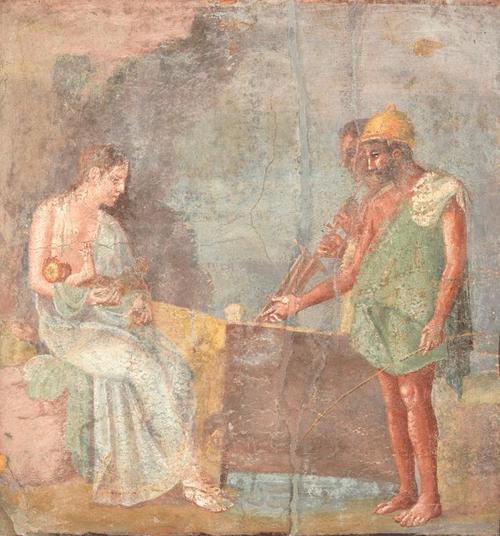
The Painters of Pompeii: Roman Frescoes from the National Archaeological Museum, Naples

×

“The Painters of Pompeii: Roman Frescoes from the National Archaeological Museum, Naples" will travel exclusively to Oklahoma City Museum of Art, from June 26 to Oct. 17, 2021. Archivio Fotografico del Museo Archeologico Nazionale di Napoli

The exhibition “The Painters of Pompeii: Roman Frescoes from the National Archaeological Museum, Naples" will travel exclusively to Oklahoma City Museum of Art from Italy and be on view from June 26 to Oct. 17, 2021.  

“The Painters of Pompeii” highlights a seldom seen medium – the Roman wall painting – which was pervasive in ancient Rome, through over 80 artifacts and artworks. As one of only two large bodies of ancient painting in existence today, this exhibition represents a once-in-a-lifetime opportunity. The exhibition is organized by the National Archaeological Museum, Naples and MondoMostre.

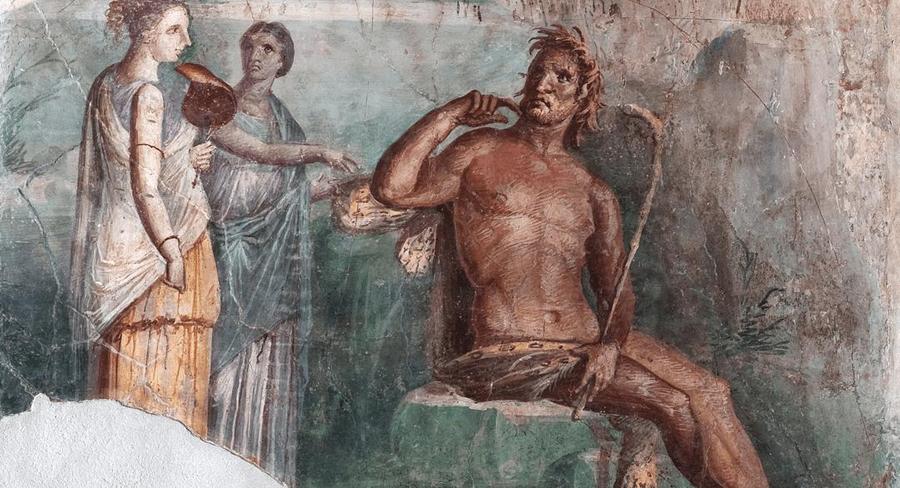
Danae and Perseo. Archivio Fotografico del Museo Archeologico Nazionale di Napoli

“We are honored to be the exclusive venue for this extraordinary exhibition,” said OKCMOA president and CEO, Michael J. Anderson, Ph.D. “These works are extremely delicate and rarely leave Italy. With travel still difficult to plan, we are incredibly grateful to be able to bring these paintings to Oklahoma City. We will continue to limit capacity throughout the summer in order to follow health and safety guidelines and allow for social distancing. Due to the rarity of the exhibition as well as the limited availability, I encourage everyone to book tickets early to secure their preferred day and time.”

Additionally, OKCMOA has released new virtual programming in advance of the exhibition. Opportunities to “house hunt” in ancient Italian coastal towns, experience the food and wine of Pompeii and more – all from the comfort of home – are now available. Armchair travelers can register for this special programming at okcmoa.com.

“We had an incredible response to our first slate of virtual classes inspired by ‘The Painters of Pompeii,’” said Rosie May, OKCMOA director of curatorial affairs and audience engagement. “Many of the classes sold out, and the feedback we heard from participants was wonderful. We are thrilled to offer new virtual classes beginning later this month and new ways to immerse visitors in the culture of southern Italy.”

Virtual Classes:

·    The Rediscovery of Pompeii, Tuesday, April 6, 7 p.m. CDT

·    Food & Wine in Pompeii: Then and Now, Tuesday, April 13, 7 p.m. CDT

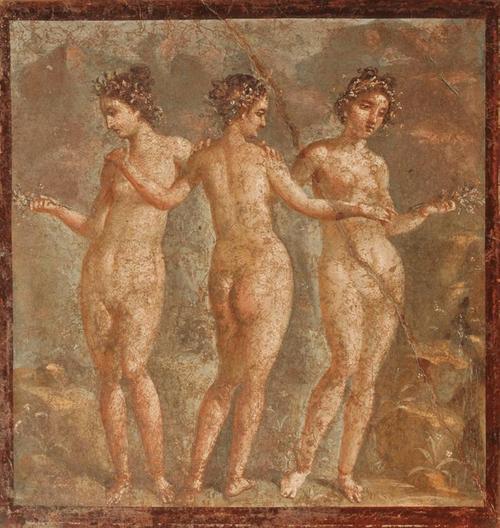
Three Graces. Archivio Fotografico del Museo Archeologico Nazionale di Napoli

·    Roman House Hunters International, Tuesday, April 20, 7 p.m. CDT

·    Pompeii and Roman Painting, Wednesday, April 28, 7 p.m. CDT

·    Livia Drusilla and Powerful Elite Women in Imperial Rome, Sunday, May 16, 1 p.m. CDT

Classes are $30 for Museum members and $40 for non-members. Registration is limited and expected to fill quickly. The museum encourages those interested to register soon at okcmoa.com/pompeii. All class registrations include one complimentary ticket to “The Painters of Pompeii.”

Wednesday, March 24, 2021

Bronze Age mining sites in what is now Austria received deliveries of pre-processed foods

 Bronze Age mining sites relied on outside sources to deliver pre-processed food to sustain the community, according to a study published March 24, 2021 in the open-access journal PLOS ONE by Andreas Heiss of the Austrian Academy of Sciences and colleagues.

Bronze Age copper mining sites are thought to have been specialized communities of craftspeople and miners that would not have produced their own food, instead requiring food to be provided by outside sources. While some research has examined the animal-based foods common to these communities, few studies have investigated plants. In this study, Heiss and colleagues contribute to this discussion with an examination of plant remains from the mining site of Prigglitz-Gasteil in the Eastern Alps in Austria, which was active between the 11th and 9th Century BCE.

The study identified a variety of cereal plant remains showing signs of various forms of processing, such as grinding and dehulling, but little evidence of plant remains discarded during processing, such as chaff, or of tools used to process the material. This suggests that much of the site's cereal food was being processed and possibly cooked off-site before being delivered to the miners--and presents the idea of specific groups' cuisine as an archaeobotanical topic worthy of further consideration, beyond simple plant remains.

These results were found to match analyses of other Bronze Age mining sites of the Eastern Alps, but it remains unclear exactly where these delivered foods were being originally processed, whether in nearby farmlands or more distant sources. The authors hope that further study on cereal plant remains and cooking tools at Prigglitz-Gasteil and other sites will help archaeologists piece together the details of how specialized sites were provided essential supplies.

The authors add: "Food is an artefact - just like an axe, a jug or a table. By including such culinary artefacts into "classical" archaeobotany, this study provides not only further evidence on the consumption patterns in Bronze Age mining, but also helps open the door to prehistoric cuisine a little bit further."

###

Citation: Heiss AG, Jakobitsch T, Wiesinger S, Trebsche P (2021) Dig out, Dig in! Plant-based diet at the Late Bronze Age copper production site of Prigglitz-Gasteil (Lower Austria) and the relevance of processed foodstuffs for the supply of Alpine Bronze Age miners. PLoS ONE 16(3): e0248287. 
https://doi.org/10.1371/journal.pone.0248287

Ancient Maya houses show wealth inequality is tied to despotic governance

 Every society has some degree of wealth inequality--over history, across continents, there always seem to be some people who have more than others. But the amount of inequality differs--in some civilizations, a few powerful people have nearly all the wealth, whereas in others, it's more spread out. In a new study in PLOS ONE, archaeologists examined the remains of houses in ancient Maya cities and compared them with other Mesoamerican societies; they found that the societies with the most wealth inequality were also the ones that had governments that concentrated power with a smaller number of people.

"Differences in house size are a reflection of wealth inequality," says Amy Thompson, a postdoctoral researcher at Chicago's Field Museum and corresponding author of the PLOS ONE study. "By looking at how house size varies within different neighborhoods within ancient cities, we can learn about wealth inequality in Classic Maya cities."

There are millions of Maya people alive today, but the period that archaeologists refer to as the Classic Maya civilization dates to 250-900 CE. Classic Maya society stretched across what's now eastern Mexico, the Yucatan Peninsula, Guatemala, Belize, and western El Salvador and Honduras, and it was composed of a network of independent cities. "Rather than being like the United States today where we have one central government overseeing all the states, Classic Maya civilization was a series of cities that each had its own independent ruler," says Thompson.

Across Mesoamerica, these political systems varied--some shared power more collectively, while others were more autocratic and concentrated power in a smaller group of individuals. Archaeologists use a variety of clues to infer how autocratic a state was. "We look at the way they represented their leadership. In burials, are certain individuals treated completely differently from everyone else, or are the differences more muted?" says Keith Prufer, an author of the study from the University of New Mexico. "Another key is to look at palaces. When you have very centralized palace buildings or funerary temples dedicated to a ruling lineage , the government tends to be more autocratic. In societies that were less autocratic, it's harder to determine where rulers lived or even who they were."

In this study, the researchers wanted to know how the governmental structure affected the distribution of wealth among the people. They note that in more autocratic societies wealth inequality is pronounced between different social groups, and also between people living in the same neighborhoods who were previously assumed by archaeologists to be economic equals. Much of this inequality is linked to access to market goods or trade networks. To learn about how wealth was dispersed across the community, they analyzed the remains of ancient houses.

Factors like house size don't give an absolute picture of wealth--for instance, a one-bedroom apartment off Central Park might be worth more than a two-bedroom in Queens, or a whole house in rural Kansas. "Everything is looked at in a relative sense," says Gary Feinman, the Field Museum's MacArthur curator of anthropology and a co-author of the paper. "We're comparing houses within a neighborhood to each other, and it still reveals a pattern. It would be like if you compared all the houses in Kansas, some might be bigger than the houses in Manhattan, but that relative pattern of wealth distribution in Kansas, as compared to Manhattan, would still tell you something about wealth differentials in both areas."

To study Maya houses, the researchers looked at a number of variables beyond just size. "Using household archaeology, we can get at the interactions and relationships between the people," says Thompson. "We document where these houses are on the landscape, how big they are, where they're located in relationship to each other, and which resources--like water and good agricultural land--are nearby." For further clues about the distribution of wealth, the researchers also excavated houses to learn about the types of ceramics and stone tools that the people used.

The researchers found that patterns of wealth inequality were fairly consistent in different neighborhoods within two Classic Maya cities in southern Belize--even if one neighborhood was richer overall than another. Nevertheless, at both sites distinctions in wealth were most magnified in neighborhoods with access to exchange routes. "People have known for decades, if not centuries, that the Classic Maya were unequal," says Prufer. "But the real thing we can add is that this inequality trickled down, even to neighborhoods. That hasn't really been well documented before."

The link between wealth inequality and autocracy isn't exclusive to the Classic Maya, the researchers note. "We're really trying to get at some of these very real issues of how inequality forms, how it's perpetuated, and how it manifests in early cities," says Prufer. "One of the larger goals within archaeology is to try to show that modern societies and ancient societies are, in their fundamental elements, not that much different from each other. There's a lot of similarities that reflect human behavior and human ingenuity and also manifestations of human inequality and cruelty on different levels. This comes through from these types of studies, and we feel really good to be able to contribute our work to these broader discussions of social inequality, which are so, so important today."

And while inequality has plagued humanity for millennia, Feinman says that we're not doomed as a species. "There's a tight interconnection between how power is funded and how power is wielded and monopolized," he says. "People can and do establish institutions that try to check power, but it takes work, and it takes interpersonal interdependence and the recognition that we cooperate with communities of people beyond just one's self and one's family."

The world's earliest stone technologies are likely to be older than previously thought


A new study from the University of Kent's School of Anthropology and Conservation has found that Oldowan and Acheulean stone tool technologies are likely to be tens of thousands of years older than current evidence suggests.

A new study from the University of Kent's School of Anthropology and Conservation has found that Oldowan and Acheulean stone tool technologies are likely to be tens of thousands of years older than current evidence suggests.

They are currently the two oldest, well-documented stone tool technologies known to archaeologists.

These findings, published by the Journal of Human Evolution, provide a new chronological foundation from which to understand the production of stone tool technologies by our early ancestors. They also widen the time frame within which to discuss the evolution of human technological capabilities and associated dietary and behavioural shifts.

For the study, a team led by Kent's Dr Alastair Key and Dr David Roberts, alongside Dr Ivan Jaric from the Biology Centre of the Czech Academy of Sciences, used statistical modelling techniques only recently introduced to archaeological science. The models estimated that Oldowan stone tools originated 2.617-2.644 million years ago, 36,000 to 63,000 years earlier than current evidence. The Acheulean's origin was pushed back further by at least 55,000 years to 1.815-1.823 million years ago.

Early stone tool technologies, such as the Oldowan and Acheulean, allowed early human ancestors to access new food types, and increased the ease of producing wooden tools or processing animal carcasses.

Dr Key, a Palaeolithic Archaeologist and the lead author of the study, said: 'Our research provides the best possible estimates for understanding when hominins first produced these stone tool types. This is important for multiple reasons, but for me at least, it is most exciting because it highlights that there are likely to be substantial portions of the artifact record waiting to be discovered.'

Dr Roberts, a conservation scientist and co-author of the study, said: 'The optimal linear estimation (OLE) modelling technique was originally developed by myself and a colleague to date extinctions. It has proved to be a reliable method of inferring the timing of species extinction and is based on the timings of last sightings, and so to apply it to the first sightings of archaeological artifacts was another exciting breakthrough. It is our hope that the technique will be used more widely within archaeology.'

Although it is widely assumed that older stone tool sites do exist and are waiting to be discovered, this study provides the first quantitative data predicting just how old these yet-to-be-discovered sites may be.

###

The research paper 'Statistical inference of earlier origins for the first flaked stone technologies' is published by the Journal of Human Evolution. doi: 

How people living in what is now Turkey over 5,000 years ago adapted agricultural practices as conditions became more arid


Humans are remarkably adaptable, and our ancestors have survived challenges like the changing climate in the past. Now, research is providing insight into how people who lived over 5,000 years ago managed to adapt.

Madelynn von Baeyer Ph.D. '18, now at the Max Planck Institute for the Science of Human History, UConn Associate Professor of Anthropology Alexia Smith, and Professor Sharon Steadman from The State University of New York College at Cortland recently published a paper in the Journal of Archaeological Science: Reports looking at how people living in what is now Turkey adapted agricultural practices to survive as conditions became more arid.

The work was conducted as von Baeyer's doctoral research at Çadr Höyük, a site located in Turkey that is unique because it has been continuously occupied for thousands of years.

"I was interested in studying how plant use was impacted by changing cultural patterns. This fit Steadman's research goals for Çad?r Höyük really well," says von Baeyer.

Smith explains the site is situated in an area with rich agricultural and pasture land that sustained generations through time. Professor Sharon Steadman from The State University of New York College at Cortland photographing the dig site. (Contributed photo)

"People would build a mud brick structure, and over the years the structure is either abandoned or collapses and the people just build on top of it," Smith says. "Eventually these villages look like they have been built on hills, but they're really just occupations going up and up."

Just as the occupants built new layers up, the archaeologists excavate down to get a glimpse of history and how lives changed over the millennia. Within the layers, archaeobotanists like von Baeyer and Smith look for ancient plant remains; for instance, intentionally or unintentionally charred plant matter. Though wood was often used, much can be learned by looking at the remains of fires fueled by livestock dung, says Smith: "The dung contains seeds that give clues about what the animals were eating."

Von Baeyer explains the research process: "Archaeobotanical research has three, vastly different, main stages: data collection, identification, and data analysis. Data collection is in the field, on an archaeological dig, getting soil samples and extracting the seeds from the dirt; identification is in the lab, identifying all the plant remains you collected from the field; and data analysis to tell a full story. I love every step."

The focus was on a time period called the Late Chalcolithic, roughly 3700-3200 years before the common era (BCE). By referencing paleo-climatic data and Steadman's very detailed phasing at Çad?r Höyük, the researchers were able to discern how lifestyles changed as the climate rapidly shifted in what is called the 5.2 kya event, an extended period of aridity and drought at the end of the fourth millennium BCE.

With climate change, there are lots of strategies that can be used to adapt says Smith, "They could have intensified, diversified, extensified, or abandoned the region entirely. In this case they extensified the area of land used and diversified the herds of animals they relied upon."

Zooarchaeologists on the site examined the bones to further demonstrate the shift in the types of animals herded, while the seeds from the dung-fueled fires at the dig site gave clues to what the animals were eating.

Smith says, "We know they were herding cattle, sheep, goats, and pigs, and we saw a shift to animals that are grazers. They all have a different diet, and by diversifying you are maximizing the range of potential calories that can eventually be consumed by humans."

By employing this mixed strategy, the people of Çad?r Höyük were ensuring their survival as the climate became increasingly dry. Smith says that at the same time they continued to grow wheat, barley, chickpeas, and lentils, among other crops for humans, while the animals grazed on crops not suitable for human consumption -- a strategy to maximize resources and resilience.

Von Baeyer says she was not expecting to make an argument about climate and the environment at the outset of the study.

"What this study does is pretty rare in archaeobotany by tracing a shift due to climate change over a relatively short time period," she says. "Often when archaeobotanical studies talk about shifts in plant use over time, it's over large cultural changes. This study looks at a shift that only spans 500 years."

Though the circumstances are not exactly the same as they were nearly 6000 years ago, there are lessons we can apply today, says von Baeyer.

"We can take this idea of shifting animal management and feeding practices and make it work in a current context," she says. "I think that this case study, and other studies that use archaeological data to examine climate change, expands the range of possibilities for solutions to shifting environmental conditions. I think archaeological case studies invite more out of the box thinking than just current case studies. Right now, we need to think as creatively as possible to come up with sustainable and efficient responses to climate change."

###

To learn more about the team and work happening at the Çadr Höyük archaeological project, visit cadirhoyuk.org.