Wednesday, March 24, 2021

Early Neolithic sheep-breeders were faced with high levels of mortality among young animals

 A study of ancient bones shows that Early Neolithic sheep-breeders were faced with high levels of mortality among young animals in their herds. A statistical model, partly developed at Ludwig-Maximilians-Universitaet (LMU) in Munich, allowed the age distribution of the bones to be precisely determined.

In the 8th millennium BCE, early sheep-herders were already aware that the conditions under which their animals were housed had an impact on mortality rates among the lambs. This one result of a study researchers led by Nadja Pöllath (a curator at the State Collection for Anthropology and Palaeoanatomy in Munich), LMU zooarchaeologist Joris Peters (who is also the Director of the state collection) and LMU statistician Sevag Kevork have now taken a closer look at the bones of unborn and neonatal lambs, which form part of the collections studied by them. The material comes from the Early Neolithic site Aşıklı Höyük, one of the largest and best investigated settlements from this period in Central Anatolia. The site was occupied from 8350 to around 7300 BCE, and the study reveals that the life expectancy of newborn lambs gradually increased over this timespan. The researchers attribute this finding to improvements in husbandry of the herds, which enabled a larger proportion of neonates to survive the nursing period, and be let out to graze the nearby pastures.

The archaeological remains that have come to light at Aşıklı Höyük provide valuable information, not only on its domestic architecture and cultural practices, but also on the surrounding vegetation and the diets of the people and animals living in the area. Moreover, it sheds light on the development of agriculture and animal husbandry during the Early Neolithic period. The finds indicate that, in the settlement's earliest phase, its inhabitants still obtained their meat mainly from hunting. Later on, however, domesticated animals - primarily sheep - supplied much of the animal protein consumed. The discovery of compacted dung layers within the settlement indicates that sheep were kept for longer periods within the boundaries of the settlement.

A new analysis of the age distribution of the animal bones found at Aşıklı Höyük illustrates the problems with which early sheep-herders were confronted - and on how they learned to mitigate them. Most of the conventional approaches used to determine the exact age at which the animals died focus on teeth. However, such methods are not sufficiently sensitive to enable researchers to reliably differentiate between developmental stages in very young animals - in this case, sheep covering the age range from the fetus to newborns and juveniles.

In order to determine the ages of fetuses and lambs as accurately as possible, the researchers developed a new statistical model. They first analyzed the morphology of the humerus or upper-arm bone in a sample of modern sheep breeds, based on material kept in anatomical reference collections in the US, the UK, Spain, Portugal and Germany, and used the results to construct a comparative model for Neolithic sheep. In this way, the age at death of the bones of lambs from Aşıklı Höyük could be precisely determined. "Our analyses were of great value in enabling us to narrow down the range of possible ages of death in fetuses and lambs," says Nadja Pöllath. "We now have a better understanding of the difficulties that early herders faced in the early phases of sheep domestication in Aşıklı Höyük." Infections were the primary causes of early mortality, together with malnutrition and dietary deficiencies. In addition, the animals were kept under overcrowded conditions. When they were subsequently let out to grass their health improved. The zooarchaeological data also suggest that, towards the end of the occupation of Aşıklı Höyük, fetal mortality fell and more lambs survived. Prof. Peters concludes: "Our research thus proves for the first time that learning by doing determined the early phase of livestock farming in the 9th and 8th millennia BCE."

Monday, March 22, 2021

Underwater sites challenge the current understanding of ancient coastal life in the Gulf of Mexico and Northern Europe

 The excavation of shell middens off two sites in the Gulf of Mexico and Northern Europe dating back to when the seabed was dry land thousands of years ago, reveal how they can offer new ground-breaking insights into the hidden history of submerged landscapes.

An international team of archaeologists from Moesgaard Museum (Denmark), the University Of Georgia (USA), the University of York (UK) Flinders University and James Cook University partnered to excavate two sites containing shell middens in the Gulf of Mexico and Eastern Jutland in Denmark in 2018, showing that middens can be clearly differentiated from natural shells on the seabed to reveal a coastline's inhabitation past.

The research, published in two companion papers in Quaternary Science Reviews, shows they are culturally significant underwater sites which challenge the current understanding of coastal life in the Gulf of Mexico and Northern Europe, by pushing back the inhabitation timeframe by hundreds of years.

The shell middens also represent deep connections with the underwater environments and seascapes to many First Nations people, and the new evidence will support policy changes towards the adequate management and cultural heritage of their ancestral land.

"Shell middens are a classic, world-wide marker for the intensive use of marine resources, but archaeologist have always assumed that these sites would have been destroyed by sea-level rise", says Professor Geoff Bailey of the University of York and Visiting Professor at Flinders University.

In Denmark, the discovery of these shell middens, which are rare in the south, hints that this type of site was more common than previously thought, shifting understandings of how intensive coastal use was 5000-7300 years ago.

"Importantly, both studies show that as more of these sites are found, our histories of past coastal use may have to be rewritten. The underwater archaeological aspect to shell midden studies is extremely important moving forward," says Dr Peter Moe Astrup, Lead Author and Curator of the Maritime Archaeology division at the Moesgaard Museum in Denmark.

"The team of archaeologists used cutting-edge techniques, including microscopy, geological and geophysical techniques, 3D reconstructions, and biological and ecological studies to tease out evidence that offers new insights into midden sites, particularly on how to locate other sites in watery depths around the globe."

"For a large portion of humanity's existence, sea levels have been significantly lower, up to 130 metres than what they are today, exposing millions of square kilometres of land. And the archaeological record clearly demonstrates that people in the past lived on these coastal plains before they were drowned by past sea-level rise" says Associate Professor Jonathan Benjamin who is the Director of the Deep History of Sea Country Project and Maritime Archaeology Program Coordinator at Flinders University's College of Humanities, Arts and Social Sciences.

"Within archaeological shell middens, we can find old food remains, discarded tools and ornaments, old living surfaces, and in some cultures, human burials," says Dr Katherine Woo at the Australian Research Council Centre of Excellence for Australian Biodiversity and Heritage, James Cook University in Australia.

"These in turn provide us with fundamental information about past food choices, tool technology, and trade practices. More importantly, these different types of information allow us to understand how people adapted their cultures over time, and how they interacted with their surrounding environments including during times of sea level rise and climate change."

The excavation of these sites emphasises the need for stronger recognition and rights to protect and manage the cultural heritage of underwater ancestral lands around the globe, which hold significant insights into human history and deep connections to marine environments.

"The discovery of these underwater sites, and the promise of more to be found, means that industry, developers, archaeologists, and government bodies must reassess how we classify and handle Indigenous heritage on the continental shelf," says Dr Jessica Cook Hale from the University of Georgia. "This is especially critical because offshore development is accelerating; here in North America the big push for offshore windfarms is underway, but Indigenous voices must remain foremost. These new findings support ongoing work to ensure that Indigenous and First Nations have a critical seat at the table, so to speak, in managing the offshore cultural heritage of their ancestral lands by documenting these relationships into the deep past."

"They are real, they are important, and we must all engage with them in a rigorous and serious fashion.

Worth one's salt- Researchers uncover more on the ancient Maya commodity


Research News

Salt cakes could have been easily transported in canoes along the coast and up rivers in southern Belize, writes LSU archaeologist Heather McKillop in a new paper published in the Journal of Anthropological Archaeology. She discovered in 2004 the first remnants of ancient Maya salt kitchen buildings made of pole and thatch that had been submerged and preserved in a saltwater lagoon in a mangrove forest in Belize. Since then, she and her team of LSU graduate and undergraduate students and colleagues have mapped 70 sites that comprise an extensive network of rooms and buildings of the Paynes Creek Salt Works.

"It's like a blueprint for what happened in the past," McKillop said. "They were boiling brine in pots over fires to make salt."

A pot 3D printed in the LSU Digital Imaging & Visualization in Archeology Lab by archeology students based on scans collected at the ancient Maya salt works field site.Photo Credit: LSU

Her research team has discovered at the Paynes Creek Salt Works, 4,042 submerged architectural wooden posts, a canoe, an oar, a high-quality jadeite tool, stone tools used to salt fish and meat and hundreds of pieces of pottery.

"I think the ancient Maya who worked here were producer-vendors and they would take the salt by canoe up the river. They were making large quantities of salt, much more than they needed for their immediate families. This was their living," said McKillop, who is the Thomas & Lillian Landrum Alumni Professor in the LSU Department of Geography & Anthropology.

She investigated hundreds of pieces of pottery including 449 rims of ceramic vessels used to make salt. Two of her graduate students were able to replicate the pottery on a 3D printer in McKillop's Digital Imaging Visualization in Archaeology lab at LSU based on scans taken in Belize at the study site. She discovered that the ceramic jars used to boil the brine were standardized in volume; thus, the salt producers were making standardized units of salt.

"Produced as homogeneous units, salt may have been used as money in exchanges," McKillop said.

An ethnographic interview with a modern day salt producer in Sacapulas, Guatemala collected in 1981 supports the idea that the ancient Maya also may have viewed salt as a valuable commodity:

"The kitchen is a bank with money for us...So when we need money at any time during the year we come to the kitchen and make money, salt."

Friday, March 19, 2021

Latest Archaeology Reports


Africa

 Ancient bone artefact found


The discovery of a rare bone artefact near the Lower Murray River casts more light on the rich archaeological record on Ngarrindjeri country in southern Australia. Details of the Murrawong bone point, dated between c. 5,300-3,800 years old, has have been described by Flinders University, Griffith University ...

Ancient skeletal hand could reveal evolutionary secrets

A 4.4 million-year-old skeleton could show how early humans moved and began to walk upright, according to new research led by a Texas A&M anthropology professor  Evolutionary expert Charles Darwin and others recognized a close evolutionary relationship between humans, chimps and gorillas based on their shared anatomies, raising some big questions: how are humans related to other primates, and exactly how did early humans move around? Research by a Texas A&M University professor may provide some answers. Thomas Cody Pran...

In June 2019, an international team brought the complete skull of the 3.67-million-year-old Little Foot Australopithecus skeleton, from South Africa to the UK and achieved unprecedented imaging resolution of its bony structures and dentition in an X-ray synchrotron-based investigation at the UK's national synchrotron, Diamond Light Source. The X-ray work is highlighted in a new paper in *e-Life,...


A new study published in the journal *Science Advances* shows that Bantu-speaking communities in the Congo rainforest underwent a major population collapse from 1600 to 1400 years ago, probably due to a prolonged disease epidemic, and that significant resettlement did not restart until around 1000 years ago. These findings revise the population history of no less than seven present-day African countries (Cameroon, Central African Republic, Democratic Republic of the Congo, Republic of the Congo, Gabon, Equatorial Guinea, an...


Asia

Roof-tiles in imperial China: Creating Ximing Temple's lotus-pattern tile ends


Researchers from Kanazawa University and the Chinese Academy of Social Sciences cast light on the production of roof tiles during the Tang dynasty through a study of variations in lotus-pattern tile ends recovered from the Ximing Temple in Xi'an K- Any visitor to China will have noticed the spectacular roofs on...


New bioarchaeological research shows malaria has threatened human communities for more than 7000 years, earlier than when the onset of farming was thought to have sparked its devastating arrival. Lead author Dr Melandri Vlok from the Department of Anatomy, University of Otago, says this ground-breaking research, published today in *Scientific Reports*, changes the entire understanding of the relationship humans have had with malaria, still one of the deadliest diseases in the world. "Until now we've believed malaria became a global threat to humans when we turned to farming, but ...

New research conducted at the UNESCO World Heritage listed 'Plain of Jars' in Laos has established the stone jars were likely placed in their final resting position from as early as 1240 to 660 BCE....

Research highlights importance of social resilience in Bronze Age China

Climate alone is not a driver for human behavior. The choices that people make in the face of changing conditions take place in a larger human context. And studies that combine insights from archaeologists and environmental scientists can offer more nuanced lessons about how people have responded -- sometimes successfully -- to long-term environmental changes. One such study, from researchers at Washington University in St. Louis and the Chinese Academy of Sciences, shows that aridification in the central ...


Megadroughts in arid central Asia delayed the cultural exchange along the proto-Silk Road


 [image: IMAGE] IMAGE: HISTORICAL SILK ROAD TRADE ROUTES ARE ILLUSTRATED IN RED, AND THE WHITE STAR MARKS THE STUDIED CAVE IN CENTRAL ASIA The Silk Road was the most elaborate network of trade routes in the ancient world, linking ancient populations in East Asia to those in southwest Asia, via Central Asia. These trade routes fostered the spread of ideas, religions, and technologies over the past 2,000 years. Before the establishment of organized exchange, starting around the time of the Chinese Han Dynasty (2,223 years ag...


Genomic insights into the origin of pre-historic populations in East Asia


Integrating evidence from genetics and archaeology resarchers shed light into East Asia's population history MAX PLANCK INSTITUTE FOR EVOLUTIONARY ANTHROPOLOGY Research News SHARE PRINT E-MAIL [image: IMAGE] IMAGE: MONGOLIAN YURT IN A LANDSCAPE ON NORTHERN MONGOLIA. view more CREDIT: © KAIRI AUN | 123RF.COM Diverse East Asians derive ancestry from a coastal expansion tens of thousands of years ago Researchers have long debated whether the peopling of East Asia by modern humans occurred mainly via a coastal or interior route. The answer is probably both. "Indigenous And...


Israel


Bible scroll fragments among dazzling artifacts found in Dead Sea Cave

Complete article with pictures *Parts of books of Nahum and Zechariah, world’s oldest woven basket, 6,000-year-old mummified child, Bar Kochba Revolt coins among stunning finds from daring Judean Desert rescue op* In a stunningly rare discovery, dozens of 2,000-year-old biblical scroll fragments have been excavated from Judean Desert caves during a daring rescue operation. Most of the newly discovered scroll fragments — the first such finds in 60 years — are Greek translations of the books of Zechariah and Nahum from the Book of the Twelve Minor Prophets, and are written in two s...

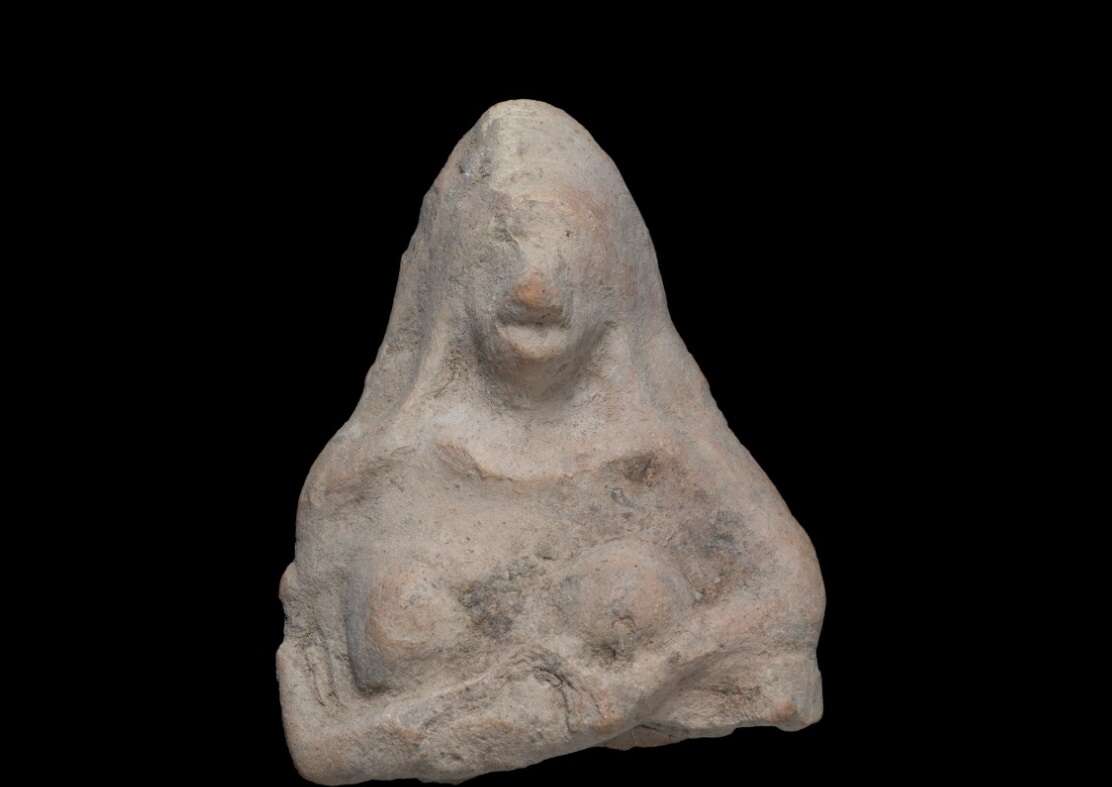
The Ben-David family from Beersheba was on a trip to HaBesor Creek in the northern Negev when one of their children, 11-year-old Zvi, caught sight of an unusual object. It turned out to be a rare archeological find, the Israel Antiquities Authority reported. Archeologists estimate that the figurine dates back to the First Temple period | Courtesy: Israel Antiquities Authority The figurine, which is in a shape of a woman, turned out to be so rare that the National Treasures Department possesses only one such example in its collection. Archeologists at the IAA estimate that the ...


Europe
 In previous research, ancient massacre sites found men who died while pitted in battle or discovered executions of targeted families. At other sites, evidence showed killing of members of a migrant community in conflict with previously established communities, and even murders of those who were part of religious rituals. But a more recent discovery by a research team -- that includes ...

Scythians, once considered nomadic, stayed local

As far back as the Greek historian Herodotus, a group of people called the Scythians were considered highly mobile warrior nomads. Scythian-era people lived across Eurasia from about 700 BCE to 200 BCE, and have long been considered highly mobile warriors who ranged widely across the steppe grasslands. Herodotus describes Scythian populations as living in wagons and engaging in raiding and warfare, and this view has persisted throughout history--supported by archeologists' observations of similar styles of horse harnesses, weapons, burial mounds and animal style motifs throughout wh...


Ancient DNA reveals clues about how tuberculosis shaped the human immune system

COVID-19 is only the latest infectious disease to have had an outsized impact on human life. A new study employing ancient human DNA reveals how tuberculosis has affected European populations over the past 2,000 years, specifically the impact that disease has had on the human genome. This work, which publishes March 4 in the *American Journal of Human Genetics*, has implications for studying not only evolutionary genetics, but also how genetics can influence the immune system. "Present-day humans are the descendants of those who have survived many things--climate changes and big ...


How a single human cranium wound up alone in a cave in Italy


Rare evidence from Eneolithic cranium suggests funerary treatment of corpse PLOS Research News  A lone cranium in an Italian cave wound up there after being washed away from its original burial site, according to a study published March 3, 2021 in the open-access...

Mediterranean migration trends over 8,000 years

A team of international researchers led by a Florida State University assistant professor has analyzed reams of data from the Neolithic to Late Roman period looking at migration patterns across the Mediterranean and found that despite evidence of cultural connections, there's little evidence of massive migration across the region. "Because of the prevailing scholarly attitude of the 'connected' Mediterranean -- one with high degrees of mobility and migration that drive the archaeological patterns we see -- we'd imagined we'd see comparatively high levels of migration reflected in...

Earliest known conch shell horn plays its tune for the first time in 17,000 years

For the first time in more than 17,000 years, three mellifluous musical notes - close in tone to C, D, and C sharp - have reverberated from a conch shell modified to serve as a wind instrument. The specimen, archaeologists have now determined, is the earliest conch shell horn yet known, and stands out as a unique find among European Upper Paleolithic artifacts. First found in 1931 in the cave of Marsoulas, nestled in the foothills of the French Pyrenees, the discoverers initially suspected the shell served as a ceremonial drinking cup, and noted no discernable modifications by hum...


Medieval containers hint at thriving wine trade in Islamic Sicily


Researchers at the University of York have found chemical residues of grapes in medieval containers indicating a prosperous wine trade in Islamic Sicily. They found that a type of container from the 9-11th century, called amphorae, traditionally used for transporting wine contained chemical traces of grapes and were found as far away as Sardinia and Pisa, suggesting that the wine was exported across the Mediterranean. Working with rese...

Changing livestock in ancient Europe reflect political shifts

Archaeology shows that politics and economics played a major impact in choosing livestockIMAGE: SUMMARY IMAGE SHOWING INFLUENCE OF POLITICAL SYSTEMS ON LIVESTOCK view more CREDIT: ARIADNA NIETO-ESPINET In ancient European settlements, livestock use was likely primarily determined by political structure and market demands, according to a study published February 17, 2021 in the open-access journal *PLOS ONE*by Ariadna Nieto-Espinet and colleagues of the Consejo Superior de Investigaciones Científicas, Barcelona. Zooa...

Americas
An important Maya man buried nearly 1,300 years ago led a privileged yet difficult life. The man, a diplomat named Ajpach' Waal, suffered malnutrition or illness as a child, but as an adult he helped negotiate an alliance between two powerful dynasties that ultimately failed. The ensuing political instability left him in reduced economic circumstances, and he probably died in relative obscurity. During excavations at El Palmar, a small plaza compound in Mexic...

Woolly mammoths may have shared the landscape with first humans in New England


Researchers trace the age of a rib fragment of the Mount Holly mammoth  Woolly mammoths may have walked the landscape at the same time as the earliest humans in what is now New E...

Bahamas were settled earlier than believed

It's believed early settlers to the islands eventually changed the landscape of the Bahamas PRINT E-MAIL Humans were present in Florida by 14,000 years ago, and until recently, it was believed the Bahamas - located only a few miles away - were not colonized until about 1,000 years ago. But new findings from a team including a Texas A&M University at Galveston researcher prove that the area was colonized earlier, and the new settlers dramatically changed the landscape. Peter van Hengstum, associate professor in the Department of Marine and Coastal Environment Science at T...

Ancient Amazonian communities fortified valuable land they had spent years making fertile to protect it from conflict, excavations show. Farmers in Bolivia constructed wooden defences around previously nutrient-poor tropical soils they had enriched over generations to keep them safe during times of social unrest. These long-term soil management strategies allowed Amazonians to grow nutrient demanding crops, such as maize and manioc and fruiting trees,...


The history of dogs has been intertwined, since ancient times, with that of the humans who domesticated them. But how far back does that history go in the Americas, and which route did dogs use to enter this part of the world? A new study led by the University at Buffalo provides insight into these questions. The research reports that a bone fragment found in Southeast Alaska belongs to a dog that lived in the region a...


Neandertals
Neandertals -- the closest ancestor to modern humans -- possessed the ability to perceive and produce human speech, according to a new study published by an international multidisciplinary team of researchers including Binghamton University anthropology professor Rolf Quam and graduate student Alex Velez. "This is one of the most important studies I have...


Neandertal gene variants both increase and decrease the risk for severe COVID-19


Last year, researchers at Karolinska Institutet in Sweden and the Max Planck Institute for Evolutionary Anthropology in Leipzig, Germany showed that a major genetic risk factor for severe COVID-19 is inherited from Neandertals. Now the same researchers show, in a study published in *PNAS*, that Neandertals also contributed a protective variant. Half of all people outside Africa carry a Neandertal gene variant that reduces the risk of needing intensive care for COVID-19 by 20 percent. Some people become seriously ill when infected with SARS-CoV-2 while others get only mild or no s..

Long held in a private collection, the newly analysed tooth of an approximately 9-year-old Neanderthal child marks the hominin's southernmost known range. Analysis of the associated archaeological assemblage suggests Neanderthals used Nubian Levallois technology, previously thought to be restricted to Homo sapiens. CAPTION The view from Shukbah Cave CREDIT Amos Frumkin With a high concentration of cave sites harbouring evidence of past populations and their behaviour, the Levant is a major centre for human origins research....


Egypt
Based on a manual recently discovered in a 3,500-year-old medical papyrus, University of Copenhagen Egyptologist Sofie Schiødt has been able to help reconstruct the embalming process used to prepare ancient Egyptians for the afterlife. It is the oldes...


CT scans of Egyptian mummy reveal new details about the death of a pivotal pharaoh


New interpretations based on medical imaging suggest Seqenenre-Taa-II was executed by multiple attackers and embalmers had skillfully concealed some head wounds MAGE: DR SAHAR SALEEM PLACING THE MUMMY IN THE CT SCANNER view more CREDIT: SAHAR SALEEM Modern medical technology is helping scholars tell a more nuanced story about the fate of an ancient king whose violent death indirectly led to the reunification of Egypt in the 16th century BC. The research was published in *Frontiers in Medicine*. Pharaoh Seqenen...

Australia

New dating techniques reveal Australia's oldest known rock painting

 A two-metre-long painting of a kangaroo in Western Australia's Kimberley region has been identified as Australia's oldest intact rock painting. Using the radiocarbon dating of 27 mud wasp nests, collected from over and under 16 similar paintings, a University of Melbourne collaboration has put the painting at 17,500 and 17,100 years old. "This makes the painting Australia's oldest known in-situ painting," said Postdoctoral Researcher Dr Damien Finch who pion...


Last Summary

Tuesday, March 16, 2021

Ancient bone artefact found


Archaeologists describe rare Lower Murray find

FLINDERS UNIVERSITY

Research News

IMAGE

IMAGE: FIGURE 1. MAP SHOWING THE LOCATION OF MURRAWONG IN THE LOWER MURRAY RIVER GORGE REGION OF SOUTH AUSTRALIA. view more 

CREDIT: FLINDERS UNIVERSITY

The discovery of a rare bone artefact near the Lower Murray River casts more light on the rich archaeological record on Ngarrindjeri country in southern Australia.

Details of the Murrawong bone point, dated between c. 5,300-3,800 years old, has have been described by Flinders University, Griffith University and other experts in a new paper in Australian Archaeology.

Probably made from a macropod (kangaroo or wallaby) bone, the point was likely used for piercing soft materials - for example, used as a pin on a cloak made of possum furs - or possibly as a projectile point, say the research leaders Dr Christopher Wilson and Professor Amy Roberts from Flinders University Archaeology.

While stone artefacts and shell middens are commonly found on the surface, bone objects are mostly uncovered during excavations. The last similar one was uncovered in the Lower Murray River Gorge was in the 1970s.

Dr Wilson, a Ngarrindjeri man, says that "even one find of this kind provides us with opportunities to understand the use of bone technologies in the region and how such artefacts were adapted to a riverine environment."

"Bone artefacts have lacked the same amount of study in comparison to artefacts made of stone, so every discovery reminds us of the diverse material culture used by Aboriginal peoples in this country," adds Professor Roberts.

The artefact was found during recent excavation work. The project was undertaken in collaboration with the Ngarrindjeri community.

Roof-tiles in imperial China: Creating Ximing Temple's lotus-pattern tile ends


Researchers from Kanazawa University and the Chinese Academy of Social Sciences cast light on the production of roof tiles during the Tang dynasty through a study of variations in lotus-pattern tile ends recovered from the Ximing Temple in Xi'an

KANAZAWA UNIVERSITY

Research News

IMAGE

IMAGE: BASIC INFORMATION ABOUT TILE ENDS AND IMBRICES. THE FIGURE SHOWS THE STRUCTURE OF A TILE END AND HOW TILE ENDS AND IMBRICES ARE USED. view more 

CREDIT: KANAZAWA UNIVERSITY

Kanazawa, Japan -- Any visitor to China will have noticed the spectacular roofs on buildings dating from imperial times. However, the question of how these roof tiles were produced has attracted relatively little attention from archaeologists. Now, a team of researchers has conducted a major study of tile ends unearthed at the Ximing Temple in Xi'an, yielding exciting insights into their production.

In a study published in Archaeological Research in Asia, researchers from Kanazawa University and the Chinese Academy of Social Sciences have revealed the significance of minute variations in the tile ends used in the roof of the famous Ximing Temple in Xi'an, built during the Tang dynasty (618-907 AD) when Xi'an (then known as Chang'an) was the imperial capital.

The researchers conducted an investigation of 449 tile ends with lotus patterns from various periods during the Tang dynasty that had been recovered from the Ximing Temple. "We were interested in the variations in the tile ends, both those within the conscious control of the artisans who made the tiles, such as whether to use simple or complex lotus patterns, and those outside their control, such as the marks left by the deterioration of the molds used to make the tiles," says lead author of the study Meng Lyu.

"We discovered that the degree of minor variation in the tile ends increases significantly in the later samples," adds author Guoqiang Gong. "This suggests to us that there was a shift away from the centralized manufacturing of imperial building materials during the Early Tang period toward one in which small private artisans played an important role in the Late Tang period."

Intriguingly, the study has revealed traces of the coming together of two distinct cultural traditions. "We found that there were, in fact, two separate production systems at work to make the title ends," notes author Chunlin Li. "One produced tile ends with compound petal patterns and curved incisions, whereas the other made end tiles with simple petal patterns and scratched incisions." These two styles may ultimately have their origins during an earlier historical period when the Northern Wei dynasty was divided into two regimes on either side of the Taihang mountain range.

This study demonstrates that studying the roof tiles of China's grand imperial buildings can reveal a great deal about the circumstances of their production and yield insights into larger historical questions.


Bible scroll fragments among dazzling artifacts found in Dead Sea Cave

 Complete article with pictures

Parts of books of Nahum and Zechariah, world’s oldest woven basket, 6,000-year-old mummified child, Bar Kochba Revolt coins among stunning finds from daring Judean Desert rescue op

In a stunningly rare discovery, dozens of 2,000-year-old biblical scroll fragments have been excavated from Judean Desert caves during a daring rescue operation. Most of the newly discovered scroll fragments — the first such finds in 60 years — are Greek translations of the books of Zechariah and Nahum from the Book of the Twelve Minor Prophets, and are written in two scribal hands. Only the name of God is written in Hebrew in the texts.

The fragments from the Prophets have been identified as coming from a larger scroll that was found in the 1950s, in the same “Cave of Horror” in Nahal Hever, which is some 80 meters (260 feet) below a cliff top. According to an Israel Antiquities Authority press release, the cave is “flanked by gorges and can only be reached by rappelling precariously down the sheer cliff.”

Along with the “new” biblical scroll fragments from the Books of the Minor Prophets, the team excavated a huge 10,500-year-old perfectly preserved woven basket — the oldest complete basket in the world — and a 6,000-year-old mummified skeleton of a child, tucked into its blanket for a final sleep.