Parts of books of Nahum and Zechariah, world’s oldest woven basket, 6,000-year-old mummified child, Bar Kochba Revolt coins among stunning finds from daring Judean Desert rescue op
In a stunningly rare discovery, dozens of 2,000-year-old biblical scroll fragments have been excavated from Judean Desert caves during a daring rescue operation. Most of the newly discovered scroll fragments — the first such finds in 60 years — are Greek translations of the books of Zechariah and Nahum from the Book of the Twelve Minor Prophets, and are written in two scribal hands. Only the name of God is written in Hebrew in the texts.
The fragments from the Prophets have been identified as coming from a larger scroll that was found in the 1950s, in the same “Cave of Horror” in Nahal Hever, which is some 80 meters (260 feet) below a cliff top. According to an Israel Antiquities Authority press release, the cave is “flanked by gorges and can only be reached by rappelling precariously down the sheer cliff.”
Along with the “new” biblical scroll fragments from the Books of the Minor Prophets, the team excavated a huge 10,500-year-old perfectly preserved woven basket — the oldest complete basket in the world — and a 6,000-year-old mummified skeleton of a child, tucked into its blanket for a final sleep.
IMAGE: TEETH WITH DENTAL INLAYS FROM A NONROYAL ELITE MAYAN TOMB. view more
CREDIT: KENICHIRO TSUKAMOTO
An important Maya man buried nearly 1,300 years ago led a privileged yet difficult life. The man, a diplomat named Ajpach' Waal, suffered malnutrition or illness as a child, but as an adult he helped negotiate an alliance between two powerful dynasties that ultimately failed. The ensuing political instability left him in reduced economic circumstances, and he probably died in relative obscurity.
During excavations at El Palmar, a small plaza compound in Mexico near the borders of Belize and Guatemala, archaeologists led by Kenichiro Tsukamoto, an assistant professor of anthropology at UC Riverside, discovered a hieroglyph-adorned stairway leading up to a ceremonial platform. When deciphered, the hieroglyphs revealed that in June, 726 CE, Ajpach' Waal traveled and met the king of Copán, 350 miles away in Honduras, to forge an alliance with the king of Calakmul, near El Palmar.
The findings, published in the journal Latin American Antiquity, shed light on the role communities peripheral to major centers played in cementing connections between royal families during the Late Classic period (600-800 CE), and the ways they might suffer when something shattered those alliances.
The inscriptions identified Ajpach' Waal as a "lakam," or standard-bearer, an ambassador that carried a banner as they walked on diplomatic missions between cities. He inherited this lofty position through his father's lineage, and his mother also came from an elite family. Ajpach' Waal must have considered this his crowning achievement because the hieroglyphs indicate he was not given the platform by El Palmar's ruler, but had it built it for himself a few months after the mission in September, 726 CE. The platform served as a sort of theatrical stage where spectacular rituals were performed for an audience, with only influential people able to build their own.
Beneath the floor of a temple next to the platform, Tsukamoto discovered the undisturbed burial of a male skeleton in a small chamber. Though interred in a location that suggested ownership of the platform and temple, unlike other elite Maya burials, only two colorfully decorated clay pots -- no jewelry or other grave goods -- had accompanied this individual into the underworld.
In the new paper, Tsukamoto and Jessica I. Cerezo-Roma?n, an assistant professor of anthropology at the University of Oklahoma, study the bones of the person buried in this puzzling tomb to tell his story.
"His life is not like we expected based on the hieroglyphics," Tsukamoto said. "Many people say that the elite enjoyed their lives, but the story is usually more complex."
The man was between 35 and 50 years old when he died. Several dating methods, including radiocarbon, stratigraphy, and ceramic typology, suggest the burial occurred around 726, when the stairway was constructed. The high status of the individual combined with proximity to the stairway lead the authors to believe that this was probably Ajpach' Waal himself, or possibly his father.
All his upper front teeth, from right canine to left, had been drilled to hold decorative implants of pyrite and jade, which was valuable and highly regulated. Maya living in geographic areas associated with ruling elites underwent this painful procedure during puberty as a rite of passage to mark their inclusion within a high office or social group. Ajpach' Waal might have received such implants when he inherited his father's title.
The skull had been mildly flattened in back from prolonged contact with something flat during infancy, which the Maya believed made a person more attractive. Because the front of the cranium was not preserved, the archaeologists could not tell if the forehead had been similarly flattened, a beautification practice limited to royalty.
Other aspects of the bones belied the privilege displayed by the dental and cranial modifications. Some of his arm bones had healed periostitis, caused by bacterial infections, trauma, scurvy, or rickets, which would have made his arm ache until the condition improved. Both sides of the skull had slightly porous, spongy areas known as porotic hyperostosis, caused by childhood nutritional deficiencies or illnesses. The condition is relatively common in burials throughout the Maya world, suggesting Ajpach' Waal's high status couldn't shield him from malnutrition and disease.
A healed fracture on his right tibia, or shinbone, resembles fractures seen in modern athletes who play contact sports such as football, rugby, or soccer. This could indicate he played some of the ballgames depicted on the stairway, strengthening the case that this was Ajpach' Waal.
Long before he died, the individual had lost many teeth on the left side of his lower jaw due to gum disease and might have had a painful abscess on his lower right premolar, all of which would have restricted his diet to soft foods. One inlaid tooth had thickened near the root in response to the injury of drilling and could have ached.
He also developed arthritis in his hands, right elbow, left knee, left ankle, and feet as he aged, which would have caused stiffness and pain, especially in the morning. Tsukamoto and Cerezo-Roma?n suggest that his arthritis might have been caused by carrying a banner on a pole for long distances over rugged terrain and walking and up and down stairways. He would have also been required to kneel on the platforms of Maya rulers.
As if these maladies weren't enough, fate conspired to change Ajpach' Waal's fortunes.
"The ruler of a subordinate dynasty decapitated Copán's king 10 years after his alliance with Calakmul, which was also defeated by a rival dynasty around the same time," Tsukamoto said. "We see the political and economic instability that followed both these events in the sparse burial and in one of the inlaid teeth."
The archaeologists determined that the inlay in Ajpach' Waal's right canine tooth had fallen out and was not replaced before his death because dental plaque had hardened into calculus in the cavity. The hole, easily visible when the man smiled or spoke, would have been an embarrassing, public admission of hardship or El Palmar's reduced significance. This also would have made him a less useful emissary if he still occupied the role.
Though people continued living at El Palmar for some time after Ajpach' Waal's death, it was eventually abandoned and reclaimed by the jungle.
New bioarchaeological research shows malaria has threatened human communities for more than 7000 years, earlier than when the onset of farming was thought to have sparked its devastating arrival.
Lead author Dr Melandri Vlok from the Department of Anatomy, University of Otago, says this ground-breaking research, published today in Scientific Reports, changes the entire understanding of the relationship humans have had with malaria, still one of the deadliest diseases in the world.
"Until now we've believed malaria became a global threat to humans when we turned to farming, but our research shows in at least Southeast Asia this disease was a threat to human groups well before that.
"This research providing a new cornerstone of malaria's evolution with humans is a great achievement by the entire team," Dr Vlok says.
Still a serious health issue, as recently as 2019 the World Health Organization reported an estimated 229 million cases of malaria around the world, with 67 per cent of malaria deaths in children under the age of 5 years.
While malaria is invisible in the archaeological record, the disease has changed the evolutionary history of human groups causing consequences visible in prehistoric skeletons. Certain genetic mutations can lead to the inheritance of Thalassemia, a devasting genetic disease that in its milder form provides some protection against malaria.
Deep in humanity's past, the genes for malaria became more common in Southeast Asia and the Pacific where it remains a threat, but up until now the origin of malaria has not been pinpointed. This research has identified thalassemia in an ancient hunter-gatherer archaeological site from Vietnam dated to approximately 7000 years ago, thousands of years before the transition to farming in the region.
In some parts of the world, slashing and burning in agricultural practice would have created pools of stagnant water attracting mosquitos carrying malaria, but in Southeast Asia these mosquitos are common forest dwellers exposing humans to the disease long before agriculture was adopted.
The study Forager and farmer evolutionary adaptations to malaria evidenced by 7000 years of thalassemia in Southeast Asia is a result of combined efforts from years of investigation by a team of researchers led by Professor Marc Oxenham (currently at the University of Aberdeen) and including researchers from University of Otago, the Australian National University (ANU), James Cook University, Vietnam Institute of Archaeology and Sapporo Medical University.
The research is the first of its kind to use microscopic techniques to investigate changes in bone tissue to identify thalassemia. In 2015, Professor Hallie Buckley from the University of Otago noticed changes in the bone of hunter-gatherers that made her suspicious that thalassemia might be the cause, but the bones were too poorly preserved to be certain. Professor Buckley called in microscopic bone expert Dr Justyna Miszkiewicz of ANU to investigate. Under the microscope, the ancient samples from Vietnam showed evidence for abnormal porosity mirroring modern-day bone loss complications in thalassemic patients.
At the same time, Dr Vlok, completing her doctoral research in Vietnam, found changes in the bones excavated in a 4000-year-old agricultural site in the same region as the 7000-year-old hunter-gatherer site. The combined research suggests a long history of evolutionary changes to malaria in Southeast Asia which continues today.
"A lot of pieces came together, then there was a startling moment of realisation that malaria was present and problematic for these people all those years ago, and a lot earlier than we've known about until now," Dr Vlok adds.
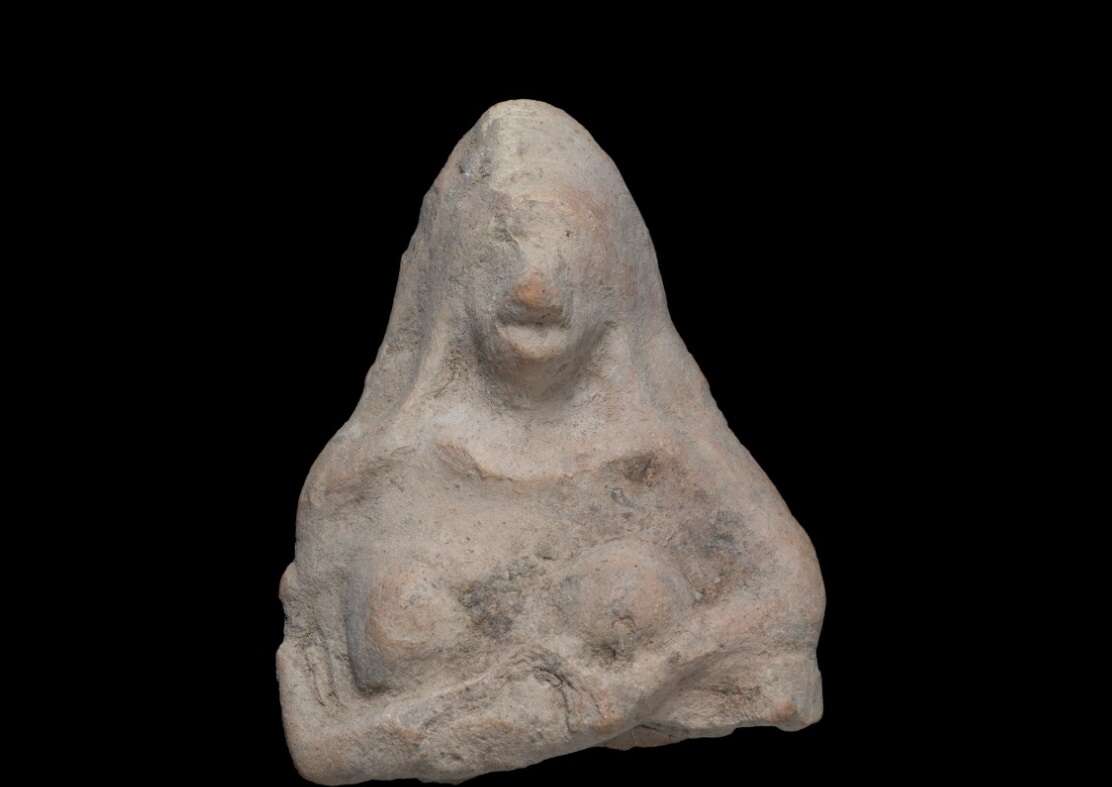
The Ben-David family from Beersheba was on a trip to HaBesor Creek in the northern Negev when one of their children, 11-year-old Zvi, caught sight of an unusual object. It turned out to be a rare archeological find, the Israel Antiquities Authority reported.
Archeologists estimate that the figurine dates back to the First Temple period | Courtesy: Israel Antiquities Authority
The figurine, which is in a shape of a woman, turned out to be so rare that the National Treasures Department possesses only one such example in its collection.
Archeologists at the IAA estimate that the object dates back to the 5th-6th century BCE, toward the end of the First Temple Period.
Ceramic figurines of women "were common in the home and everyday life, like the hamsa [palm-shaped] symbol today, and they apparently served as amulets to ensure protection, good luck, and prosperity," curators Oren Shmueli and Debbie Ben Ami explained.
IMAGE: DR SHEWAN AND COLLABORATORS PRESENT NEW RADIOCARBON RESULTS FOR SITE USE AND ALSO INTRODUCE GEOCHRONOLOGICAL DATA DETERMINING THE LIKELY QUARRY SOURCE FOR ONE OF THE LARGEST MEGALITHIC SITES. view more
CREDIT: PLAIN OF JARS ARCHAEOLOGICAL RESEARCH PROJECT
New research conducted at the UNESCO World Heritage listed 'Plain of Jars' in Laos has established the stone jars were likely placed in their final resting position from as early as 1240 to 660 BCE.
Sediment samples from beneath stone jars from two of the more than 120 recorded megalithic sites were obtained by a team led Dr Louise Shewan from the University of Melbourne, Associate Professor Dougald O'Reilly from the Australian National University (ANU) and Dr Thonglith Luangkoth from the Lao Department of Heritage.
The samples were analysed using a technique called Optically Stimulated Luminescence (OSL) to determine when sediment grains were last exposed to sunlight.
"With these new data and radiocarbon dates obtained for skeletal material and charcoal from other burial contexts, we now know that these sites have maintained enduring ritual significance from the period of their initial jar placement into historic times," Dr Shewan said.
The megalithic jar sites in Northern Laos comprise one to three-metre-tall carved stone jars, weighing up to 20 tonnes, dotted across the landscape, appearing alone or in groups of up to several hundred.
Dr Shewan and her team completed their most recent excavations in March 2020, revisiting Site 1 (Ban Hai Hin), and arriving back in Australia just before global pandemic international boarder closures.
Site 1 revealed more burials placed around the jars and confirmed earlier observations that the exotic boulders distributed across the site are markers for ceramic burial jars buried below.
Published today in PLOS One, Dr Shewan and collaborators present new radiocarbon results for site use and also introduce geochronological data determining the likely quarry source for one of the largest megalithic sites.
While geologists have used detrital zircon U-Pb dating for several decades, this methodology has recently been used to establish the provenance of ceramic and stone sources in archaeological contexts including Stonehenge.
Conducted at ANU by Associate Professor Richard Armstrong, the U-Pb zircon ages measured in jar samples from Site 1 were compared to potential source material, including a sandstone outcrop and an incomplete jar from a presumed quarry located some 8km away. The zircon age distributions revealed very similar provenance suggesting that this outcrop was the likely source of the material used for the creation of jars at the site.
"How the jars were moved from the quarry to the site, however, remains a mystery," Associate Professor O'Reilly said.
The next challenge for the researchers is to obtain further samples from other sites and from across the geographic expanse of this megalithic culture to understand more about these enigmatic sites and the period over which they were created.
Dr Shewan said this is not an especially easy task given the extensive unexploded ordnance (UXO) contamination in the region where less than 10 per cent of the known jar sites have been cleared.
"We expect that this complex process will eventually help us share more insights into what is one of Southeast Asia's most mysterious archaeological cultures."
IMAGE: THE UPPER LAYERS OF THE POTOČANI MASS BURIAL SHOWS NUMEROUS COMMINGLED SKELETONS. view more
CREDIT: .JACQUELINE BALEN, ARCHAEOLOGICAL MUSEUM OF ZAGREB
In previous research, ancient massacre sites found men who died while pitted in battle or discovered executions of targeted families. At other sites, evidence showed killing of members of a migrant community in conflict with previously established communities, and even murders of those who were part of religious rituals.
But a more recent discovery by a research team -- that includes two University of Wyoming faculty members -- reveals the oldest documented site of an indiscriminate mass killing 6,200 years ago in what is now Potocani, Croatia.
"The DNA, combined with the archaeological and skeletal evidence -- especially that indicating systematic violence, perhaps even execution-style -- demonstrates an indiscriminate massacre and haphazard burial of 41 individuals from an early pastoralist community in what is now eastern Croatia," says James Ahern, a UW professor in the Department of Anthropology and associate vice provost for graduate education.
Ahern was a nonsenior co-author of a paper, titled, "Genome-Wide Analysis of Nearly All the Victims of a 6,200-Year-Old Massacre," that was published March 10 in PLOS ONE. The journal accepts research in over 200 subject areas across science, engineering, medicine, and the related social sciences and humanities.
Mario Novak, a research associate with the Institute for Anthropological Research in Zagreb, Croatia, was the paper's lead author. Ivor Jankovic, a UW adjunct professor of anthropology and assistant director of the Institute for Anthropological Research, also was a nonsenior co-author of the study.
Other researchers who contributed to the paper were from the Universitat Pompeu Fabra in Barcelona, Spain; Harvard University; Archaeological Museum in Zagreb, Croatia; University of Zagreb; University of Vienna; Broad Institute of Harvard and Massachusetts Institute of Technology; and the Howard Hughes Medical Institute at Harvard Medical School.
In 2007, the Croatian site underwent a "rescue" excavation that occurred when the burial was uncovered during the construction of a garage on private land, Ahern says. Archaeologists, led by Jacqueline Balen of the Archaeological Museum in Zagreb, working nearby on a cultural resource impact assessment related to the construction of a motorway, were called in to investigate.
In 2012, Ahern and Jankovic, then a research scientist at the Institute for Anthropological Research, were invited by the archaeologists in charge of Potocani discoveries to analyze the skeletal remains. The skeletal remains needed to be cleaned and inventoried, and basic analysis -- such as estimation of age and sex, recording of preserved elements, and basic documentation of pathologies and trauma -- was conducted by Jankovic, Ahern and Zrinka Premuzic, a Ph.D. student at the University of Zagreb.
"This is the oldest known case of indiscriminate, mass killing that we know of," Ahern says. "In some ways, it goes against the conventional wisdom about early agriculturalists -- the Neolithic and Eneolithic -- who have long been thought to have lived in small villages or herding groups.
"The DNA evidence indicates just a few close relatives in such a large sample, meaning that, not only was the violence seemingly indiscriminate, it involved a subset of a much larger local population."
Prior research shows that some early farmers lived in large settlements, such as at Catalhoyuk in Western Asia; and some later Eneolithic peoples, such as those who lived at the Vucedol site in the Balkans. However, Potocani is approximately 1,000 years older than the latter settlement.
The genetic analysis revealed that 70 percent of the analyzed skeletons did not have close kin among the deceased. Additionally, there was no sex bias, as the number of males and females found at the site were almost equal in number. This indicates the massacre was not the outcome of inter-male fighting one would expect in battles, nor was the result of a reprisal event targeting individuals of a specific sex.
Cranial injuries were found on 13 of the 41 individuals massacred at the site, according to the study.
"Although we do not have evidence on the cause of death for the other individuals, their deaths were almost certainly violent," Ahern says. "Multiple radiocarbon dates, as well as the sedimentology of the burial, all indicate a single burial event.
"Furthermore, a majority of violent deaths do not leave clear evidence of trauma in the preserved skeletal remains," he continues. "Individuals could have been strangled, bludgeoned, cut or stabbed in soft-tissue areas or in manners that did not damage underlying bones."
The study also considered the potential role of climate change in the mass burial event. When climate changes, resources such as water, vegetation -- including feed for cattle and other livestock -- and game animals become less predictable. Furthermore, hazards, such as unpredictable extreme weather, become more common.
"These factors tend to disrupt human lifeways, and groups sometimes try to take over others' territories and resources," Ahern explains. "Increases in population size cause groups to overextend their local resources and require expansion into other areas. Both climate change and population increase tend to cause social disruption and violent acts, such as what happened at Potocani, that become more common as groups come into conflict with each other."
Data in the study reveal how organized violence in this period could be indiscriminate, just as indiscriminate killings have been an important feature of life in historic and modern times. The history, development and causes of human violence are crucial to our ability to understand and reduce violence in our own society, Ahern says.
"Perhaps, because of the long history of human violence and warfare and its contemporary relevance, the public is engaged by the sort of narrative about the deep human past that we've been able to recreate through our scientific research," Ahern says. "Furthermore, DNA, heredity and human ancestry are issues that touch everyone's lives. Our research also highlights UW's global engagement and research enterprise."
As far back as the Greek historian Herodotus, a group of people called the Scythians were considered highly mobile warrior nomads.
Scythian-era people lived across Eurasia from about 700 BCE to 200 BCE, and have long been considered highly mobile warriors who ranged widely across the steppe grasslands. Herodotus describes Scythian populations as living in wagons and engaging in raiding and warfare, and this view has persisted throughout history--supported by archeologists' observations of similar styles of horse harnesses, weapons, burial mounds and animal style motifs throughout what is now Ukraine.
Because of this, history has lumped the diverse cultures and periods of people in this region as a single "Scythian" identity, even calling it an "empire." But a study including University of Michigan research reveals what previously was considered one group was likely a set of diverse peoples with varied diets.
Mamai-Gora Mirror.pngBy analyzing human bone and tooth enamel, the international team of researchers found that, rather than being wide-ranging warriors, people in this region more likely lived in urban locales, growing millet and raising livestock in mixed economic systems. The team's results are published in the journal PLOS ONE.
"Our study demonstrates overall low levels of human mobility in the vicinity of key urban locales of the Scythian era, in contrast to previous stereotypes of highly nomadic populations," said Alicia Ventresca Miller, lead author of the study and U-M assistant professor of anthropology. "While long-distance mobility increased during the Scythian era relative to preceding periods, it was limited to a small percentage of individuals."
Ventresca Miller, formerly of the Max Planck Institute for the Science of Human History, and her team took samples of bone and tooth enamel from 56 human skeletons at three burial sites--Bel'sk, Mamai-Gora and Medvin--in modern-day Ukraine. The team examined these samples using isotope analysis. This kind of analysis examines isotopes of elements--in this study, strontium, oxygen, nitrogen and carbon--deposited in human tissues through eating and drinking. This allows researchers to determine where an individual traveled and lived based on the unique isotope composition in their tissue.
Together, these analyses showed that urban locales were places of social and economic diversity where people farmed millet and raised livestock. These findings suggest people largely stayed where they farmed and raised livestock--though they did tend to move around more than previous eras.
"The Scythian epoch was clearly a period of contradictions, with strong evidence for complex interactions between agro-pastoralists and pastoralists that contributed to population aggregation in urban locales," said Ventresca Miller, who is also assistant curator of Asian archeology at the U-M Museum of Anthropological Archaeology. "This study highlights the potential use of using isotopic analysis to directly assess prevailing models of economies and mobilities during the Scythian era."
In the future, researchers hope to provide further insights into how people moved between site types, such as urban centers versus rural settings, as well as between individuals with different grave goods and apparent social status.
"In this way, we can move further away from assumed stereotypes of migration and nomadism toward dynamic and complex insights into globalized Scythian societies," Ventresca Miller said.