Wednesday, August 5, 2020

Native American stone tool technology found in Arabia


CNRS


IMAGE
IMAGE: STONE FLUTED POINTS DATING BACK SOME 8,000 TO 7,000 YEARS AGO, WERE DISCOVERED ON ARCHAEOLOGICAL SITES IN MANAYZAH, YEMEN AND AD-DAHARIZ, OMAN. UNTIL NOW, THE PREHISTORIC TECHNIQUE OF FLUTING HAD... view more 
CREDIT: © JÉRÉMIE VOSGES / CNRS

Stone fluted points dating back some 8,000 to 7,000 years ago, were discovered on archaeological sites in Manayzah, Yemen and Ad-Dahariz, Oman. Spearheads and arrowheads were found among these distinctive and technologically advanced projectile points. Until now, the prehistoric technique of fluting had been uncovered only on 13,000 to 10,000-year-old Native American sites. According to a study led by an international team of archaeologists from the CNRS (1), Inrap, Ohio State University and the Max Planck Institute for the Science of Human History, the difference in age and geographic location implies there is no connection between the populations who made them. This is therefore an example of cultural convergence for an invention which required highly-skilled expertise. And yet, despite similar fluting techniques, the final aim appears to be different. Whereas in the Americas the points were used to facilitate hafting, or attaching the point to a shaft, fluting in Arabia was possibly a mere display of knapping skills.

 new study led by archaeologists from the CNRS, the Inrap, the Ohio State University and the Max Planck Institute for the Science of Human History, reports on fluted points from the archaeological sites of Manayzah in Yemen and Ad-Dahariz in Oman. Fluted stone tools are a distinctive, technologically advanced form of projectile points, including spearheads and arrowheads. Fluting is a specific technique that involves the extraction of an elongated flake along the length of a projectile point, leaving a distinctive groove or depression at the base of the spearhead or arrowhead.
Fluting is a distinct technological tradition invented by early human cultures that spread across the Americas. Fluted point technology is very well known in North America, evidenced by finds across the continent dating from 13,000 to 10,000 years ago. As lead author Dr. Rémy Crassard of the CNRS notes, "Until the early 2000s, these fluted points were unknown elsewhere on the planet. When the first isolated examples of these objects were recognized in Yemen, and more recently in Oman, we recognized that there could be huge implications."
The sites of Manayzah and Ad-Dahariz yielded dozens of fluted points. The Arabian examples date to the Neolithic period, about 8,000 to 7,000 years ago, at least two thousand years later than the American examples. As Professor Petraglia of the Max Planck explains, "Given their age and the fact that the fluted points from America and Arabia are separated by thousands of kilometers, there is no possible cultural connection between them. This is then a clear and excellent example of cultural convergence, or independent invention in human history."
The new PLOS ONE article carefully examines the fluted points found in south Arabia. Detailed technological analysis, backed up by stone tool experiments and replication by an expert modern flintknapper, illustrate the similarities between the American and Arabian fluting procedures.
In addition to the similarities, the authors of the new study also investigated the contrasts between the technologies of the two regions. Technological differences were apparent in the nature and location of the flute. The authors emphasize that the 'fluting method' was likely a mental conceptualization of stone tool manufacture, more than just a technical way to produce a projectile and hafting zone. Whereas the apparent function of fluting in the Americas is to facilitate hafting, or attaching the point to a shaft, most of the Arabian fluted points do not have hafting as a functional final aim. The fluting concept and the method itself are the same in both American and Arabia, yet the final aim of fluting appears to be different.
Arabian and American fluted point technologies were highly specialized stone tool production methods. The PLOS ONE study of Arabian fluting technology demonstrates that similar innovations and inventions were developed under different circumstances and that such highly-skilled and convergent production methods can have different anthropological implications. As discussed in the article, Professor McCorriston argues that "fluting in Arabia was used as a display of skill, rather than serving a purely functional purpose such as hafting, as is more widely accepted in the Americas."
In Arabian prehistory, southern Arabia experienced developments of local origin, with multiple examples of inventions and innovations not culturally transmitted by outside traditions. The fluting method is then a hallmark of this indigenous development in the south Arabian Neolithic.

Tuesday, August 4, 2020

Ancient shell llama offering found in lake Titicaca


PENN STATE
IMAGE
IMAGE: STONE BOX WITH CARVED SHELL LLAMA AND ROLLED GOLD FOIL view more 
CREDIT: TEDDY SEQUIN
A llama carved from a spondylus shell and a cylindrical laminated gold foil object were the contents of a carved stone box -- an offering -- found at the bottom of Lake Titicaca, according to researchers from Penn State and the Université libre de Bruxelles, Belgium. The offering, found near an island in the lake, was not located where others had found offerings in the past.
"We knew they (Inca) did some form of ritual offerings and that they did them in the lake," said Jose Capriles, assistant professor of anthropology, Penn State. "The 16th and 17th century chronicles indicate there were submerged offerings."
Lake Titicaca is located in the Andes between Bolivia and Peru. It is the largest lake in South America and was important to many cultures, including the Tiwanaku and the Inca.
Amateur divers in 1977 found other offerings, or artifacts that could be part of offering bundles near the Island of the Sun, but these were not intact offerings. Professional divers between 1988 and 1992 investigated the area of the Khoa reef and found pre-Inca and Inca artifacts including stone boxes with miniature figures. Recent excavations show that the Khoa reef was an important ceremonial site for the Inca and prior societies; however, this new group of artifacts was not found on the Khoa reef, but on the K'akaya reef.
Capriles and Christophe Delaere, junior research fellow, Université libre de Bruxelles, report their findings today (Aug. 4) in Antiquity.
"Since 2012, the Université libre de Bruxelles has implemented a research program with the goal of locating and inventorying the underwater heritage of Lake Titicaca," said Delaere. "Our team has systematically surveyed around the islands and reefs in the Bolivian side of Lake Titicaca."
The K'akaya Archipelago is west of Challapata Bay in the eastern shore of Lake Titicaca and is a series of a main island and three small ones. K'akaya reef is the last islet of the small chain and is covered in bird droppings.
The divers retrieved the box intact although currents had eroded one side. The box was tightly sealed, but not watertight. Resting in the box, beneath the silt that had filtered in, was the spondylus shell llama and the rolled gold foil.
One indication that these boxes contain artifacts valuable enough for offerings, beside the gold foil, is the spondylus shell llama. The closest location where the Inca could obtain this spiny oyster shell was in warm coastal ocean waters off the coast of Ecuador.
Finding this box in a new location suggests to the researchers that Lake Titicaca was a locus of ritual and ceremonial activity by the Inca. Similar offerings are found in other parts of what was the Inca Empire, some on land and some on water, but the researchers think that the lake was important in the consolidation of the empire.
According to Capriles, as the Inca radiated out from Cuzco in Peru, Lake Titicaca became a focal point. Prior archaeological evidence indicates that many of the islands, reefs and archipelagos contain ruins of temples and other monumental architecture.
"Most of what we know outside of archaeology is from the Spanish," said Capriles. "Indications were that Lake Titicaca was a pilgrimage center for the Inca, but also served as a focal point for alliances with other groups."
Spanish myths about the Inca dumping their gold into Lake Titicaca are apparently untrue, but the lake holds much more information still to be uncovered, said the researchers.
The artifacts reside with the Bolivian municipality of Escoma, which has jurisdiction over the area in which they were found.
"One of the goals of our underwater archaeological survey was to identify the existence of similar sites and to our surprise we found at least one," said Delaere. "It presents not only one of the rare intact discoveries of an Inca underwater offering, but also that it was found at another place in the lake, which has an important implication for understanding the relationship between the expanding Inca empire, the local communities who lived in the lake, and Lake Titicaca itself prior to European contact.
"The inland underwater world remains largely unexplored and offers outstanding opportunities to understand prehistoric societies," said Delaere. "The underwater heritage of Lake Titicaca still has many surprises to reveal."

Saturday, August 1, 2020

Latest Archaeology News

Europe

Most of Stonehenge's large boulders share origin in west woods, Wiltshire

Jonathan Kantrowitz at Archaeology News Report - 2 days ago
Origins of the sarsen megaliths at Stonehenge AMERICAN ASSOCIATION FOR THE ADVANCEMENT OF SCIENCE SHARE PRINT E-MAIL Most of the hulking sandstone boulders - called sarsens - that make up the United Kingdom's famous Stonehenge monument appear to share a common origin 25 kilometers away in West Woods, Wiltshire, according to an analysis of the stones' chemical composition. The findings support the theory that the stones were brought to Stonehenge at around the same time, contradicting a previous suggestion that one large sarsen, the Heel Stone, originated in the immediate vicini... more »

Bald's Eyesalve: Medieval medicine could provide new treatment for modern day infections

Jonathan Kantrowitz at Archaeology News Report - 3 days ago
FULL STORY ------------------------------ Antibiotic resistance is an increasing battle for scientists to overcome, as more antimicrobials are urgently needed to treat biofilm-associated infections. However scientists from the School of Life Sciences at the University of Warwick say research into natural antimicrobials could provide candidates to fill the antibiotic discovery gap. Bacteria can live in two ways, as individual planktonic cells or as a multicellular biofilm. Biofilm helps protect bacteria from antibiotics, making them much harder to treat, one such biofilm that is part... more »
 

Researchers find evidence of smallpox in the viking age

Jonathan Kantrowitz at Archaeology News Report - 1 week ago
UNIVERSITY OF COPENHAGEN THE FACULTY OF HEALTH AND MEDICAL SCIENCES SHARE PRINT E-MAIL The fatal disease smallpox is older and more widespread than scientists so far have proved. A new study by an international team of researchers from the University of Copenhagen and the University of Cambridge shows that the Vikings also suffered from smallpox. Through the ages, the highly infectious disease smallpox has killed hundreds of millions of people. But it is unclear exactly when the disease emerged. There has been found evidence of smallpox from individuals from the 17th century wh... more »

Breakthrough in studying ancient DNA from Doggerland that separates the UK from Europe

Jonathan Kantrowitz at Archaeology News Report - 2 weeks ago
UNIVERSITY OF WARWICK SHARE PRINT E-MAIL [image: IMAGE] IMAGE: THE SEDIMENT OF WHICH THE SEDADNA WAS STUDIED view more CREDIT: DR MARTIN BATES, UWTSD Thousands of years ago the UK was physically joined to the rest of Europe through an area known as Doggerland. However, a marine inundation took place during the mid-holocene, separating the British landmass from the rest of Europe, which is now covered by the North Sea. Scientists from the School of Life Sciences at the University of Warwick have studied sedimentary ancient DNA (sedaDNA) from sediment deposits in the southern Nor... more »
 

New chemical analyzes: What did Danes and Italians in the Middle Ages have in common?

Jonathan Kantrowitz at Archaeology News Report - 2 weeks ago
UNIVERSITY OF SOUTHERN DENMARK SHARE PRINT E-MAIL [image: IMAGE] IMAGE: THE MONTELLA CHAPEL NEAR NAPLES, SOUTHERN ITALY, WAS BUILT IN THE 1620S WHEN GIOVANNI BERNARDINO IANNELLI DONATED A LARGE SUM TO THE MONASTERY. IT HAS BEEN EXCAVATED SINCE 2007. view more CREDIT: UNIVERSITY OF SOUTHERN DENMARK In the 1600s, two private chapels were erected as family burial sites for two noble families. One in the town Svendborg in Denmark, the other in Montella, Italy. They were both attached to a Franciscan Friary, and only a few meters from the chapels, more common townspeople and friars ... more »29,000 years of Aboriginal history Uncovering new layers of River Murray occupation
Jonathan Kantrowitz at Archaeology News Report - 2 weeks ago
FLINDERS UNIVERSITY SHARE PRINT E-MAIL [image: IMAGE] IMAGE: MIDDEN SHELL EXPOSED ON THE PIKE CLIFF LINE ON THE RIVER MURRAY. view more CREDIT: FLINDERS UNIVERSITY The known timeline of the Aboriginal occupation of South Australia's Riverland region has been vastly extended by new research led by Flinders University in collaboration with the River Murray and Mallee Aboriginal Corporation (RMMAC). Radiocarbon dating of shell middens - remnants of meals eaten long ago - capture a record of Aboriginal occupation that extends to around 29,000 years, confirming the location as one ...more »
 

5,000 years of history of domestic cats in Central Europe

Jonathan Kantrowitz at Archaeology News Report - 2 weeks ago
Interdisciplinary studies in paleogenetics and archeozoology NICOLAUS COPERNICUS UNIVERSITY IN TORUN SHARE PRINT E-MAIL [image: IMAGE] IMAGE: PERSPEKTYWICZNA CAVE INSIDE VIEW DURING EXCAVATION. view more CREDIT: MAGDALENA KRAJCARZ A loner and a hunter with highly developed territorial instincts, a cruel carnivore, a disobedient individual: the cat. These features make the species averse to domestication. Even so, we did it. Nowadays, about 500 million cats live in households all around the world; it is also difficult to estimate the amount of the homeless and the feral ones Alth... more »
Jonathan Kantrowitz at Archaeology News Report - 3 weeks ago
Archaeologists from Cardiff University and the University of Sheffield have combined the latest scientific methods to offer new insights into life during the Norman Conquest of England. Until now, the story of the Conquest has primarily been told from evidence of the elite classes of the time. But little has been known about how it affected everyday people's lives. The research team, which also included academics from the University of Bristol, used a range of bioarchaeological techniques to compare human and animal bones recovered from sites across Oxford, along with ceramics used ... more »
 
Americas

Lead white pigments on Andean drinking vessels provide new historical context

Jonathan Kantrowitz at Archaeology News Report - 4 days ago
Isotope analysis suggest clues to the manufacture and distribution of qeros DICKINSON COLLEGE SHARE PRINT E-MAIL [image: IMAGE] IMAGE: LEAD RESEARCHER ALLISON CURLEY WITH QEROS FROM THE COLLECTION OF THE SMITHSONIAN NATIONAL MUSEUM OF THE AMERICAN INDIAN. view more CREDIT: ALYSON THIBODEAU (Carlisle, Pa.) - Researchers studying lead white pigments on Andean ceremonial drinking vessels known as qeros have found new similarities among these artifacts that could help museums, conservators, historians and scholars better understand the timeline and production of these culturally si... more »

Stone tools move back the arrival of humans in America thousands of years

Jonathan Kantrowitz at Archaeology News Report - 1 week ago
UNIVERSITY OF COPENHAGEN THE FACULTY OF HEALTH AND MEDICAL SCIENCES SHARE PRINT E-MAIL Stone tools move back the arrival of humans in America thousands of years Findings of stone tools move back the first immigration of humans to America at least 15,000 years. This is revealed in a new international study from the University of Copenhagen, where researchers have analysed ancient material from a Mexican mountain cave. The first humans arrived in America at least 30,000 years ago, approximately 15,000 before science was hitherto able to render it probable. This is the conclusion i... more »
 

Earliest humans stayed at the Americas 'oldest hotel' in Mexican cave

Jonathan Kantrowitz at Archaeology News Report - 1 week ago
A cave in a remote part of Mexico was visited by humans around 30,000 years ago -- 15,000 years earlier than people were previously thought to have reached the Americas. Painstaking excavations of Chiquihuite Cave, located in a mountainous area in northern Mexico controlled by drugs cartels, uncovered nearly 2000 stone tools from a small section of the high-altitude cave. Archaeological analysis of the tools and DNA analysis of the sediment in the cave uncovered a new story of the colonisation of the Americas which now traces evidence of the first Americans back to 25,000-30,000 years... more »

Archaeologists use tooth enamel protein to show sex of human remains

Jonathan Kantrowitz at Archaeology News Report - 1 week ago
New method used in Bay Area excavation A new method for estimating the biological sex of human remains based on reading protein sequences rather than DNA has been used to study an archaeological site in Northern California. The protein-based technique gave superior results to DNA analysis in studying 55 sets of human remains between 300 and 2,300 years old. The work is published July 17 in *Scientific Reports*. The method targets amelogenin, a protein found in tooth enamel, said first author Tammy Buonasera, postdoctoral researcher working with Glendon Parker, adjunct associate profe... more »

New evidence challenges Euro-centric narrative of early colonization

Jonathan Kantrowitz at Archaeology News Report - 2 weeks ago
In American history, we learn that the arrival of Spanish explorers led by Hernando de Soto in the 1500s was a watershed moment resulting in the collapse of Indigenous tribes and traditions across the southeastern United States. While these expeditions unquestionably resulted in the deaths of countless Indigenous people and the relocation of remaining tribes, new research from Washington University in St. Louis provides evidence that Indigenous people in Oconee Valley -- present-day central Georgia -- continued to live and actively resist European influence for nearly 150 years. The... more »

How Native Americans sustained oyster harvests for thousands of year

Jonathan Kantrowitz at Archaeology News Report - 2 weeks ago
An interdisciplinary team of scientists studying thousands of oyster shells along the Georgia coast, some as old as 4,500 years, has published new insights into how Native Americans sustained oyster harvests for thousands of years, observations that may lead to better management practices of oyster reefs today. Their study, led by University of Georgia archaeologist Victor Thompson, was published July 10 in the journal *Science Advances*. The new research argues that understanding the long-term stability of coastal ecosystems requires documenting past and present conditions of such ... more »

Polynesians, Native Americans made contact before European arrival, genetic study finds

Jonathan Kantrowitz at Archaeology News Report - 3 weeks ago
STANFORD MEDICINE SHARE PRINT E-MAIL Through deep genetic analyses, Stanford Medicine scientists and their collaborators have found conclusive scientific evidence of contact between ancient Polynesians and Native Americans from the region that is now Colombia -- something that's been hotly contested in the historic and archaeological world for decades. "Genomics is at a stage where it can really make useful contributions to answering some of these open questions," said Alexander Ioannidis, PhD, a postdoctoral scholar at Stanford. "I think it's really exciting that we, as data ... more »


Neandertals
 

Neandertals may have had a lower threshold for pain

Jonathan Kantrowitz at Archaeology News Report - 1 week ago
People who inherited a special ion channel from Neandertals experience more pain MAX PLANCK INSTITUTE FOR EVOLUTIONARY ANTHROPOLOGY SHARE PRINT E-MAIL [image: IMAGE] IMAGE: NEANDERTALS AND MODERN MAN HAVE MIXED AND EXCHANGED GENES SEVERAL TIMES OVER THE MILLENNIA. RESEARCHERS HAVE DISCOVERED THAT PEOPLE WHO HAVE INHERITED A GENE VARIANT FOR AN ION CHANNEL FROM...view more CREDIT: © SCIENCE PHOTO LIBRARY / DAYNES, ELISABETH As several Neandertal genomes of high quality are now available researchers can identify genetic changes that were present in many or all Neandertals, invest... more »


Neanderthals of Western Mediterranean did not become extinct because of changes in climate

Jonathan Kantrowitz at Archaeology News Report - 1 week ago
UNIVERSITÀ DI BOLOGNA SHARE PRINT E-MAIL [image: IMAGE] IMAGE: RESEARCHERS SAMPLED THIS 50-CM LONG STALAGMITE IN THE POZZO CUCÙ CAVE, IN THE CASTELLANA GROTTE AREA (BARI) AND THEY CARRIED OUT 27 HIGH-PRECISION DATINGS AND 2,700 ANALYSES OF CARBON AND... view more CREDIT: PHOTO: O. LACARBONARA Homo Neanderthaliensis did not become extinct because of changes in climate. At least, this did not happen to the several Neanderthals groups that lived in the western Mediterranean 42,000 years ago. A research group of the University of Bologna came to this conclusion after a detailed pa... more »
 
Israel/Egypt

Hyksos, 15th Dynasty rulers of Ancient Egypt, were an internal takeover

Jonathan Kantrowitz at Archaeology News Report - 2 weeks ago
Chemical analysis reveals Egypt was a multi-cultural hub for centuries PLOS SHARE PRINT E-MAIL [image: IMAGE] IMAGE: SEAL AMULET WITH THE NAME OF THE HYKSOS PHAROAH APOPHIS. view more CREDIT: THE METROPOLITAN MUSEUM OF ART (CC0) The Hyksos, who ruled during the 15th Dynasty of ancient Egypt, were not foreign invaders, but a group who rose to power from within, according to a study published July 8, 2020 in the open-access journal PLOS ONE by Chris Stantis of Bournemouth University, UK and colleagues. The Hyksos were a foreign dynasty that ruled parts of Egypt between approximate... more »

Grape pips reveal collapse of ancient economy in the grip of plague and climate change

Jonathan Kantrowitz at Archaeology News Report - 4 days ago
While we all try to understand the new reality imposed by the COVID-19 pandemic, many look to the past for historical precedents such as the Spanish flu of 1918 and the Black Plague of the 14th century. The first historically attested wave of what later became known as the Black Plague (caused by the bacterium Yersinia pestis) spread throughout the Byzantine Empire and beyond, in 541 CE. Known as Justinianic Plague, after the emperor Justinian who contracted the disease but survived, it caused high mortality and had a range of socio-economic effects. Around the same time, an enormo... more »

Ancient rock art in northern Israel

Jonathan Kantrowitz at Archaeology News Report - 3 weeks ago
The culture responsible for building the dolmens -- enormous stone graves -- scattered throughout Israel remains largely unknown, but the discovery of rock art may give archaeologists new understanding of the people who lived here 4,000 years ago. Cave carvings discovered unexpectedly at the Yehudiya Forest Nature Reserve on the Golan Heights are the subject of new research from the Israel Antiquities Authority and the Tel Hai Academic College. The carvings were identified on ancient graves constructed from boulders, known as dolmens, that date back some 4,200 years, and appear to ... more »

Naturally perforated shells one of the earliest adornments in the Middle Paleolithic

Jonathan Kantrowitz at Archaeology News Report - 3 weeks ago
Simulations and microscopic analysis confirm that ancient shells were hung on strings and painted with ochre PLOS CAPTION Shells from Qafzeh Cave on which use-wear was studied. CREDIT Bar-Yosef Mayer et al, 2020 Ancient humans deliberately collected perforated shells in order to string them together as beads, according to a study published July 8, 2020 in the open-access journal *PLOS ONE* by Daniella Bar-Yosef Mayer (Tel Aviv University, Israel), Iris Groman-Yaroslavski (University of Haifa, Israel), and colleagues. Shells are one of the oldest ways humans have adorned and expresse... more »
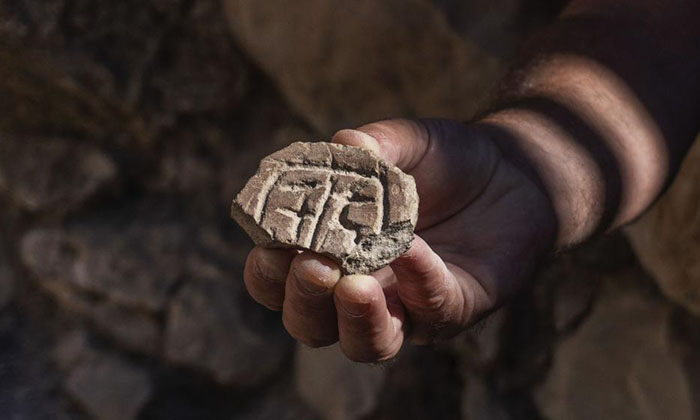
Image: A seal made out of a piece of clay from the Persian Period /Credit: Shai Halevy, Israel Antiquities Authority /via CBN News. How did Jerusalem deal with the tremendous destruction wrought upon her by the Babylonian army in the 6th century BC? A double stamp impression on a bulla and a seal made of re-used pottery shards, dated with high probability to the Persian period, may provide an answer to this question. The findings were discovered in the course of archaeological excavations undertaken by the Israel Antiquities Authority [IAA] and Tel Aviv University in the Givati p... more »
 
Asia

Care for cats? So did people along the Silk Road more than 1,000 years ago

Jonathan Kantrowitz at Archaeology News Report - 3 weeks ago
Common domestic cats, as we know them today, might have accompanied Kazakh pastoralists as pets more than 1,000 years ago. This has been indicated by new analyses done on an almost complete cat skeleton found during an excavation along the former Silk Road in southern Kazakhstan. An international research team led by Martin Luther University Halle-Wittenberg (MLU), Korkyt-Ata Kyzylorda State University in Kazakhstan, the University of Tübingen and the Higher School of Economics in Russia has reconstructed the cat's life, revealing astonishing insights into the relationship between ... more »


Thursday, July 30, 2020

Most of Stonehenge's large boulders share origin in west woods, Wiltshire


Origins of the sarsen megaliths at Stonehenge
AMERICAN ASSOCIATION FOR THE ADVANCEMENT OF SCIENCE
Most of the hulking sandstone boulders - called sarsens - that make up the United Kingdom's famous Stonehenge monument appear to share a common origin 25 kilometers away in West Woods, Wiltshire, according to an analysis of the stones' chemical composition. The findings support the theory that the stones were brought to Stonehenge at around the same time, contradicting a previous suggestion that one large sarsen, the Heel Stone, originated in the immediate vicinity of the monument and was erected earlier than the others. The results may also help scientists identify the route the monument's ancient builders would have taken to transport the enormous rocks to their celebrated resting site. "Until recently we did not know it was possible to provenance a stone like sarsen," says David Nash, the lead author of the study. "It has been really exciting to use 21st century science to understand the Neolithic past and answer a question that archaeologists have been debating for centuries." Since technology for determining the origins of the enormous sarsens, which tower at up to 30 feet tall, weigh as much as 25 tons, and make up most of Stonehenge, did not exist until recently, most research has revolved around the monument's smaller "bluestones" - various types of rock that clearly were not gathered locally. To learn where the behemoth boulders came from, Nash and colleagues used portable x-ray fluorescence spectrometry (PXRF) to initially characterize their chemical composition, then analyzed the data statistically to determine their degree of chemical variability. Next, the researchers performed inductively coupled plasma mass spectrometry (ICP-MS) and ICP-atomic emission spectrometry (ICP-AES) of samples from a core previously drilled through one sarsen stone and a range of sarsen boulders from across southern Britain. After comparing these signatures, Nash et al. were able to point to West Woods as the sarsens' earliest home. The reason the monument's builders selected this site remains a mystery, although the researchers suggest the size and quality of West Woods' stones, and the ease with which the builders could access them, may have factored into the decision.

Wednesday, July 29, 2020

Bald's Eyesalve: Medieval medicine could provide new treatment for modern day infections


FULL STORY

Antibiotic resistance is an increasing battle for scientists to overcome, as more antimicrobials are urgently needed to treat biofilm-associated infections. However scientists from the School of Life Sciences at the University of Warwick say research into natural antimicrobials could provide candidates to fill the antibiotic discovery gap.
Bacteria can live in two ways, as individual planktonic cells or as a multicellular biofilm. Biofilm helps protect bacteria from antibiotics, making them much harder to treat, one such biofilm that is particularly hard to treat is those that infect diabetic foot ulcers.
Researchers at the University of Warwick, Dr Freya Harrison, Jessica Furner-Pardoe, and Dr Blessing Anonye, have looked at natural remedies for the gap in the antibiotic market, and in the paper, 'Anti-biofilm efficacy of a medieval treatment for bacterial infection requires the combination of multiple ingredients' published in the journal Scientific Reports today the 28 July, researchers say medieval methods using natural antimicrobials from every day ingredients could help find new answers.
The Ancientbiotics research team was established in 2015 and is an interdisciplinary group of researchers including microbiologists, chemists, pharmacists, data analysts and medievalists at Warwick, Nottingham and in the United States.
Building on previous research done by the University of Nottingham on using medieval remedies to treat MRSA, the researchers from the School of Life Sciences at University of Warwick reconstructed a 1,000-year-old medieval remedy containing onion, garlic, wine, and bile salts, which is known as 'Bald's eyesalve', and showed it to have promising antibacterial activity. The team also showed that the mixture caused low levels of damage to human cells.
They found the Bald's eyesalve remedy was effective against a range of Gram-negative and Gram-positive wound pathogens in planktonic culture. This activity is maintained against the following pathogens grown as biofilms:
    1. Acinetobacter baumanii- commonly associated with infected wounds in combat troops returning from conflict zones.
    2. Stenotrophomonas maltophilia- commonly associated with respiratory infections in humans
    3. Staphylococcus aureus- a common cause of skin infections including abscesses, respiratory infections such as sinusitis, and food poisoning.
    4. Staphylococcus epidermidis- a common cause of infections involving indwelling foreign devices such as a catheter, surgical wound infections, and bacteremia in immunocompromised patients.
    5. Streptococcus pyogenes -- causes numerous infections in humans including pharyngitis, tonsillitis, scarlet fever, cellulitis, rheumatic fever and post-streptococcal glomerulonephritis.
All of these bacteria can be found in the biofilms that infect diabetic foot ulcers and which can be resistant to antibiotic treatment. These debilitating infections can lead to amputation to avoid the risk of the bacteria spreading to the blood to cause lethal bacteremia.
The Bald's eyesalve mixtures use of garlic, which contains allicin, can explain activity against planktonic cultures, however garlic alone has no activity against biofilms, and therefore the anti-biofilm activity of Bald's eyesalve cannot be attributed to a single ingredient and requires the combination of all ingredients to achieve full activity.
Dr Freya Harrison, from the School of Life Sciences at the University of Warwick comments:
"We have shown that a medieval remedy made from onion, garlic, wine, and bile can kill a range of problematic bacteria grown both planktonically and as biofilms. Because the mixture did not cause much damage to human cells in the lab, or to mice, we could potentially develop a safe and effective antibacterial treatment from the remedy.
"Most antibiotics that we use today are derived from natural compounds, but our work highlights the need to explore not only single compounds but mixtures of natural products for treating biofilm infections. We think that future discovery of antibiotics from natural products could be enhanced by studying combinations of ingredients, rather than single plants or compounds. In this first instance, we think this combination could suggest new treatments for infected wounds, such as diabetic foot and leg ulcers. "
Jessica Furner-Pardoe, from the Medical School at the University of Warwick comments:
"Our work demonstrates just how important it is to use realistic models in the lab when looking for new antibiotics from plants. Although a single component is enough to kill planktonic cultures, it fails against more realistic infection models, where the full remedy succeeds."
In previous research Christina Lee, from the School of English at the University of Nottingham, had examined the Bald's Leechbook, an Old English leatherbound volume in the British Library, to see if it really works as an antibacterial remedy. The Leechbook is widely thought of as one of the earliest known medical textbooks and contains Anglo-Saxon medical advice and recipes for medicines, salves and treatments. Christina adds: "Bald's eyesalve underlines the significance of medical treatment throughout the ages. It shows that people in Early Medieval England had at least some effective remedies. The collaboration which has informed this project shows the importance of the arts in interdisciplinary research."

Tuesday, July 28, 2020

Grape pips reveal collapse of ancient economy in the grip of plague and climate change


While we all try to understand the new reality imposed by the COVID-19 pandemic, many look to the past for historical precedents such as the Spanish flu of 1918 and the Black Plague of the 14th century. The first historically attested wave of what later became known as the Black Plague (caused by the bacterium Yersinia pestis) spread throughout the Byzantine Empire and beyond, in 541 CE. Known as Justinianic Plague, after the emperor Justinian who contracted the disease but survived, it caused high mortality and had a range of socio-economic effects. Around the same time, an enormous volcanic eruption in late 535 or early 536 CE marked the beginning of the coldest decade in the last two thousand years (another volcano of similar proportions erupted in 539 CE). However, scholars disagree as to just how far-reaching and devastating the mid-6th century epidemic and climate change were. This scholarly debate is unsurprising considering that even today, leaders and policymakers around the world differ on the severity and correct response to COVID-19, not to mention climate change. One reason that hindsight is not 20/20 when it comes to ancient plagues is that ancient reports tend to exaggerate, or underrepresent, the human tolls, while archaeological evidence for the social and economic effects of plague are very hard to find.
Recently, a team of Israeli archaeologists discovered new and compelling evidence for a significant economic downturn on the fringe of the Byzantine Empire in the aftermath of a major pandemic in the mid-6th century CE. The research, published today in the Proceedings of the National Academy of Sciences (PNAS), reconstructs the rise and fall of commercial viticulture in the middle of Israel's arid Negev desert.
Daniel Fuks, a PhD student in the Martin (Szusz) Department of Land of Israel Studies and Archaeology at Bar-Ilan University, led the study as a researcher in Prof. Ehud Weiss' Archaeobotany Lab, and as a team member of the Negev Byzantine Bio-Archaeology Research Program, "Crisis on the Margins of the Byzantine Empire", headed by Prof. Guy Bar-Oz of the University of Haifa. This project seeks to discover when and why the agricultural settlement of the Negev Highlands was abandoned.
Agriculture in this arid desert was made possible through rainwater runoff farming which reached its peak in the Byzantine period, as seen at sites like Elusa, Shivta and Nessana. At Negev Highland sites today, the ruins of well-built stone structures attest to their former glory, but Bar-Oz's team, guided by field archaeologists from the Israel Antiquities Authority (IAA), Dr. Yotam Tepper and Dr. Tali Erickson-Gini, discovered even more compelling evidence about life during that period in an unexpected place: the trash. "Your trash says a lot about you. In the ancient trash mounds of the Negev, there is a record of residents' daily lives - in the form of plant remains, animal remains, ceramic sherds, and more," explains Bar-Oz. "In the 'Crisis on the Margins' project, we excavated these mounds to uncover the human activity behind the trash, what it included, when it flourished, and when it declined."
The study of seeds found in archaeological excavations is part of the field known as archaeobotany (aka paleoethnobotany). The Bar-Ilan University Archaebotany Lab in which most of this research was conducted is the only lab in Israel dedicated to the identification of ancient seeds and fruits. Prof. Ehud Weiss, the lab's head, explains that the task of archaeobotany is to "get into the pantry - or, in this case, the trash - of ancient people and study their interactions with plants. Archaeobotany reconstructs ancient economy, environment and culture, but the way there is not easy. Grain by grain must be sorted through endless sediment samples, looking for seeds, identifying them and counting each one, as it is written '...if one can count the dust of the earth, then your seed too can be counted' (Genesis 13:16)." For the present study, nearly 10,000 seeds of grape, wheat and barley were retrieved and counted from 11 trash mounds at three sites. "Identifying seed and fruit remains is a unique capability of our lab," says Weiss, "and it relies on the Israel National Reference Collection of Plant Seeds and Fruit held in our lab, and on years of experience in retrieving, processing, and analyzing plant remains from sites of all periods in Israeli archaeology."
One of the researchers' first observations was the high numbers of grape seeds in the ancient trash mounds. This fit well with previous scholars' suggestions that the Negev was involved in export-bound viticulture. Byzantine texts laud the vinum Gazetum or "Gaza wine" as a sweet white wine exported from the port of Gaza throughout the Mediterranean and beyond. This wine was generally transported in a type of amphora known as "Gaza Jars" or "Gaza Wine Jars", which are also found in sites throughout the Mediterranean. In Byzantine Negev trash mounds, these Gaza Jars appear in high quantities.
Daniel Fuks, the Bar-Ilan University PhD student, sought to determine whether there were any interesting trends in the relative frequency of grape pips in the rubbish. In a Ted-style talk hosted by Bet Avichai last year, he said, "Imagine you're an ancient farmer with a plot of land to feed your family. On most of it, you plant cereals like wheat and barley because that's how you get your bread. On a smaller part, you plant a vineyard and other crops like legumes, vegetables and fruit trees, for your family's needs.
"But one day you realize that you could sell the excellent wine you produce, for export, and earn enough cash to buy bread and a bit more. Little by little you expand your vineyard and move from subsistence farming to commercial viticulture.
"If we look at your trash and count the seeds, we'll discover a rise in the proportion of grape pips relative to cereal grains. And that's exactly what we discovered: A significant rise in the ratio of grape pips to cereal grains between the 4th century CE and the mid-6th century. Then suddenly, it declines."
Meanwhile, Fuks and Dr. Tali Erickson-Gini, an expert in ancient Negev pottery, took this to the next level. They checked whether there were similar trends in the proportion of Gaza Wine Jars to Bag-Shaped Jars, the latter being much less suited to camelback transport from the Negev Highlands to the port at Gaza. Indeed, the rise and initial decline of Gaza Jars tracked the rise and fall of the grape pips.
The researchers concluded that the commercial scale of viticulture in the Negev, as seen in the grape pip ratios, was connected to Mediterranean trade, attested to by the Gaza Jar ratios. In other words, a novel archaeological testimony to an international commercial economy from some 1,500 years ago was discovered!
Like today, this situation brought unprecedented prosperity, but also greater vulnerability to shocks. In the mid-6th century, there were a few such shocks that could explain the decline. One of them was Justinianic plague, which had a high death toll in Byzantium and other parts of the empire. In the article, the authors explain that the resulting "contracting market for Gaza products would have detrimentally impacted the Negev economy, even while trade at nearby Gaza may have continued... If the plague reached the Negev, it could also have harmed the local production capacity and supply of agricultural products in general by inducing a shortage of agricultural laborers."
A different shock of that period was a volcanic eruption of global proportions in late 535/early 536 CE, which covered the Northern Hemisphere's atmosphere with dust and caused decade-long global cooling (another eruption of similar magnitude occurred in 539 CE). This led to drought in Europe, but may have increased precipitation, possibly including high-intensity flash flooding, in the southern Levant, causing detriment to local agriculture.
The Sisyphean task of sorting and counting seeds may not appear to be the most exciting, but the research on archaeological plant finds is innovative and influential, while also demonstrating the ingenuity and insightfulness involved in ancient peoples' interactions with plants. Guy Bar-Oz, of the University of Haifa, states,: "The discovery of the rise and fall of commercial viticulture in the Byzantine Negev supports other recent evidence unearthed by the 'Crisis on the Margins' project for major agricultural and settlement expansion in the 5th to mid-6th century followed by decline. It appears that agricultural settlement in the Negev Highlands received such a blow that it was not revived until modern times. Significantly, the decline came nearly a century before the Islamic conquest of the mid-seventh century."
Two of the most likely triggers for the mid-6th century collapse - climate change and plague - reveal inherent vulnerabilities in political-economic systems, then and now. "The difference is that the Byzantines didn't see it coming," explains Fuks. "We can actually prepare ourselves for the next outbreak or the imminent consequences of climate change. The question is, will we be wise enough to do so?"