Thursday, July 9, 2020

Care for cats? So did people along the Silk Road more than 1,000 years ago


Common domestic cats, as we know them today, might have accompanied Kazakh pastoralists as pets more than 1,000 years ago. This has been indicated by new analyses done on an almost complete cat skeleton found during an excavation along the former Silk Road in southern Kazakhstan. An international research team led by Martin Luther University Halle-Wittenberg (MLU), Korkyt-Ata Kyzylorda State University in Kazakhstan, the University of Tübingen and the Higher School of Economics in Russia has reconstructed the cat's life, revealing astonishing insights into the relationship between humans and pets at the time. The study will appear in the journal "Scientific Reports".
The tomcat - which was examined by a team led by Dr Ashleigh Haruda from the Central Natural Science Collections at MLU - did not have an easy life. "The cat suffered several broken bones during its lifetime," says Haruda. And yet, based on a very conservative estimate, the animal had most likely made it past its first year of life. For Haruda and her colleagues, this is a clear indication that people had taken care of this cat.
During a research stay in Kazakhstan, the scientist examined the findings of an excavation in Dzhankent, an early medieval settlement in the south of the country which had been mainly populated by the Oghuz, a pastoralist Turkic tribe. There she discovered a very well-preserved skeleton of a cat. According to Haruda, this is quite rare because normally only individual bones of an animal are found during an excavation, which prevents any systematic conclusions from being drawn about the animal's life. The situation is different when it comes to humans since usually whole skeletons are found. "A human skeleton is like a biography of that person. The bones provide a great deal of information about how the person lived and what they experienced," says Haruda. In this case, however, the researchers got lucky: after its death, the tomcat was apparently buried and therefore the entire skull including its lower jaw, parts of its upper body, legs and four vertebrae had been preserved.
Haruda worked together with an international team of archaeologists and ancient DNA specialists. An examination of the tomcat's skeleton revealed astonishing details about its life. First, the team took 3D images and X-rays of its bones. "This cat suffered a number of fractures, but survived," says Haruda. Isotope analyses of bone samples also provided the team with information about the cat's diet. Compared to the dogs found during the excavation and to other cats from that time period, this tomcat's diet was very high in protein. "It must have been fed by humans since the animal had lost almost all its teeth towards the end of its life."
DNA analyses also proved that the animal was indeed likely to be a domestic cat of the Felis catus L. species and not a closely related wild steppe cat. According to Haruda, it is remarkable that cats were already being kept as pets in this region around the 8th century AD: "The Oghuz were people who only kept animals when they were essential to their lives. Dogs, for example, can watch over the herd. They had no obvious use for cats back then," explains the researcher. The fact that people at the time kept and cared for such "exotic" animals indicates a cultural change, which was thought to have occurred at a much later point in time in Central Asia. The region was thought to have been slow in making changes with respect to agriculture and animal husbandry.
The Dhzankent settlement, where the remains of the cat were found, was located along the Silk Road, an ancient network of important caravan routes that connected Central and East Asia with the Mediterranean region by land. According to Haruda, the find is also an indication of cultural exchange between the regions located along the Silk Road.

Wednesday, July 8, 2020

Naturally perforated shells one of the earliest adornments in the Middle Paleolithic


Simulations and microscopic analysis confirm that ancient shells were hung on strings and painted with ochre
PLOS

CAPTION
Shells from Qafzeh Cave on which use-wear was studied.
CREDIT
Bar-Yosef Mayer et al, 2020
Ancient humans deliberately collected perforated shells in order to string them together as beads, according to a study published July 8, 2020 in the open-access journal PLOS ONE by Daniella Bar-Yosef Mayer (Tel Aviv University, Israel), Iris Groman-Yaroslavski (University of Haifa, Israel), and colleagues.
Shells are one of the oldest ways humans have adorned and expressed themselves, with examples of deliberately-collected shell assemblages at human sites dating as far back as 160,000 years ago found across North Africa, South Africa, and the Eastern Mediterranean. Shells from one Mediterranean Paleolithic site, Qafzeh Cave (dated to 120,000 years ago) are all naturally perforated (in contrast to the unperforated shells found at a nearby older site, Misliya Cave), suggesting that these shells were deliberately collected and strung together as beads.
To investigate the possibility of deliberate suspension to create strings of shell beads, Bar-Yosef Mayer and Groman-Yaroslavski collected the same species of perforated clamshells (Glycymeris) and simulated the potential use and wear present on the original shells: first systematically abrading the shells against different materials like leather, sand, and stone to produce a catalogue of wear patterns, then hanging the shells on strings made from wild flax to to identify wear patterns specific to string suspension. They then compared these wear patterns to those of the original Qafzeh Cave shells.
Microscopic analysis of the five best-preserved Qafzeh Cave shells revealed traces consistent with those created in the simulated shells via contact with a string, as well as traces of shell-to-shell contact (indicating the shells hung closely together). Four of the five original shells also revealed traces of an ochre coloring treatment.
Though it's not possible to determine the precise symbolic meaning of the shell bead strand from Qafzeh Cave, the fact that bivalve shells are a frequent hallmark across Paleolithic sites gives a sense of their importance. Additionally, the presence of a string seems to suggest that not only was shell collection important--the ability to display the shells to others also likely held significance. As one of the earliest instances of perforated objects hung on strings, the Qafzeh Cave shells also bring us closer to understanding the origins of string-making technology probably between 160-120,000 years ago.
Bar-Yosef Mayer adds: "Modern humans collected unperforated cockle shells for symbolic purposes at 160,000 years ago or earlier, and around 120,000 they started collecting perforated shells and wearing them on a string. We conclude that strings, which had many more applications, were invented within this time frame."

Polynesians, Native Americans made contact before European arrival, genetic study finds


STANFORD MEDICINE
Through deep genetic analyses, Stanford Medicine scientists and their collaborators have found conclusive scientific evidence of contact between ancient Polynesians and Native Americans from the region that is now Colombia -- something that's been hotly contested in the historic and archaeological world for decades.
"Genomics is at a stage where it can really make useful contributions to answering some of these open questions," said Alexander Ioannidis, PhD, a postdoctoral scholar at Stanford. "I think it's really exciting that we, as data scientists and geneticists, are able to contribute in a meaningful way to our understanding of human history."
Before this study was conducted, proponents of Native American and Polynesian interaction reasoned that some common cultural elements, such as a similar word used for a shared agricultural staple, hinted that the two populations had mingled before Europeans settled in South America. Those who disagreed pointed to studies with contrasting conclusions and the fact that the two groups were separated by thousands of miles of open ocean.
This new study is the first to show, through conclusive genetic analyses, that the two groups indeed encountered one another, and did so before Europeans arrived in South America. To conduct the study, Ioannidis and a team of international researchers collected genetic data from more than 800 living Indigenous inhabitants of several South American countries, Mexico and Polynesia, conducting extensive genetic analyses to find signals of common ancestry. Based on trackable, heritable segments of DNA, the team was able to trace common genetic signatures of Native American and Polynesian DNA back hundreds of years.
"Our laboratory in Mexico has been very interested in understanding the genetic diversity of populations throughout Latin America and, more generally, of underrepresented populations in genomic research," said Andrés Moreno-Estrada, PhD, professor and head of genomic services at the National Laboratory of Genomics for Biodiversity in Mexico. "Through this research, we wanted to reconstruct the ancestral roots that have shaped the diversity of these populations and answer deep, long-standing questions about the potential contact between Native Americans and Pacific Islanders, connecting two of the most understudied regions of the world."
A paper detailing the study will be published July 8 in Nature. Ioannidis, who conducted much of this work while a graduate student at Stanford's Institute for Computational and Mathematical Engineering, is the lead author. Moreno-Estrada is the senior author.
The mystery of the sweet potato
Before the study brought scientific evidence to the debate, the idea that Native Americans and Polynesians had crossed paths originated from a complex -- both in its structure and origins -- carbohydrate: the sweet potato. It turns out the sweet potato, which was originally domesticated in South and Central America, has also been known to grow in one other place prior to European contact. That place is known as Oceania, which consists of many islands, including Polynesia.
"The sweet potato is native to the Americas, yet it's also found on islands thousands of miles away," Ioannidis said. "On top of that, the word for sweet potato in Polynesian languages appears to be related to the word used in Indigenous American languages in the Andes."
The overlap in culture made some archaeologists and historians think it was not only feasible, but likely, that the potato's arrival in Polynesia was the result of the two peoples mingling.
The researchers believe that the Polynesians landed in what is now Colombia. It is also possible, though less likely due to their coastal travel norms, that one or two ships carrying Native Americans could have sailed off course and run into Polynesia, Ioannidis said.
Without scientific evidence, the idea of overlap was just conjecture. Earlier, other groups of researchers turned to the genetics of the sweet potato, hoping to show that the domesticated potatoes from South America and Polynesia were genetically one and the same. But their efforts to trace the tubers have been inconclusive, as the sweet potato's genetic origins were too complex to definitively point to human-mediated spread.
Other studies have analyzed ancient DNA from bones belonging to Native Americans and native Polynesians. Ancient DNA samples, however, are often degraded, so these studies were unable to provide sufficient evidence that the two populations shared a moment in history.
Carriers of history
Ioannidis' team took a different, big data approach, analyzing the DNA of hundreds of Indigenous people from Polynesia, Mexico and South America. Before collecting any samples or conducting genetic analyses, the researchers visited the communities to explain the study, gauge interest in participation and ask for consent. The scientists then collected saliva samples from 807 participants on 17 Polynesian islands and 15 Native American groups along the Pacific coast of the Americas from Mexico to Chile, conducting genetic analyses to look for snippets of DNA that are characteristic of each population and for segments that are "identical by descent," meaning they are inherited from the same ancestor many generations ago.
"We found identical-by-descent segments of Native American ancestry across several Polynesian islands," Ioannidis said. "It was conclusive evidence that there was a single shared contact event." In other words, Polynesians and Native Americans met at one point in history, and during that time people from the two cultures produced children with both Native American and Polynesian DNA. Statistical analyses confirmed the event occurred in the Middle Ages, around A.D. 1200, which is "around the time that these islands were originally being settled by native Polynesians," Ioannidis said. Using computational methods developed as part of Ioannidis' graduate work, the team then localized the source of the Native American DNA to modern-day Colombia.
"If you think about how history is told for this time period, it's almost always a story of European conquest, and you never really hear about everybody else," Ioannidis said. "I think this work helps piece together those untold stories -- and the fact that it can be brought to light through genetics is very exciting to me."

Artifacts from Ezra and Nehemiah era found


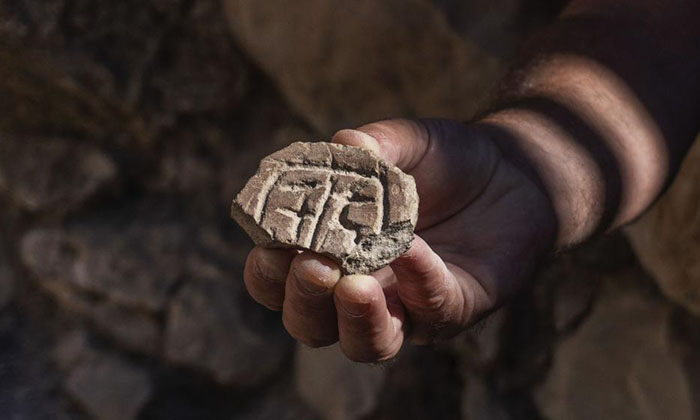
Image: A seal made out of a piece of clay from the Persian Period /Credit: Shai Halevy, Israel Antiquities Authority /via CBN News.
How did Jerusalem deal with the tremendous destruction wrought upon her by the Babylonian army in the 6th century BC?
A double stamp impression on a bulla and a seal made of re-used pottery shards, dated with high probability to the Persian period, may provide an answer to this question.
The findings were discovered in the course of archaeological excavations undertaken by the Israel Antiquities Authority [IAA] and Tel Aviv University in the Givati parking lot excavation of the City of David in the Jerusalem Walls National Park. They were found next to the rubble of a large structure that was destroyed during the Babylonian destruction of Jerusalem.
According to Prof. Yuval Gadot of the Department of Archaeology and Ancient Near Eastern Cultures at Tel Aviv University and Dr. Yiftah Shalev of the IAA: “Despite the numerous excavations conducted in Jerusalem to date, so far the findings revealed from the Persian period are extremely meager and therefore we lack information regarding the character and appearance of the city during this period. The researchers emphasized that: “Discovering these artifacts in an archaeological context which can be dated with a high probability is very rare.”
The seal impression—bullae—were small pieces of clay used in ancient times to sign documents or containers (for example, storage jugs for agricultural produce collected as a tax), and were intended to keep them sealed en route to their destination. Oftentimes, the objects on which the seals were stamped were themselves left unopened or did not endure (especially the documents), but the bullae remained preserved, leaving evidence of the administrative authorities, and even of the people representing them.
According to Prof. Gadot and Dr. Shalev: “The finding of the stamp and seal impression in the City of David indicates that despite the city’s dire situation after the destruction, efforts were made to restore the administrative authorities to normal, and its residents continued to partly use the structures that were destroyed.”
The double seal impression was discovered on a large piece of clay. The size of the clay piece, about 4.5 cm [1.77 in], indicates that it was used to seal a large container—perhaps a jar—and not a document. The imprint bears the image of a person sitting on a large chair with one or two columns in front of him. The design of the image is indicative of a Babylonian-style composition. The character is probably a king and the columns are the symbols that represent the gods Nabu and Marduk.
According to Dr. Ido Koch of the Department of Archaeology and Ancient Near Eastern Cultures at Tel Aviv University, only about ten artifacts of this style have been found in Israel, in places such as Ein Gedi and Jerusalem, which appear to have been in use during the Persian period. Another bulla of this style, also from the Persian period, was discovered in excavations carried out by Dr. Eilat Mazar on the eastern slope of the City of David.
The seal is made of a large, locally-made pottery shard, with a circular frame engraved on its outer side, and is divided into two sections containing several linear inscriptions. The engravings probably represent two characters, and it may be a pseudo-epigraphic seal (bearing drawings designed to resemble letters). On the other side of the seal is a fragment, which may be indicative of a handle that was attached to it in the past. The size of the seal, about 8 cm [3.14 in] in diameter, indicates that it was used to seal large objects.
According to the researchers: “Discovering the new findings on the western slope of the City of David adds much information about the city’s structure during the period of the Return to Zion, a period we knew about mainly from biblical literature (the books of Ezra and Nehemiah). The paucity of the findings from this period made it difficult to understand the status and extent of the city. The findings from the Givati parking lot excavation shed light on the renewal of the local administration, in a location similar to the one that existed before the destruction of the First Temple, about 100 years prior.”

Monday, July 6, 2020

Norman Conquest of 1066 did little to change people's eating habits


Archaeologists from Cardiff University and the University of Sheffield have combined the latest scientific methods to offer new insights into life during the Norman Conquest of England.
Until now, the story of the Conquest has primarily been told from evidence of the elite classes of the time. But little has been known about how it affected everyday people's lives.
The research team, which also included academics from the University of Bristol, used a range of bioarchaeological techniques to compare human and animal bones recovered from sites across Oxford, along with ceramics used for cooking. Their results suggest only short-term fluctuations in food supplies following the Conquest which didn't adversely affect the population's overall health.
There is evidence the Norman invasion led to more controlled and standardised mass agricultural practices. Pork became a more popular choice and dairy products were used less. But on the whole, a diet dominated by vegetables, cereals beef and mutton remained largely unchanged.
Dr Elizabeth Craig-Atkins of the University of Sheffield's Department of Archaeology said: "Examining archaeological evidence of the diet and health of ordinary people who lived during this time gives us a detailed picture of their everyday experiences and lifestyles. Despite the huge political and economic changes that were happening, our analysis suggests the Conquest may have only had a limited impact on most people's diet and health.
"There is certainly evidence that people experienced periods where food was scarce. But following this, an intensification in farming meant people generally had a more steady food supply and consistent diet. Aside from pork becoming a more popular food choice, eating habits and cooking methods remained unchanged to a large extent."
Researchers used a technique called stable isotope analysis on bones to compare 36 humans found in various locations around Oxford, including Oxford Castle, who had lived between the 10th and 13th centuries. Signals from food we consume are archived as chemical tracers in our bones, allowing scientists to investigate the quality and variety of a person's diet long after they have died.
The team found that there wasn't a huge difference between the health of the individuals, who were alive at different points before and after the Conquest. Levels of protein and carbohydrate consumption were similar in the group and evidence of bone conditions related to poor diet - such as rickets and scurvy - were rare. However, high resolution analysis of teeth showed evidence of short-term changes in health and diet in early life during this transitional phase.
Isotope analysis was also used on 60 animals found at the same sites, to ascertain how they were raised. Studies of pig bones found their diets became more consistent and richer in animal protein after the Conquest, suggesting pig farming was intensified under Norman rule. They were likely living in the town and being fed scraps instead of natural vegetable fodder.
Fragments of pottery were examined using organic residue analysis. When food is cooked in ceramic pots, fats are absorbed into the vessel, allowing researchers to extract them. Analysis showed that pots were used to cook vegetables like cabbage as well as meat such as lamb, mutton or goat across the conquest. Researchers say the use of dairy fats reduced after the Conquest and that pork or chicken became more popular.
Dr Richard Madgwick, based in Cardiff University's School of History, Archaeology and Religion, said: "To our knowledge, this is the very first time globally that human osteology, organic residues analysis and isotope analysis of incremental dentine and bone have been combined in a single study.
"It is only with this innovative and diverse suite of methods that we have been able to tell the story of how the Conquest affected diet and health in the non-elite, a somewhat marginalised group until now."

Friday, July 3, 2020

Latest Archaeology News - Asia, Africa, Europe, Oceania


Australia and Oceania

Aboriginal artifacts reveal first ancient underwater cultural sites in Australia

Jonathan Kantrowitz at Archaeology News Report - 18 hours ago
The first underwater Aboriginal archaeological sites have been discovered off northwest Australia dating back thousands of years ago when the current seabed was dry land. The discoveries were made through a series of archaeological and geophysical surveys in the Dampier Archipelago, as part of the Deep History of Sea Country Project, funded through the Australian Research Council's Discovery Project Scheme. The Aboriginal artefacts discovered off the Plibara coast in Western Australia represent Australia's oldest known underwater archaeology. An international team of archaeologists f... more »

Papua New Guinea highland research redates Neolithic period

Jonathan Kantrowitz at Archaeology News Report - 6 days ago
A new report published in *Science Advances* on the emergence of agriculture in highland Papua New Guinea shows advancements often associated with a later Neolithic period occurred about 1000 years' earlier than previously thought. University of Otago Archaeology Programme Professor and report co-author Glenn Summerhayes says findings in Emergence of a Neolithic in highland New Guinea by 5000 to 4000 years ago, provide insights into when and how the highlands were first occupied; the role of economic plants in this process; the development of trade routes which led to the transloca... more »

Denisovan DNA influences immune system of modern day Oceanian populations

Jonathan Kantrowitz at Archaeology News Report - 2 weeks ago
WELLCOME TRUST SANGER INSTITUTE SHARE PRINT E-MAIL More than 120,000 novel human genetic variations that affect large regions of DNA have been discovered, some of which are linked to immune response, disease susceptibility or digestion. Scientists at the Wellcome Sanger Institute identified these changes affecting multiple bases of DNA, known as structural variations, in a study of the most diverse worldwide populations examined to date. This included variations in medically-important genes in populations from Papua New Guinea that were inherited from Denisovan ancestors. The ... more »
 

New Papua New Guinea research solves archaeological mysteries

Jonathan Kantrowitz at Archaeology News Report - 3 weeks ago
UNIVERSITY OF OTAGO SHARE PRINT E-MAIL [image: IMAGE] IMAGE: PROFESSOR GLENN SUMMERHAYES AT THE "JOES' GARDEN " SITE IN THE IVANE VALLEY IN THE NEW GUINEA HIGHLANDS. view more CREDIT: UNIVERSITY OF OTAGO New research which "fills in the blanks" on what ancient Papuan New Guineans ate, and how they processed food, has ended decades-long speculation on tool use and food stables in the highlands of New Guinea several thousand years ago. Findings from the "Joe's Garden" site in the Ivane Valley in the New Guinea highlands end several decades of academic speculation about what a for... more »


Europe, Asia and Africa

Climate change and the rise of the Roman Empire and the fall of the Ptolemies

Jonathan Kantrowitz at Archaeology News Report - 1 week ago
YALE UNIVERSITY SHARE PRINT E-MAIL The assassination of Julius Caesar on the Ides of March in 44 B.C.E. triggered a 17-year power struggle that ultimately ended the Roman Republic leading to the rise of the Roman Empire. To the south, Egypt, which Cleopatra was attempting to restore as a major power in the Eastern Mediterranean, was shook by Nile flood failures, famine, and disease. These events are among the best known and important political transitions in the history of western civilization. A new study reveals the role climate change played in these ancient events. An inte... more »
 

Eruption of Alaska's Okmok volcano linked to period of extreme cold in ancient Rome

Jonathan Kantrowitz at Archaeology News Report - 1 week ago
An international team of scientists and historians has found evidence connecting an unexplained period of extreme cold in ancient Rome with an unlikely source: a massive eruption of Alaska's Okmok volcano, located on the opposite side of the Earth. Around the time of Julius Caesar's death in 44 BCE, written sources describe a period of unusually cold climate, crop failures, famine, disease, and unrest in the Mediterranean Region -impacts that ultimately contributed to the downfall of the Roman Republic and Ptolemaic Kingdom of Egypt. Historians have long suspected a volcano to be the... more »


Seafood helped prehistoric people migrate out of Africa

Jonathan Kantrowitz at Archaeology News Report - 2 weeks ago
Prehistoric pioneers could have relied on shellfish to sustain them as they followed migratory routes out of Africa during times of drought, a new study suggests. The study examined fossil reefs near to the now-submerged Red Sea shorelines that marked prehistoric migratory routes from Africa to Arabia. The findings suggest this coast offered the resources necessary to act as a gateway out of Africa during periods of little rainfall when other food sources were scarce. The research team, led by the University of York, focused on the remains of 15,000 shells dating back 5,000 years to ... more »
 
Africa

Mixture and migration brought food production to sub-Saharan Africa

Jonathan Kantrowitz at Archaeology News Report - 2 weeks ago
In order to reveal the population interactions that gave rise to Africa's enormous linguistic, cultural, and economic diversity, an interdisciplinary team of researchers from Africa, Europe, and North America sampled key regions in which current models predict a legacy of significant population interactions. The collaborative study between researchers at the Max Planck Institute for the Science of Human History (MPI-SHH), the National Museums of Kenya and other partners was led by archaeogeneticist Ke Wang and archaeologist Steven Goldstein of MPI-SHH. It sheds light on patterns of ... more »
 
Europe

First-degree incest: ancient genomes uncover Irish passage tomb dynastic elite

Jonathan Kantrowitz at Archaeology News Report - 2 weeks ago
TRINITY COLLEGE DUBLIN SHARE PRINT E-MAIL [image: IMAGE] IMAGE: NEWGRANGE AS SEEN ON A MISTY MORNING. view more CREDIT: KEN WILLIAMS, SHADOWSANDSTONE.COM > The genome of an adult male from the heart of the world famous Newgrange passage tomb points to first-degree incest, implying dynasty and echoing local place-name folklore first recorded in Medieval times > Far-flung kinship ties between Newgrange and passage tomb cemeteries in the west (Carrowkeel and Carrowmore, Co. Sligo) indicate an elite social stratum was widespread > Before megalith builders arriv... more »
 

Tropical disease in medieval Europe revises the history of a pathogen related to syphilis

Jonathan Kantrowitz at Archaeology News Report - 2 weeks ago
Genomic analysis of plague victims from a mass burial in Lithuania identifies a medieval woman who was also infected with yaws -- a disease today found only in the tropics MAX PLANCK INSTITUTE FOR THE SCIENCE OF HUMAN HISTORY SHARE PRINT E-MAIL [image: IMAGE] IMAGE: MULTIPLE BURIAL IN VILNIUS, LITHUANIA CONTAINING AN INDIVIDUAL INFECTED WITH BOTH PLAGUE AND YAWS. view more CREDIT: PHOTO COURTESY OF ROBERTAS �UKOVSKIS AND SCIENTIFIC REPORTS. Mass burials are common remnants of the many plague outbreaks that ravaged Medieval Europe. A number of these graveyards are well documented... more »

Entire Roman city revealed without any digging

Jonathan Kantrowitz at Archaeology News Report - 3 weeks ago
For the first time, archaeologists have succeeded in mapping a complete Roman city, Falerii Novi in Italy, using advanced ground penetrating radar (GPR), allowing them to reveal astonishing details while it remains deep underground. The technology could revolutionise our understanding of ancient settlements. The team, from the University of Cambridge and Ghent University, has discovered a bath complex, market, temple, a public monument unlike anything seen before, and even the city's sprawling network of water pipes. By looking at different depths, the archaeologists can now study h... more »
 
 
Neandertals and Denisovans

A Neandertal from Chagyrskaya Cave

Jonathan Kantrowitz at Archaeology News Report - 2 weeks ago
Neandertals may have lived in very small groups, and genes expressed in the basal ganglia of their brains may have changed MAX PLANCK INSTITUTE FOR EVOLUTIONARY ANTHROPOLOGY SHARE PRINT E-MAIL [image: IMAGE] IMAGE: RESEARCHERS HAVE SEQUENCED THE GENOME OF A NEANDERTAL FROM CHAGYRSKAYA CAVE IN THE ALTAI MOUNTAINS TO HIGH QUALITY.view more CREDIT: DR. BENCE VIOLA, DEPT. OF ANTHROPOLOGY, U. OF TORONTO The researchers extracted the DNA from bone powder and sequenced it to high quality. They estimate that the female Neandertal lived 60,000-80,000 years ago. From the variation in the ... more »
 

Immune properties in ancient DNA found in isolated villages might benefit humanity today

Jonathan Kantrowitz at Archaeology News Report - 2 weeks ago
TGen-led international study traces genetic diversity among hunter-gathers of Indonesia, including last significant vestige of DNA from extinct human cousins THE TRANSLATIONAL GENOMICS RESEARCH INSTITUTE SHARE PRINT E-MAIL PHOENIX, Ariz. -- June 15, 2020 -- Could remnants of DNA from a now extinct human subspecies known as the Denisovans help boost the immune functions of modern humans? An international study co-led by the Translational Genomics Research Institute (TGen), an affiliate of City of Hope, and published in the scientific journal *PLOS Genetics*, represents the first... more »

Denisovan DNA influences immune system of modern day Oceanian populations

Jonathan Kantrowitz at Archaeology News Report - 2 weeks ago
WELLCOME TRUST SANGER INSTITUTE SHARE PRINT E-MAIL More than 120,000 novel human genetic variations that affect large regions of DNA have been discovered, some of which are linked to immune response, disease susceptibility or digestion. Scientists at the Wellcome Sanger Institute identified these changes affecting multiple bases of DNA, known as structural variations, in a study of the most diverse worldwide populations examined to date. This included variations in medically-important genes in populations from Papua New Guinea that were inherited from Denisovan ancestors. The ... more »
 
Asia
 

Discovery of oldest bow and arrow technology in Eurasia

Jonathan Kantrowitz at Archaeology News Report - 2 weeks ago
[image: IMAGE] IMAGE: FA-HIEN LENA HAS EMERGED AS ONE OF SOUTH ASIA'S MOST IMPORTANT ARCHAEOLOGICAL SITES SINCE THE 1980S, PRESERVING REMAINS OF OUR SPECIES, THEIR TOOLS, AND THEIR PREY IN A TROPICAL CONTEXT.... view more CREDIT: LANGLEY ET AL., 2020 The origins of human innovation have traditionally been sought in the grasslands and coasts of Africa or the temperate environments of Europe. More extreme environments, such as the tropical rainforests of Asia, have been largely overlooked, despite their deep history of human occupation. A new study provides the earliest evidence for bo... more »


Discovery of the oldest Chinese work of art

Jonathan Kantrowitz at Archaeology News Report - 3 weeks ago
A small bird carving--the oldest instance of East Asian three-dimensional art ever discovered--is described in a study published June 10, 2020 in the open-access journal *PLOS ONE* by Zhanyang Li from Shandong University, China, and colleagues. European animal and human mammoth ivory carvings dated to 40-38 ka are our earliest examples of prehistoric humans three-dimensionally representing the world around them--though due to a lack of evidence, it's unclear when this type of three-dimensional representation became part of the cultural repertoire of prehistoric groups around the res... more »
 

Radiocarbon dating pins date for construction of Uyghur complex to the year 777

Jonathan Kantrowitz at Archaeology News Report - 3 weeks ago
[image: IMAGE] IMAGE: THIS IS AN AERIAL VIEW OF POR-BAJIN FROM THE WEST. THE COMPLEX IS SITUATED ON AN ISLAND IN A LAKE. SCIENTISTS HAVE PINNED ITS CONSTRUCTION ON THE YEAR 777... view more CREDIT: ANDREI PANIN Dating archaeological objects precisely is difficult, even when using techniques such as radiocarbon dating. Using a recently developed method, based on the presence of sudden spikes in carbon-14 concentration, scientists at the University of Groningen, together with Russian colleagues, have pinned the date for the construction of an eighth-century complex in southern Siber... more »

Oldest connection with Native Americans identified near Lake Baikal in Siberia

Jonathan Kantrowitz at Archaeology News Report - 3 weeks ago
Using human population genetics, ancient pathogen genomics and isotope analysis, a team of researchers assessed the population history of the Lake Baikal region, finding the deepest connection to date between the peoples of Siberia and the Americas. The current study, published in the journal *Cell*, also demonstrates human mobility, and hence connectivity, across Eurasia during the Early Bronze Age. Modern humans have lived near Lake Baikal since the Upper Paleolithic, and have left behind a rich archaeological record. Ancient genomes from the region have revealed multiple genetic ... more »

Ancient genomes link subsistence change and human migration in northern China

Jonathan Kantrowitz at Archaeology News Report - 4 weeks ago
Genetic analysis of 55 ancient individuals finds that genetic changes in Yellow River, West Liao River and Amur River populations correlate with the intensification of farming and the inclusion of a pastoral economy E-MAIL [image: IMAGE] IMAGE: HUMAN REMAINS IN HOUSE FOUNDATION F40 OF THE HAMINMANGHA SITE. view more CREDIT: YONGGANG ZHU, SCHOOL OF ARCHAEOLOGY JILIN UNIVERSITY While recent advances in ancient DNA analysis have established the major patterns of prehistoric human migration in western Eurasia, the population history of eastern Eurasia remains little understood. North... more »


Israel

Pinpointing the origins of Jerusalem's Temple Mount

Jonathan Kantrowitz at Archaeology News Report - 4 weeks ago
CAPTION Wilson's Arch excavation area. (A) Map of the old city of Jerusalem and the location Wilson's Arch. Copyrights: Israel Antiquities Authority, 2020. (B) An artistic reconstruction of the Temple Mount in the time of Herod the Great (1st century AD). The arrow points to the arch known today as Wilson's Arch. Copyrights: Ritmeyer Archaeological Design, 2020. (C,D) Photographs of the site. The scale bar in D is 1 meter in length. (E,F) A 3D reconstruction of the site. As the site is under constant renovations, a model is used here to illustrate the location of the various featur... more »
 

Latest Archaeology News - Americas

 
Americas

Non-tobacco plant identified in ancient pipe for first time

Jonathan Kantrowitz at Archaeology News Report - 2 days ago
People in what is now Washington State were smoking Rhus glabra, a plant commonly known as smooth sumac, more than 1,400 years ago. The discovery, made by a team of Washington State University researchers, marks the first-time scientists have identified residue from a non-tobacco ... more »

The millenial pre-colonial cultural inluence is evident in the Amazon forest

Jonathan Kantrowitz at Archaeology News Report - 2 days ago
 More than ten years ago, large geometric earthworks found in the southwestern parts of the Amazon, called geoglyphs, were reported in the global scientific news. A pre-colonial civilization unknown to scholars that built geometric ceremonial centers and sophisticated road systems. This civilization flourished in the rainforest area 2,000 years ago. The discovery radically altered the prevailing notion of the pristine Amazon rai... more »

Innovation by ancient farmers adds to biodiversity of the Amazon

Jonathan Kantrowitz at Archaeology News Report - 1 week ago
 
 Innovation by ancient farmers to improve soil fertility continues to have an impact on the biodiversity of the Amazon, a major new study shows. Early inhabitants fertilized the soil with charcoal from fire remains and food waste. Areas with this "dark earth" have a different set of species than the surrounding landscape, contributing to a more diverse ecos... more »
 

Ancient Maya reservoirs contained toxic pollution

Jonathan Kantrowitz at Archaeology News Report - 2 days ago
Reservoirs in the heart of an ancient Maya city were so polluted with mercury and algae that the water likely was undrinkable. Researchers from the University of Cincinnati found toxic levels of pollution in two central reservoirs in Tikal, an ancient Maya city that dates back to the third century B.C. in what is now northern Guatemala. UC's findings suggest droughts in the ninth century likely contributed to the depopulation and eventual abandonment of ... more »


Oldest connection with Native Americans identified near Lake Baikal in Siberia

Jonathan Kantrowitz at Archaeology News Report - 3 weeks ago
Using human population genetics, ancient pathogen genomics and isotope analysis, a team of researchers assessed the population history of the Lake Baikal region, finding the deepest connection to date between the peoples of Siberia and the Americas. The current study, published in the journal *Cell*, also demonstrates human mobility, and hence connectivity, across Eurasia during the Early Bronze Age. Modern humans have lived near Lake Baikal since the Upper Paleolithic, and have left behind a rich archaeological record. Ancient genomes from the region have revealed multiple genetic ... more »

Ancient DNA provides new insights into the early peopling of the Caribbean

Jonathan Kantrowitz at Archaeology News Report - 3 weeks ago
New study reveals multiple waves of settlement and connections to the American mainland UNIVERSITY OF COPENHAGEN THE FACULTY OF HEALTH AND MEDICAL SCIENCES SHARE PRINT E-MAIL [image: IMAGE] IMAGE: LLLUSTRATION OF ONE OF THE EARLY SETTLERS IN THE CARIBBEAN. view more CREDIT: TOM BJÖRKLUND. According to a new study by an international team of researchers from the Caribbean, Europe and North America, the Caribbean was settled by several successive population dispersals that originated on the American mainland. he Caribbean was one of the last regions of the Americas to be settled b... more »
 

Largest, oldest Maya monument suggests importance of communal work

Jonathan Kantrowitz at Archaeology News Report - 4 weeks ago
From the ground, it's impossible to tell that the plateau underfoot is something extraordinary. But from the sky, with laser eyes, and beneath the surface, with radiocarbon dating, it's clear that it is the largest and oldest Mayan monument ever discovered. Located in Tabasco, Mexico, near the northwestern border of Guatemala, the newly discovered site of Aguada Fénix lurked beneath the surface, hidden by its size and low profile until 2017. The monument measures nearly 4,600 feet long, ranges from 30 to 50 feet high and includes nine wide causeways. The monument was discovered by an... more »

Maize became a key food source in Central America 4,700 years ago

Jonathan Kantrowitz at Archaeology News Report - 4 weeks ago
About 9,000 years ago in the Balsas River Valley of southwestern Mexico, hunter-gatherers began domesticating teosinte, a wild grass. Fast-forward to the present, and what was a humble perennial has been turned into the world's biggest grain crop: maize. Humanity deeply relies on maize, or corn, but just when it became a major food crop in the Americas has been a source of mystery and dispute. Now, a UC Santa Barbara researcher and his collaborators, by testing the skeletons of an "unparalleled" collection of human skeletal remains in Belize, have demonstrated that maize had become a... more »

Doubts about the Nerja cave art having been done by neanderthals

Jonathan Kantrowitz at Archaeology News Report - 4 weeks ago
UNIVERSITY OF CÓRDOBA SHARE PRINT E-MAIL [image: IMAGE] IMAGE: THE RESEARCHER JOSÉ LUIS SANCHIDRIÁN AT THE NERJA CAVE view more CREDIT: UNIVERSITY OF CORDOBA Dating cave art is a key issue for understanding human cognitive development. Knowing whether the ability for abstraction and conveying reality involved in artistic development is unique to Homo sapiens or if it was shared with other species, or simply knowing at what moment these abilities developed, is vital in order to understand the complexity of human evolution. Currently in Spain, for the most part, when trying to f... more »

Ancient DNA extracted from Dead Sea Scrolls permits rare glimpse into world of Second Temple Judaism

Jonathan Kantrowitz at Archaeology News Report - 4 weeks ago
An interdisciplinary team from Tel Aviv University, led by Prof. Oded Rechavi of TAU's George S. Wise Faculty of Life Sciences, Prof. Noam Mizrahi of TAU's Department of Biblical Studies, in collaboration with Prof. Mattias Jakobsson of Uppsala University in Sweden, the Israel Antiquities Authority and Prof. Christopher E. Mason of Weill Cornell Medicine, has successfully decoded ancient DNA extracted from the animal skins on which the Dead Sea Scrolls were written. By characterizing the genetic relationships between different scroll fragments, the researchers were able to discern ... more »