Wednesday, January 6, 2016

Neolithic and Bronze Age migration to Ireland


Modern Europe has been shaped by two episodes in prehistory, the advent of agriculture and later metallurgy. These innovations brought not only massive cultural change but also, in certain parts of the continent, a change in genetic structure. The manner in which these transitions affected the islands of Ireland and Britain on the northwestern edge of the continent remains the subject of debate. The first ancient whole genomes from Ireland, demonstrate that large-scale genetic shifts accompanied both transitions.  A new PNAS Online study also observe a strong signal of continuity between modern day Irish populations and the Bronze Age individuals, one of whom is a carrier for the hemochromatosis mutation, which has its highest frequencies in Ireland today.
The Neolithic and Bronze Age transitions were profound cultural shifts catalyzed in parts of Europe by migrations, first of early farmers from the Near East and then Bronze Age herders from the Pontic Steppe. However, a decades-long, unresolved controversy is whether population change or cultural adoption occurred at the Atlantic edge, within the British Isles. We address this issue by using the first whole genome data from prehistoric Irish individuals. A Neolithic woman (3343–3020 cal BC) from a megalithic burial (10.3× coverage) possessed a genome of predominantly Near Eastern origin. She had some hunter–gatherer ancestry but belonged to a population of large effective size, suggesting a substantial influx of early farmers to the island. Three Bronze Age individuals showed substantial Steppe genetic heritage indicating that the European population upheavals of the third millennium manifested all of the way from southern Siberia to the western ocean. This turnover invites the possibility of accompanying introduction of Indo-European, perhaps early Celtic, language. Irish Bronze Age haplotypic similarity is strongest within modern Irish, Scottish, and Welsh populations, and several important genetic variants that today show maximal or very high frequencies in Ireland appear at this horizon. 

New discoveries about Knossos, Europe's oldest city


Recent fieldwork at the ancient city of Knossos on the Greek island of Crete finds that during the early Iron Age (1100 to 600 BC), the city was rich in imports and was nearly three times larger than what was believed from earlier excavations. The discovery suggests that not only did this spectacular site in the Greek Bronze Age (between 3500 and 1100 BC) recover from the collapse of the socio-political system around 1200 BC, but also rapidly grew and thrived as a cosmopolitan hub of the Aegean and Mediterranean regions. Antonis Kotsonas, a University of Cincinnati assistant professor of classics, will highlight his field research with the Knossos Urban Landscape Project at the 117th annual meeting of the Archaeological Institute of America and Society for Classical Studies. The meeting takes place Jan. 7-10, 2016 in San Francisco.
Kotsonas explains that Knossos, "renowned as a glorious site of the Greek Bronze Age, the leader of Crete and the seat of the palace of the mythical King Minos and the home of the enigmatic labyrinth," was the prosperous epicenter of Minoan culture. Scholars have studied the city's Bronze Age remains for more than a century, but more recent research has focused on the urban development of the city after it entered the Iron Age -- in the 11th century BC -- following the Bronze Age collapse of the Aegean palaces. 
The Knossos Urban Landscape Project over the past decade has recovered a large collection of ceramics and artifacts dating back to the Iron Age. The relics were spread over an extensive area that was previously unexplored. Kotsonas says that this exploration revealed considerable growth in the size of the settlement during the early Iron Age and also growth in the quantity and quality of its imports coming from mainland Greece, Cyprus, the Near East, Egypt, Italy, Sardinia and the western Mediterranean.
"No other site in the Aegean period has such a range of imports," Kotsonas says. The imports include bronze and other metals -- jewelry and adornments, as well as pottery. He adds that the majority of the materials, recovered from tombs, provide a glimpse of the wealth in the community, because status symbols were buried with the dead during this period. 
The antiquities were collected from fields covering the remains of dwellings and cemeteries. "Distinguishing between domestic and burial contexts is essential for determining the size of the settlement and understanding the demographic, socio-political and economic development of the local community," explains Kotsonas. "Even at this early stage in detailed analysis, it appears that this was a nucleated, rather densely occupied settlement extending over the core of the Knossos valley, from at least the east slopes of the acropolis hill on the west to the Kairatos River, and from the Vlychia stream on the south until roughly midway between the Minoan palace and the Kephala hill."
Kotsonas' Jan. 9, 2016 presentation is part of a colloquium themed, "Long-Term Urban Dynamics at Knossos: The Knossos Urban Landscape Project, 2005-2015." Kotsonas serves as a consultant on the project, which is dedicated to intensively surveying the Knossos valley and documenting the development of the site from 7000 BC, to the early 20th century. The project is a research partnership between the Greek Archaeological Service and the British School at Athens. Kotsonas has served as a collaborator on the project since 2009.

Monday, January 4, 2016

The first European farmers traced back to Anatolia


Human material from the Anatolian site Kumtepe was used in the study. The material was heavily degraded, but yielded enough DNA for the doctorate student Ayca Omrak to address questions concerning the demography connected to the spread of farming. She conducted her work at the Archaeological Research Laboratory.
"I have never worked with a more complicated material. But it was worth every hour in the laboratory. I could use the DNA from the Kumtepe material to trace the european farmers back to Anatolia. It is also fun to have worked with this material from the site Kumtepe, as this is the precursor to Troy", says doctorate student Ayca Omrak, at the Archaeological Research Laboratory Stockholm University.
Jan Storå, associate professor in osteoarchaeology and coauthor to the study agrees with Ayca. The results confirms Anatolias importance to Europe's cultural history. He also thinks that material from the area needs to be researched further.
"It is complicated to work with material from this region, it is hot and the DNA is degraded. But if we want to understand how the process that led from a hunter-gatherer society proceeded to a farming society, it is this material we need to exhaust", says Jan Storå, associate professor in osteoarchaeology, Stockholm University.
Anders Götherstörm who heads the archaeogenetic research at the Archaeological Research Laboratory agrees that this study indicates further possibilities:
"Our results stress the importance Anatolia has had on Europe's prehistory. But to fully understand how the agricultural development proceeded we need to dive deeper down into material from the Levant. Jan is right about that."

Thursday, December 31, 2015

An Impressive Farmstead and an Ancient Monastery with Colorful Mosaics and Inscriptions were Recently Exposed in Rosh Ha-‘Ayin


Impressive archaeological finds are currently being uncovered in extensive excavations the Israel Antiquities Authority is carrying out in Rosh Ha-‘Ayin at the initiative of the Ministry of Construction and Housing and the Rosh Ha-‘Ayin municipality, prior to the building of new neighborhoods. So far scores of teenagers from preparatory programs and youth villages have participated in the excavation as part of the Israel Antiquities Authority policy of increasing public awareness of our cultural heritage.

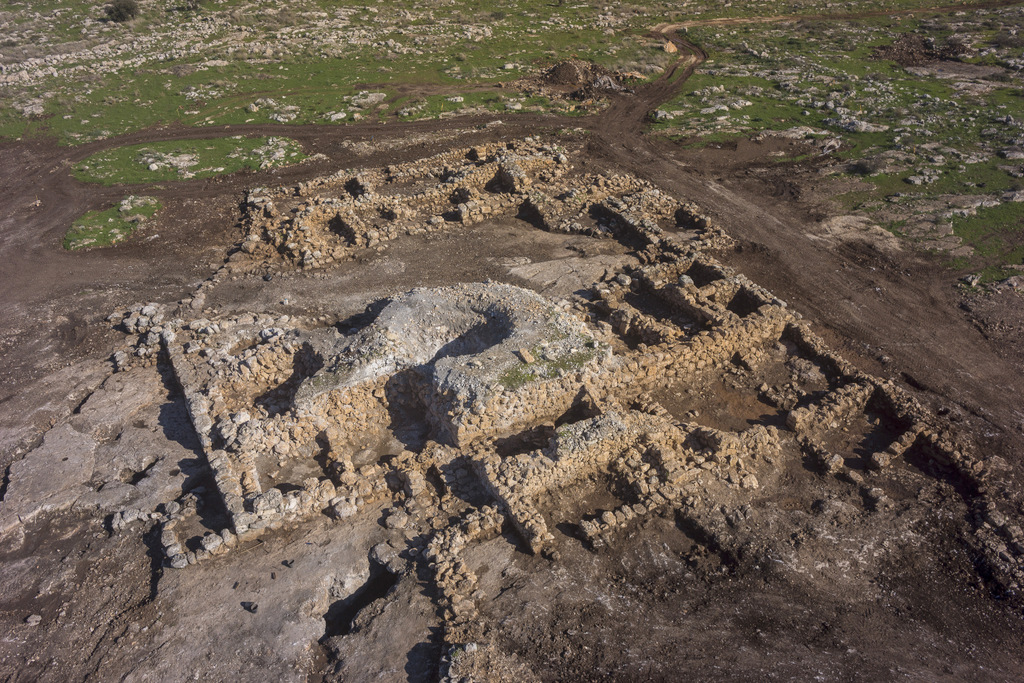
During the excavation an impressive 2,700 year old farmhouse (30 × 50 meters) and a 1,500 year old church with colorful mosaics and inscriptions in it were uncovered.


According to Amit Shadman, excavation director on behalf of the Israel Antiquities Authority, “The large farmhouse was preserved to a height of more than two meters. The building is 2,700 years old and included twenty-four rooms constructed around a central courtyard. A large storage compartment (silo) meant to protect the grain was exposed in the courtyard. It seems that carbohydrates were as popular then as now, and the growing and processing of grain were fairly widespread in the rural-agricultural region. This was corroborated by other discoveries in the field that included numerous millstones which were used to grind the grain into flour. In addition, we found simple rock-hewn oil presses used in the production of olive oil”. Among the other artifacts that were exposed in the farmhouse remains were two silver coins from the fourth century BCE that bear the likenesses of the goddess Athena and the Athenian owl.

According to Shadman, this farmstead and other similar ones operated for centuries until the region was abandoned in Hellenistic period. Many hundreds of years later, during the fifth century CE, another settlement wave, this being one Christian, arrived in the area and changed the landscape. Among other things, the rapid spread of Christianity at that time is apparent as evidenced by the many impressive rural churches and monasteries that have been exposed.

A monastery dating to the Byzantine period was exposed on one of the hills in the area and included a church, an oil press, residential quarters and stables equipped with mangers and troughs, etc. The floors of the church that was built in the monastery were made of colorful mosaics that included geometric and other designs. In addition, a Greek inscription ascribed to a priest named Theodosius (a common name in the Byzantine period) was revealed in one of the mosaics – “This place was built under Theodosius the priest. Peace be with you when you come, peace be with you when you go, Amen”.

Hundreds of years after the monastery ceased to function a lime kiln was established there in the Ottoman period, which destroyed large parts of the monastery.

Given the impressive finds uncovered in the excavations, it was decided that the ancient remains will be conserved in situ, and will be displayed in the communal areas of the new neighborhoods that will be open for the benefit of the public.


Monday, December 28, 2015

Ancient Irish human genomes show unequivocal evidence for mass migrations into Ireland


A team of geneticists from Trinity College Dublin and archaeologists from Queen's University Belfast has sequenced the first genomes from ancient Irish humans, and the information buried within is already answering pivotal questions about the origins of Ireland's people and their culture.

The team sequenced the genome of an early farmer woman, who lived near Belfast some 5,200 years ago, and those of three men from a later period, around 4,000 years ago in the Bronze Age, after the introduction of metalworking. Their landmark results are published today in international journal Proceedings of the National Academy of Sciences, USA.

Ireland has intriguing genetics. It lies at the edge of many European genetic gradients with world maxima for the variants that code for lactose tolerance, the western European Y chromosome type, and several important genetic diseases including one of excessive iron retention, called haemochromatosis.

However, the origins of this heritage are unknown. The only way to discover our genetic past is to sequence genomes directly from ancient people, by embarking on a type of genetic time travel.

Migration has been a hot topic in archaeology. Opinion has been divided on whether the great transitions in the British Isles, from a hunter-gatherer lifestyle to one based on agriculture and later from stone to metal use, were due to local adoption of new ways or whether these influences were derived from influxes of new people.

These ancient Irish genomes each show unequivocal evidence for massive migration. The early farmer has a majority ancestry originating ultimately in the Middle East, where agriculture was invented. The Bronze Age genomes are different again with about a third of their ancestry coming from ancient sources in the Pontic Steppe.

"There was a great wave of genome change that swept into Europe from above the Black Sea into Bronze Age Europe and we now know it washed all the way to the shores of its most westerly island," said Professor of Population Genetics in Trinity College Dublin, Dan Bradley, who led the study, "and this degree of genetic change invites the possibility of other associated changes, perhaps even the introduction of language ancestral to western Celtic tongues."

"It is clear that this project has demonstrated what a powerful tool ancient DNA analysis can provide in answering questions which have long perplexed academics regarding the origins of the Irish," said Dr Eileen Murphy, Senior Lecturer in Osteoarchaeology at Queen's University Belfast.

Whereas the early farmer had black hair, brown eyes and more resembled southern Europeans, the genetic variants circulating in the three Bronze Age men from Rathlin Island had the most common Irish Y chromosome type, blue eye alleles and the most important variant for the genetic disease, haemochromatosis.

The latter C282Y mutation is so frequent in people of Irish descent that it is sometimes referred to as a Celtic disease. This discovery therefore marks the first identification of an important disease variant in prehistory.

"Genetic affinity is strongest between the Bronze Age genomes and modern Irish, Scottish and Welsh, suggesting establishment of central attributes of the insular Celtic genome some 4,000 years ago," added PhD Researcher in Genetics at Trinity, Lara Cassidy.


Friday, December 18, 2015

Site of first multi-year European settlement in the U.S. identified


The University of West Florida archaeology program recently identified the archaeological site of the Luna settlement – the first multi-year European settlement in the United States – in a developed neighborhood in Pensacola.

The artifacts discovered are evidence of the Spanish settlement by Tristán de Luna y Arellano from 1559 to 1561, the earliest multi-year European colonial settlement ever archaeologically identified in the United States.

The work began on Oct. 2, 2015, when Pensacola native Tom Garner discovered Spanish colonial and Native American artifacts at a privately owned residential lot within view of the two uncovered shipwrecks in Pensacola Bay, which were also linked to the Luna expedition. In 1983, Garner attended a UWF archaeology field school led by Dr. Judith Bense, founder of the UWF archaeology program and current University president. Garner is well versed in the identification of historical artifacts and aware of areas considered likely candidates for the location of the Luna settlement.

After multiple visits and surface collections, Garner brought the artifacts to the UWF archaeology lab on Oct. 30, 2015. Dr. John Worth (right), associate professor of historical archaeology, is an archaeology and ethnohistory expert and focuses on the Spanish colonial era in the southeastern U.S.

“What we saw in front of us in the lab that day was an amazing assemblage of mid-16th century Spanish colonial period artifacts,” said Worth. “These items were very specific to this time period. The University conducted fieldwork at this site in the mid-1980s, as have others since then, but no one had ever found diagnostics of the sort that Tom found on the surface. People have looked for this site for a long time.”

With the cooperation and support of residents and property owners, UWF began test excavations at the site and recovered additional artifacts in undisturbed context. Worth is the principal site investigator and Dr. Elizabeth Benchley, director of the UWF archaeology program, provides administrative and financial support. Garner also recently joined the team as a research assistant and neighborhood liaison for the project.

UWF archaeologists recovered numerous sherds of broken 16th century Spanish ceramics found undisturbed beneath the ground surface. They are believed to be pieces of assorted cookware and tableware, including liquid storage containers called olive jars. Small personal and household items were also among the findings – a lead fishing line weight, a copper lacing aglet and wrought iron nail and spike fragments. Additionally, the team recovered beads known to have been traded with Native Americans. These items are consistent with materials previously identified in the shipwrecks offshore in Pensacola Bay.

The artifacts were linked to the Spanish expedition led by Tristán de Luna y Arellano, who brought 1,500 soldiers, colonists, slaves and Aztec Indians in 11 ships from Veracruz, Mexico, to Pensacola to begin the Spanish colonization of the northern Gulf Coast in 1559. One month after they arrived, the colony was struck by a hurricane, sinking many of their ships and devastating their food supplies. After two years, the remnants of the colony were rescued by Spanish ships and returned to Mexico.

The Luna settlement inhabited Pensacola from 1559 to 1561, which predates the Spanish settlement in St. Augustine, Florida, by six years, and the English settlement in Jamestown, Virginia, by 48 years.

   “If the Luna expedition hadn’t been devastated by a massive hurricane and had instead achieved its original goal, the reasons and circumstances surrounding the 1565 establishment of St. Augustine might never have happened,” explained Worth. “If Florida had grown as an extension of New Spain through Pensacola on the Gulf Coast to Santa Elena on the Atlantic, the history of the United States itself could have evolved quite differently.”

The winter encampment of Hernando de Soto’s Spanish exploratory expedition to Tallahassee, Florida, from 1539 to 1540, is the only earlier European habitation site positively identified by archaeologists in the southeastern U.S. Two earlier Spanish colonial settlements have yet to be found – those of Juan Ponce de León near Fort Myers, Florida, in 1521 and of Lucas Vázquez de Ayllón near Brunswick, Georgia, in 1526. However, neither settlement lasted more than a few weeks.

The discoveries made at the site of the Luna settlement signify that the two shipwrecks previously discovered in Pensacola Bay were wrecked at the anchorage for the entire Luna fleet. The first shipwreck was discovered by the Florida Bureau of Archaeological Research, and the second was found by UWF. The second shipwreck is currently being excavated by UWF with the assistance of a Florida Division of Historical Resources Special Category Grant. This new information about the location of the settlement may help UWF archaeologists narrow the field of search for the remaining shipwrecks.

With the continued cooperation of residents and property owners, UWF archaeologists will continue to examine the neighborhood to determine the extent and organization of the site.

“The shipwrecks have provided a tremendous insight into the nature of the machinery that brought Spain to the New World and how they operated this entire vast empire,” explained Worth. “In terms of understanding who they were after coming to the New World, this kind of archaeology at the terrestrial site will provide us that window.”

The UWF archaeology program includes a select group of 13 full-time professional archaeologists, nine support staff and numerous graduate students. The program has a rich history of significant instruction, research and public outreach in the Pensacola region. Exhibits displaying UWF research and Pensacola area archaeology are open to the public at the UWF Archaeology Institute, T.T. Wentworth Jr. Florida State Museum and Destination Archaeology at the Florida Public Archaeology Network Coordinating Center.

Experiential learning is a key component of undergraduate and graduate education at UWF. Each summer, the archaeology program offers multiple 10- to 11-week field school sections – like the one Garner attended in 1983 – during which students receive hands-on experience and develop skills necessary for employment. The University plans to include the Luna settlement site in field school sections led by Worth in Summer 2016.

“It’s hard to believe that this opportunity is finally here,” said Worth. “Not only do we know where the site is, but now we get to explore it.”

In order to protect the neighborhood and the integrity of the site, the UWF archaeology program does not plan to disclose the exact location of the Luna settlement.

Thursday, December 17, 2015

Late Chalcolithic period, 5th millennium BCE, lead object found in the northern Negev desert


In the deepest section of a large complex cave in the northern Negev desert, Israel, a bi-conical lead object was found logged onto a wooden shaft. Associated material remains and radiocarbon dating of the shaft place the object within the Late Chalcolithic period, at the late 5th millennium BCE.

Based on chemical and lead isotope analysis, this study shows that this unique object was made of almost pure metallic lead, likely smelted from lead ores originating in the Taurus range in Anatolia. Either the finished object, or the raw material, was brought to the southern Levant, adding another major component to the already-rich Late Chalcolithic metallurgical corpus known to-date.

The paper also discusses possible uses of the object, suggesting that it may have been used as a spindle whorl, at least towards its deposition.

Related article