Tuesday, January 15, 2013

Discovery of Ancient Pitcher Indicates that Biblical Shiloh Was Burned

Complete article


The Tel Shiloh dig. Photo: Courtesy of Tel Shiloh archaeological site.


Shiloh essentially served as Israel’s capital in the 13th century BCE during the first Israelite commonwealth, and as the spiritual center in Israel for 369 years until its destruction. The Bible does not provide much detail of the story of its ruin, but the discovery of an uncovered broken clay pitcher lying in a layer of reddish ashes was discovered near the ancient site where the Mishkan, the Tabernacle, was placed during the Judges period may shed light on the manner in which the capital met its tragic demise.


A jug found in ashes. Photo: Courtesy of Tel Shiloh archaeological site.


The new archaeological finding indicates that a devastating fire occurred on the site. The dating of the clay pitcher, 1050 BCE, correlates with the dating of the events depicted in Book of Samuel.


The story of Shiloh from the Bible (1 Samuel 4:1-22):

1 And the word of Samuel came to all Israel.

Now Israel went out to battle against the Philistines, and encamped beside Ebenezer; and the Philistines encamped in Aphek. 2 Then the Philistines put themselves in battle array against Israel. And when they joined battle, Israel was defeated by the Philistines, who killed about four thousand men of the army in the field. 3 And when the people had come into the camp, the elders of Israel said, “Why has the Lord defeated us today before the Philistines? Let us bring the ark of the covenant of the Lord from Shiloh to us, that when it comes among us it may save us from the hand of our enemies.” 4 So the people sent to Shiloh, that they might bring from there the ark of the covenant of the Lord of hosts, who dwells between the cherubim. And the two sons of Eli, Hophni and Phinehas, were there with the ark of the covenant of God.

5 And when the ark of the covenant of the Lord came into the camp, all Israel shouted so loudly that the earth shook. 6 Now when the Philistines heard the noise of the shout, they said, “What does the sound of this great shout in the camp of the Hebrews mean?” Then they understood that the ark of the Lord had come into the camp. 7 So the Philistines were afraid, for they said, “God has come into the camp!” And they said, “Woe to us! For such a thing has never happened before. 8 Woe to us! Who will deliver us from the hand of these mighty gods? These are the gods who struck the Egyptians with all the plagues in the wilderness. 9 Be strong and conduct yourselves like men, you Philistines, that you do not become servants of the Hebrews, as they have been to you. Conduct yourselves like men, and fight!”

10 So the Philistines fought, and Israel was defeated, and every man fled to his tent. There was a very great slaughter, and there fell of Israel thirty thousand foot soldiers. 11 Also the ark of God was captured; and the two sons of Eli, Hophni and Phinehas, died.

12 Then a man of Benjamin ran from the battle line the same day, and came to Shiloh with his clothes torn and dirt on his head. 13 Now when he came, there was Eli, sitting on a seat by the wayside watching, for his heart trembled for the ark of God. And when the man came into the city and told it, all the city cried out. 14 When Eli heard the noise of the outcry, he said, “What does the sound of this tumult mean?” And the man came quickly and told Eli. 15 Eli was ninety-eight years old, and his eyes were so dim that he could not see.

16 Then the man said to Eli, “I am he who came from the battle. And I fled today from the battle line.”

And he said, “What happened, my son?”

17 So the messenger answered and said, “Israel has fled before the Philistines, and there has been a great slaughter among the people. Also your two sons, Hophni and Phinehas, are dead; and the ark of God has been captured.”

18 Then it happened, when he made mention of the ark of God, that Eli fell off the seat backward by the side of the gate; and his neck was broken and he died, for the man was old and heavy. And he had judged Israel forty years.

19 Now his daughter-in-law, Phinehas’s wife, was with child, due to be delivered; and when she heard the news that the ark of God was captured, and that her father-in-law and her husband were dead, she bowed herself and gave birth, for her labor pains came upon her. 20 And about the time of her death the women who stood by her said to her, “Do not fear, for you have borne a son.” But she did not answer, nor did she regard it. 21 Then she named the child Ichabod, saying, “The glory has departed from Israel!” because the ark of God had been captured and because of her father-in-law and her husband. 22 And she said, “The glory has departed from Israel, for the ark of God has been captured.”

An interesting discussion of the destruction here.

Tuesday, January 8, 2013

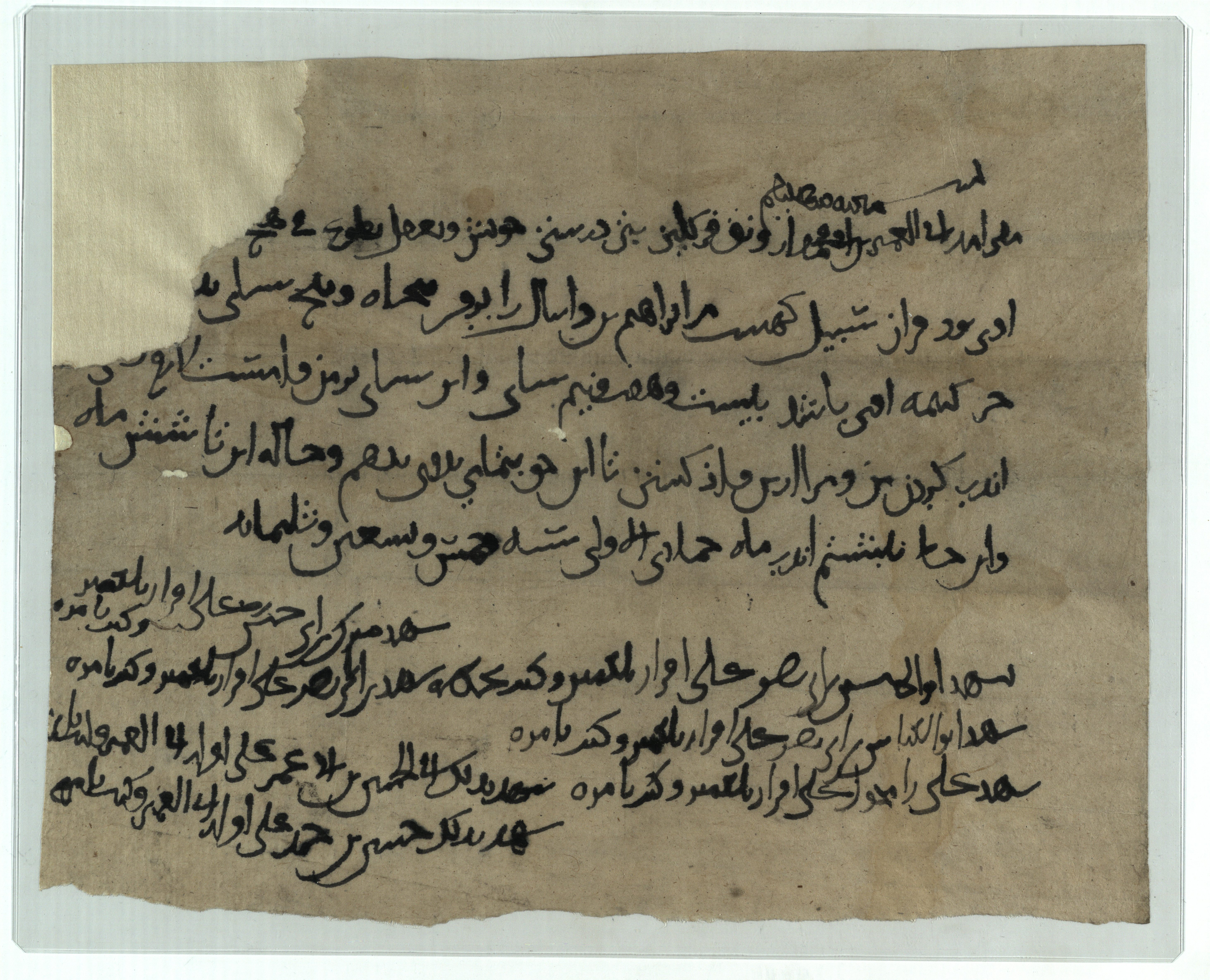
A genizah of Jewish manuscripts from Afghanistan: 11th century


About a year and a half ago, the National Library of Israel got word regarding the existence of a stash, a genizah, of Jewish manuscripts from Afghanistan. The news was backed by numerous photographs. The manuscripts left Afghanistan and reached antiquaries in different countries, bound together in bundles of varying sizes.


A letter in Judeo-Persian dealing with financial and family matters.

The material includes many dozens of fragments in Hebrew, in Judeo-Arabic, in Judeo-Persian and in Muslim Arabic. The documents written in Muslim Arabic are dated and their content is of a legal nature. Based on these items, we can date the Afghan genizah to approximately the first half of the 11th century. The National Library has now purchased 29 of these fragments. This lot includes fragments of commentaries by Rav Sa'adia Gaon in Judeo Arabic, letters and other documents in Judeo-Persian and legal documents in Arabic. This is an extremely important finding, being a unique testimony, both in nature and in volume, of the cultural history of a Jewish community in an area which in the 11th century included highly important political, cultural and economical centers. To this day we have not seen Jewish findings of such magnitude and importance from this area. Everything indicates that the findings are authentic, as attested by the experts consulted by the National Library.


A legal document in Judeo-Persian (February 1005 CE).

We know very little about Afghan Jews in the Middle Ages. Those interested in learning about this topic can turn to Benzion D. Yehoshua-Raz's book, "From the Lost Tribes in Afghanistan to the Mashhad Jewish Converts of Iran", and discover there that Jews in the Razavi Khorasan Province, the land that today is situated between Iran and Afghanistan, are mentioned in the Arabic literature of the Middle Ages and in period interpretations of the Bible. Khorasan is mentioned in Middle Age rabbinical and biblical writings as the home of the ten tribes and in Rabbi Sa'adia Gaon's interpretations the name is mentioned in connection with the Assyrian exile. Benzion Yehoshua cites these details as well as archeological evidence to the connection between Khorasan Jews and Babylonian Jews. The evidence presented in Yehoshua's book is taken mostly from Jewish headstones discovered in Khorasan.

Related article

Jerusalem find: "proto-aeolic capital"


A similar find


When an architectural fragment like this one is found on an archaeological dig in Jerusalem, it could likely mean a very important building existed somewhere nearby -- such as a building fit for a king. An archaeological excavation team under the direction of Israeli archaeologist Eilat Mazar has recently uncovered a large fragment of what is known as a "proto-aeolic capital", or royal Israelite capital, the top-most portion of an architectural column that is designed to support or grace the facade or entrance-way of an important royal or administrative/public building. It was found within a stony fill adjacent to a wall dated to the Iron Age II (1000 - 539 BCE) and is assumed by its location to have been in secondary use in this final resting place. (Succeeding builders often reused or "recycled" architectural elements in the construction of later structures)...


Complete article

Wednesday, January 2, 2013

Terrace Farming at Ancient Desert City of Petra


New archaeological research dates the heyday of terrace farming at the ancient desert city of Petra to the first century. This development led to an explosion of agricultural activity, increasing the city’s strategic significance as a military prize for the Roman Empire.

A team of international archaeologists including Christian Cloke of the University of Cincinnati is providing new insights into successful and extensive water management and agricultural production in and around the ancient desert city of Petra, located in present-day Jordan. Ongoing investigations, of which Cloke is a part, are led by Professor Susan Alcock of the Brown University Petra Archaeological Project (BUPAP).

Using a variety of tools and techniques, including high-resolution satellite imagery and optically stimulated luminescence (OSL) dating of soils, Cloke, a doctoral student in the Department of Classics at UC, and Cecelia Feldman, classics lecturer at UMass-Amherst, have suggested that extensive terrace farming and dam construction in the region north of the city began around the first century, some 2,000 years ago, not during the Iron Age (c. 1200-300 BC) as had been previously hypothesized. This striking development, it seems, was due to the ingenuity and enterprise of the ancient Nabataeans, whose prosperous kingdom had its capital at Petra until the beginning of the second century.


UC doctoral student Christian Cloke in front of the Monastery of Ed Deir at Petra.Images courtesy of BUPAP

The successful terrace farming of wheat, grapes and possibly olives, resulted in a vast, green, agricultural “suburb” to Petra in an otherwise inhospitable, arid landscape. This terrace farming remained extensive and robust through the third century. Based on surface finds and comparative data collected by other researchers in the area, however, it is clear that this type of farming continued to some extent for many centuries, until the end of the first millennium (between A.D. 800 and 1000). That ancient Petra was under extensive cultivation is a testament to past strategies of land management, and is all the more striking in light of the area’s dry and dusty environment today.

Cloke and Feldman will present their findings Jan. 4 at the Archaeological Institute of America Annual Meeting in Seattle, in a paper titled “On the Rocks: Landscape Modification and Archaeological Features in Petra’s Hinterland.” Their research efforts are contributing to a growing understanding of the city, its road networks, and life in the surrounding area.

AGRICULTURAL SUCCESS FOLLOWED BY ANNEXATION

Dating the start of extensive terrace farming at Petra to the beginning of the common era has important historical implications, according to Cloke, because this date coincides closely with the Roman annexation of the Nabataean Kingdom in A.D. 106.

He explained, “No doubt the explosion of agricultural activity in the first century and the increased wealth that resulted from the wine and oil production made Petra an exceptionally attractive prize for Rome. The region around Petra not only grew enough food to meet its own needs, but also would have been able to provide olives, olive oil, grapes and wine for trade. This robust agricultural production would have made the region a valuable asset for supplying Roman forces on the empire’s eastern frontier.”

In other words, said Feldman, successful terrace farming and water management when Petra was at its zenith as a trading center added not only to the city’s economic importance but to its strategic military value as well, because there were limited options in the region for supplying troops with essential supplies.

TERRACES FOR FARMING AND DAMS FOR WATER MANAGEMENT

On large stretches of land north of Petra, inhabitants built complex and extensive systems to dam wadis (riverbeds) and redirect winter rainwater to hillside terraces used for farming.

Rainfall in the region occurs only between October and March, often in brief, torrential downpours, so it was important for Petra’s inhabitants to capture and store all available water for later use during the dry season. Over the centuries, the Nabataeans of Petra became experts at doing so. The broad watershed of sandstone hills naturally directed water flow to the city center, and a complex system of pipes and channels directed it to underground cisterns where it was stored for later use.

“Perhaps most significantly,” said Cloke, “it’s clear that they had considerable knowledge of their surrounding topography and climate. The Nabataeans differentiated watersheds and the zones of use for water: water collected and stored in the city itself was not cannibalized for agricultural uses. The city’s administrators clearly distinguished water serving the city’s needs from water to be redirected and accumulated for nurturing crops. Thus, extensive farming activity was almost entirely outside the bounds of the city’s natural catchment area and utilized separate watersheds and systems of runoff.”

These initial conclusions from the first three seasons of BUPAP fieldwork promise more exciting discoveries about how the inhabitants of Petra cultivated the outlying landscape and supported the city’s population. The presence of highly developed systems of landscape modification and water management at Petra take on broader significance as they offer insight into geopolitical changes and Roman imperialism.


Tuesday, January 1, 2013

Did Lucy Walk On the Ground or Stay in the Trees?


Much has been made of our ancestors "coming down out of the trees," and many researchers view terrestrial bipedalism as the hallmark of "humanness." After all, most of our living primate relatives -- the great apes, specifically -- still spend their time in the trees. Humans are the only member of the family devoted to the ground, living terrestrial rather than arboreal lives, but that wasn't always the case.

The fossil record shows that our predecessors were arboreal habitués, that is, until Lucy arrived on the scene. About 3.5 million years ago in Africa, this new creature, Australopithecus afarensis, appeared; Lucy was the first specimen discovered. Anthropologists agree that A. afarensis was bipedal, but had Lucy and her legions totally forsaken the trees? The question is at the root of a controversy that still rages.

"Australopithecus afarensis possessed a rigid ankle and an arched, nongrasping foot," write Nathaniel Dominy and his co-authors in Proceedings of the National Academy of Sciences (PNAS). "These traits are widely interpreted as being functionally incompatible with climbing and thus definitive markers of terrestriality," says Dominy, an associate professor of anthropology at Dartmouth.

But not so fast; this interpretation may be a rush to judgment in light of new evidence brought to light by Dominy and his colleagues. They did what anthropologists do. They went out and looked at modern humans who, like Lucy, have feet adapted to terrestrial bipedalism, and found these people can still function as effective treeclimbers.

Co-authors Vivek Venkataraman and Thomas Kraft collaborated with Dominy on field studies in the Philippines and Africa that inform their PNAS paper. Venkataraman and Kraft are Dartmouth graduate students in the Ecology and Evolutionary Biology PhD program in the Department of Biological Sciences, and are supported by National Science Foundation graduate research fellowships.


Men in Twa society from Uganda regularly climb trees to gather honey. (Credit: Nathaniel Dominy)


The studies in Uganda compared Twa hunter-gatherers to their agriculturalist neighbors, the Bakiga. In the Philippines, the researchers studied Agta hunter-gatherers and Manobo agriculturalists. Both the Twa and the Agta habitually climb trees in pursuit of honey, a highly nutritious component of their diets. They climb in a fashion that has been described as "walking" up small-diameter trees. The climbers apply the soles of their feet directly to the trunk and "walk" upward, with their arms and legs advancing alternately.

Among the climbers, Dominy and his team documented extreme dorsiflexion -- bending the foot upward toward the shin to an extraordinary degree -- beyond the range of modern "industrialized" humans. Assuming their leg bones and ankle joints were normal, "we hypothesized that a soft-tissue mechanism might enable such extreme dorsiflexion," the authors write.

They tested their hypothesis using ultrasound imaging to measure and compare the lengths of gastrocnemius muscle fibers -- the large calf muscles -- in all four groups -- the Agta, Manobo, Twa and Bakiga. The climbing Agta and Twa were found to have significantly longer muscle fibers.

"These results suggest that habitual climbing by Twa and Agta men changes the muscle architecture associated with ankle dorsiflexion," write the scientists, demonstrating that a terrestrially adapted foot and ankle do not exclude climbing from the behavioral repertoire of human hunter- gatherers, or Lucy.

In their conclusions, the Dartmouth team highlights the value of modern humans as models for studying the anatomical correlates of behavior, both in the present and in the dim past of our fossil ancestors.

Journal Reference:

1. Vivek V. Venkataraman, Thomas S. Kraft, and Nathaniel J. Dominy. Tree climbing and human evolution. Proceedings of the National Academy of Sciences, 2012; DOI: 10.1073/pnas.1208717110

Monday, December 31, 2012

Christians and Jews In 5th-6th Century Yemen


Complete article


...In 525 AD, the Negus, or king, of Aksum dispatched a fleet across the Red Sea. Soldiers and fighting elephants were ferried across the water to the East on un-tarred, raft-like ships to spread the gospel. In the ensuing decades, his army captured large parts of Arabia.

The first spearhead was targeted at the capital Zafar. Like a fortress in the sky, the town was perched on an extinct volcano, at an altitude of 2,800 meters (9,184 feet) above sea level. Its walls, riddled with towers and alarm bells, were four-and-a-half kilometers long. About 25,000 people lived in Zafar.

According to Yule, between the 3rd and the 5th century the confederation managed to complete a "meteoric rise" and become a superpower. Its merchants traded in sandalwood from Ceylon and valerian from Persia. The state controlled the port of Aden, where the ships of spice traders from India docked. Frankincense, which was made in Arabia, was also traded. It was a place of luxury. Yule found wine amphorae, the remains of precious fish condiments and palaces decorated with sphinxes and lions.

A Peaceful Multi-Cultural Community

The social structure in Zafar also appeared to be unique. The city had a large Jewish community, as evidenced by a seal with a Torah niche. Hebrew inscriptions were discovered. Zafar's residents also included Christians, who built a church there in 354 AD. Arabs who worshipped old idols lived in the alleys.

But this peaceful, multicultural community soon came to an end, as tensions began to mount in the 5th century, and Arabia was transformed into a front.

The Byzantine Empire, bristling with weapons, operated in the west, and its vassals kept making inroads toward the desert. They were accompanied by Christian missionaries, who brought the doctrine of the Holy Trinity to the shepherds on the edge of the Rub' al Khali, the sand desert that makes up much of the southern third of the Arabian Peninsula.

These Sacred Heart imperialists confronted the Persian realm of the Sassanids, with its archers and armies of bearded soldiers clad in heavy metal armor. The Jews, who lived by the tens of thousands in the oases, were to some extent aligned with this power.

It was a confrontation between east and west, and everyone was forced to choose a side.

This also applied to Zafar. To stop the advance of Christianity, individual Arab kings initially converted to Judaism. The entire ruling class of the realm eventually followed suit. From then on, people were given names like Yehuda and Yussuf.

Then they took up arms. In approximately 520 AD, they attacked the Christian colony of Najran, where there were churches and monasteries. Countless Christians were slaughtered. The shocking news traveled all the way to Europe...

Religious practices and rituals in the early days of the Kingdom of Judah has recently been discovered


Rare evidence of the religious practices and rituals in the early days of the Kingdom of Judah including a ritual building (a temple) and a cache of sacred vessels some 2,750 years old have been uncovered at Tel Motza, to the west of Jerusalem.


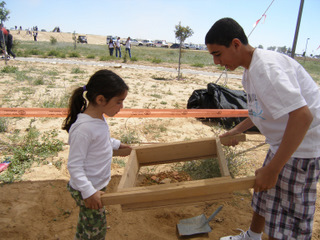
General view of the excavation site. Photograph: Skyview, courtesy of the Israel Antiquities Authority.

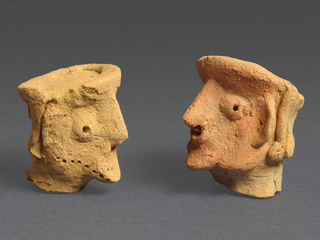
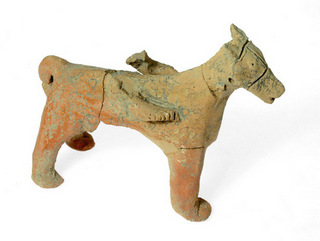
The finds, dated to the early monarchic period and including pottery figurines of men and horses, provide rare testimony of a ritual cult in the Jerusalem region at the beginning of the period of the monarchy.


Figurines of a person. Photograph: Clara Amit, courtesy of the Israel Antiquities Authority


They were uncovered during excavations by the Israel Antiquities Authority, prior to work by the National Roads Company on the new Highway 1 section.


Figurine of a horse. Photograph: Clara Amit, courtesy of the Israel Antiquities Authority

According to Anna Eirikh, Dr. Hamoudi Khalaily and Shua Kisilevitz, directors of the excavation on behalf of the Israel Antiquities Authority, "The ritual building at Tel Motza is an unusual and striking find, in light of the fact that there are hardly any remains of ritual buildings of the period in Judaea at the time of the First Temple. The uniqueness of the structure is even more remarkable because of the vicinity of the site's proximity to the capital city of Jerusalem, which acted as the Kingdom's main sacred center at the time." According to the archaeologists, "Among other finds, the site has yielded pottery figurines of men, one of them bearded, whose significance is still unknown."

Tel Motza and the surrounding region are renowned for their prime archaeological importance. Many finds have previously been uncovered at the site, from a variety of different periods. From the 1990's to the beginning of the present millennium, the site was excavated in preparation for the new route taken by Highway 1. At the time, the site's archaeologists proposed once more identifying the site with the Biblical settlement "Mozah" mentioned in the Book of Joshua – a town in the tribal lands of Benjamin bordering on Judaea (Joshua 18: 26). The proposal was based, among other things, on the discovery at the site of a public building, a large structure with storehouses, and a considerable number of silos. At the time, archaeologists identified the site as a storehouse, run by high-ranking officials, for Jerusalem's grain supplies.

The current excavations have revealed evidence that provides another aspect to our understanding of the site. According to archaeologists Eirikh, Dr. Khalaily and, Kisilevitz, "The current excavation has revealed part of a large structure, from the early days of the monarchic period (Iron Age IIA). The walls of the structure are massive, and it includes a wide, east-facing entrance, conforming to the tradition of temple construction in the ancient Near East: the rays of the sun rising in the east would have illuminated the object placed inside the temple first, symbolizing the divine presence within. A square structure which was probably an altar was exposed in the temple courtyard, and the cache of sacred vessels was found near the structure. The assemblage includes ritual pottery vessels, with fragments of chalices (bowls on a high base which were used in sacred rituals), decorated ritual pedestals, and a number of pottery figurines of two kinds: the first, small heads in human form (anthropomorphic) with a flat headdress and curling hair; the second, figurines of animals (zoomorphic) – mainly of harnessed animals. The archeologists stress that "The find of the sacred structure together with the accompanying cache of sacred vessels, and especially the significant coastal influence evident in the anthropomorphic figurines, still require extensive research."

Ritual elements in the Kingdom of Judah are recorded in archaeological research, especially from the numerous finds of pottery figurines and other sacred objects found at many sites in Israel, and these are usually attributed to domestic rituals. However, the remains of ritual platforms and temples used for ritual ceremonies have only been found at a few sites of this period. According to the site's directors, "The finds recently discovered at Tel Motza provide rare archaeological evidence for the existence of temples and ritual enclosures in the Kingdom of Judah in general, and in the Jerusalem region in particular, prior to the religious reforms throughout the kingdom at the end of the monarchic period (at the time of Hezekiah and Isaiah), which abolished all ritual sites, concentrating ritual practices solely at the Temple in Jerusalem."