Monday, February 14, 2011

Ancient Mesoamerican sculpture uncovered in southern Mexico

Ω

With one arm raised and a determined scowl, the figure looks ready to march right off his carved tablet and into the history books. If only we knew who he was - corn god? Tribal chief? Sacred priest?
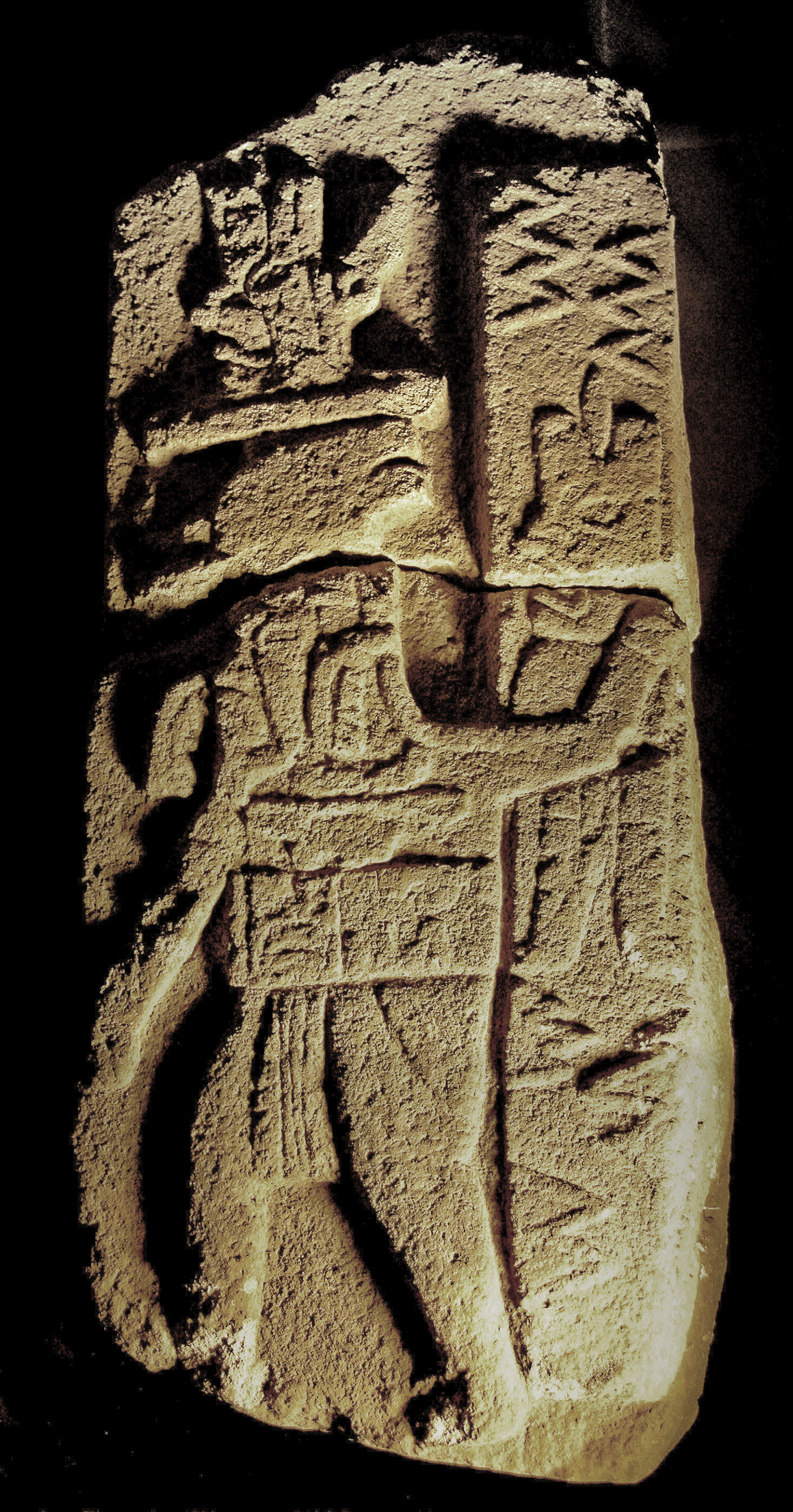


"It's beautiful and was obviously very important," says University of Wisconsin-Madison archaeologist John Hodgson of the newly discovered stone monument. "But we will probably never know who he was or what the sculpture means in its entirety."

Monument 3 is just the second carved monument found in Ojo de Agua. Monument 1 was discovered accidently when a local farmer hit it with a plow in the 1960s. Monument 3 was a similarly fortuitous finding, uncovered in the process of digging an irrigation ditch. (Monument 2 is a large boulder with a flat surface and no visible carving.)

Hodgson was working in the area and received word of the finding within just a few days of its discovery. He was able to see the monument's impression in the trench wall and study the soil layers where it had been buried, gaining a wealth of information that is usually lost long before any archaeologist lays eyes on a piece.

"Usually sculptures are first seen by archaeologists in private art collections and we normally have no good idea where they came from. The depictions of figures and the motifs change in form through time so you can get an approximate date by comparing styles," he says. "But we were able to date the new monument by where it was found to a narrow 100-year window, which is very rare."

The archaeological context and radiocarbon dating of ceramic sherds associated with the stone monument show that it dates to 1100 to 1000 B.C., making it approximately 3,000 years old. Its age and style correspond to the Early Formative period, when an early culture known as the Olmec dominated the area.

Its purpose and meaning, however, will be harder to ascertain.

"Everything means something in this kind of culture," says pre-eminent archaeologist Michael D. Coe, a professor emeritus of anthropology at Yale University and expert on Mesoamerican civilizations. "It obviously was a public monument — an important one, probably in connection with some really big cheese who lorded it over the area." Coe was not directly involved in the work but is familiar with the newly discovered monument.

"It appears to me to be a depiction of an event or a way to convey other types of information," Hodgson adds. "This dates to a time prior to a developed written language, but like the modern symbol used internationally for the Red Cross, symbols are very efficient at communicating complicated ideas."

The main figure on the tablet is depicted wearing an elaborate headdress, loincloth and ornate accessories, including a pair of large, comb-like ear ornaments, a rope-like necklace and a thick belt with a jaguar-head buckle. A face on the headdress includes features such as sprouting plants that identify it as a corn god. The tablet also includes a smaller secondary figure and a series of asymmetric zigzag designs that the authors suggest could represent lightning, local mountain ranges, or other features of the natural world.

"This is closely connected with agriculture and the cult of the corn god," Coe says, pointing out the zigzags. "Thunderstorms bring the rain."

The monument is a carved flat slab of a relatively soft, local volcanic stone that weighs about 130 pounds. It stands nearly three feet tall, about 14 inches wide, and ranges from four to seven inches thick. The use of local materials shows it was made in or near Ojo de Agua, Hodgson says, but style similarities to pieces found in larger Olmec centers near the Gulf of Mexico and the Valley of Mexico indicate pan-regional influences as well.

"It's cruder in execution than most Olmec monuments from the other side of the isthmus — 'provincial' Olmec," Coe says. But despite lacking some of the intricate artistry, it is still relatively sophisticated, he says. "This adds to our knowledge of the Olmec on the south side of the isthmus."

The depiction of corn is particularly notable. Corn cultivation is generally associated with a settled lifestyle rather than a nomadic existence, indicating that Ojo de Agua was almost certainly a farming community. The grain's storability and nutritional content also would have allowed the population to expand drastically and the civilization to become more complex, Hodgson says, adding that "the early date of the monument supports the idea that there was an early association between corn and religion."

Ojo de Agua lies in the heart of the ancient Aztec province Soconusco, nestled in a bend of the Coatán River. It is the earliest known site in Mesoamerica with formal pyramids built around plazas.

Though it has not been worked very extensively as an archeological site, Ojo de Agua appears to cover about 200 hectares and is the largest site in the area from the time period 1200-1000 B.C. The limited work to date describes civic architecture consistent with a decent-sized planned settlement. The identified platform mounds are laid out in a deliberate alignment that may be relative to magnetic north.

"That's something we see later but to see it this early is pretty surprising," says Hodgson, who has been working at Ojo de Agua since 2003.

The site appears to have been occupied for 150 to 200 years before being abandoned for unknown reasons.

Hodgson expects there are many more clues at Ojo de Agua and hopes to have the opportunity to continue working at the site and perhaps another look at Monument 3.

"We've just scratched the surface there. The things we've found are fantastic," Hodgson says. "These early societies were a lot more complicated than we thought they were."

Wednesday, February 9, 2011

Ancient teeth in Israel raise new questions about the origins of modern man

Ω

Eight small teeth found in a cave near Rosh Haain, central Israel, are raising big questions about the earliest existence of humans and where we may have originated, says Binghamton University anthropologist Rolf Quam. Part of a team of international researchers led by Dr. Israel Hershovitz of Tel Aviv University, Qaum and his colleagues have been examining the dental discovery and recently published their joint findings in the American Journal of Physical Anthropology.

Excavated at Qesem cave, a pre-historic site that was uncovered in 2000, the size and shape of the teeth are very similar to those of modern man, Homo sapiens, which have been found at other sites is Israel, such as Oafzeh and Skhul - but they're a lot older than any previously discovered remains.

"The Qesem teeth come from a time period between 200,000 - 400,000 years ago when human remains from the Middle East are very scarce," Quam said. "We have numerous remains of Neandertals and Homo sapiens from more recent times, that is around 60,00 - 150,000 years ago, but fossils from earlier time periods are rare. So these teeth are providing us with some new information about who the earlier occupants of this region were as well as their potential evolutionary relationships with the later fossils from this same region."

The teeth also present new evidence as to where modern man might have originated. Currently, anthropologists believe that modern humans and Neandertals shared a common ancestor who lived in Africa over 700,000 years ago. Some of the descendants of this common ancestor migrated to Europe and developed into Neandertals. Another group stayed in Africa and evolved into Homo sapiens, who later migrated out of the continent. If the remains from Qesem can be linked directly to the Homo sapiens species, it could mean that modern man either originated in what is now Israel or may have migrated from Africa far earlier that is presently accepted.

But according to Quam, the verdict is still out as to what species is represented by these eight teeth, which poses somewhat of a challenge for any kind of positive identification.

"While a few of the teeth come from the same individual, most of them are isolated specimens," Quam said. "We know for sure that we're dealing with six individuals of differing ages. Two of the teeth are actually deciduous or 'milk' teeth, which means that these individuals were young children. But the problem is that all the teeth are separate so it's been really hard to determine which species we're dealing with."

According to Quam, rather than rely on individual features, anthropologists use a combination of characteristics to get an accurate reading on species type. For instance, Neandertal teeth have relatively large incisors and very distinctive molars and premolars whereas Homo sapiens teeth are smaller with incisors that are straighter along the 'lip' side of the face. Sometimes the differences are subtle but it's these small changes that make having a number of teeth from the same individual that much more important.

But even though Quam and the team of researchers don't know for sure exactly who the teeth belong to, these dental 'records' are still telling them a lot about the past.


IMAGE: Teeth found at a site near Rosh Haain in Israel are providing new information about who the earlier occupants of this region were as well as their potential evolutionary relationships...
Click here for more information.


"Teeth are evolutionarily very conservative structures," Quam said. "And so any differences in their features can provide us with all sorts of interesting information about an individual. It can tell us what they ate, what their growth and development patterns looked like as well as what their general health was like during their lifetime. They can also tell us about the evolutionary relationships between species, all of which adds to our knowledge of who we are and where we came from."

Excavation continues at the Qesem site under the direction of Professor Avi Gopher and Dr. Ran Barkai of Tel Aviv University. The archaeological material already recovered includes abundant stone tools and animal remains, all of which are providing researchers with a very informative 'picture' of daily life and hunting practices of the site's former inhabitants.

"This is a very exciting time for archeological discovery," Quam said. "Our hope is that the continuing excavation at the site will result in the discover of more complex remains which would help us pinpoint exactly which species we are dealing with."

Quam continues to be in touch with the on-site archeologists and hopes to collaborate in the project when and if more complete human remains are recovered.

Wednesday, February 2, 2011

Anthropologists discover earliest cemetery in Middle East

Ω

Anthropologists at the University of Toronto and the University of Cambridge have discovered the oldest cemetery in the Middle East at a site in northern Jordan. The cemetery includes graves containing human remains buried alongside those of a red fox, suggesting that the animal was possibly kept as a pet by humans long before dogs ever were.

The 16,500-year-old site at 'Uyun al-Hammam was discovered in 2000 by an expedition led by University of Toronto professor Edward (Ted) Banning and Lisa Maher, an assistant professor of anthropology at U of T and research associate at the University of Cambridge. “Recent archaeological excavations have uncovered the remains of at least 11 individuals – more than known from all other sites of this kind combined,” says Banning, of U of T’s Department of Anthropology.

Previous research had identified the earliest cemeteries in the region in a somewhat later period (the Natufian, ca. 15,000-12,000 years ago). These were notable for instances of burials of humans with dogs. One such case involved a woman buried with her hand on a puppy, while another included three humans buried with two dogs along with tortoise shells. However, this new research shows that some of these practices occurred earlier.

Most of the individuals buried at the Jordan site were found with what are known as "grave goods," such as stone tools, a bone spoon, animal parts, and red ochre (an iron mineral). One grave contained the skull and right upper arm bone of a red fox, with red ochre adhered to the skull, along with bones of deer, gazelle and wild cattle. Another nearby grave contained the nearly complete skeleton of a red fox, missing its skull and right upper arm bone, suggesting that portions of a single fox had been moved from one grave to another in prehistoric times.

“What we appear to have found is a case where a fox was killed and buried with its owner,” says Maher, who directs excavations at the site. “Later, the grave was reopened for some reason and the human’s body was moved. But because the link between the fox and the human had been significant, the fox was moved as well.”

The researchers say that it could suggest that foxes were at one time treated in much the same way as dogs, in that there could have been early attempts to tame foxes, but no successful domestication. Studies have shown that foxes can be brought under human control but is not easily done given their skittish and timid nature, which may explain why dogs ultimately achieved “man’s best friend” status instead.

“However, it is also noteworthy that the graves contain other animal remains, so we can only take the fox-dog analogy so far,” says Banning. “We should remember that some more recent hunter-gatherers consider themselves to have social relationships with a wide range of wild animals, including ones they hunt, and that this sometimes led to prescribed ways to treat the remains of animals, as well as to represent relationships between particular humans and particular animals.” Banning says that the "pet" hypothesis is only one among several, which happens to fit with modern preconceptions about human-dog relationships.

Either way, because the same grave that held the fox remains also contained other bones, Banning says that the find holds important clues about burial methods of civilizations past.

“These were unusually dense and diverse concentrations of bones, and indicate very early mortuary practices that involved interring selected animal remains with humans,” says Banning. “The site has implications both for our understanding of the development of ideas about death and mortuary practice, and for our understanding of the beginnings of domestication of dog-like animals.”

Details of the find were published recently in a paper titled “A Unique Human-Fox Burial from a Pre-Natufian Cemetery in the Levant (Jordan)” in the online journal PLoS One . Fieldwork and research by Banning, Maher and colleagues was partly funded by the Social Sciences and Humanities Research Council of Canada and a National Geographic Research Exploration Grant.

The paper can be viewed here.

Thursday, January 27, 2011

Modern humans reached Arabia earlier than thought, new artifacts suggest

Ω

Humans may have found the Arabian Peninsula as long as 125,000 years ago

Artifacts unearthed in the United Arab Emirates date back 100,000 years and imply that modern humans first left Africa much earlier than researchers had expected, a new study reports. In light of their excavation, an international team of researchers led by Hans-Peter Uerpmann from Eberhard Karls University in Tübingen, Germany suggests that humans could have arrived on the Arabian Peninsula as early as 125,000 years ago — directly from Africa rather than via the Nile Valley or the Near East, as researchers have suggested in the past.

The timing and dispersal of modern humans out of Africa has been the source of long-standing debate, though most evidence has pointed to an exodus along the Mediterranean Sea or along the Arabian coast approximately 60,000 years ago.

This new research, placing early humans on the Arabian Peninsula much earlier, will appear in the 28 January issue of Science, which is published by AAAS, the nonprofit science society.

The team of researchers, including lead author Simon Armitage from Royal Holloway, University of London, discovered an ancient human toolkit at the Jebel Faya archaeological site in the United Arab Emirates. It resembles technology used by early humans in east Africa but not the craftsmanship that emerged from the Middle East, they say. This toolkit includes relatively primitive hand-axes along with a variety of scrapers and perforators, and its contents imply that technological innovation was not necessary for early humans to migrate onto the Arabian Peninsula. Armitage calculated the age of the stone tools using a technique known as luminescence dating and determined that the artifacts were about 100,000 to 125,000 years old.

"These 'anatomically modern' humans — like you and me — had evolved in Africa about 200,000 years ago and subsequently populated the rest of the world," said Armitage. "Our findings should stimulate a re-evaluation of the means by which we modern humans became a global species."

Uerpmann and his team also analyzed sea-level and climate-change records for the region during the last interglacial period, approximately 130,000 years ago. They determined that the Bab al-Mandab Strait, which separates Arabia from the Horn of Africa, would have narrowed due to lower sea-levels, allowing safe passage prior to and at the beginning of that last interglacial period. At that time, the Arabian Peninsula was much wetter than today with greater vegetation cover and a network of lakes and rivers. Such a landscape would have allowed early humans access into Arabia and then into the Fertile Crescent and India, according to the researchers.

"Archaeology without ages is like a jigsaw with the interlocking edges removed — you have lots of individual pieces of information but you can't fit them together to produce the big picture," said Armitage. "At Jebel Faya, the ages reveal a fascinating picture in which modern humans migrated out of Africa much earlier than previously thought, helped by global fluctuations in sea-level and climate change in the Arabian Peninsula."

Tuesday, January 11, 2011

Oldest wine-making equipment ever found - vintage 4100 B.C.

Ω


Archaeologists contemplate 6,100-year-old wine-making equipment.


Analysis by a UCLA-led team of scientists has confirmed the discovery of the oldest complete wine production facility ever found, including grape seeds, withered grape vines, remains of pressed grapes, a rudimentary wine press, a clay vat apparently used for fermentation, wine-soaked potsherds, and even a cup and drinking bowl.

The facility, which dates back to roughly 4100 B.C. — 1,000 years before the earliest comparable find — was unearthed by a team of archaeologists from Armenia, the United States and Ireland in the same mysterious Armenian cave complex where an ancient leather shoe was found, a discovery that was announced last summer.

"For the first time, we have a complete archaeological picture of wine production dating back 6,100 years," said Gregory Areshian, co-director of the excavation and assistant director of UCLA's Cotsen Institute of Archaeology.

An analysis of the discovery, which received support from the National Geographic Society, is presented in an article published online Jan. 11 in the peer-reviewed Journal of Archaeological Science.

"This is, so far, the oldest relatively complete wine production facility, with its press, fermentation vats and storage jars in situ," said Hans Barnard, the article's lead author and a UCLA Cotsen Institute archaeologist.

Cave outside Armenian village

The discovery in 2007 of what appeared to be ancient grape seeds inspired the team to begin excavating Areni-1, a cave complex located in a canyon where the Little Caucasus mountains approach the northern end of the Zagros mountain range, near Armenia's southern border with Iran. The cave is outside a tiny Armenian village still known for its wine-making activities.

Under Areshian and Boris Gasparyan, co-director of the project, the dig continued through September, when the vat was excavated.

Radiocarbon analysis by researchers at UC Irvine and Oxford University has dated the installation and associated artifacts to between 4100 B.C. and 4000 B.C., or the Late Chalcolithic Period, also known as the Copper Age in recognition of the technological advances that paved the way for metal to replace stone tools.

Archaeologists found one shallow basin made of pressed clay measuring about 3 feet by 3-and-a-half feet. Surrounded by a thick rim that would have contained juices, and positioned so as to drain into the deep vat, the basin appears to have served as a wine press. Similarly structured wine-pressing devices were in use as recently as the 19th century throughout the Mediterranean and the Caucasus, Areshian said. No evidence was found of an apparatus to smash the grapes against the wine press, but the absence does not trouble the archaeologists.

"People obviously were stomping the grapes with their feet, just the way it was done all over the Mediterranean and the way it was originally done in California," Areshian said.

All around and on top of the wine press archaeologists found handfuls of grape seeds, remains of pressed grapes and grape must, and dozens of desiccated vines. After examining the seeds, paleobotanists from three separate institutions determined the species to be Vitis vinifera vinifera, the domesticated variety of grape still used to make wine.

Telltale evidence of grapes


The vat, at just over 2 feet in height, would have held between 14 and 15 gallons of liquid, Areshian estimates. A dark gray layer clung to three potsherds — two of which rested on the press and the third which was still attached to the vat. Analysis of the residue by chemists at UCLA's Pasarow Mass Spectrometry Laboratory confirmed the presence of the plant pigment malvidin, which is known to appear in only one other fruit native to the area: pomegranates.

"Because no remnants of pomegranates were found in the excavated area, we're confident that the vessels held something made with grape juice," Areshian said.

The size of the vessel during an era that predated mechanical refrigeration by many millennia points to the likelihood that the liquid was wine, the researchers stress.

"At that time, there was no way to preserve juice without fermenting it," Areshian said. "At this volume, any unfermented juice would sour immediately, so the contents almost certainly had to be wine."

The team also unearthed one cylindrical cup made of some kind of animal horn and one complete drinking bowl of clay, as well as many bowl fragments.

The closest comparable collection of remains was found in the late 1980s by German archaeologists in the tomb of the ancient Egyptian king Scorpion I, the researchers said. Dating to around 3150 B.C., that find consisted of grape seeds, grape skins, dried pulp and imported ceramic jars covered inside with a yellow residue chemically consistent with wine.

After the Areni-1 discovery, the next earliest example of an actual wine press is two and a half millennia younger: Two plaster basins that appear to have been used to press grapes between 1650 B.C. and 1550 B.C. were excavated in what is now Israel's West Bank in 1963.

Over the years, archaeologists have claimed to find evidence of wine dating as far back as 6000 B.C.–5500 B.C. And references to the art and craft of wringing an inebriant from grapes appear in all kinds of ancient settings. After Noah's Ark landed on Mount Ararat, for instance, the Bible says he planted a vineyard, harvested grapes, produced wine and got drunk. Ancient Egyptian murals depict details of wine-making. Whatever form it takes, early evidence of wine production provides a window into a key transition in human development, scientists say.

"Deliberate fermentation of carbohydrates into alcohol has been suggested as a possible factor that prompted the domestication of wild plants and the development of ceramic technology," said Barnard, who teaches in the UCLA Department of Near Eastern Languages and Cultures.

Three lines of inquiry point to wine-making

In addition to its age and wealth of wine-making elements, the Areni-1 find is notable for its numerous levels of confirmation. In a field where claims often rest on one or two sets of collaborating evidence, this find is supported by radiocarbon dating, paleobotanical analysis and a new approach to analyzing wine residue based on the presence of malvidin. Most prior claims of ancient wine have rested on the presence of tartaric acid — which is present in grapes but also, at least in some level, in many other fruits and vegetables — or on the presence of tree resins that were added to preserve the wine and improve its taste, as is done today with retsina, a wine flavored with pine resin.

"Tartaric acid alone can't act as a reliable indicator for wine," Areshian said. "It is present in too many other fruits and vegetables, including hawthorn, which still is a popular fruit in the area, but also in a range of other fruits, including tamarind, star fruit and yellow plum."

"Resins could indicate wine, but because they were used for a large number of other purposes, ranging from incense to glue, they also are unreliable indicators for wine," Barnard said. "Moreover, we have no idea how wide the preference for retsina-like wine spread."

The beauty of malvidin, the UCLA team emphasizes, is the limited number of options for its source. The deeply red molecule gives grapes and wine their red color and makes their stains so difficult to remove.

"In a context that includes elements used for wine production, malvidin is highly reliable evidence of wine," Areshian said.

Areshian and Ron Pinhasi, an archaeologist at Ireland's University College Cork and a co-director of the excavation project, captured the world's imagination in June, when they announced the discovery of a single 5,500-year-old leather moccasin at the Areni-1 site. It is believed to be the oldest leather shoe ever found.

The precise identity of the wine-swilling shoe-wearers remains a mystery, although they are believed to be the predecessors of the Kura-Araxes people, an early Transcaucasian group. Nevertheless, archaeologists who have been excavating the 7,500-square-foot-plus site since 2007 think they have an idea of how the wine was used. Because the press and jugs were discovered among dozens of grave sites, the archaeologists believe the wine may have played a ceremonial role.

"This wine wasn't used to unwind at the end of the day," Areshian said.

The archaeologists believe wine-making for day-to-day consumption would have occurred outside the cave, although they have yet to find evidence for these activities. Still, they believe it is only a matter of time before someone does.

"The fact that a fully developed wine production facility seems to have been preserved at this site strongly suggests that there are older, less well-developed instances of this technology, although these have so far not been found," Barnard said.

Wednesday, January 5, 2011

Ancient Roman Mosaic from Israel on View at Metropolitan Museum

Ω


* Now - April 3, 2011

In 1996, workmen widening the Jerusalem–Tel Aviv road in Lod (formerly Lydda), Israel, made a startling discovery: signs of a Roman mosaic pavement were found about three feet below the modern ground surface. A rescue excavation was conducted immediately by the Israel Antiquities Authority, revealing a mosaic floor that measures approximately 50 feet long by 27 feet wide. It is of exceptional quality and in an excellent state of preservation. The mosaic, comprising seven panels, is symmetrically divided into two large "carpets" by a long rectangular horizontal panel, and the entire work is surrounded by a ground of plain white. To preserve the mosaic, it was reburied until funding was secured for its full scientific excavation and conservation. Recently removed from the ground, the three most complete and impressive panels will be exhibited to the general public for the first time when they go on display at The Metropolitan Museum of Art. The pavement is believed to come from the home of a wealthy Roman living in the Eastern Roman Empire in around A.D. 300. Because the mosaic's imagery has no overt religious content, it cannot be determined whether the owner was a pagan, a Jew, or a Christian.

Exhibition Overview

The exhibition will highlight the three large panels found in what was probably a large audience room. Within the central panel—which measures 13 feet square—is a series of smaller squares and triangles depicting various birds, fish, and animals that surround a larger octagonal scene with ferocious wild animals—a lion and lioness, an elephant, a giraffe, a rhinoceros, a tiger, and a bull. Such animals were well known to the Romans since they appeared at gladiatorial games, where they were pitted either against each other or against human adversaries. The mosaic may therefore represent the largesse that the owner had conferred by staging games with wild animal hunts. Flanking the central panel to the north and south are two smaller, rectangular end panels. The north panel explores the same theme as the main panel with various creatures; the south panel is devoted to a single marine scene, complete with two Roman merchant ships. A striking feature of all the mosaics is that none of them contains any human figures.

The exhibition will also relate the history of the discovery and the story of the mosaic's removal, conservation, and eventual journey to New York.

Historical Background

Lod is located near Tel Aviv, and the site was initially settled in the fifth millennium B.C. Its name appears in the written record as early as 1465 B.C.—in a list of towns in Canaan that was compiled during the reign of the pharaoh Thutmose III—and also in the Old and New Testaments. In the first century A.D., the inhabitants of Lod were sold into slavery and subsequently the town was razed. A Roman city was established there in A.D. 200, and at that time most of its inhabitants were Christian.

During the lifting of the mosaic in September 2009 preliminary sketches were found etched in the mortar setting bed. The footprints of several workers involved in laying the floor—some wearing sandals and others working barefoot—were also found.

After its presentation at the Metropolitan, the mosaic will be displayed at the Legion of Honor Museum (San Francisco), The Field Museum (Chicago), and the Columbus Museum of Art (Columbus, Ohio).


The Lod Mosaic is on loan from the Israel Antiquities Authority and the Shelby White and Leon Levy Lod Mosaic Center.

Tuesday, January 4, 2011

500 Years of Wine Drinking Cups Mark Social Shifts in Ancient Greece

Ω


Rendering of a symposium. The cups used at these gatherings reflected the social, political and economic trends of the time, just as items we commonly use reflect modern trends.


“Symposium” in Ancient Athens

These were gatherings held for nearly a millennia where communal drinking of wine was a means for cementing cultural norms and social bonds that carried over into the world of politics and business. Think of these symposia as the ancient world’s ultimate cocktail parties, with established rituals and rules.

Basic rules of Athenian symposia:

- Couches or mattresses used by reclining participants were set in a circle or square. So, there was no formal position of status or group “head.”
-Drinkers imbibed in rounds, so consumption of wine (mixed with water) was equitable. In other words, everyone got drunk at about the same rate. No teetotalers permitted.

An important aspect of any symposium was the wine cup. The cups used at these gatherings reflected the social, political and economic trends of the time, just as items we commonly use reflect modern trends. The form of and the imagery on the cups reflected the shared culture of participants, as well as the larger social realities and changes in their world during the following periods:

Iron Age (1,100-700 B.C.)
The Archaic Period (700-480 B.C.)
The Late Archaic Period (525-480 B.C.)
The High Classical Period (480-400 B.C.)
The Late Classical Period (400-323 B.C.)
The Hellenistic Period (323-31 B.C)


IRON AGE SYMPOSIA AND DRINKING CUPS (1,100-700 B.C.)


The drinking gatherings (symposia) were reserved for the elite, probably allowing political factions to consolidate power and set themselves apart from the population at large. In other words, the drinking gatherings were for the “in” crowd.

At this time, even grave markers for the very wealthy came in the form of the mixing bowls (kraters) used to blend wine with water during symposia. In other words, the ability to sponsor these drinking events was what people wanted to be remembered for.

This three-foot-high Iron Age gravemarker is in the form of a mixing vessel (water and wine) used at symposia. It signals the importance of the symposia in Athenian society. People wanted to be remembered for their ability to sponsor these gatherings.

The drinking cups during this period were simply decorated and rested directly on a base (no stem).


This three-foot-high Iron Age gravemarker is in the form of a mixing vessel (water and wine) used at symposia. It signals the importance of the symposia in Athenian society. People wanted to be remembered for their ability to sponsor these gatherings.

THE ARCHAIC PERIOD (700-480 B.C.)

After the turn of the 6th century B.C., changes in the fashion of drinking cups began, corresponding with Athens’ rising political power and rising dominance in the ceramic market. Variety and quality were high during this period. It was the beginning of black-figured pottery production as well as plain, black-glazed versions. Stemmed cups became more popular, probably because they were easier to hold while reclining.

The middle of the 6th century B.C. saw a rapid proliferation of cup types: Komast cups, Siana cups, Gordion cups, Lip cups, Band cups, Droop cups, Merry-thought cups and Cassel cups – last only a few decades in terms of popularity. Some of these remain popular for only a few decades.

Possessing what was newest in terms of mode and style of drinking cups was likely equated with knowledge and status. The elites may have been seeking cohesion and self definition in the face of factional rivalries and populist movements. This hypothesis underscores how the drinking symposia – and specific cup forms identified with specific factions – might have been used by aristocratic blocs to cement group bonds in the politically charged environment of the time.

LATE ARCHAIC PERIOD (525-480 B.C.)

The overall number of wine-drinking vessels increased dramatically during this period, pointing to the democratization of the symposium, as well as the democratization of the political and social arenas. The masses had become the political, if not the social, equals of the elites, and these masses were now enjoying symposia of their own.

It’s estimated that drinking vessels for symposia comprised up to 60 percent of the terra cotta fineware (collection of dishes) in the typical Athenian home of this period.

The typical home had few useful dishes for eating in contrast to many vessels designed for drinking wine in communal settings.

This period ends with the devastating Persian Wars, which Greece won. The proliferation of cup types fell, with red-figured drinking cups, introduced around 525 B.C., becoming the most popular.

HIGH CLASSICAL PERIOD (480-400 B.C.)

Red-figured cups (cups decorated with red figures vs. black) remain popular through the first part of this period of cultural development in Athens, but the cups grow taller and shallower.

By the end of the 5th century B.C., Athens was weathering the Peloponnesian Wars and plague, and people were searching for an escape. This came in the form of an aesthetic restlessness. Fads in drinking cups came and went, but few developed into long-lived styles.

These new cup innovations tended to emulate the fineness commonly found in silver work at the time. For instance, there were many more plain, black clay cups with shiny surfaces. And delicate stamped and incised designs in clay cup interiors imitated metal prototypes on the cheap. In other words, the common terra cotta cups were “designer knock-offs” of the “high-end” designs found on silver cups.

Think of this cup as a "designer knock off." It's made of clay but was incised and stamped to emulate silver work. It was created in a period of harsh economic and social realities when people sought escape by means of pseudo luxury goods.

Stemmed cups had finally run their course, being 200 years old at this point, and a stemless form became more popular.People may have been seeking a visual antidote to the struggles of the period and a yearning for luxury at odds with daily conditions.


LATE CLASSICAL PERIOD (400-323 B.C.)

Trends toward pseudo luxury (designer knock-offs) in drinking cups continued; however, the variety of these “silver-inspired” clay cup designs diminished after the turn of the 4th century B.C., probably because the forms were impractical. For instance, one clay cup – modeled on a silver drinking vessel – featured delicate high-swung handles that served no useful purpose in clay.

Also “running out of steam” in this period was the tradition of decorating cups with human figures. A decorative innovation, called West Slope, became popular at this time. It consisted of colored clay applied atop black-glazed surfaces to create the effects of garlands and wreaths. Human figures were no longer depicted.


Think of this cup as a "designer knock off." It's made of clay but was incised and stamped to emulate silver work. It was created in a period of harsh economic and social realities when people sought escape by means of pseudo luxury goods.


Finally, as Athens fell under the sway of Philip of Macedon and his son, Alexander the Great, the symposium came full circle. It began in the Iron Age as a practice of the elite. Then, with the movement toward democratization in Athens, participation in symposia broadened. Now, in Athens’ Hellenistic period, the practice was again the prerogative of the elites as a luxury and display of ostentatious consumption. Equality was no longer important in a state that was no longer democratic but monarchical.


Image credits:
Symposium rendering : Connolly & Dodge, “The Ancient City,” Oxford University Press, 1998, p. 52.
Symposium scene on cup (Brygos Ptr cup with decoration on exterior): Courtesy of the trustees of the British Museum, website.
Krater used as grave marker: The Metropolitan Museum of Art website: metmuseum.org/toah/works-of-art/14.130.14
Band Cup: Located in the Louvre Museum, image courtesy of Wikimedia commons.
Droop Cup: Located in the Louvre Museum, image courtesy of Wikimedia commons.
Lip Cup: Courtesy of the trustees of the British Museum, website.
Siana Cup: Courtesy of the trustees of the British Museum, website.
Kylix Cup: Courtesy of the excavations of the Athenian Agora.
Set of Iron Age vessels: Courtesy of the excavations of the Athenian Agora.
Set of Kantharoi cups 1: Courtesy of the excavations of the Athenian Agora.
Set of Kantharoi cups 2: Courtesy of the excavations of the Athenian Agora.
Stemless Stamped Cup: Courtesy of the excavations of the Athenian Agora.
Set of three stemless cups: Courtesy of the excavations of the Athenian Agora.
Third Stemless Cup: Courtesy of the excavations of the Athenian Agora.