Saturday, August 30, 2025

Rare coin from Year Four of the Great Revolt discovered in Jerusalem


A bronze coin minted in Jerusalem during the final year before the destruction of the Second Temple in 70 CE, inscribed with the words “For the Redemption of Zion” was discovered during excavations in Jerusalem.

The obverse of the coin features a chalice, surrounded by an inscription in ancient Hebrew script: “For the Redemption of Zion”
The obverse of the coin features a chalice, with ancient Hebrew script: “For the Redemption of Zion”© Emil Aladjem, Israel Antiquities Authority

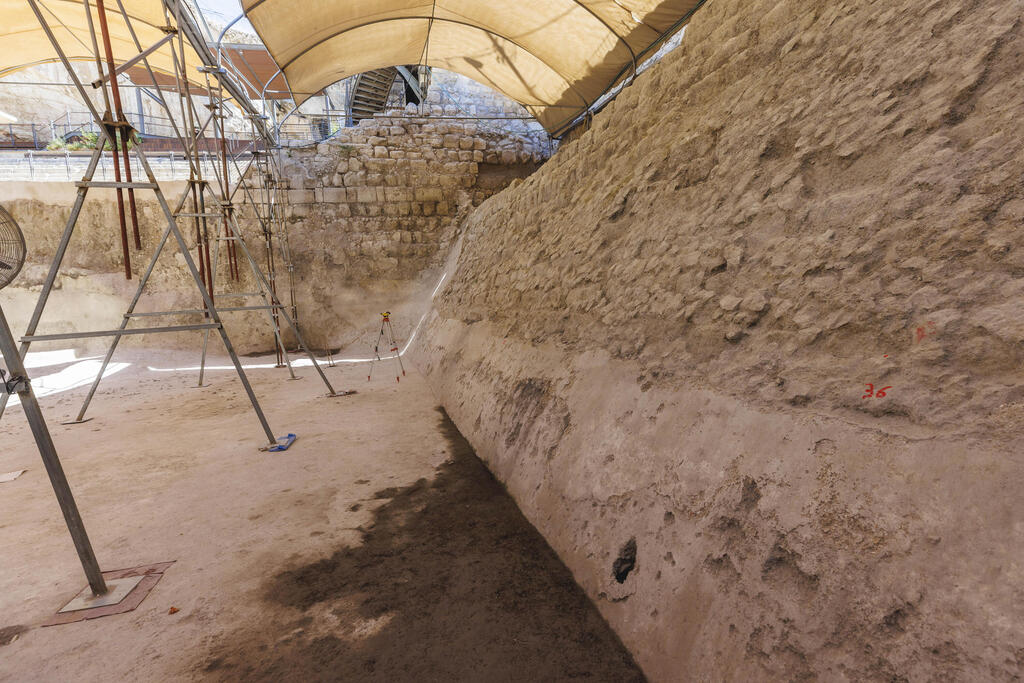
A bronze coin minted by Jews in Jerusalem during the final year before the destruction of the Second Temple was discovered during archaeological excavations in the Jerusalem Archaeological Garden – Davidson Center conducted by the Israel Antiquities Authority in collaboration with the City of David and Jewish Quarter Reconstruction and Development Company. This rare coin, discovered near the southwest corner of the Temple Mount, was minted during the 4th year of the Great Revolt against the Romans. The obverse side of the coin carries the inscription in ancient Hebrew script: “For the Redemption of Zion”– expressing the heartfelt desire of Jerusalem’s Jews, towards the end of the revolt. 

Excavations conducted by the Israel Antiquities Authority at this site, now in its sixth season, directed Dr. Yuval Baruch, Dr. Filip Vukosavović and Esther Rakow-Mellet, are revealing impressive, monumental remains ranging from the Second Temple period to the Umayyad period (2nd Century BCE—7th Century CE), and an abundance of finds – some unique. The excavations are financed by the Shalem Project and the City of David Foundation.

According to Esther Rakow-Mellet, archaeologist at the Israel Antiquities Authority, “In the last few days an unexpected gift was discovered: Yaniv David Levy, our coin researcher, came here and to his great surprise found a coin, covered in dirt. Already then, we thought from the looks of it that it might be a rare coin. We waited anxiously for several days until it came back from cleaning, and it turned out that it was a greeting from the Jewish rebels in the Year Four of the Great Revolt.”

According to Yanniv David Levy, a researcher and curator in the coin department of the Israel Antiquities Authority, “The coin is made of bronze, and its state of preservation is quite good. On its obverse side you can see a model of a goblet, and around it is an inscription in ancient Hebrew script: ‘LeGe’ulat Zion’, ‘For the Redemption of Zion’. On its reverse is a lulav, a palm frond used in the Sukkot festival ritual. Next to it are two etrogs, the citron used in that same ritual. The reverse bears the inscription: ‘Year Four’.” This inscription denotes the number of years since the outbreak of the rebellion and allows us to accurately date the coin to the period between the Hebrew month of Nissan (March-April) of the year 69 CE, and the month of Adar (February-March) of the year 70 CE. According to Levy, “The ‘Year Four’ bronze coins differ from their predecessors. Their size and weight increased significantly, and the earlier rebel coin inscription, ‘For the Freedom (Herut) of Zion’, is replaced by a new inscription – ‘For the Redemption of Zion’. 

In the research, it is accepted that Great Revolt Year Four coins were minted in Jerusalem under the leadership of Shimon Bar Giora, one of the prominent commanders in the revolt’s last year. Year Four coins are considered relatively rare, given the historical circumstances towards the end of the revolt and its impact on the much-reduced rebel production capabilities. Most of the Year Four coins were discovered in and around Jerusalem.

According to Dr. Yuval Baruch, Excavation Director on behalf of the Israel Antiquities Authority, who has researched this site for over 25 years, “The inscription on the coin – “For the Redemption of Zion”, replacing the earlier “For the Liberation of Zion” – indicates a profound change of identity and mindset, and perhaps also reflects the desperate situation of the rebel forces about six months before the fall of Jerusalem on Tisha B’Av, the 9th of the Hebrew month of Av; in August of the year 70 CE. It would seem that in the rebellion’s fourth year, the mood of the rebels now besieged in Jerusalem changed from euphoria and anticipation of freedom at hand, to a dispirited mood and a yearning for redemption. It is also possible that the representatives of the ritual “Four Species’ depicted on the coin, which are symbols of the Sukkot Festival and the ritual national pilgrimage to the Temple, were intended to evoke among the rebels a sense of redemption and anticipation of a hoped-for miracle and happy times.”

"Two thousand years after the minting of this coin, we come along a few days before Tisha B'Av and find such a moving testimony to that great destruction, and I think there is nothing more symbolic,” concludes Rakow-Mellet.

This unique ancient coin is being presented to the public for the first time during the family tours being held all this summer at the Jay and Jeanie Schottenstein National Campus for the Archaeology of Israel in Jerusalem.

Friday, August 29, 2025

Newly uncovered medieval evidence latest to cast doubt on authenticity of the Shroud of Turin

 Newly uncovered medieval evidence is the latest to cast doubt on the authenticity of the Shroud of Turin, the linen cloth many believe was used to wrap the crucified body of Jesus. 


Following analysis, this recently discovered, previously unknown ancient document has become one of the oldest dismissals of the famous 14-foot cloth – and the oldest written evidence known to-date. 


Findings, published in the peer-reviewed Journal of Medieval History, show a highly-respected, Norman theologian Nicole Oresme had rejected the Shroud, with this future bishop claiming it as a “clear” and “patent” fake – the result of deceptions by ‘clergy men’. 


Bearing a faint imprint image of the front and back of a naked man, consistent with traditional accounts of Jesus of Nazareth after his death by crucifixion, the Shroud’s genuineness is still being questioned to this day – with many supporters of its authenticity maintaining their belief.  


This is despite ever-growing new research. For example, one paper this summer, published in the journal Archaeometry concluded – using 3D analysis – that the material had been wrapped around a sculpture, rather than Jesus’ body. 


Previous radiocarbon dating of the Shroud has also determined the linen was produced at the end of the 13th or 14th century. 


“This now-controversial relic has been caught up in a polemic between supporters and detractors of its cult for centuries,” explains Dr Nicolas Sarzeaud, the lead author of this new study, out today.  


Dr Sarzeaud is a researcher in history at the Université Catholique of Louvain, in Belgium, and a fellow of the Villa Médicis, the French Academy, in Rome, Italy. His focus is on the history of relics and images – and more specifically on the question of traces in the West in the late Middle Ages. 


His new paper is important, he explains, as it shows that a statement – found by renowned historians Alain Boureau and Béatrice Delaurenti – within a treatise by Oresme is now the first-ever written, ‘official’, and highly respected rejection of the Shroud presented to-date.  
 

This is rather than the previously known account written in 1389 by the bishop of Troyes, Pierre d’Arcis, who rejected the Shroud as a fraud and reported that a predecessor of his had done likewise in around 1355. 
 
Dr Sarzeaud says Oresme – who later became the Bishop of Lisieux, in France – was a particularly important figure at the time and well-regarded for his attempts to provide rational explanations for so-called miracles and other phenomena. He was influential, too, for his works on economics, mathematics, physics, astrology, astronomy, and philosophy. 
 
“What has been uncovered is a significant dismissal of the Shroud,” Dr Sarzeaud states. 


“Oresme asserts: ‘I do not need to believe anyone who claims: “Someone performed such miracle for me”, because many clergy men thus deceive others, in order to elicit offerings for their churches. ‘This is clearly the case for a church in Champagne, where it was said that there was the shroud of the Lord Jesus Christ, and for the almost infinite number of those who have forged such things, and others.’ 


“Nicole Oresme did not choose just any venerated object as an example of a fraud orchestrated by the clergy. Oresme chose the claim of the Champenoise (Lirey) shrine to possess the Shroud as a striking example of lies fabricated by the clergy.  


“What makes Oresme’s writing stand out is his attempt to provide rational explanations for unexplained phenomena, rather than interpreting them as divine or demonic. The philosopher even rated witnesses according to factors such as their reliability, and also cautioned against rumour. 

 
“Nicole Oresme was unwilling to compromise his scholarly approach for pastoral purposes, it was essential for him to denounce all errors and manipulations.” 


Dr Sarzeaud adds: “When viewed in the broader history of relics and devotional images, this case gives us an unusually detailed account of clerical fraud – a topic typically treated generically in satire or theological debates on the potential for superstitious devotion, but very rarely documented in the form of concrete accusations of fraud against a clerical institution. 


“Oresme’s assessment of the Shroud, too, actually prompted him to be more broadly suspicious of the word of clergy all together.” 


Commenting on Dr Sarzeaud’s findings, world-leading Shroud of Turin expert Professor Andrea Nicolotti says the results are “further historical evidence that even in the Middle Ages, they knew that the Shroud was not authentic”. 


“The other technological and scientific evidence, which points in the same direction, remains unchanged,” adds Professor Nicolotti, who is a Professor of History of Christianity and Churches, at the University of Turin. 
 
“This new discovery of Oresme’s conclusion is particularly important because it confirms that at the time of its composition, likely in the 1370s, that a shroud had been fraudulently presented as authentic in Lirey. And this was widespread news, reaching as far as Paris.  


“This allowed Oresme to cite it in one of his books, confident that his readers would understand what he was talking about.  


“Oresme’s opinion is very important because it comes from a person who was not personally involved in the dispute – and therefore had no interest in supporting his own position.  


“With this document the story we already knew from other sources is perfectly confirmed.” 


In addition to the revelation of Oresme’s document, a main feature of Sarzeaud’s paper is its detailed history mapping of the physical journey of the Shroud during this period. 

Sarzeaud says Oresme would have assessed the Shroud, as it had found its way to Lirey – a village in France’s Champagne region. (As such, the controversial relic was known as the Shroud of Lirey in medieval times.) 


Oresme, Dr Sarzeaud explains, referenced the Shroud in a document written between 1355 and 1382, most likely after 1370. He hypothesizes that Oresme learned about the Lirey fraud when he was a scholar and a counsellor to the king in the 1350s. 


It was displayed in Lirey until around 1355 when the Bishop of Troyes ordered its removal. This followed extensive investigations adding evidence that it was not authentic and people had been paid to ‘fake miracles’. 


It was then hidden away for more than three decades until it was granted permission from Pope Clement VII to be displayed once more – but under the strict instruction that worshippers were to be told that it was as a ‘figure or representation of the Shroud’ and it should be exposed as so.  


It was formally announced as a fake in a memorandum for Pope Clement VII in 1389. The bishop even asked Charles VI of France to halt further displays of the Shroud – referring to it as ‘a manufactured cloth, artificially portrayed’.  

Today, many centuries on, replicas are exposed all over the world; but the Shroud is rarely shown to the public. 
 
So, what does Dr Sarzeaud feel about what Oresme’s conclusion of the Shroud of Turin mean for its authenticity? 

“The Shroud is the most documented case of a forged relic in the Middle Ages, and one of the few examples of a cult denounced and stopped by the Church and clerics,” he explains.  
 
“Although we generally consider people from this era to be credulous, Oresme provides a precious example of medieval critical thinking, evaluating testimonies and dismissing evidence not corroborated by any real evidence – so, naturally, I agree with his assessment. 

“It is striking that, of the thousands of relics from this period, it is the one most clearly described as false by the medieval Church that has become the most famous today.” 

Genetic shifts that helped tame horses and made them rideable

 A study of ancient horse genomes reveals the genetic changes that contributed to making the animals tame, strong, and rideable by humans thousands of years ago. The domestication of horses, which occurred at least 4,500 years ago, had a transformative effect on the evolution of human society, altering mobility, farming, and warfare. Across much of the world, horses served as a primary mode of human transportation until the rise of the combustion engine in the late 19th century. However, despite considerable advances in the genomic sequencing of ancient horses, the full suite of biological traits that reshaped the species during domestication, including those that facilitated human equestrianism, remains unknown. 

Here, Xuexue Liu and colleagues present an extensive horse genome time series analysis of 266 trait-associated genetic markers and show how human selection shaped horse biology over time. According to Liu et al., early domestication favored behavioral traits. Traits like coat color expanded only modestly at first. From the Iron Age onward, breeding practices increasingly emphasized larger body size and tameness. Especially pivotal was the intensive selection at the GSDMC locus, which showed one of the strongest signals of positive selection during the rise of the modern domesticated horse lineage ~4,200 years ago. 

The GSDMC gene, tied to skeletal conformation in horses and spinal anatomy, motor coordination, and strength in other mammals, likely enabled horses to meet the demands of large-scale mobility and warfare, fundamentally reshaping human societies. “Although the precise circumstances and the cultural identity of the people responsible for this early, intensive breeding remain a mystery, they must have had the necessary ingenuity, technology, and foresight,” writes Laurent Frantz in a related Perspective. “What is certain is that these first riders kick-started a revolution that changed the world, demonstrating how the immense currents of history can turn on the smallest of biological changes.”

Thursday, August 28, 2025

Ancient DNA reveals farming spread through migration, locals slow to adopt it

 Roughly 10,000 years ago, humans started shifting from being nomadic hunter-gatherers to building large agricultural settlements, marking one of the greatest transformations in human history. This transition, known as the Neolithic Revolution, began in the Fertile Crescent of the Middle East and led to the spread of farming throughout Europe. For decades, researchers have debated what drove this change. Did farming spread mainly because farmers themselves moved into new lands, or because hunter-gatherers adopted farming practices?

New interdisciplinary research by scientists at Penn State provides the clearest answer to date. Using mathematical models, computer simulations, and ancient DNA analysis, the team was able to measure how migration and cultural adoption each contributed to the expansion of farming. Their findings, published this week (Aug. 25) in Nature Communications, show that migration of farming groups was the dominant factor, while cultural adoption by hunter-gatherers only played a minimal role.

“Archaeology and genetics offer complementary windows onto this transition,” explained Christian Huber, assistant professor of biology at Penn State and senior author on the paper. “For example, artifacts and isotopes in ancient bones can reveal whether a person relied on domesticated plants or animals, reflecting the adoption of new farming practices. At the same time, DNA preserved in those bones can show where people’s ancestors came from, providing evidence of migration, or the movement of farming populations into new regions.”

Using sophisticated computer simulations, ancient DNA and archaeological evidence, Huber’s team was able to measure the forces that drove farming’s expansion — and how influential each force was.

“This has been a long-standing question — and disentangling the roles of migration and cultural adoption has been a goal of archaeologists and anthropologists for decades,” said Troy LaPolice, doctoral student at Penn State and lead author of the study. “What we found was surprising: when cultures spread through migration, it is not guaranteed local ancestry patterns will change, but the spread of farming managed to leave a strong and lasting impact on European ancestry.”

By building models that simulate population movement, growth and cultural learning, and fitting them to the known rate of farming expansion and ancestry data from 618 European Neolithic individuals derived from ancient DNA, the team was able to quantify the contributions of both migration and cultural adoption.

“It's really interesting to be able to understand a time period before any written or oral history,” LaPolice said. “This intense interdisciplinary project allowed us to undertake a new kind of historical reconstruction.”

The team found that the adoption of new ideas and practices did not significantly accelerate the spread of agriculture. Hunter-gatherers appear to have largely continued to forage even as farming expanded and gradually displaced their way of life. The contribution of cultural transmission to farming’s spread, known as the “cultural effect,” was minimal, estimated at only about 0.5%.

“The assimilation rate, the rate at which hunter-gatherers were grafted into farming communities, was actually very low — only about one in 1,000 farmers converted a hunter-gatherer to farming each year,” Huber said. “As a result, cultural transmission had almost no effect on how quickly farming spread. Still, even at this low rate, it left a lasting mark on the DNA of Europeans today and introduced useful genetic traits into the growing farming communities.”

The researchers also found that mating was largely restricted to within cultural groups, meaning farmers predominantly mated with other farmers and hunter-gatherers with other hunter-gatherers. Any “between-group mating” was remarkably rare, estimated at less than 3%, according to their models. This aligns with evidence from other ancient DNA studies showing minimal gene flow even where foragers and farmers co-existed for centuries, explained Matthew Williams, academic affiliate assistant professor of biology and co-author on the paper.

Williams and Huber have also published two recent papers where they tested commonly used methods for studying ancestry in ancient people. Their work shows how these tools can shed light on human movement through history, but also points out where they can be misleading if used without care. One paper was published in Genome Biology and the other in Genetics.

“This research highlights the power of combining genetic data with archaeological models to uncover the complex behavioral mechanisms of our past,” Williams said. “Looking forward, I see this paving the way for a re-evaluation of other major prehistoric cultural shifts.”

Tuesday, August 26, 2025

New discovery of wild cereal foraging – a precursor to agriculture – far from the fertile crescent

The dawn of agriculture in the Neolithic was a major development in the evolution of modern human culture. Although scientists agree that farming developed independently several times around the world, including in Africa, the Americas, and eastern Asia, the origins of many key crops, such as wheat, barley, and legumes have been traced to the Fertile Crescent and the harvesting of wild grains by a people known as the Natufians, roughly 10,000 years ago.

Now, a new study by an interdisciplinary research team shows that, by at least 9,200 years ago, people as far north and east as southern Uzbekistan were harvesting wild barley using sickle blades as well. The study shows that the cultural developments which served as stepping stones on the way to agriculture were more widespread than previously realized, challenging arguments that cultivation began as one group’s response to population pressure or climate change.

The research was conducted by an international team of scholars, led by Xinying Zhou of the Institute of Vertebrate Paleontology and Paleoanthropology in Beijing and under the supervision of the director of the Institute of Archaeology in Samarkand, Farhad Maksudov. During their excavations of Toda Cave in the Surkandarya Valley of southern Uzbekistan, the team recovered stone tools, charcoal, and plant remains from the cave’s oldest layers.

Archaeobotanical investigations led by Robert Spengler of the Max Planck Institute of Geoanthropology revealed that the people of Toda Cave were collecting wild barley from the surrounding valleys. Other plant remains included wild pistachio shells and apple seeds. Use-wear analysis of the stone tools – blades and flakes mostly made from limestone – indicates they were used to cut grass or plant material, similar to finds from sites where agriculture is known to have been practiced.

“This discovery should change the way that scientists think about the transition from foraging to farming, as it shows how widespread the transitional behaviors were,” says Xinying.

“These ancient hunters and foragers were already tied into the cultural practices that would lead to the origins of agriculture,” Spengler adds. “A growing body of research suggests that domestication occurred without deliberate human intent, and the finding that people continually developed the behaviors which lead to agriculture supports this view.”

The research team will continue to investigate how commonplace these behaviors were in Central Asia during this time period. Additionally, the team is further exploring the possibility that these grains represent an early example of cultivation using morphologically wild barley. If the grains were cultivated, it could mean that a sperate origin of farming was being experimented with or that the tradition form the Fertile Crescent spread eastward much earlier than previously recognized. In either case, future research is likely to fill in many gaps in our understanding of the human narrative. 

10.1073/pnas.2424093122  

A 3,800-year-old Canaanite scarab amulet discovered in Israel bu a 3 year ild girl

 A three-year-old girl in Israel picked up what she thought was a “beautiful stone” while visiting Tel Azekah, the site traditionally linked to David and Goliath. To her family’s surprise, experts later identified it as a 3,800-year-old Canaanite scarab amulet, a rare artifact influenced by Egyptian culture.

The amulet, authenticated by the Israel Antiquities Authority, sheds light on the rich history of the region and the spiritual practices of the Canaanites. The discovery connects an innocent moment of childhood curiosity to a remarkable piece of archaeology from the biblical heartland.


A climate crisis led the Kings of Judah to construct a monumental dam in Jerusalem about 2,800 years ago.


A climate crisis led the Kings of Judah to construct a monumental dam in Jerusalem about 2,800 years ago.
This is the conclusion of a new study by the Israel Antiquities Authority and the Weizmann Institute of Science, published in the prestigious journal PNAS.
The massive wall, uncovered in the Pool of Siloam excavations in the City of David National Park, was dated to 795-805 BCE during the reigns of Kings Joash or Amaziah of Judah. The dam appears to have been built in response to severe water shortages caused by climatic challenges.


The newly uncovered structure joins two other water systems from the same period: a tower that dammed the Gihon Spring, and a channel that carried its waters into the Pool of Siloam, where they were joined by floodwaters blocked by the dam.
These systems reflect comprehensive urban planning for managing Jerusalem’s water supply as early as the late 9th century BCE - clear evidence of the city’s strength and sophistication.


Excavation directors Dr. Nahshon Szanton, Itamar Berko, and Dr. Filip Vukosavović:
"This is the largest dam ever discovered in Israel and the earliest one ever found in Jerusalem. Its dimensions are remarkable: about 12 meters high, over 8 meters wide, and the uncovered length reaches 21 meters - continuing beyond the limits of the current excavation. The dam was designed to collect waters from the Gihon Spring as well as floodwaters flowing down the main valley of ancient Jerusalem (the historical Tyropoeon Valley) to the Kidron Stream, providing a dual solution for both water shortages and flash floods".
Dr. Szanton added: "The collaboration between the Weizmann Institute researchers and the Israel Antiquities Authority offers new insight into the challenges faced by the inhabitants of ancient Jerusalem. This massive royal construction project influenced the city’s development, particularly its southern and western parts – including Mount Zion – which relied on the waters of the Siloam Pool".
Dr. Johanna Regev and Prof. Elisabetta Boaretto of the Weizmann Institute explained: "Short-lived twigs and branches embedded in the dam’s construction mortar provided a clear date at the end of the 9th century BCE, with extraordinary resolution of only about 10 years – a rare achievement when dating ancient finds. All the data pointed to a period of low rainfall in the Land of Israel, interspersed with short and intense storms that could cause flooding. It follows that the establishment of such large-scale water systems was a direct response to climate change and arid conditions that included flash floods".

Photos: Eliyahu Yanai and Lior Daskal, City of David; Reut Vilf, City of David Spokesperson’s Office; Emil Aladjem, Israel Antiquities Authority

Monday, August 25, 2025

Egypt Eternal: 4,000 Years of Fascination

  Pharaohs, pyramids, sphinxes, and hieroglyphs—ancient Egypt has captivated the world for millennia. In Egypt Eternal: 4,000 Years of Fascination the Harvard Museum of the Ancient Near East explores our enduring interest. In a bright and refreshed gallery with an elegant arched window revealed for the first time in decades, the new exhibition showcases returning favorites such as the mummy case of Padimut (now able to be viewed in 360°), an elaborate teak and ivory reproduction of King Tutankhamun’s throne, the portrait of Idu in his underground tomb chapel, and the award-winning Dreaming the Sphinx augmented-reality experience for the Dream Stela of King Thutmose IV.

Coffin of Ankh-khonsu.
Coffin of Ankh-khonsu 1902.50.9, Harvard Museum of the Ancient Near East

Many of the objects in the exhibition have been scanned and formed into digital 3D models that are easily shared with the public. The models enable three coffins to be opened virtually from within the gallery—or anywhere. Other pieces from the museum’s collections are on display for the first time. 

Discover how Harvard supported early archaeological excavations and how today’s Harvard studies advance our understanding of the ancient world. We all know something about ancient Egypt; the real stories are even more fascinating!

Reproduction of Tutankhamun’s throne.
Detail from reproduction of Tutankhamun’s throne 2022.3.1, Harvard Museum of the Ancient Near East

This ongoing exhibition opens to the public at the Harvard Museum of the Ancient Near East on Sunday, September 21, 2025 at 11:00 am. The museum is open Sundays–Fridays 11:00 am–4:00 pm (closed Saturdays) and admission is free.

The new exhibition is part of the Harvard Museum of the Ancient Near East’s commitment to enhance ancient artifacts using modern technologies to support research, teaching, and preservation of the many cultures of the ancient Near East. Recent updates include the Mediterranean Marketplaces: Connecting the Ancient World exhibition with its life-size Iron Age II house replica from ancient Israel and cutaway view of an ancient ship, and the new augmented reality experience Art of Intimidation that animates ancient Assyrian casts within the From Stone to Silicone exhibition.

About the Harvard Museum of the Ancient Near East

Founded in 1889, the Harvard Museum of the Ancient Near East houses more than 40,000 Near Eastern artifacts, mostly from museum-sponsored excavations in Egypt, Iraq, Israel, Jordan, Syria, and Tunisia. In 2020, the museum changed its name to be more inclusive and accurately reflect the diversity of the collection. The collections are used to investigate and teach Near Eastern archaeology, history, and culture. The galleries span three floors, and the building is located at 6 Divinity Avenue, Cambridge, on the Harvard campus, an eight-minute walk from the Harvard Square Red Line MBTA station. The museum is wheelchair accessible. The museum is open Sunday–Friday, 11:00 am–4:00 pm (closed on Saturday). Admission is free. The Harvard Museum of the Ancient Near East is one of the four Harvard Museums of Science & Culture (HMSC). For directions, exhibition schedules, lectures, and information on parking, visit the websites hmane.harvard.edu and hmsc.harvard.edu.

Saturday, August 23, 2025

Shipwreck's preserved artillery from the medieval period tells a story

 Lund University archaeologists have revealed details of late medieval artillery from the wreck of the royal Danish-Norwegian flagship, Gribshunden. The shipwreck is the only known example of its kind from the medieval period – as both ship and weapons are nearly identical to those of the early Spanish and Portuguese explorers. The new study tells the story of how early modern maritime adventurers were equipped to start the process of dominance and colonisation across the world.


WATCH VIDEO STORY – see artillery found on Gribshunden

“Diving on this late medieval royal shipwreck is of course exciting. However, the greatest satisfaction is when we can actually put the pieces of the puzzle together later on; combining Martin’s castle expertise with Kay’s deep understanding of artillery”, explains Brendan Foley, the marine archeologist behind the study, who worked closely with fellow LU archaeologist Martin Hansson and medieval artillery expert Kay Douglas Smith.

Gribshunden, the flagship of the Danish-Norwegian King Hans, sank mysteriously in 1495 off the coast of Ronneby, Sweden. The wreck is internationally significant as the world’s best-preserved ship from the Age of Exploration – a proxy for the vessels of Christopher Columbus and Vasco da Gama.

Ocean-going ships like Gribshunden and the artillery they carried were critical technologies for European explorers after 1492. The voyages to America and into the Indian Ocean via the Cape of Good Hope led to European colonization around the world. Gribshunden is a rare archaeological resource, as it is the most complete example yet discovered of a late medieval carvel warship. 

The ship carried 50 or more small calibre guns firing lead shot with an iron core. They were intended for anti-personnel use at close range, with tactics designed to injure or kill the enemy ships’ personnel, followed by boarding to capture the vessel. Led by Lund University Professor Nicolo Dell’Unto, the Lund University team recreated the guns from 3D models of the artifacts. (Watch video story detailing the artillery)

A Danish ‘floating castle’

Gribshunden was built near Rotterdam between 1483-84. King Hans of Denmark and Norway had taken possession of the ship by spring 1486. The high cost of building and equipping these ships meant Gribshunden probably absorbed about 8% of the Danish national budget in 1485. 

Hans utilized his flagship differently from other monarchs; he personally sailed on it frequently, using it not for exploration, but to solidify his grasp on his kingdom. It was his floating castle, enabling royal travel to Sweden and all around the Danish realm including Gotland and especially Norway. The king used this vessel in ways similar to a terrestrial royal fortification. This included several soft power functions: economic, diplomatic, social, cultural, and administrative. Underpinning all of these was the obvious hard power of the ship’s martial purpose embodied by the guns and other weapons carried aboard.

Evidence of explosion

Gribshunden served the crown for a decade before sinking while the king was en route from Copenhagen to a political summit in Sweden, where he expected to unify the entire Nordic region in a new Kalmar Union. Historical documents including eyewitness accounts relate that while Hans was ashore in Ronneby, an explosion and fire claimed the ship while it was anchored off the town. 

Among the 22-lead artillery shots from Gribshunden, several are flattened on one or two sides. This may be a result of the explosion that sank the vessel. Shot stored in the hold near the gunpowder ricocheted inside the ship.

No Nordic expansion into North America

So, given the existence of these warships, why didn’t Denmark compete in expanding to the Americas? Denmark and Norway shared the long Viking and medieval Nordic history of exploration and settlement in the west, with colonies in Iceland and Greenland, and settlements in North America. Coupled with adoption of this new enabling technology, Hans might have successfully competed with the Iberian rulers in global exploration and expansion to the Americas. 

However, Hans’ primary concern was consolidating rule over the Baltic region. In pursuit of that goal, Hans himself sailed on Gribshunden into the Atlantic on several royal visits, and to Kalmar on the ship’s final voyage.

One reason for Denmark’s inattention to the Americas might have been a 1493 papal bull signed by Pope Alexander VI. This granted Spain rights to the Americas, and a treaty between Spain and Portugal ceded the Indian Ocean to the latter. Prior to the Reformation, the threat of excommunication for ignoring the papal ‘Inter Caetera’ was very real.

Friday, August 22, 2025

Extinct human relatives left a genetic gift that helped people thrive in the Americas

 A new study provides fresh evidence that ancient interbreeding with archaic human species may have provided modern humans with genetic variation that helped them adapt to new environments as they dispersed across the globe.

The study, published in Science, focused on a gene known as MUC19, which is involved in the production of proteins that form saliva and mucosal barriers in the respiratory and digestive tracts. The researchers show that a variant of that gene derived from Denisovans, an enigmatic species of archaic humans, is present in modern Latin Americans with Indigenous American ancestry, as well as in DNA collected from individuals excavated at archeological sites across North and South America.

The frequency at which the gene appears in modern human populations suggests the gene was under significant natural selection, meaning it provided a survival or reproductive advantage to those who carried it. It’s not clear exactly what that advantage might have been, but given the gene’s involvement in immune processes, it may have helped populations to fight off pathogens encountered as they migrated into the Americas thousands of years ago.

“From an evolutionary standpoint, this finding shows how ancient interbreeding can have effects that we still see today,” said study author Emilia Huerta-Sánchez, a professor of ecology, evolution and organismal biology at Brown University. “From a biological standpoint, we identify a gene that appears to be adaptive, but whose function hasn’t yet been characterized. We hope that leads to additional study of what this gene is actually doing.”

Huerta-Sanchez co-authored the study with Fernando Villanea, a former post-doctoral researcher at Brown who is now at University of Colorado, Boulder; David Peede, a graduate student at Brown; and an international team of collaborators.

Not much is known about the Denisovans, who lived in Asia between 300,000 and 30,000 years ago, aside from a few small fossils from Denisova cave in Siberia, two jaw bones found in Tibet and Taiwan, and a nearly complete skull from China found this year. The finger fossil from Siberia contained ancient DNA, which enables scientists to look for common genes between Denisovans and modern humans. Prior research led by Huerta-Sánchez found that a version of a gene called EPAS1 acquired from Denisovans may have helped Sherpas and other Tibetans to adapt to high altitudes.

For this study, the researchers compared Denisovan DNA with modern genomes collected through the 1,000 Genomes Project, a survey of worldwide genetic variation. The researchers found that the Denisovan-derived MUC19 gene is present in high frequencies in Latino populations who harbor Indigenous American genetic ancestry. The researchers also looked for the gene in the DNA of 23 individuals collected from archeological sites in Alaska, California, Mexico and elsewhere in the Americas. The Denisovan-derived variant was present at high frequency in these ancient individuals as well.

The team used several independent statistical tests to show that the Denisovan MUC19 gene variant rose to unusually high frequencies in ancient Indigenous American populations and present-day people of Indigenous descent, and that the gene sits on an unusually long stretch of archaic DNA — both signs that natural selection had boosted its prevalence. The research also revealed that the gene was likely passed through interbreeding from Denisovans to another archaic population, the Neanderthals, who then interbred with modern humans.

Huerta-Sánchez said the findings demonstrate the importance that interbreeding had in introducing new and potentially useful genetic variation in the human lineage.

“Typically, genetic novelty is generated through a very slow process,” Huerta- Sánchez said.  “But these interbreeding events were a sudden way to introduce a lot of new variation.”

In this case, she said, that “new reservoir of genetic variation” appears to have helped modern humans as they migrated into the Americas, perhaps providing a boost to the immune system.

“Something about this gene was clearly useful for these populations — and maybe still is or will be in the future,” Huerta-Sánchez said.

She’s hopeful that the recognition of the gene’s importance will spur new research into its function to reveal novel biological mechanisms, especially since it involves coding genetic variants that alter the protein sequence.


10.1101/2023.09.25.559202  

Thursday, August 21, 2025

In the Neolithic, agriculture took root gradually

 The transition to agriculture in Europe involved the coexistence of hunter-gatherers and early farmers migrating from Anatolia. To better understand their dynamics of interaction, a team from the University of Geneva (UNIGE), in collaboration with the University of Fribourg and Johannes Gutenberg University, Mainz, combined computer simulations with ancient genetic data. The results show that population mixing increased locally over time during the Neolithic expansion, at each stage of the farmers’ advance along the “Danube route” toward Central Europe. Published in Science Advances, the study offers new insight into this pivotal period in human history.


The shift from a hunter-gatherer lifestyle to an agricultural one marked a major turning point in human history. In Europe, this transition began almost 9,000 years ago, with the migration of farmers from the Aegean region and western Anatolia (modern-day Anatolian Turkey), who followed the “Danube route” eventually reaching Central Europe (present-day northern Germany). Before the hunter-gatherer lifestyle was fully replaced, the two cultures coexisted for several generations.


Scientists have long debated whether this transition occurred through knowledge transfer from nearby farming communities or through interbreeding between the populations as the farmers migrated. Archaeological evidence – such as the coexistence of cultural artifacts from both groups – combined with paleogenomic analysis of well-preserved human remains, has confirmed the hypothesis of population migration and admixture.


Modeling the Encounter Between Two Worlds

In this study, the group led by Mathias Currat, senior lecturer in the Department of genetics and evolution at UNIGE’s Faculty of science, aimed to better understand how these populations interacted over time. The team focused on the demographic dynamics along the “Danube route”: did the groups intermingle consistently from the outset, or did the mixing intensify over time? Using computer models, the researchers simulated the Neolithic expansion by incorporating geographic positions, biological parameters (such as population sizes, reproduction rates, and migration patterns), and interaction variables (like genetic admixture rates and potential competition).


“These simulations generated thousands of genetic scenarios, which we then compared to data from 67 prehistoric individuals from regions where the two groups had coexisted. By applying statistical methods, we were able to estimate the most likely demographic parameters,” explains Mathias Currat. The findings reveal that at each stage of the farmers’ expansion toward northwestern Europe, genetic mixing with hunter-gatherers was initially rare but increased locally over time. “Our results show that the Neolithic transition was not characterized by violent confrontation or complete replacement, but rather by prolonged coexistence with increasing levels of interbreeding,” adds Alexandros Tsoupas, a researcher in Currat’s team and first author of the study.


More Numerous and More Mobile Farmers

The study also estimates the demographic advantage of early farmers: their effective population size was roughly five times larger than that of the hunter-gatherers. Although rare, some farmers made long-distance “migration jumps,” helping to accelerate their expansion into central Europe.


These findings provide a nuanced answer to a longstanding debate: the Neolithization of Europe was not a simple colonization process, but a complex one involving contact, cohabitation, and gradually increasing admixture. The study also highlights the power of combining ancient genetics with modeling approaches to reconstruct key chapters of human history.