Monday, July 19, 2021

Using archeology to better understand climate change

 Throughout history, people of different cultures and stages of evolution have found ways to adapt, with varying success, to the gradual warming of the environment they live in. But can the past inform the future, now that climate change is happening faster than ever before?

Yes, say an international team of anthropologists, geographers and earth scientists in Canada, the U.S. and France led by Université de Montréal anthropologist Ariane Burke.

In a paper published today in the Proceedings of the National Academy of Sciences, Professor Burke and her colleagues make a case for a new and evolving discipline called "the archeology of climate change."

It's an interdisciplinary science that uses data from archeological digs and the palaeoclimate record to study how humans interacted with their environment during past climate-change events such as the warming that followed the last ice age, more than 10,000 years ago.

What the scientists hope to identify are the tipping points in climate history that prompted people to reorganize their societies to survive, showing how cultural diversity, a source of human resilience in the past, is just as important today as a bulwark against global warming.

"The archaeology of climate change combines the study of environmental conditions and archaeological information," said Burke, who runs the Hominin Dispersals Research Group and the Ecomorphology and Paleoanthropology Laboratory.

"What this approach allows us to do identify the range of challenges faced by people in the past, the different strategies they used to face these challenges and ultimately, whether they succeeded or not."

For instance, studying the rapid warming that occurred between 14,700 and 12,700 years ago, and how humans coped with it as evidenced in the archeological record, can help climate specialists model possible outcomes of climate change in the future, Burke said.

Her paper is co-authored with UdeM anthropologist Julien Riel-Salvatore and colleagues from Bishop's University, Université du Québec à Montréal, the University of Colorado and the CNRS, in France.

Historically, people from different walks of life have found a variety of ways to adapt to the warming of their climate, and these can inform the present and help prepare for the future, the researchers say.

For example, traditional farming practices - many of which are still practiced today - are valid alternatives that can be used to redesign industrial farming, making it more sustainable in the future, they say.

Indigenous cultures have a major role to play in teaching us how to respond to climate change -in the Canadian Arctic, for instance, Indigenous people have a detailed knowledge of the environment that's key to be essential to planning a sustainable response, said Burke.

"Similarly, indigenous farmers all over the world cultivate a wide variety of crop types that won't all respond to changing climate conditions in the same way," she said. "They are preserving crop diversity in the global food chain and if and when the main crop types we currently rely on fail, this diversity could well prove to be a lifeline.

Another example is the readoption in northeastern North America of multi-cropping agriculture based on the "three sisters": corn, squash and beans. "There are archeological models for that," said Burke, "and the point is to use them to come up with more sustainable, locally scaled ways of farming that will ensure food security in the years to come.


Friday, July 16, 2021

DNA from 1,600-year-old Iranian sheep mummy brings history to life

 A team of geneticists and archaeologists from Ireland, France, Iran, Germany, and Austria has sequenced the DNA from a 1,600-year-old sheep mummy from an ancient Iranian salt mine, Chehrabad. This remarkable specimen has revealed sheep husbandry practices of the ancient Near East, as well as underlining how natural mummification can affect DNA degradation.

The incredible findings have just been published in the international, peer-reviewed journal Biology Letters.

The salt mine of Chehrabad is known to preserve biological material. Indeed, it is in this mine that human remains of the famed "Salt Men" were recovered, dessicated by the salt-rich environment. The new research confirms that this natural mummification process -- where water is removed from a corpse, preserving soft tissues that would otherwise be degraded -- also conserved animal remains.

The research team, led by geneticists from Trinity College Dublin, exploited this by extracting DNA from a small cutting of mummified skin from a leg recovered in the mine.

While ancient DNA is usually damaged and fragmented, the team found that the sheep mummy DNA was extremely well-preserved; with longer fragment lengths and less damage that would usually be associated with such an ancient age. The group attributes this to the mummification process, with the salt mine providing conditions ideal for preservation of animal tissues and DNA.

The salt mine's influence was also seen in the microorganisms present in the sheep leg skin. Salt-loving archaea and bacteria dominated the microbial profile -- also known as the metagenome -- and may have also contributed to the preservation of the tissue.

The mummified animal was genetically similar to modern sheep breeds from the region, which suggests that there has been a continuity of ancestry of sheep in Iran since at least 1,600 years ago.

The team also exploited the sheep's DNA preservation to investigate genes associated with a woolly fleece and a fat-tail -- two important economic traits in sheep. Some wild sheep -- the asiatic mouflon -- are characterised by a "hairy" coat, much different to the woolly coats seen in many domestic sheep today. Fat-tailed sheep are also common in Asia and Africa, where they are valued in cooking, and where they may be well-adapted to arid climates.

The team built a genetic impression of the sheep and discovered that the mummy lacked the gene variant associated with a woolly coat, while fibre analysis using Scanning Electron Microscopy found the microscopic details of the hair fibres consistent with hairy or mixed coat breeds. Intriguingly, the mummy carried genetic variants associated with fat-tailed breeds, suggesting the sheep was similar to the hairy-coated, fat-tailed sheep seen in Iran today.

"Mummified remains are quite rare so little empirical evidence was known about the survival of ancient DNA in these tissues prior to this study," says Conor Rossi, PhD candidate in Trinity's School of Genetics and Microbiology, and the lead author of the paper.

"The astounding integrity of the DNA was not like anything we had encountered from ancient bones and teeth before. This DNA preservation, coupled with the unique metagenomic profile, is an indication of how fundamental the environment is to tissue and DNA decay dynamics.

Dr Kevin G Daly, also from Trinity's School of Genetics and Microbiology, supervised the study. He added:

"Using a combination of genetic and microscopic approaches, our team managed to create a genetic picture of what sheep breeds in Iran 1,600 years ago may have looked like and how they may have been used.

"Using cross-disciplinary approaches we can learn about what ancient cultures valued in animals, and this study shows us that the people of Sasanian-era Iran may have managed flocks of sheep specialised for meat consumption, suggesting well developed husbandry practices."

Thursday, July 15, 2021

Five-letter inscription inked 3,100 years ago may be name of biblical judge

Complete article


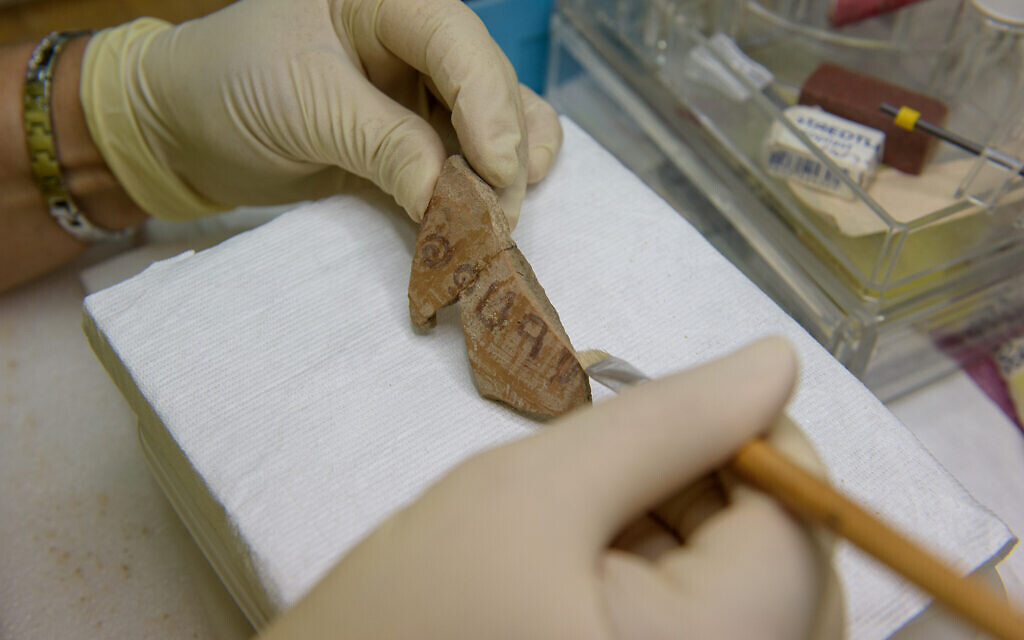
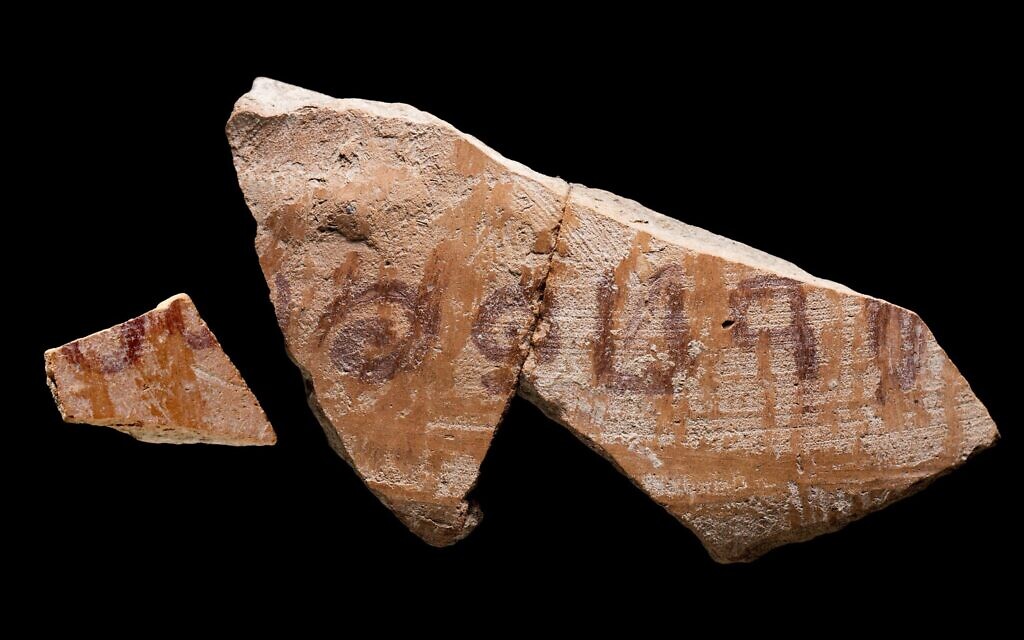
Excavations in Judean foothills uncover small jug from 1,100 BCE that could be inscribed with ‘Jerubbaal’; first evidence of a name from Book of Judges on a contemporary artifact

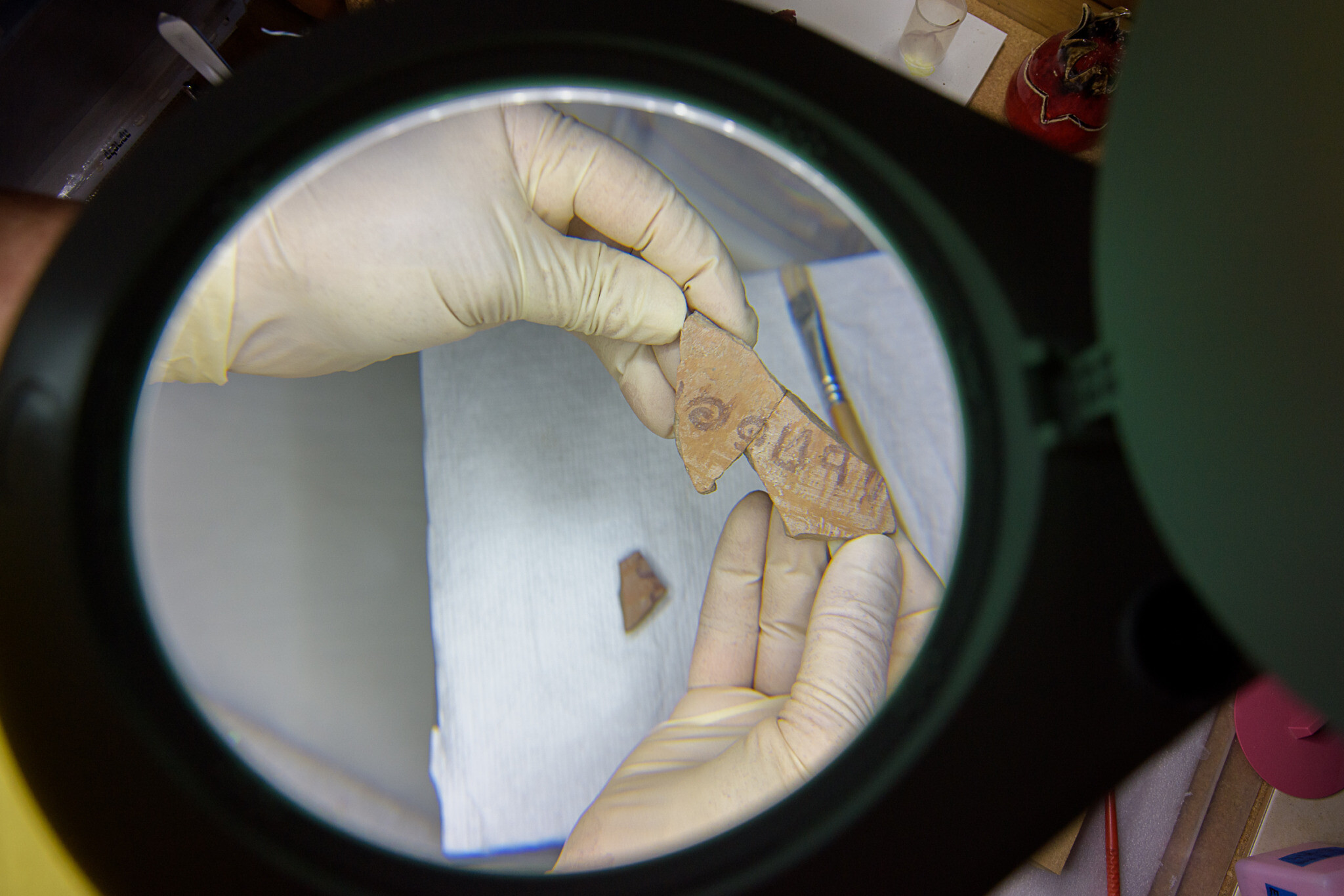
  • The 'Jerubbaal' inscription, written in ink on a pottery vessel, discovered at Khirbet el Rai. (Dafna Gazit, Israel Antiquities Authority)
    The 'Jerubbaal' inscription, written in ink on a pottery vessel, discovered at Khirbet el Rai. (Dafna Gazit, Israel Antiquities Authority)
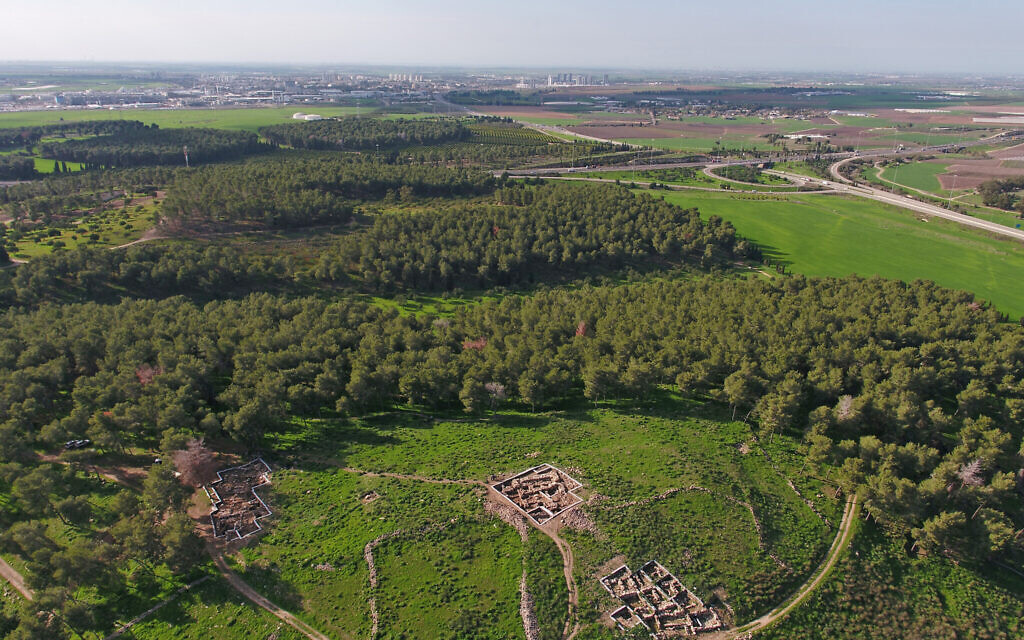
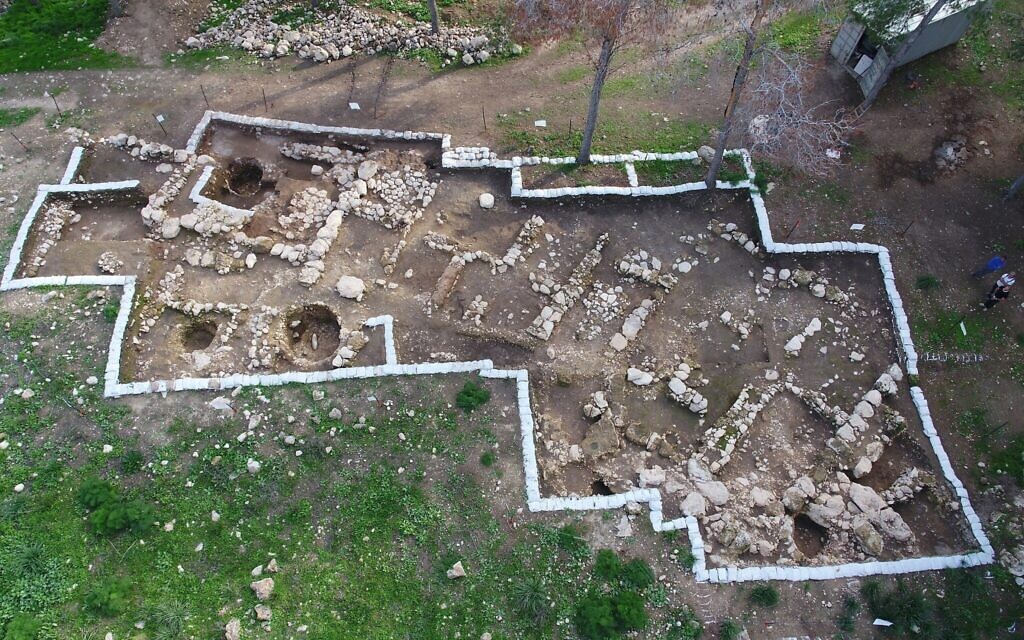
  • Aerial view of Khirbet el Rai, near Lachish in central Israel. (Emil Aladjem, Israel Antiquities Authority)
    Aerial view of Khirbet el Rai, near Lachish in central Israel. (Emil Aladjem, Israel Antiquities Authority)
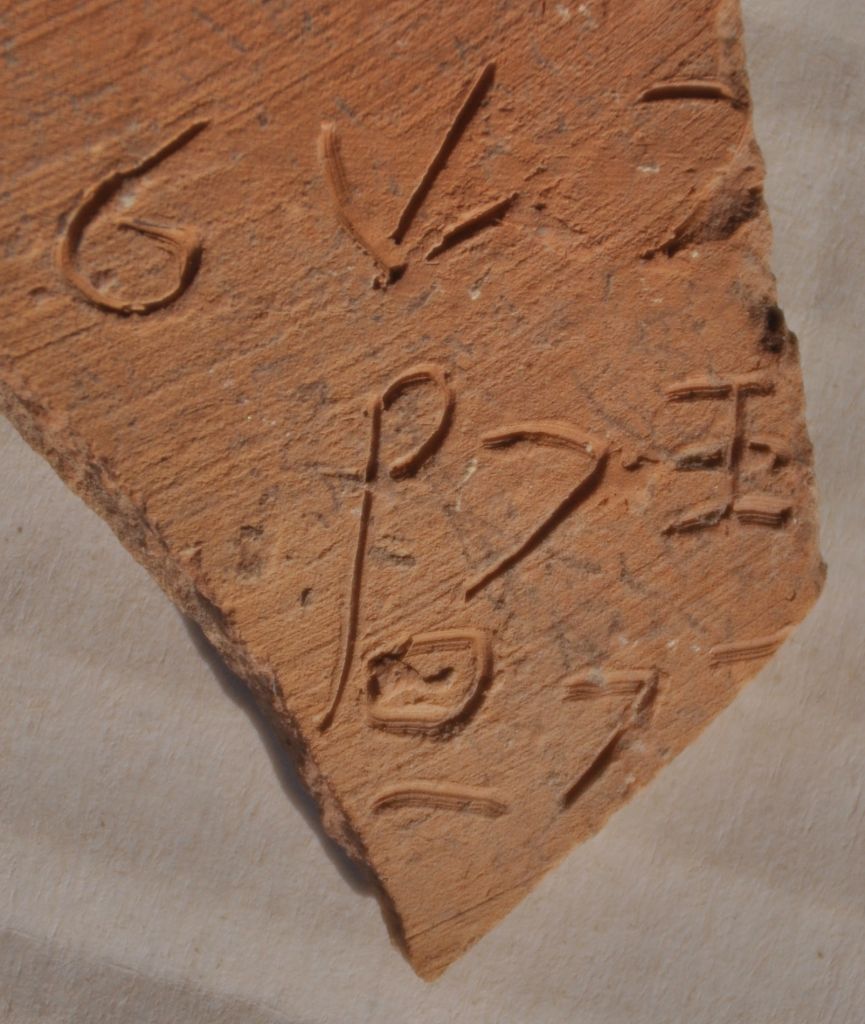
  • The 'Jerubbaal' inscription, written in ink on a pottery vessel, discovered at Khirbet el Rai. (Dafna Gazit, Israel Antiquities Authority)
    The 'Jerubbaal' inscription, written in ink on a pottery vessel, discovered at Khirbet el Rai. (Dafna Gazit, Israel Antiquities Authority)
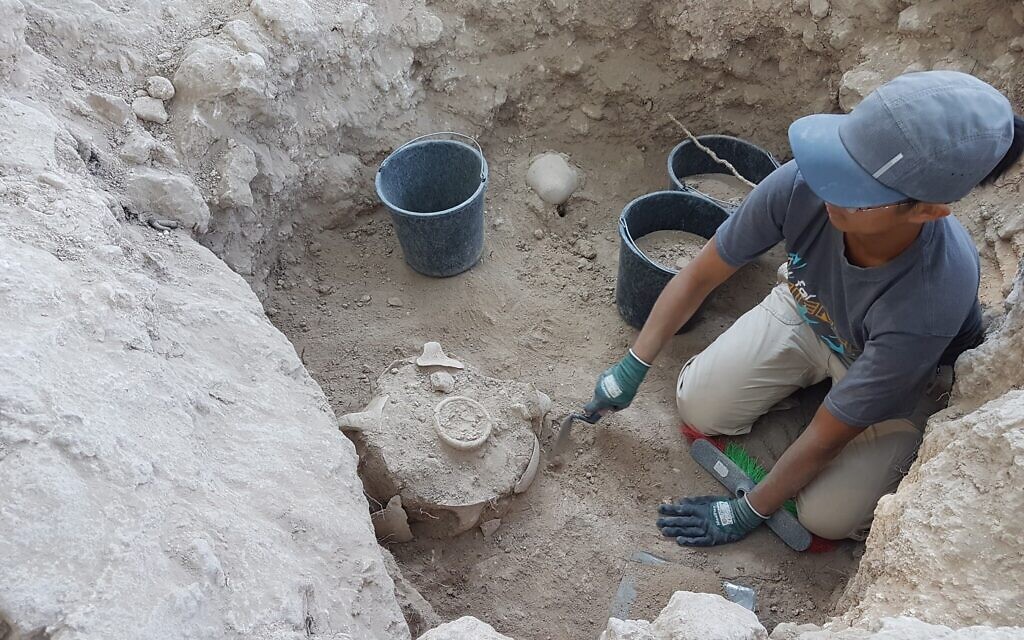
  • Excavation of the silo where the Jerubbaal inscription was found. 
(Yossi Garfinkel, Hebrew University of Jerusalem)
    Excavation of the silo where the Jerubbaal inscription was found. 
(Yossi Garfinkel, Hebrew University of Jerusalem)
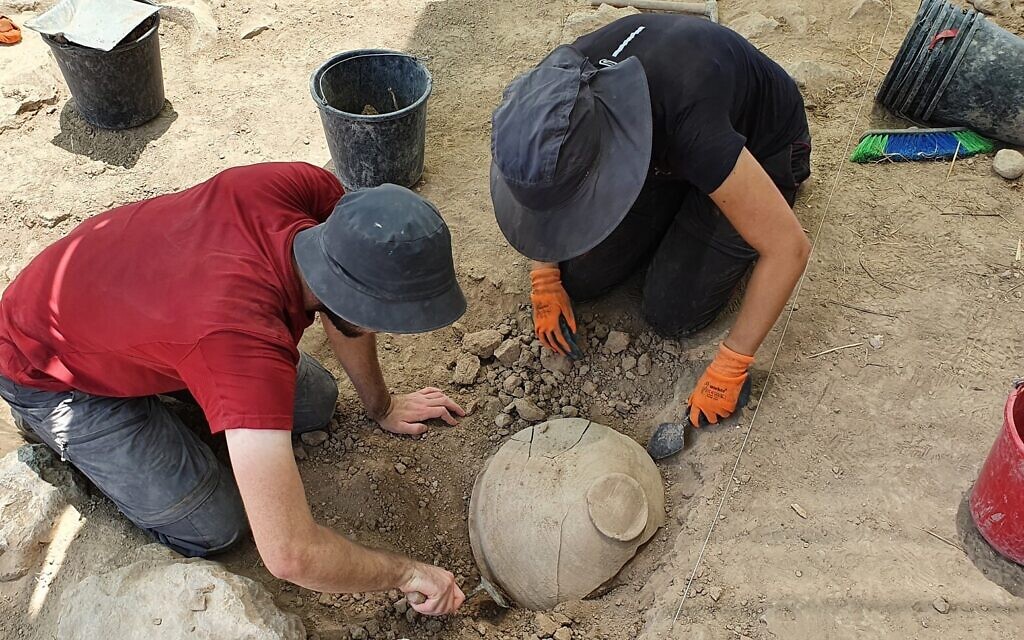
  • Excavating a jar from the time of the biblical Judges at Khirbet el Rai. (Sa‘ar Ganor, Israel Antiquities Authority)
    Excavating a jar from the time of the biblical Judges at Khirbet el Rai. (Sa‘ar Ganor, Israel Antiquities Authority)
  • Sa‘ar Ganor, Israel Antiquities Authority, at Khirbet el Rai. (Emil Aladjem, Israel Antiquities Authority)
    Sa‘ar Ganor, Israel Antiquities Authority, at Khirbet el Rai. (Emil Aladjem, Israel Antiquities Authority)
  • Aerial view of Khirbet el Rai, near Lachish in central Israel. (Emil Aladjem, Israel Antiquities Authority)
    Aerial view of Khirbet el Rai, near Lachish in central Israel. (Emil Aladjem, Israel Antiquities Authority)

Inked 3,100 years ago during the era of the biblical judges, an extremely rare five-letter inscription discovered in the lush Judean foothills could be a missing link in the development of Early Alphabetic (also known as Canaanite) writing used during the 12th-10th centuries BCE.

If correct, this would be the first hard evidence of a name from the biblical stories of the judges that is on an artifact contemporary to the period.

The inscription was published Monday as part of the second issue of the Jerusalem Journal of Archaeology (JJAR) — a new open-access online journal — edited by Bar-Ilan Prof. Avraham Faust, Hebrew University Prof. Yossef Garfinkel, and Hebrew University researcher Dr. Madeleine Mumcuoglu.

The painted pottery is dated by the archaeologists to 1,100 BCE, which would make it prior to the formation of the biblical monarchy. The inscription was written in Early Alphabetic/Canaanite script, evidence of which has been found throughout Egypt and the Levant. First finds including paleo-Hebrew script come much later, dating to the 9th century BCE.

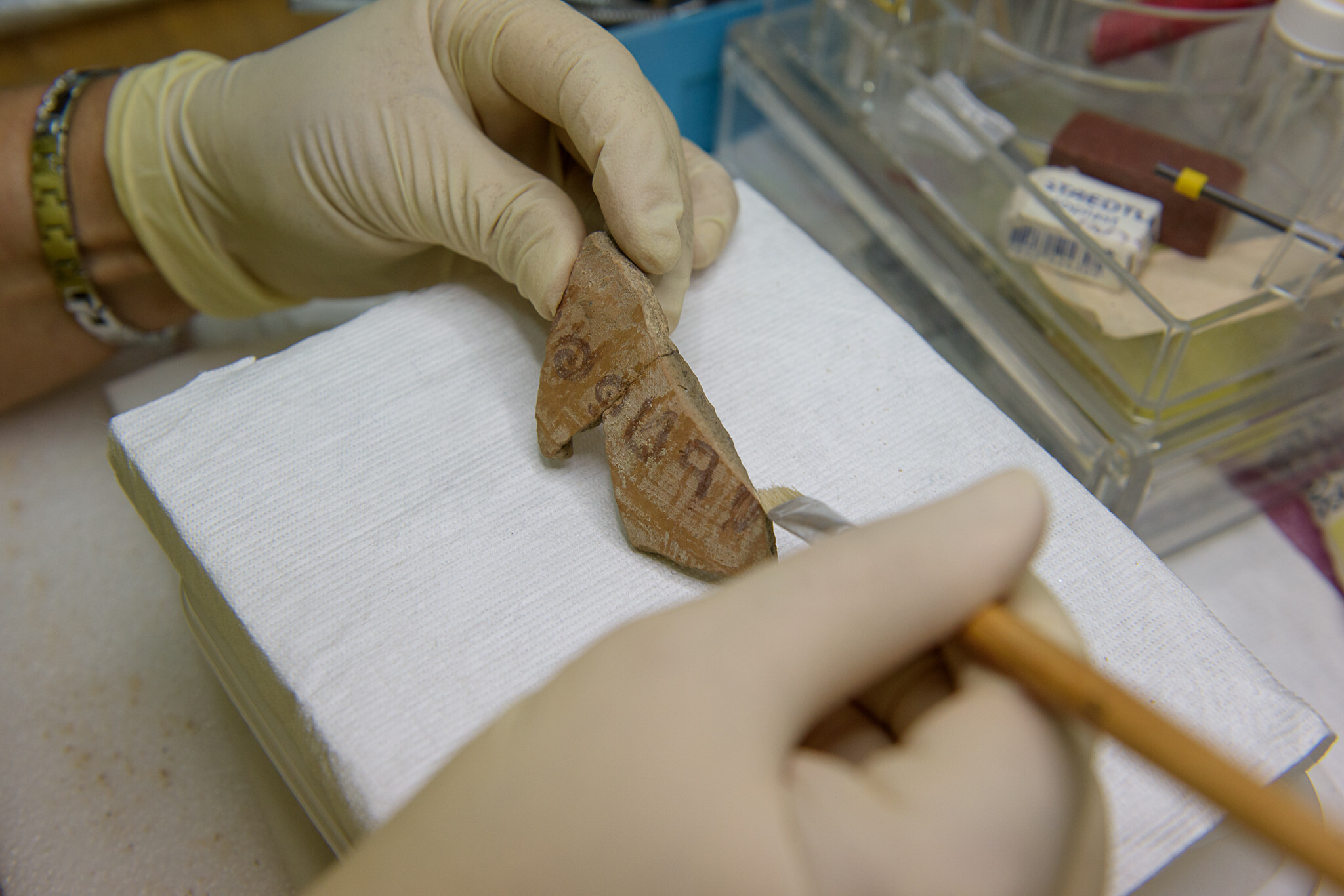
According to a cross-institutional team of archaeologists and epigraphers, the partial inscription, painted on three pottery sherds from an incomplete small vessel, is most logically read as “Jerubbaal” or “Yeruba’al,” which was the nickname of the biblical judge Gideon, son of Joash, who was active in the northern parts of the Land of Israel during this era.

“The reading Yeruba’al is the most logical and reasonable reading, and I consider it quite definitive,” epigrapher Prof. Christopher Rollston from George Washington University, who deciphered the text, told The Times of Israel. “I would hasten to add that this script is well known and nicely attested, so we can read it with precision.”
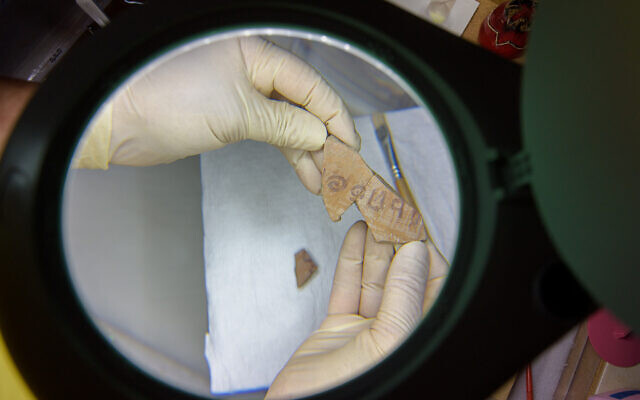
The ‘Jerubbaal’ inscription, written in ink on a pottery vessel, discovered at Khirbet el Rai. (Dafna Gazit, Israel Antiquities Authority)

The inscription joins a mere handful of others that were found in the Land of Israel from a similar time period. Arguably, one of the earliest was discovered in the 1970s in Izbet-Sarta, followed by several other 12th-10th century BCE inscription discoveries in the past 15 years, including in Tell eṣ-Ṣafi, Khirbet Qeiyafa, Jerusalem, Lachish.

According to the archaeologists, the newly discovered inscription serves as a textual bridge for the transition from the Canaanite to the Israelite and Judahite cultures.

“For decades, there were practically no inscriptions of this era and region. To the point that we were not even sure what the alphabet looked like at that time. There was a gap. Some even argued that the alphabet was unknown in the region, that there were no scribes, and that the Bible must therefore have been written much later,” polymath independent epigrapher and historian Michael Langlois told The Times of Israel.
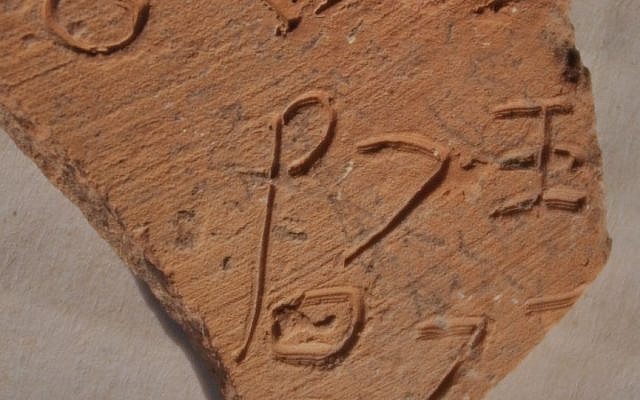
An early 12th century BCE Canaanite alphabet inscription found at Lachish in 2014. (courtesy of Yossi Garfinkel, Hebrew University)

“These inscriptions are still rare, but they are slowly filling the gap; they not only document the evolution of the alphabet, they show that there was in fact continuity in culture, language and traditions. The implications for our understanding of biblical history are vast — and exciting!” said Langlois, who was not involved in this current excavation.

At Khirbet el Rai

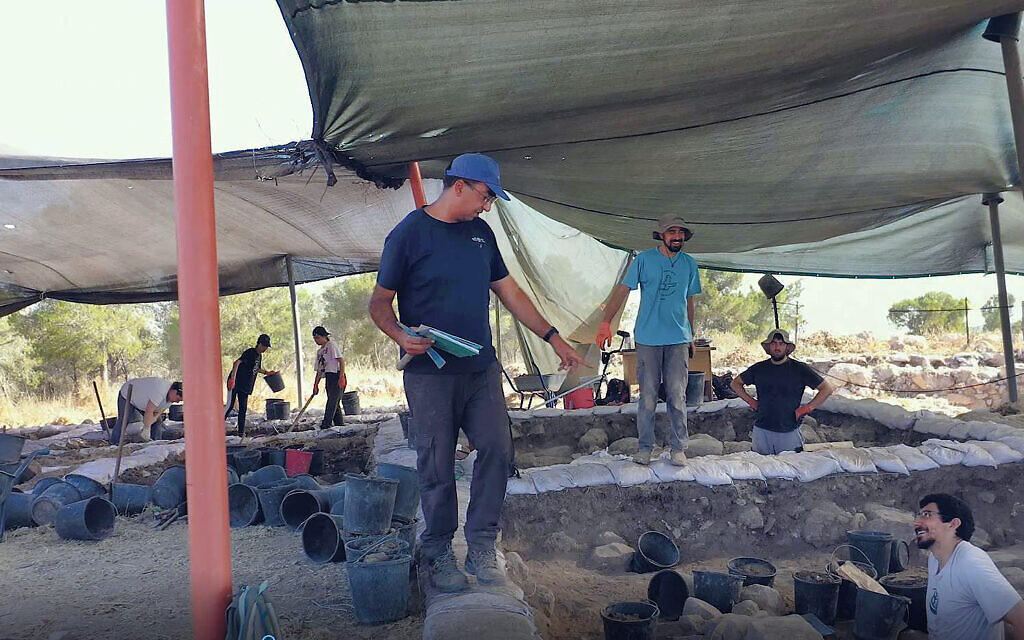
The inscription was discovered at the Khirbet el Rai site, located between Kiryat Gat and Lachish, about 70 kilometers (43 miles) southwest of Jerusalem. Since 2015, the site has been excavated by the Hebrew University of Jerusalem’s Prof. Yossef Garfinkel, the Israel Antiquities Authority’s Sa’ar Ganor, and Dr. Kyle Keimer and Dr. Gil Davies of Macquarie University in Sydney.

According to Ganor, the site includes impressively large structures from the 12th, 11th and 10th centuries BCE. “If you’d like a biblical parallel, we’re talking about the days of the judges and King David,” he said in an IAA Hebrew-language film.

Excavating among the area’s vineyards, the team has found evidence of a Philistine-era settlement from the 12-11th centuries BCE under layers of a rural settlement dating to the early 10th century BCE, largely considered the Davidic era. Among the findings were massive stone structures and typical Philistine cultural artifacts, including pottery in foundation deposits — good luck offerings laid beneath a building’s flooring.

Archaeologist Garfinkel told The Times of Israel that the dating of the pottery piece was accomplished through a confluence of methods including radiocarbon-14 dating from the stratum just above this find, which gave a result of 1050 BCE, the typography of the pottery sherds found with the inscription, and petrographic analysis of the inscribed pottery that was completed by Ariel University’s Prof. David Ben-Shlomo, who concluded that the small liter-sized jug was locally made.


T

GHe emphasized that while it is thrilling and important to find hard evidence of a name included in the Bible, what is even more important is filling what he calls a “missing link” in the Canaanite script. He said that there have been examples discovered from the 14th, 13th, and the first half of the 12th century — but then there was a mysterious period of 150 years of no discovered inscriptions that connected between Canaanite inscriptions and Judean script.

This discovery, he said, would have been “very important even if was just letters without meaning. But in this case, we also have a name from the biblical period.”

The inscription is partial, but the word “ba’al” can clearly be read in it, which was a somewhat common name in the Bible from sections that could have taken place during the 11th-10th centuries. This hard evidence dating from the same era, said Garfinkel, helps shore up what he repeatedly called an “onomastic horizon” — i.e., the proof of the common use of “ba’al” in personal names.

The use of “ba’al” can be tied to the strong pagan warrior god, or to “lord,” said Garfinkel. He hypothesized that as the peoples came to worship the Israelite god more in following centuries, the onomastic horizon again shifted to include “yahu” — the Israelite god — instead of “ba’al,” with names such as Yirmiyahu (Jeremiah) and Eliyahu (Elijah).
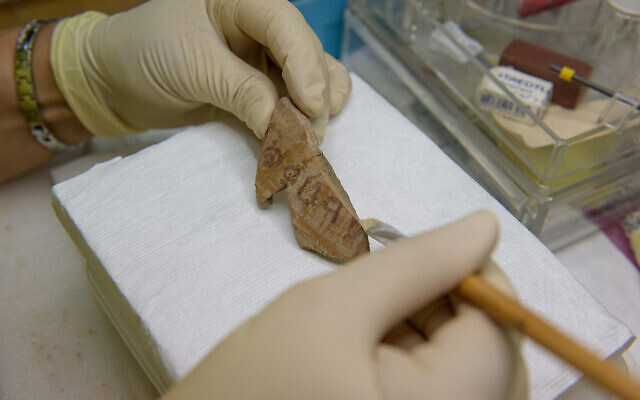
The ‘Jerubbaal’ inscription, written in ink on a pottery vessel, discovered at Khirbet el Rai. (Dafna Gazit, Israel Antiquities Authority)

“For the peoples who believed in strong warrior god, sometime over time the Canaanite ‘ba’al’ became the Israelite ‘yahu,'” said Garfinkel.

Scribes who wrote the developing Early Alphabetic script painted on the newly discovered inscription did not use punctuation and were not particular about the directions in which letters lay. It is quite possible that letters came before and after the four clear letters found on the pottery — spelling resh, bet, ayin, and lamed — and the partial letter that has been identified by Rollston as yud.

According to Hebrew University epigrapher Dr. Haggai Misgav, “the variability of this script is well known.” He believes that according to the letters’ shapes, the dating of 1,100 BCE is quite possible; however, because the inscription is partial, he is not convinced that “Jerubbaal” is the only reading of the letters. “I can think about ‘Azruba’al — the first seen letter could be zayin, and maybe there is an ‘ayin before it,” he spitballed to The Times of Israel.


Likewise, epigrapher Langlois said that there were still plenty of options on the table before definitely arriving at “Jerubbaal.”

“The inscription is fragmentary, which calls for caution. But this kind of inscription often bears personal names, which often feature the name of a deity… Supposing that what we have is a name ending in -baal, and that the previous letter is a resh, there are a number of candidates already attested: Zekharbaal, Maribaal, Jerubbaal etc. And of course it could also be a name not yet attested, which is not uncommon, as our knowledge of that period of history is quite limited. The key is thus the identification of yud at the beginning of the line,” said Langlois.

Regarding the partial letter, Rollston said, “The shape of that letter is most consistent with a yud. (It should be remembered that with this very early script, the stance of a letter, that is, the way that it is rotated, can vary a great deal) Thus, it is the shape of that letter which is the crucial part… and the shape is most consistent with a yud.”

Regarding playing Boggle with other potential letters to arrive at different readings, Rollston said that there is no visible letter prior to the yud — “thus, to posit that an ayin is present is pure speculation…and I don’t consider speculation to be a good method.”

Or, as Garfinkel put it, “We have resh, beit, ayin, and lamed, and nearby there is another letter, which is a bit broken… The most stable ground is to reconstruct the minimal possible name, which is Jerubbaal.”

2,000-year-old coins depict Bar Kochba Revolt

Complete article

An archaeological survey in the northeast of the Binyamin Region conducted by the Martin Szuz Department of Land of Israel Studies and Archaeology at Bar-Ilan University has turned up two rare 2,000-year-old coins at two adjacent sites.

One coin, discovered at Khirbet Jabaat, dates back to the Jewish revolt against the Romans and was minted in the year 67 C.E. One side of the coin bears a depiction of a grape leaf and the Hebrew inscription Herut Zion (Freedom for Zion), while the other side is imprinted with a cup and the inscription “Year Two.”

Dr. Dvir Raviv, who is directing the survey, explained that the coin was the first tangible evidence that the area in question had been under the administrative control of Bar Kochba, and might even testify to the existence of a Jewish community in the region until 134-135 C.E, despite the prevailing belief that all Jewish communities to the north of Jerusalem were razed in the great revolt of the 7th decade C.E. and never resurrected.

One side of the coin from Wadi Rashash, which is believed to have been minted in 134-135 C.E., is imprinted with a palm frond surrounded by a wreath, which itself is surrounded by the Hebrew inscription LeHerut Yerushalayim (“To the Liberation of Jerusalem”). The other side depicts musical instruments, possibly a harp, and the name “Shimon”—the first name of the leader of the revolt against the Romans, Shimon Ben Kosevah, better known as Shimon Bar Kochba.

Newfound sections 'prove' ancient wall protected Jerusalem's east flank


Israeli researcher Filip Vukosavovic displays a missing section of the city wall of Jerusalem that the Babylonians encountered on the eve of its destruction in 586 BC, after it was excavated by the Israel Antiquities Authority at the City of David national park, in Jerusalem on July 14, 2021. According to the researchers, this find connects additional sections of the wall, which were uncovered decades ago, and proves, that the eastern slope of the City of David was protected by a single impressive fortification line. Near the wall, a number of finds were uncovered such as a Babylonian stamp seal, a bulla (stamp seal impression) bearing a personal name in ancient Hebrew script as well as vessels that were in use on the eve of the destruction. Emmanuel DUNAND / AFP.Previous finds over the decades had uncovered two sections, one stretching for 90 metres and the other 30 metres, but a 70-metre gap between those two segments left doubts as to whether the ancient city of Jerusalem, with its First Temple, was shielded by an uninterrupted eastern wall. The newly discovered segments consist of 14 metres and three metres.


Complete article

Tuesday, July 13, 2021

Resilience, not collapse: What the Easter Island myth gets wrong


New research from Binghamton University, State University of New York suggests that the demographic collapse at the core of the Easter Island myth didn't really happen.

You probably know this story, or a version of it: On Easter Island, the people cut down every tree, perhaps to make fields for agriculture or to erect giant statues to honor their clans. This foolish decision led to a catastrophic collapse, with only a few thousand remaining to witness the first European boats landing on their remote shores in 1722.

But did the demographic collapse at the core of the Easter Island myth really happen? The answer, according to new research by Binghamton University anthropologists Robert DiNapoli and Carl Lipo, is no.

Their research, "Approximate Bayesian Computation of radiocarbon and paleoenvironmental record shows population resilience on Rapa Nui (Easter Island)," was recently published in the journal Nature Communications. Co-authors include Enrico Crema of the University of Cambridge, Timothy Rieth of the International Archaeological Research Institute and Terry Hunt of the University of Arizona.

Easter Island, or Rapa Nui in the native language, has long been a focus of scholarship into questions related to environmental collapse. But to resolve those questions, researchers first need to reconstruct the island's population levels to ascertain whether such a collapse occurred and, if so, the scale.

"For Rapa Nui, a big part of scholarly and popular discussion about the island has centered around this idea that there was a demographic collapse, and that it's correlated in time with climate changes and environmental changes," explained DiNapoli, a postdoctoral research associate in environmental studies and anthropology.

Sometime after it was settled between the 12th to 13th centuries AD, the once-forested island was denuded of trees; most often, scholars point to human-prompted clearing for agriculture and the introduction of invasive species such as rats. These environmental changes, the argument goes, reduced the island's carrying capacity and led to a demographic decline.

Additionally, around the year 1500, there was a climactic shift in the Southern Oscillation index; that shift led to a dryer climate on Rapa Nui.

"One argument is that changes in the environment had a negative impact. People see that there was a drought and said, 'Well, the drought caused these changes,'" said Lipo, a professor of anthropology and environmental studies and associate dean of Harpur College. "There are changes. Their population changes and their environment changes; over time, the palm trees were lost and at the end, the climate got drier. But do those changes really explain what we're seeing in the population data through the radiocarbon dating?"

Reconstructing population changes

Archaeologists have different ways to reconstruct population sizes using proxy measures, such as looking at the different ages of individuals at burial sites or counting ancient house sites. That latter measure can be problematic because it makes assumptions as to the number of people who live in each house, and whether the houses were occupied at the same time, DiNapoli said.

The most common technique, however, uses radiocarbon dating to track the extent of human activity during a moment in time, and extrapolating population changes from that data. But radiocarbon dates can be uncertain, DiNapoli acknowledged.

For the first time, DiNapoli and Lipo have presented a method that is able to both resolve these uncertainties and show how changes in population sizes relate to environmental variables over time.

Standard statistical methods don't work when it comes to linking the radiocarbon data to environmental and climate changes, and the population shifts connected with them. To do so would involve estimating a "likelihood function," which is currently difficult to compute. Approximate Bayesian Computation, however, is a form of statistical modeling that doesn't require a likelihood function, and thus gives researchers a workaround, DiNapoli explained.

Using this technique, the researchers determined that the island experienced steady population growth from its initial settlement until European contact in 1722. After that date, two models show a possible population plateau, while another two models show possible decline.

In short, there is no evidence that the islanders used the now-vanished palm trees for food, a key point of many collapse myths. Current research shows that deforestation was prolonged and didn't result in catastrophic erosion; the trees were ultimately replaced by gardens mulched with stone that increased agricultural productivity. During times of drought, the people may have relied on freshwater coastal seeps.

Construction of the moai statues, considered by some to be a contributing factor of collapse, actually continued even after European arrival.

In short, the island never had more than a few thousand people prior to European contact, and their numbers were increasing rather than dwindling, their research shows.

"Those resilience strategies were very successful, despite the fact that the climate got drier," Lipo said. "They are a really good case for resiliency and sustainability."

Burying the myth

Why, then, does the popular narrative of Easter Island's collapse persist? It likely has less to do with the ancient Rapa Nui people than ourselves, Lipo explained.

The concept that changes in the environment affect human populations began to take off in the 1960s, Lipo said. Over time, that focus became more intense, as researchers began to consider changes in the environment as a primary driver of cultural shifts and transformations.

But this correlation may derive more from modern concerns with industrialization-driven pollution and climate change, rather than archaeological evidence. Environmental changes, Lipo points out, occur on different time scales and in different magnitudes. How human communities respond to these changes varies.

Take a classic example of the overexploitation of resources: the collapse of the cod fisheries in the American Northeast. While the economies of individual communities may have collapsed, larger harvesting efforts simply switched to the other side of the world.

On an isolated island, however, sustainability is a matter of the community's very survival and resources tend to be managed conservatively. A misstep in resource management could lead to tangible, catastrophic consequences, such as starvation.

"The consequences of your actions are immediately obvious to you, and everyone else around you," Lipo said.

Lipo acknowledged that proponents of the Easter Island collapse story tend to see him as a climate-change denier; that's emphatically not the case. But he cautioned that the ways ancient peoples dealt with climate and environmental changes aren't necessarily reflective of current global crises and their impact in the modern world. In fact, they may have a good deal to teach us about resilience and sustainability.

"There's a natural tendency to think that people in the past aren't as smart as we are and that they somehow made all these mistakes, but it's really the opposite," Lipo said. "They produced offspring, and the success that created the present. Even though their technologies might be more simple than ours, there is so much to be learned about the context in which they were able to survive."


An archaeological study reveals new aspects related to plant processing in a Neolithic settlement in Turkey


Researchers have discovered at the site of Çatalhöyük (Anatolia, Turkey) a wide variety of hitherto unknown wild resources.

UNIVERSITAT POMPEU FABRA - BARCELONA

Research News

IMAGE

IMAGE: A) SET OF STONE TOOLS, STORAGE AREA OF BUILDING 52; B) USE-WEAR TRACE OBSERVED ON THE SURFACE OF STONE IMPLEMENTS; C) WHEAT INFLORESCENCE PHYTOLITH; D) WHEAT STARCH GRAIN. view more 

CREDIT: UPF

A study conducted by researchers from the UPF Culture and Socio-Ecological Dynamics research group (CaSEs) and the University of Leicester (UK) has provided a highly dynamic image surrounding the use and importance of hitherto unknown wild plant resources at the Neolithic site of Çatalhöyük (Anatolia, Turkey). The researchers carried out their work combining the analysis of microbotanical remains and use-wear traces in various stone implements recovered from the site, which in the past hosted one of mankind's first agricultural societies.

The researchers carried out their work combining the analysis of microbotanical remains and use-wear traces in various stone implements recovered from the site

Çatalhöyük is a world heritage archaeological site located in Anatolia (Turkey), which was inhabited during the Neolithic, between 7,100 and 6,000 BC. This site has received worldwide attention due to its size and because it is one of the first urban centres with a high density of agglomerated dwellings, to which entry was gained through the roof and which contained elaborate wall paintings inside. The settlement was studied continuously for nearly three decades and provided a wealth of archaeobotanical remains (charred remains of plants) and a wide range of stone artefacts and tools used to process plant resources.

An innovative approach that analyses residue trapped on the surface of grinding implements

Despite the extensive research conducted in the area, much of what is known about agricultural practices and the use of plant resources, both at Çatalhöyük and in many other archaeological settlements, is based on the study of charred remains. However, these remains occur causally, either when cooking food or due to accidental fire, which gives a limited image of the use of plant resources in the past.

"We recovered residues trapped in the pits and crevices of these stone artefacts that date back to the time of being used, and then carried out studies of microbotanical remains and thus reveal what types of plants had been processed with these artefacts in the past"

The study, led by Carlos G. Santiago-Marrero, a predoctoral researcher with the Culture and Socio-Ecological Dynamics (CaSEs) research group of the UPF Department of Humanities, together with Carla Lancelotti and Marco Madella, ICREA-UPF research professors and members of CaSEs, and Christina Tsoraki, of the School of Archaeology and Ancient History at the University of Leicester (UK), used an innovative approach based on the analysis of microscopic remains taken from grinding implements from three domestic contexts, attributed to the Middle (6,700-6,500 BC) and Late (6,500 -6,300 BC) periods of occupation.

"We recovered residues trapped in the pits and crevices of these stone artefacts that date back to the time of being used, and then carried out studies of microbotanical remains and thus reveal what types of plants had been processed with these artefacts in the past", the researchers explain.

Among the microscopic remains studied by the researchers are phytoliths, from the deposition of opal silica in plant cells and cell walls, that provide clues about the presence of anatomical parts, such as the stems and husks of plants, including wheat and barley. Another residue studied are starches, glucose compounds, created by plants to store energy, which are found in large quantities in many edible parts of plants, such as seeds and tubers.

Thanks to combining these two lines, the researchers have shown that although the community of Çatalhöyük was based on an agricultural economy by definition, growing cereals and vegetables (wheat, oats, peas), there continued to be much exploitation of wild resources outside the spectrum of domestic resources, which had not yet been found at this site.

Use of wild plant resources to diversify the diet, through complex processing

"Microbotanical evidence has contributed to our knowledge about the plants used in the past and helped identify the presence of wild plants and various aspects related to possible strategies to exploit these resources, both to diversify the diet and to replace any calorie deficit that may have arisen in times of scarcity", the researchers assert. These wild plant resources were as important as domestic ones, and were most likely used regularly to supplement the core diet.

These wild plant resources were as important as domestic ones, and were most likely used regularly to supplement the core diet.

"Among our findings we have shown that the community used a wide range of tuberous plants, many of them belonging to potentially toxic taxonomic families, which require complex processing or use. This shows the great phytocultural knowledge possessed by this community", the authors underscore. And they add: "Many of these tuberous plants had highly restrictive seasonal life cycles, which has helped us to infer the possible means of organizing and exploiting the plant environment at different times of the year".

Moreover, another important aspect revealed by the study is the processing of wild millet seeds, which had never been found among the charred remains of plants on the site.

Use-wear traces on the surfaces of processing implements denoting various uses

The analysis of use-wear traces on the surfaces of plant processing implements, produced by use in various activities, has allowed the researchers to infer different tasks for which the tools were used.

Thanks to these analyses, they have discovered very diverse life histories of these implements and the close relationship with various aspects related to the processing of plant resources and other domestic activities. "By combining microbotanical evidence with use traces, we have discovered processes such as grain husking, the milling of legumes, tubers and cereals, and even the use of these implements in other activities not related to plant processing".