Monday, September 9, 2013

Ancient Golden Treasure Found at Foot of Temple Mount


A 10-cm gold medallion discovered in Hebrew University excavations at the foot of the Temple Mount in Jerusalem. Etched into the medallion are a menorah (Temple candelabrum), shofar (ram’s horn) and Torah scroll. (Photos by Ouria Tadmor)

In summer excavations at the foot of the Temple Mount, Hebrew University of Jerusalem archaeologist Dr. Eilat Mazar made a stunning discovery: two bundles of treasure containing thirty-six gold coins, gold and silver jewelry, and a gold medallion with the menorah (Temple candelabrum) symbol etched into it. Also etched into the 10-cm medallion are a shofar (ram’s horn) and a Torah scroll.


A third-generation archaeologist working at the Hebrew University’s Institute of Archaeology, Dr. Mazar directs excavations on the City of David’s summit and at the Temple Mount’s southern wall. Calling the find “a breathtaking, once-in-a-lifetime discovery,” Dr. Mazar said: “We have been making significant finds from the First Temple Period in this area, a much earlier time in Jerusalem’s history, so discovering a golden seven-branched Menorah from the seventh century CE at the foot of the Temple Mount was a complete surprise.”


The discovery was unearthed just five days into Mazar’s latest phase of the Ophel excavations, and can be dated to the late Byzantine period (early seventh century CE). The gold treasure was discovered in a ruined Byzantine public structure a mere 50 meters from the Temple Mount’s southern wall.

The menorah, a candelabrum with seven branches that was used in the Temple, is the national symbol of the state of Israel and reflects the historical presence of Jews in the area. The position of the items as they were discovered indicates that one bundle was carefully hidden underground while the second bundle was apparently abandoned in haste and scattered across the floor.

Given the date of the items and the manner in which they were found, Mazar estimates they were abandoned in the context of the Persian conquest of Jerusalem in 614 CE. After the Persians conquered Jerusalem, many Jews returned to the city and formed the majority of its population, hoping for political and religious freedom. But as Persian power waned, instead of forming an alliance with the Jews, the Persians sought the support of Christians and ultimately allowed them to expel the Jews from Jerusalem.

Hanging from a gold chain, the menorah medallion is most likely an ornament for a Torah scroll. In that case it is the earliest Torah scroll ornament found in archaeological excavations to date. It was buried in a small depression in the floor, along with a smaller gold medallion, two pendants, a gold coil and a silver clasp, all of which are believed to be Torah scroll ornamentations.

“It would appear that the most likely explanation is that the Ophel cache was earmarked as a contribution toward the building of a new synagogue, at a location that is near the Temple Mount,” said Dr. Mazar. “What is certain is that their mission, whatever it was, was unsuccessful. The treasure was abandoned, and its owners could never return to collect it.”

The Ophel cache is only the third collection of gold coins to be found in archaeological excavations in Jerusalem, said Lior Sandberg, numismatics specialist at the Institute of Archaeology. “The thirty-six gold coins can be dated to the reigns of different Byzantine emperors, ranging from the middle of the fourth century CE to the early seventh century CE,” said Sandberg.

Found with the coins were a pair of large gold earrings, a gold-plated silver hexagonal prism and a silver ingot. Remnants of fabric indicated that these items were once packaged in a cloth purse similar to the bundle that contained the menorah medallion.

Mazar’s Ophel excavation made headlines earlier this year when she announced the 2012 discovery of an ancient Canaanite inscription (recently identified as Hebrew), the earliest alphabetical written text ever uncovered in Jerusalem.

Friday, September 6, 2013

A new excavation on the Israeli coast reveals ancient Assyrian wall


Researchers from Tel Aviv University have unearthed the remains of massive ancient fortifications built around an Iron-Age Assyrian harbor in present-day Israel.

At the heart of the well-preserved fortifications is a mud-brick wall up to more than 12 feet wide and 15 feet high. The wall is covered in layers of mud and sand that stretch for hundreds of feet on either side. When they were built in the eighth century B.C.E., the fortifications formed a daunting crescent-shaped defense for an inland area covering more than 17 acres.

The finding comes at the end of the first excavation season at the Ashdod-Yam archaeological dig in the contemporary Israeli coastal city of Ashdod, just south of Tel Aviv. Dr. Alexander Fantalkin of TAU's Department of Archaeology and Ancient Near Eastern Cultures is leading the project on behalf of the Sonia and Marco Nadler Institute of Archaeology.

"The fortifications appear to protect an artificial harbor," says Fantalkin. "If so, this would be a discovery of international significance, the first known harbor of this kind in our corner of the Levant."

When the fortifications were built, the Assyrians ruled the southeastern part of the Mediterranean basin, including parts of Africa and the Middle East. Assyrian inscriptions reveal that at the end of the century, Yamani, the rebel king of Ashdod, led a rebellion against Sargon II, the king of the Assyrian Empire. The Kingdom of Judah, under King Hezekiah, rejected Yamani's call to join the insurrection.

The Assyrians responded harshly to the rebellion, eventually destroying Philistine Ashdod. As a result, power shifted to the nearby area of Ashdod-Yam, where the TAU excavations are taking place. The fortifications seem to be related to these events, but it is not yet clear exactly how. They could have been built before or after the Ashdod rebellion was put down, either at the initiative of the locals or at the orders of the Assyrians.

"An amazing amount of time and energy was invested in building the wall and glacis [embankments]," says Fantalkin.

More recent ruins — from the Hellenistic period, between the fourth and second centuries B.C.E. — were also found on top of the sand of the Iron Age fortifications. The buildings and walls were apparently built after the fortifications were abandoned and then probably destroyed by an earthquake in the second half of the second century B.C.E. Among the unusually well-preserved ruins were artifacts, including coins and weights.

The researchers employed a powerful new digital technique, photogrammetry, to create a 3D reconstruction of all the features of the excavation. The University of Nebraska-Lincoln provided the equipment. Dr. Philip Sapirstein, a postdoctoral fellow at TAU, served as a digital surveyor on the project.

The only archaeological work done previously at Ashdod-Yam was a series of exploratory digs led by late Israeli archaeologist Dr. Jacob Kaplan on behalf of the Tel Aviv-Jaffa Museum of Antiquities between 1965 and 1968. Kaplan believed the Ashdod rebels built the fortifications in anticipation of an Assyrian attack, but Fantalkin says the construction appears too impressive to have been done under such circumstanc

Archaeologists Find Cinnamon In Israel


Complete article

Researchers analyzing the contents of 27 flasks from five archaeological sites in Israel that date back around 3,000 years have found that 10 of the flasks contain cinnamaldehyde, the compound that gives cinnamon its flavor, indicating that the spice was stored in these flasks.

At this time cinnamon was found in the Far East with the closest places to Israel being southern India and Sri Lanka located at least 3,000 miles (nearly 5,000 kilometers) away. A form of it was also found in the interior of Africa, but does not match the material found in these flasks.


This discovery "raises the intriguing possibility that long-range spice trade from the Far East westward may have taken place some 3,000 years ago," researchers write in a paper to be published in the journal Mediterranean Archaeology andArchaeometry. Although cinnamon can be purchased today at any grocery or bulk food store, 3,000 years ago, people in the Levant would have needed to take part in trade that extended beyond the edge of the known world in order to acquire it, something this discovery suggests they were willing to do.


The flasks that contained cinnamon were made locally in northern coastal Israel which back then was part of ancient Phoenicia. They appear to have been designed to hold precious contents, featuring a narrow opening with thick walls. Flasks like these have been found in special places such as treasuries and temple storerooms, the researchers noted.

Namdar and Gilboa explained that the bark from the cinnamon tree would have been brought in from the Far East in a dry form and, when it reached Phoenicia, was mixed with some form of liquid and put in these flasks. Then, afterwards it was shipped all over Phoenicia and also to neighboring regions such as Philistia (much of which is located in modern day southwest Israel) and Cyprus.

Cinnamon mixed in wine?

A further mystery the team faces: What was the cinnamon used for? The cinnamon from these flasks would have tasted "roughly the same as today," Namdar said.

One possibility, Namdar and Gilboa said, is that people of the time mixed the cinnamon in with wine, an idea supported by the fact that the flasks were quite small, whereas wine was stored in bigger containers. "If you mix it with a bigger [container of wine], then you get flavored wine," they said. Indeed, cinnamon is often used in wine-based recipes today, including ones for mulled or spiced wine.

Canaanite Ritual Stone Discovered in Northern Israel


An archaeological discovery in the Tel Rechesh excavations at the Tabor River Reserve in northern Israel: a joint archaeological expedition, which included researchers from the University of Tenri, Japan, and the Institute of Archaeology of Galilee Kinneret Academic College, have unearthed a Canaanite cult ritual stone. The excavations in this area have been going on for six years now. The same excavations also revealed large parts of a Jewish farmhouse dating back to the Second Temple. Researchers were able to establish that this was a place of Jewish dwellers based on typical stone tools, oil lamps and coins minted in the city of Tiberias.

“The diggers received a big surprise,” said Chairman of the Institute of Archaeology of Galilee Kinneret Academic College Dr. Mrdechai Avi’am. “In the ruins of the second floor of the farmhouse, they discovered a Canaanite cult statue, similar to a statue that stood in the sanctuary of a temple which is yet to be located.”

“Similar stones have been discovered in a number of Canaanite sites, such as Hazor,” Dr. Avi’am said. “The same stone was later used as part of a doorframe in one of the rooms of the Jewish structure. This is the unique development of archaeological hills in Israel, where successive generations mingle ritual objects on their way from the world of the Canaanite mythology to monotheism.”

Read more at: http://www.jewishpress.com/news/breaking-news/canaanite-altar-discovered-in-northern-israel/2013/08/28/

Tuesday, September 3, 2013

Luxury Textiles and Copper from Cypriote Bronze Age City


A Swedish archaeological expedition from the University of Gothenburg has excavated a previously unknown part of the Bronze Age city Hala Sultan Tekke (around 1600–1100 BC). The finds include a facility for extraction of copper and production of bronze objects, evidence of production of luxurious textiles, as well as ceramics and other objects imported from all over the Mediterranean but also from central Europe.

‘One of our conclusions is that the Bronze Age culture in Hala Sultan Tekke played a central role in the Eastern Mediterranean. Cyprus served as an important node not only for regional but also for more long-distance trade. We have also realized that the city was larger than previously thought,’ says Peter Fischer, professor of Cypriote archaeology at the University of Gothenburg.

Hala Sultan Tekke is located near the Larnaca airport on the Mediterranean island of Cyprus and spans approximately 25-50 hectares, making it one of the largest Bronze Age cities in the Mediterranean region. In 2010, Peter Fischer and his team of archaeologists and students continued the excavations of the city that were initiated in the 1970s by Fischer’s former teacher, professor Paul Åström.

The recently excavated part of the city was discovered in 2012 using a ground penetrating radar, which is an electromagnetic equipment that makes it possible to ‘see’ what’s hidden in the ground down to a depth of about two metres. The method also enables archaeologists to get a tomographic image of a limited area under the surface.

‘This summer we discovered a residential area with facilities for extraction of copper from copper ore and copper slag. We found remains of melting furnaces and about 300 kilos of ore and slag. In a room nearby, we also found evidence of production of purple textiles, which were among the most valuable commodities during the Bronze Age.’

Next to the copper extraction facility, the archaeologists exposed living quarters where they also found many interesting objects, such as locally produced ceramics of high quality and ceramics from Mycenae (in present-day Greece) and the Levant (the Eastern Mediterranean countries).

The finds also include a complete decorated bronze brooch, probably imported from northern Italy or central Europe around 1200 BC, a decorated faience bowl from Egypt, faience cylinder seals depicting warriors and hunters and figurines of people/gods and animals. All finds can be dated to the period 1400-1175 BC.

‘The finds underscore the mobility of Bronze Age people far beyond their immediate surroundings. Their connections with Greece, Turkey, Egypt and the Levant may not come as a surprise, but those with Italy and central and northern Europe are very exciting. These finds lend strength to the hypothesis about major migration taking place around 1200 BC, the so-called Sea Peoples. Recent analyses of Swedish bronze objects from this period, led by Johan Ling, reader (docent) at the University of Gothenburg, suggest that bronze was imported from Cyprus,’ says Fischer.

Proof of Solomon's Mines Found in Israel


New findings from an archaeological excavation led this winter by Dr. Erez Ben-Yosef of Tel Aviv University's Jacob M. Alkow Department of Archaeology and Near Eastern Cultures prove that copper mines in Israel thought to have been built by the ancient Egyptians in the 13th century BCE actually originated three centuries later, during the reign of the legendary King Solomon.

Based on the radiocarbon dating of material unearthed at a new site in Timna Valley in Israel's Aravah Desert, the findings overturn the archaeological consensus of the last several decades. Scholarly work and materials found in the area suggest the mines were operated by the Edomites, a semi-nomadic tribal confederation that according to the Bible warred constantly with Israel.

"The mines are definitely from the period of King Solomon," says Dr. Ben-Yosef. "They may help us understand the local society, which would have been invisible to us otherwise."

Slaves to history

Now a national park, Timna Valley was an ancient copper production district with thousands of mines and dozens of smelting sites. In February 2013, Dr. Ben-Yosef and a team of researchers and students excavated a previously untouched site in the valley, known as the Slaves' Hill. The area is a massive smelting camp containing the remains of hundreds of furnaces and layers of copper slag, the waste created during the smelting process.

In addition to the furnaces, the researchers unearthed an impressive collection of clothing, fabrics, and ropes made using advanced weaving technology; foods, like dates, grapes, and pistachios; ceramics; and various types of metallurgical installations. The world-renowned Oxford Radiocarbon Accelerator Unit at the University of Oxford in England dated 11 of the items to the 10th century BCE, when according to the Bible King Solomon ruled the Kingdom of Israel.

The archaeological record shows the mines in Timna Valley were built and operated by a local society, likely the early Edomites, who are known to have occupied the land and formed a kingdom that rivaled Judah. The unearthed materials and the lack of architectural remains at the Slaves' Hill support the idea that the locals were a semi-nomadic people who lived in tents.

The findings from the Slaves' Hill confirm those of a 2009 dig Ben-Yosef helped to conduct at "Site 30," another of the largest ancient smelting camps in Timna Valley. Then a graduate student of Prof. Thomas E. Levy at the University of California, San Diego, he helped demonstrate that the copper mines in the valley dated from the 11th to 9th centuries BCE — the era of Kings David and Solomon — and were probably Edomite in origin. The findings were reported in the journal The American Schools of Oriental Research in 2012, but the publication did little to shake the notion that the mines were Egyptian, based primarily on the discovery of an Egyptian Temple in the center of the valley in 1969.

Power without stone

The Slaves' Hill dig also demonstrates that the society in Timna Valley was surprisingly complex. The smelting technology was relatively advanced and the layout of the camp reflects a high level of social organization. Impressive cooperation would have been required for thousands of people to operate the mines in the middle of the desert.

"In Timna Valley, we unearthed a society with undoubtedly significant development, organization, and power," says Ben-Yosef. "And yet because the people were living in tents, they would have been transparent to us as archaeologists if they had been engaged in an industry other than mining and smelting, which is very visible archaeologically."

Although the society likely possessed a degree of political and military power, archaeologists would probably never have found evidence of its existence if it were not for the mining operation. Ben-Yosef says this calls into question archaeology's traditional assumption that advanced societies usually leave behind architectural ruins. He also says that the findings at the Slaves' Hill undermine criticisms of the Bible's historicity based on a lack of archaeological evidence. It's entirely possible that David and Solomon existed and even that they exerted some control over the mines in the Timna Valley at times, he says.

Thursday, August 29, 2013

2700 Year-Old Inscription Found in the City of David, Jerusalem


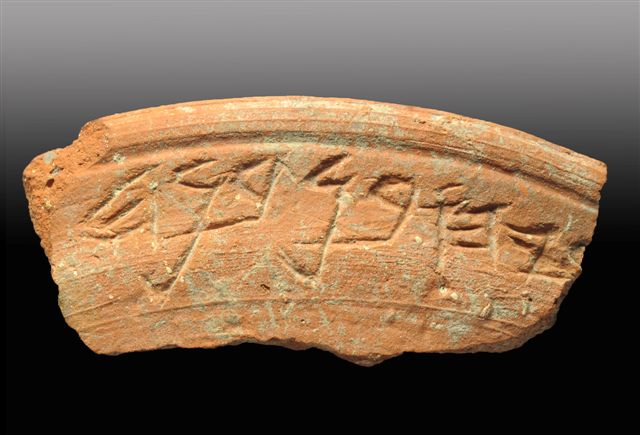
Pottery Sherd of a Bowl from the end of the First Temple Period, bearing the inscription "ryhu bn bnh". Photo: Clara Amit, Israel Antiquities Authority

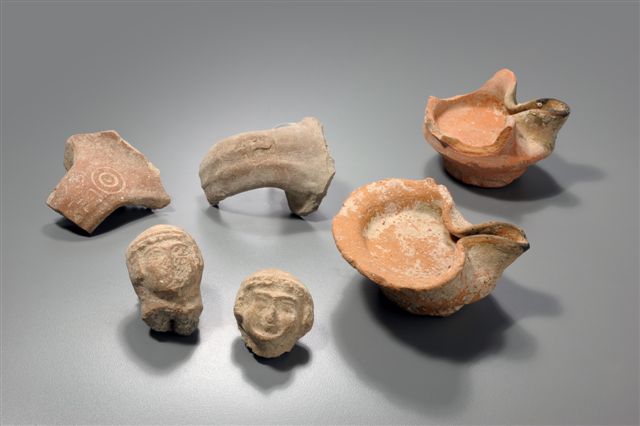
Archaeological excavations conducted by the Israel Antiquities Authority in the area of the Gihon Spring in the City of David, in the Walls around Jerusalem National Park, have unearthed a layer of rich finds including thousands of broken pottery shards, clay lamps and figurines. Most intriguing is the recent discovery of a ceramic bowl with a partially preserved inscription in ancient Hebrew. While not complete, the inscription presents us with the name of a seventh century BCE figure, which resembles other names known to us from both the Biblical and archaeological record (see examples below) and providing us with a connection to the people living in Jerusalem at the end of the First Temple period. This fascinating find will be presented at Megalim's Annual Archaeological Conference which will take place on Thursday, August 29th in the City of David.

The most similar name to our inscription is Zechariah the son of Benaiah, the father of the Prophet Jahaziel. The name Zechariah the son of Benaiah appears in 2 Chronicles 20:14 where it states that Jahaziel, son of Zechariah, son of Benaiah, a Levite of the sons of Asaph, prophesized before the Biblical King Jehoshaphat before the nation went off to war against the ancient kingdoms of Ammon and Moab.

Israel Antiquity Authority archaeologists Dr. Joe Uziel and Nahshon Zanton, who discovered the bowl while excavating remains associated with the First Temple period destruction, explained that the letters inscribed on the shard likely date to the 8-7th centuries BCE, placing the production of the bowl sometime between the reign of Hezekiah and the destruction of Jerusalem under King Zedekiah. The archaeologists also explained that the inscription was engraved on the bowl prior to firing, indicating that the inscription originally adorned the rim of the bowl in its entirety, and was not written on a shard after the vessel was broken.

While the purpose of the inscription on the bowl is unclear, archaeologists have posited that the bowl may have contained an offering, likely given by the individual whose name was inscribed on the bowl, or alternatively given to him.

Inscription Analysis

The first letter of the ceramic bowl’s partially preserved inscription in ancient Hebrew script is broken and is therefore difficult to read, but appears to be the letter ר. The next three letters יהו constitute the theophoric suffix (the component in which the name of the deity appears as part of the first name, such as Yirme-yahu and Eli-yahu, etc). These letters are followed by בנ (the son of) after which appears the patronymic name composed of the three letters בנה. According to archaeologists Uziel and Zanton, “If we consider the possibility that we are dealing with an unvowelized or ‘defective’ spelling of the name בניה (Benaiah), then what we have before us is the name "...ריהו בן בניה"

Many of the first names mentioned in the Bible contained the theophoric component יהו, as is the case of this inscription from the City of David. Besides the biblical references, other examples of this have also been found in archaeological excavations, written on a variety of objects such as seals, bullae, pottery vessels or even carved on rock.

Noteworthy among the many names that end with the theophoric suffix יהו are several prominent examples that were previously discovered in City of David by Professor Yigal Shiloh, such as Gemar-yahu the son of Shaphan, Bena-yahu the son of Hoshayahu, etc. which were also found in the destruction layer and the ruins of the Babylonian conquest.


Various finds from the fill layer of the end of First Temple period: oil lamps, LMLKstamped handles and female figurines. Photo: Clara Amit, Israel Antiquities Authority