Tuesday, November 13, 2012

Desecrated Ancient Temple Sheds Light on Early Power Struggles at Tel Beth-Shemesh


TAU archaeologists unearth unique 11th-century BCE sacred compound with a turbulent history Credit: Image courtesy of American Friends of Tel Aviv University)


Floor level of the temple at Beth Shemesh. Photo: Dale Manor.

Tel Aviv University researchers have uncovered a unique 11th-century BCE sacred compound at the site of Tel Beth-Shemesh, an ancient village that resisted the aggressive expansion of neighboring Philistines. The newly discovered sacred complex is comprised of an elevated, massive circular stone structure and an intricately constructed building characterized by a row of three flat, large round stones. Co-directors of the dig Prof. Shlomo Bunimovitz and Dr. Zvi Lederman of TAU's Sonia and Marco Nadler Institute of Archaeology say that this temple complex is unparalleled, possibly connected to an early Israelite cult — and provides remarkable new evidence of the deliberate desecration of a sacred site.

The village of Beth-Shemesh frequently changed hands between the ambitious Philistines and the Canaanite and Israelite populations that resisted them. The temple and its history reflect the power struggles that defined the region in the 12th-11th century BCE, say Prof. Bunimovitz and Dr. Lederman. Their findings will be presented this month at the annual meeting of the American Schools of Oriental Research in Chicago.

In the archaeological record, there are no parallels to this Canaanite or Israelite sacred compound of the period, note the researchers. Research has revealed that the temple has a rich history steeped in conflict. Excavators determined that the temple was not only destroyed, but also desecrated. More intensive scientific analysis of the site, conducted by geoarchaeolgist Dr. Shawn Bubel of the University of Lethbridge in Alberta, Canada, has shown that the temple ruins were used as animal pens, maybe by the invading Philistines.

Power clash in Tel Beth-Shemesh


Bird's-eye view over the sacred complex, with round stone structure at right and temple at left. Photo: SkyView.


After ruling out the use of the site as a domestic structure, the researchers knew that they had found something unique. Excavations revealed almost only shards of painted chalices and goblets found spread on the floor but no traces of domestic use. One of the three flat stones was surrounded by animal bone remnants, and the two other stones were seemingly designed to direct liquids. These clues convinced Prof. Bunimovitz and Dr. Lederman that they had uncovered a likely place of sacred worship.

But the temple didn't remain sacred. Samples of earth taken from layers above the destroyed temple and analyzed at the Weizmann Institute of Science revealed astonishing results. Directly above the temple was a packed-in layer containing phytoliths (remains of weeds that are commonly eaten by livestock) and spherulites (microscopic remnants of manure produced by grass-eating animals), indicating the presence of animal pens directly on top of the sacred site, explains Prof. Bunimovitz. Intermittent burning in order to clean the pens likely resulted in the concentrated state of the layer.

This desecration was no accident or coincidence, the researchers believe. Instead, it represents the see-saw of political might between the Philistines and the local population. Presumably the Philistines gained temporary control of Beth-Shemesh, and brought in livestock to live on what they knew had been a sacred site to their enemies.

Preserving tradition

According to Prof. Bunimovitz and Dr. Lederman, this discovery also serves to illuminate the recent discovery of a number of round clay ovens, called "tabuns," in the layer excavated above the temple. Typically, such ovens were located in a domestic building for food preparation, explains Prof. Bunimovitz. But these particular ovens were not part of a neighborhood or living quarter.

When the temple was discovered directly underneath, a plausible explanation for the mysterious ovens emerged. "We believe that ancestors of those who had built the original complex came back to rebuild the site," says Dr. Lederman, who suspects that the ovens were used to cook celebration feasts held in veneration of the old temple. Thus, despite the desecration of the temple by the Philistines, the memory of the sacred site survived. Once the Philistines withdrew from the area, the descendents of the original worshippers returned to commemorate this sacred place.

The researchers are now looking for additional funding to help further the excavation and analysis of this unique and surprising sacred site, which has only been partially unearthed.


Ancient Measuring System Uncovered

The shapes and sizes of pottery used for commerce depended on an ancient measuring system
The size and shape of spherical vessels reflected a non-metric measurement system used in Ancient Egypt.


A team of archeologists and mathematicians from Tel Aviv University has discovered a unique, ancient system of calculating volume that differs significantly from the metric system we use today. The method appears to have been used by Egyptians and Phoenicians from the 14th to the 10th century BCE. It allowed merchants (and their clients) to accurate estimate the amount of oil, wine and other products stored in spherical containers and was entirely based on the sphere rather than the cube as a way to measure length and volume.


The Hekat and the Royal Cubit


Until this discovery archeologists believed merchants in antiquity had no accurate, standardized way of measuring the volume of fluids transported in ceramic vessels. However, digital analysis of hundreds of pots and jars found at Tel Megiddo and other sites across the Middle East revealed a strong correlation between the size and volume of these containers. The discovery was made by Professor Itzhak Benenson, head of the Department of Geography and the Human Environment at Tel Aviv University, researcher Elena Zapassky and Professor Israel Finkelstein and Dr. Yuval Gadot from the Department of Archeology.

Ancient Egyptians used a measuring unit called the "royal cubit", equivalent to approximately 52 centimeters, to measure length, and a "hekat", equivalent of approximately 5 liters, to measure volume. When TAU researchers began to measure ceramic vessels in cubits and hekats rather than meters and liters they came across an astounding discovery. Vessels with a circumference of one royal cubit could hold approximately half a hekat's worth of liquid. The correlation, repeated across hundreds of containers, is very unlikely to be accidental and indicates Ancient Egyptians had a method of accurately measuring liquid in a spherical container.


Standardization in the Ancient World


This Egyptian measuring system was adopted by Phoenicians and was still used in the area long after the fall of Egypt's New Kingdom in the late 12th century BCE. Researchers believe this is yet another indication of Egypt's immense political and cultural influence over the region, as it wasn't until the Assyrian conquest – in the 8th century BCE – that new measuring systems were introduced. Interestingly, as the royal cubit and the hekat were slowly phased out, the shapes and sizes of vessels used for transport and trade changed in accordance with new, Assyrian, measurement systems.

Friday, November 9, 2012

Neandertals might have produced sophisticated tools, body ornaments


A population of Neandertals produced sophisticated bone tools and body ornaments more than 40,000 years ago, a study finds. Jean-Jacques Hublin and colleagues analyzed bone samples from two sites in France: Grotte du Renne and Saint Césaire, where Neandertal remains are associated with artifacts from a period called the Châtelperronian.

The researchers extracted collagen from the samples and performed radiocarbon dating using an accelerator mass spectrometer. At Grotte du Renne, the Châtelperronian artifacts were dated to between 44,500 and 41,000 years ago, and a Neandertal tibia bone from Saint Césaire was found to date close to 41,950 years ago. These ages are significant because modern humans replaced the last known European Neandertals starting around 50,000 years ago. Given the dating results, the authors conclude that Neandertals must have made the bone tools and body ornaments found at the sites.

The findings contradict prior research that concluded that modern humans made the Châtelperronian items. However, because Neandertals produced body ornaments only after modern humans arrived in neighboring regions, cultural exchange likely took place between modern humans and Neandertals, according to the authors.

Thursday, November 8, 2012

Extreme weather preceded collapse of Maya civilization


Decades of extreme weather crippled, and ultimately decimated, first the political culture and later the human population of the ancient Maya, according to a new study by an interdisciplinary team of researchers that includes two University of California, Davis, scientists.

The collapse of the Maya is one of the world's most enduring mysteries. Now, for the first time, researchers have combined a precise climatic record of the Maya environment with a precise record of Maya political history to provide a better understanding of the role weather had in the civilization's downfall.

Their findings are published in the Nov. 9, 2012 issue of the journal Science.

"Here you had an amazing state-level society that had created calendars, magnificent architecture, works of art, and was engaged in trade throughout Central America," said UC Davis anthropology professor and co-author Bruce Winterhalder. "They were incredible craftspersons, proficient in agriculture, statesmanship and warfare—and within about 80 years, it fell completely apart."

To determine what was happening in the sociopolitical realm during each of those years, the study tapped the extensive Maya Hieroglyphic Database Project, run by UC Davis Native American Language Center director and linguist Martha Macri, a specialist in Mayan hieroglyphs who has been tracking the culture's stone monuments for nearly 30 years.

"Every one of these Maya monuments is political history," said Macri.

Inscribed on each monument is the date it was erected and dates of significant events, such as a ruler's birthday or accession to power, as well as dates of some deaths, burials and major battles. The researchers noted that the number of monuments carved decreased in the years leading to the collapse.

But the monuments made no mention of ecological events, such as storms, drought or references to crop successes or failures.

For that information, the research team collected a stalagmite from a cave in Belize, less than 1 mile from the Maya site of Uxbenka and about 18 miles from three other important centers. Using oxygen isotope dating in 0.1 millimeter increments along the length of the stalagmite, the scientists uncovered a physical record of rainfall over the past 2,000 years.

Combined, the stalagmite and hieroglyphs allowed the researchers to link precipitation to politics. Periods of high and increasing rainfall coincided with a rise in population and political centers between 300 and 660 AD. A climate reversal and drying trend between 660 and 1000 AD triggered political competition, increased warfare, overall sociopolitical instability, and finally, political collapse. This was followed by an extended drought between 1020 and 1100 AD that likely corresponded with crop failures, death, famine, migration and, ultimately, the collapse of the Maya population.

"It has long been suspected that weather events can cause a lot of political unrest and subject societies to disease and invasion," Macri said. "But now it's clear. There is physical evidence that correlates right along with it. We are dependent on climatological events that are beyond our control."

Said Winterhalder: "It's a cautionary tale about how fragile our political structure might be. Are we in danger the same way the Classic Maya were in danger? I don't know. But I suspect that just before their rapid descent and disappearance, Maya political elites were quite confident about their achievements."

A Neolithic well uncovered in the Jezreel Valley


A rare well dating to the Neolithic period was uncovered in recent excavations the Israel Antiquities Authority carried out at ‘Enot Nisanit’, along the western fringes of the Jezreel Valley prior to enlarging Ha-Yogev Junction (Highway 66) by the National Roads Company. Archaeologists estimate the well was built approximately 8,500 years ago.


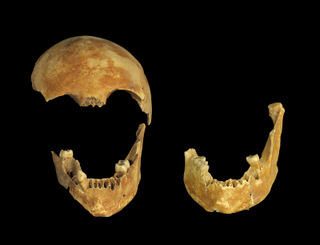
The skull that was exposed during the excavation. Photographic credit: Clara Amit, courtesy of the Israel Antiquities Authority

During the excavations the skeletal remains of a woman approximately 19 years of age and a man older than her were uncovered deep inside the well. How did these come to be in the well? Was this an accident or perhaps murder? As of now the answer to this question remains a mystery.

According to Yotam Tepper, excavation director on behalf of the Israel Antiquities Authority, “What is clear is that after these unknown individuals fell into the well it was no longer used for the simple reason that the well water was contaminated and was no longer potable”.

Tepper adds, “The impressive well that was revealed was connected to an ancient farming settlement and it seems the inhabitants used it for their subsistence and living. The upper part of the well was built of stones and its lower part was hewn in the bedrock. Two capstones, which narrowed the opening, were set in place at the top of the well. It is c. 8 meters deep and its upper part measures about 1.3 meters in diameter”.


The flint implements that were exposed during the excavation. Photographic credit: Clara Amit, courtesy of the Israel Antiquities Authority

Tepper says, “Numerous artifacts indicating the identity of the people who quarried it – the first farmers of the Jezreel Valley – were recovered from inside the well. The finds include, among other things, deeply denticulated sickle blades knapped from flint which were used for harvesting, as well as arrow heads and stone implements. The excavation of the accumulations in the well shaft yielded animal bones, organic finds and charcoal which will enable future studies about the domestication of plants and animals, and also allow researchers to determine the exact age of the well by means of advanced methods of absolute dating”.

“The well that was exposed in the Jezreel Valley reflects the impressive quarrying ability of the site’s ancient inhabitants and the extensive knowledge they possessed regarding the local hydrology and geology which enabled them to quarry the limestone bedrock down to the level of the water table. No doubt the quarrying of the well was a community effort that lasted a long time”, said Tepper.

According to Dr. Omri Barzilai, head of the Prehistory Branch of the Israel Antiquities Authority, “Wells from this period are unique finds in the archaeology of Israel, and probably also in the prehistoric world in general. The two oldest wells in the world were previously exposed in Cyprus and they indicated the beginning of the domestication phenomenon: it seems that ancient man tried to devise ways of protecting his drinking water from potential contamination by the animals he raised, and therefore he enclosed the water in places that were not accessible to them. The wells had another important advantage: quarrying them provided access to an available source of water that was not dependent upon springs or streams. Another well, which is about 1,000 years later than those in Cyprus, was previously exposed at the Atlit Yam site in Israel, and another well from this period has now been exposed at the ‘Enot Nisanit’ site. The exposure of these wells makes an important contribution to the study of man’s culture and economy in a period when pottery vessels and metallic objects had still not yet been invented”.

Same Scribe's Works Found Among Dead Sea Scrolls At Qumran and At Masada


Qumran


Recently Ada Yardeni, the foremost paleographer working in Israel today, made a startling claim: More than 50 Dead Sea Scroll manuscripts were copied by the same scribe.1 The 54 manuscripts came from six different caves: Qumran Caves 1, 2, 3, 4, 6 and 11. Even more surprising, Yardeni identified the same scribal hand in a manuscript of the Joshua Apocryphon found 30 miles south of Qumran at the famous desert fortress of Masada, the last holdout in the Jewish revolt against Rome.

Complete article

“It seems likely that some manuscripts from Qumran were carried south by refugees fleeing the Roman destruction of Qumran in 68 C.E. [Masada is south of Qumran]. But that’s only a best guess.”

Source of this quote.

Friday, November 2, 2012

Rare find, only artifact of its kind, that of Bes, ever found in Jerusalem.


Excavations in in the Ophel area, located between the southern wall of the Old City of Jerusalem and the City of David to its south. have been conducted by Dr. Eilat Mazar of the Hebrew University Institute of Archaeology. The excavations are at a level dating from the period of King Solomon.

An exciting find at that level was
only about one inch in length, was a small white necklace pendant made from faience (see video below). Originally green, the pendant was a figurine depicting the ancient Egyptian god Bes, a deity worshipped as a fertility god and protector of families and households, and in particular, of mothers, children and childbirth. The find is rare in that it is the first and only artifact of its kind, that of Bes, ever found in Jerusalem.


More info here.